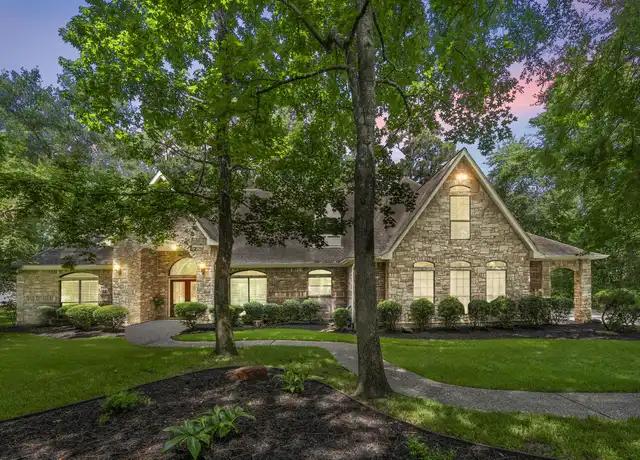
Buy for Your Life First—Then Think About Resale
Should You Buy the Woodlands Home You Love—or the One You Think Will Be Easier to Sell Later?
You find two homes.
House A feels like you.
Great office.
Private backyard.
Layout you love.
Maybe a slightly unusual feature that fits your lifestyle perfectly.
House B feels more conventional.
More neutral.
More broadly appealing.
You don't love it quite as much.
But someone says:
“House B will probably be easier to sell later.”
Now you start second-guessing everything.
Should resale control the decision?
It should matter.
But it should not become the only thing that matters.
Because you are not buying a home for a future buyer today.
You are buying it for yourself first.
The better question is:
“Can we choose the home that fits us well without ignoring the features that may matter when we eventually sell?”
That balance is much more useful.
Start With How Long You Expect to Stay
Time changes how much weight resale should carry.
If you expect to move again in:
Two years.
Three years.
Maybe resale deserves more immediate attention.
If you expect to stay:
Ten years.
Fifteen years.
Longer.
your own lifestyle fit may deserve even more weight.
You still care about future marketability.
But you also have many years to enjoy the home.
Don't Buy a House You Barely Like for a Buyer Who Doesn't Exist Yet
This happens more often than it should.
You choose:
The safer floor plan.
The safer finishes.
The safer lot.
because you assume someone else will prefer them later.
Then you spend years living in a house that never felt quite right.
Resale should help you avoid obvious problems.
It should not turn your purchase into a speculative exercise.
Broad Appeal Is Useful, but Personal Fit Is Real Value Too
A home that supports your:
Work.
Family.
Hobbies.
Privacy.
Outdoor life.
Entertaining.
daily routine
has real value to you.
That value may not appear perfectly in a resale formula.
But it matters every day you live there.
Start With the Hard-to-Change Features
When balancing lifestyle and resale, begin with characteristics that tend to remain:
Location.
Street.
Lot.
Privacy.
Overall floor plan.
Garage.
Home size.
Orientation.
These deserve more weight than temporary finishes.
Location Usually Matters to Both You and Future Buyers
A strong location may support:
Commute.
Convenience.
Schools where relevant.
Shopping.
Trails.
Parks.
Access to major roads.
Future buyers may care about many of the same things.
That is why location often sits at the intersection of lifestyle and resale.
But Don't Overpay for Convenience You Don't Use
Suppose a home is significantly more expensive because it is closer to an area you visit twice a year.
That premium may have less personal value to you.
Another buyer may love it.
You should understand the market benefit without pretending it improves your life more than it does.
Lot Quality Can Have Lasting Appeal
Characteristics such as:
Privacy.
Mature trees.
Greenbelt setting.
Cul-de-sac position.
Usable backyard.
Golf-course view.
Water view.
can attract future buyers.
But not every feature appeals to everyone.
The key is avoiding lots with characteristics you strongly dislike while giving extra attention to the ones you value.
Privacy Is Often Personal and Marketable
A private backyard may improve your everyday life.
It may also appeal to future buyers.
That's a strong example of a feature that can serve both goals.
But don't assume every buyer values privacy equally.
Some may prioritize:
Open views.
Amenity proximity.
Larger yard.
Golf.
Different street position.
Floor Plan Matters More Than Trendy Finishes
A future buyer can repaint.
Replace lights.
Change flooring.
But a difficult floor plan can require much more significant work.
Look at:
Bedroom placement.
Kitchen relationship to living spaces.
Office.
Storage.
Garage access.
Primary suite location.
Overall flow.
These characteristics can affect both your experience and future appeal.
Function Usually Ages Better Than Fashion
Today's trend:
Certain cabinet color.
Certain tile.
Certain lighting.
In ten years?
Maybe different.
But:
Good storage.
Natural light.
Useful office.
Functional kitchen.
Adequate garage.
comfortable room proportions
still matter.
Prioritize function first.
Home Offices Have Become More Flexible Spaces
A dedicated office can support:
Remote work.
Homework.
Study.
Library.
Hobby room.
Depending on layout, future buyers may see similar flexibility.
The best office isn't simply a room labeled study.
It should be genuinely useful.
Extra Bedrooms Can Help—but More Is Not Always Better
A fifth bedroom can add flexibility.
Guest room.
Office.
Exercise room.
But if you never use it, you still pay for:
Purchase.
Cooling.
Furnishing.
Maintenance.
More bedrooms can broaden appeal, but useless square footage isn't automatically valuable.
Garage Space Can Be Quietly Important
Garage capacity may support:
Vehicles.
Storage.
Workshop.
Bikes.
Golf cart where appropriate.
Teen drivers.
Future buyers may value it too.
A strong garage is often more practical than a highly specialized interior room.
Don't Assume Every Luxury Feature Improves Resale
Wine room.
Theater.
Sauna.
Highly customized built-ins.
Specialty hobby room.
These may be dream features for a particular buyer.
Or irrelevant to another.
Specialized features should be purchased because you value them, not because you assume they guarantee broader resale appeal.
Pools Are a Perfect Example
Some buyers say:
“Pool is a must.”
Others say:
“Absolutely no pool.”
A pool can enhance:
Lifestyle.
Entertaining.
Outdoor appearance.
But it also brings:
Maintenance.
Operating cost.
Repairs.
This makes it a personal feature with market appeal to a specific segment—not a universal resale guarantee.
Buy the Pool If You Want the Pool
If your household will use it constantly, great.
Do not avoid it solely because a hypothetical future buyer may not want one.
Likewise, don't buy one because someone tells you every Woodlands buyer expects it.
Evaluate your own lifestyle.
Outdoor Living Can Broaden Appeal When It Is Functional
Covered patio.
Good shade.
Connection to kitchen.
Usable backyard.
These features may support both:
Your lifestyle.
Future buyer interest.
Again, useful design tends to travel well across different owners.
Over-Customization Can Narrow the Audience
Personalization is part of owning a home.
But highly specific permanent changes can appeal to a smaller future buyer pool.
Examples might include:
Removing a bedroom for a specialty use.
Converting garage space permanently.
Highly unusual structural alterations.
Extremely specific built-ins.
This doesn't mean never customize.
It means understand when the change reduces flexibility.
Reversible Personalization Is Easier
Paint.
Furniture.
Lighting.
Decor.
Landscape styling.
These allow you to make the home yours without necessarily changing its underlying function.
If future marketability concerns you, focus heavy personalization on things a later owner can change reasonably easily.
School Considerations Can Influence Future Demand
For buyers who care about public-school assignment, verify current address-specific information through official district resources.
Future buyers may also consider schools.
But assignments and boundaries can change.
Do not buy solely on the assumption that a current school situation is permanent forever.
Home Condition Matters at Resale Too
A beautiful property that has been consistently maintained can be easier to position later than one with significant deferred maintenance.
That means maintenance today can support:
Your ownership experience.
Future sale preparation.
Take care of:
Roof.
HVAC.
Exterior.
Drainage.
Trees.
Pool.
Other major systems.
Good ownership often becomes good resale preparation.
Keep Improvement Records
This is simple and useful.
Save:
Receipts.
Warranties.
Permits where applicable.
Contractor information.
Major maintenance records.
Documentation of significant improvements.
When you eventually sell, good records can help tell the home's maintenance story.
Renovations Should Solve Real Problems First
If you're renovating, prioritize:
Function.
Maintenance.
Condition.
Usability.
before chasing every design trend.
A kitchen that:
Flows well.
Has strong storage.
Uses durable materials.
may age better than one designed entirely around a short-lived style.
Neutral Does Not Mean Boring
Buyers sometimes hear:
“Think about resale.”
and assume:
Everything beige.
No personality.
No.
You can create a beautiful home that reflects your taste while keeping major spaces reasonably flexible.
Resale-friendly does not mean personality-free.
Don't Renovate for a Future Buyer Too Early
You move in.
Immediately start asking:
“What would buyers want?”
But you're not selling.
Maybe for ten years.
Design preferences may change dramatically by then.
Improve the home for:
Function.
Quality.
Your enjoyment.
Then reconsider current buyer preferences closer to the actual sale.
The Market Can Change Before You Sell
This is why buying purely for resale predictions is risky.
Future conditions may differ in:
Inventory.
Interest rates.
Buyer preferences.
Technology.
Work patterns.
Design trends.
Local development.
You cannot perfectly predict the future market.
Choose a fundamentally good property and take care of it.
Don't Assume the Biggest Home Will Have the Best Resale
Bigger can mean:
More bedrooms.
More flexibility.
But also:
Higher purchase price.
More utilities.
More maintenance.
Different buyer pool.
A well-designed smaller home can sometimes have broader appeal within its price range.
The complete property matters.
Price Range Affects Future Buyer Pool
When you buy, consider whether the home is unusually expensive for its immediate setting or significantly over-improved relative to nearby properties.
That doesn't automatically make it a bad purchase.
But it may affect future comparisons.
A real estate professional can help evaluate current comparable properties and market positioning.
The Most Expensive Home on the Street Deserves Thought
You may love it.
Best kitchen.
Largest addition.
Most upgrades.
But future buyers may compare it with:
Other homes on the street.
Nearby alternatives.
Different neighborhoods in the same price range.
Understand how the home fits within its market context.
Don't Confuse Upgrade Cost With Resale Value
You spend $80,000.
That does not automatically add $80,000 to future value.
Some improvements may contribute strongly.
Others may return less.
Some are primarily lifestyle investments.
That is okay.
Not every home improvement has to be an investment strategy.
Lifestyle Improvements Can Still Be Worth It
Suppose an outdoor kitchen never returns every dollar spent.
But your family uses it every weekend for eight years.
Did it have value?
Absolutely.
Homeownership value includes:
Use.
Enjoyment.
Convenience.
not only resale.
Use the “Would We Still Want It Without Resale?” Test
Look at the feature.
Ask:
If we knew this added zero additional resale value, would we still want it?
If yes, you're buying it for lifestyle.
That's fine.
Now decide whether the cost is worth that enjoyment.
Use the “Would Another Buyer Understand It?” Test
For permanent changes, ask:
Would someone else easily understand how this space could be used?
Flexible features generally create broader appeal.
Highly specific configurations may require the right buyer.
Again, not necessarily bad.
Just something to understand.
Use the “Five-Year No-Sale” Test
Imagine you're unexpectedly unable to move for five years longer than planned.
Would you still like the home?
This helps expose purchases made too heavily around future resale.
You should be comfortable living there if your timeline changes.
Use the “Tomorrow We Have to Sell” Test
Now reverse it.
If you unexpectedly had to sell next year, is there anything about the property that would concern you?
Extremely unusual floor plan?
Major deferred maintenance?
Very specific permanent modification?
A location issue you ignored?
This gives resale appropriate—but not excessive—weight.
Marketability Is About Reducing Obvious Friction
You do not need a home every buyer loves.
Impossible.
But broad marketability often improves when the property avoids major functional friction.
Examples:
Reasonable bedroom count.
Useful garage.
Functional kitchen.
Good maintenance.
Usable outdoor space.
Practical location.
No major unresolved condition issues.
You are looking for solid fundamentals.
The Perfect Resale Home Does Not Exist
Every property eliminates some buyers.
Too large.
Too small.
Pool.
No pool.
Two story.
One story.
Golf course.
Not golf course.
Older.
Newer.
That's normal.
Your goal is not universal appeal.
It's a property with enough future appeal while still being a home you genuinely want.
Resale Should Break Ties, Not Control the Entire Search
This is a useful rule.
If you love two homes equally, future marketability may help break the tie.
But if you clearly prefer one home for reasons that improve your everyday life, don't automatically choose the other solely because someone guesses it will sell faster someday.
Understand the trade.
Use the “Permanent Feature” Test
Ask which property has stronger:
Location.
Street.
Lot.
Privacy.
Floor plan.
Garage.
These often deserve more resale weight than:
Paint.
Decor.
Temporary finishes.
Use the “Our Life” Test
Which home better supports:
Work.
Family.
Hobbies.
Outdoor living.
Entertaining.
Daily routine.
Your home should earn its keep every day.
Use the “Future Buyer” Test Last
After identifying your preferred property, ask:
Is there anything here that may materially limit future marketability?
If no major issue jumps out, great.
You have likely found a reasonable balance.
Create a Lifestyle-and-Resale Scorecard
For your serious Woodlands contenders, rate:
Personal Fit
Does the home support how you actually live?
Location
Does it serve your routine and have broad usefulness?
Street
Is the immediate setting appealing and functional?
Lot
Does privacy, size, orientation, and outdoor space work?
Floor Plan
Is it flexible and generally functional?
Garage and Storage
Does the home provide practical utility?
Condition
Are major systems and maintenance reasonably understood?
Specialized Features
Do you value them enough even if future buyers do not?
Flexibility
Could rooms and spaces serve multiple purposes?
Market Context
How does the home compare with others in its price range and immediate area?
Future Comfort
Would you still want the property if your moving timeline changed?
Now compare.
The answer should feel like a home decision—not a stock pick.
Final Thoughts
Resale matters.
You should think about:
Location.
Lot.
Floor plan.
Condition.
Market context.
Future buyer appeal.
But resale should not make you afraid to buy the home that fits your life.
Because the next buyer is hypothetical.
You are real.
You are the one who will:
Cook in the kitchen.
Work in the office.
Sit on the patio.
Drive the commute.
Use the pool.
Walk the trails.
Come home every evening.
So buy for your life first.
Then make sure the property still has solid fundamentals a future buyer may appreciate.
That is the balance.
Not:
“Will everyone want this house someday?”
But:
“Do we want this house now—and are we making a choice that still makes reasonable sense when the day eventually comes to sell?”
That is a much healthier way to think about resale in The Woodlands.
Frequently Asked Questions
How much should resale matter when buying a home in The Woodlands?
It should be part of the decision, but it should not override your own lifestyle and needs. Focus on strong fundamentals such as location, lot, floor plan, condition, and practical functionality.
Are pools good or bad for resale in The Woodlands?
Pools appeal strongly to some buyers and not others. Buy one primarily because it fits your lifestyle while understanding that future buyer preferences can vary.
Should I avoid making personalized improvements?
Not necessarily. Personalize your home in ways that improve your enjoyment. For highly permanent or structural changes, consider whether the modification reduces the home's future flexibility.
Are neutral finishes always better for resale?
Neutral, flexible finishes can appeal broadly, but resale-friendly does not require making the home bland. Quality, condition, functionality, and overall presentation matter too.
Is a larger home always easier to sell?
No. Marketability depends on price, location, condition, floor plan, buyer demand, operating costs, and competing inventory—not square footage alone.
Should I keep renovation and maintenance records?
Yes. Receipts, warranties, permits where applicable, and maintenance records can help document the home's improvement and ownership history when you eventually sell.
Is it risky to buy the most expensive home on the street?
It deserves careful evaluation because future buyers may compare the property with nearby homes and alternatives in the same price range. Consider current comparable sales and market positioning.
What's the biggest takeaway?
Buy the Woodlands home that fits your life first, then protect future marketability by prioritizing strong location, lot, floor plan, condition, maintenance, and flexible features. Resale should inform the decision—not make it for you.