Buying in a Growing Cypress Community? Look Past the Model Home and Study What Comes Next
The model home is dangerous.
Not actually dangerous.
Dangerous to your ability to think about anything except how much you love the kitchen.
Everything is perfect.
Furniture.
Lighting.
Artwork.
Backyard.
Closets.
Even the towels look expensive.
You walk outside thinking:
“This is exactly what we want.”
Then you drive to the homesite.
And realize your future house may be surrounded by:
Empty lots.
Construction.
Temporary roads.
Future phases.
Unfinished landscaping.
Amenities that haven't opened yet.
Commercial areas still being planned.
That's not necessarily a problem.
Buying early in a growing Cypress community can be exciting.
But you're not only buying the house that exists today.
You're buying into a neighborhood that may continue changing around you.
So before signing, look past the model home.
And start asking:
“What comes next?”
The Model Home Isn't Your House
Start here.
Model homes are designed to demonstrate what's possible.
That can include:
Upgraded flooring.
Premium countertops.
Built-ins.
Lighting packages.
Extended patios.
Special landscaping.
Designer paint.
Furniture that makes rooms feel perfectly proportioned.
Your actual home may include some, all, or none of those features depending on the purchase.
Ask what's standard.
Ask what's upgraded.
Know the difference.
Take Pictures of the Upgrade List, Not Just the Kitchen
Buyers photograph everything.
Kitchen.
Bathroom.
Living room.
Then forget the most useful information:
Which features cost extra?
Ask the builder or sales representative for current information showing what is included in the home you're considering.
The model is inspiration.
Your contract determines what you're actually buying.
Now Leave the Model
Drive to the actual lot.
Park.
Get out.
Stand there.
This is where you're buying.
Not inside the perfectly staged model three streets away.
Look:
Left.
Right.
Behind.
Across.
Then ask what is known about each surrounding area.
That Empty Land Is Not Automatically Staying Empty
This is one of the biggest assumptions buyers can make.
You see open land behind the property.
Beautiful.
You think:
“No rear neighbors!”
Maybe.
But if you don't own the land, don't assume it will remain unchanged.
Investigate current development information and applicable plans.
Plans can change.
But today's empty field should not automatically become tomorrow's permanent view in your imagination.
Ask What Is Planned Behind the Home
Depending on the location, future development could potentially include:
Additional homes.
Roadways.
Commercial development.
Schools.
Recreation.
Utilities.
Drainage infrastructure.
Open space.
Other uses.
Don't guess based on what seems likely.
Investigate available information.
Future Plans Are Plans—Not Promises
This works both ways.
A buyer may hear:
“They're planning a beautiful commercial area over there.”
Great.
But future development can change.
Timing can change.
Tenants can change.
Design can change.
Projects may be delayed.
Treat proposed development as useful context, not a guaranteed future amenity.
Buy a home you can enjoy based on what you know today.
Construction May Be Your Neighbor for a While
If you're buying in an actively developing section, everyday life may temporarily include:
Construction vehicles.
Workers.
Noise.
Dust.
Street activity.
Material deliveries.
Homes at different construction stages.
For many buyers, that's completely acceptable.
They understand they're purchasing in a growing area.
But if you work from home and need a very quiet environment, you may evaluate it differently.
Visit on a Weekday
Weekend model-home visits can be misleading.
Construction activity may be lower.
If possible, visit the actual homesite during a normal weekday.
Listen.
Observe traffic.
See how much activity is occurring nearby.
You aren't trying to find something wrong.
You're trying to understand what the first year of ownership may feel like.
Remote Workers Should Pay Special Attention
Imagine your office faces the street.
Now imagine construction happening across from you for months.
Would that bother you?
Maybe not.
Maybe you use headphones and barely notice.
But if quiet is essential to your work, lot position within an actively developing section may matter more than you expected.
Ask How Many Nearby Lots Remain
You don't need an exact prediction of when every house will be completed.
But understanding the amount of remaining construction around your property can provide useful context.
Is yours one of the last homes?
Or one of the first?
Those are different experiences.
Early Buyers and Later Buyers Get Different Neighborhoods
Buy early and you may experience more construction.
Buy later and more of the surroundings may already be established.
Neither is automatically better.
Earlier buyers may have different choices available.
Later buyers may have more certainty about what's physically around them.
Decide which trade-off you prefer.
Lot Selection Can Matter More Than the Floor Plan
Buyers spend hours choosing:
Elevation.
Cabinet color.
Flooring.
Countertops.
But the lot may be one of the most permanent decisions.
Think about:
Orientation.
Rear surroundings.
Street position.
Lot shape.
Nearby intersections.
Drainage features.
Utilities.
Sidewalks.
Future development.
The countertops can eventually change.
The lot cannot.
Cul-de-Sac Lots Need Closer Evaluation
Cul-de-sac sounds automatically desirable.
Sometimes it is.
But look at the actual lot.
Its shape may affect:
Backyard configuration.
Frontage.
Driveway.
Pool possibilities.
Side-yard space.
Every cul-de-sac property is different.
Don't buy the label.
Buy the lot.
Corner Lots Have Trade-Offs Too
A corner property may provide:
More openness.
Different side access.
A distinctive setting.
But it can also have:
More street exposure.
Different sidewalk placement.
Different fencing considerations.
Additional landscaping.
Evaluate the specific property rather than assuming corner equals better or worse.
Ask About Easements Before Planning the Backyard
You already see:
Pool.
Outdoor kitchen.
Pergola.
Maybe a putting green.
Great.
Now investigate the lot.
Utilities.
Easements.
Setbacks.
Drainage.
HOA requirements.
Permitting.
The backyard may look large enough while still having limitations that affect your project.
Don't design a $100,000 backyard in your head before determining whether it fits.
Drainage Infrastructure Isn't Wasted Space
Growing communities need infrastructure.
You may see:
Detention areas.
Drainage channels.
Easements.
Utility areas.
Those features serve purposes.
Understand what's near the property and how it relates to your lot.
Don't simply label an open area “green space” without knowing what it is.
Ask About Roads
A quiet road today may eventually connect to another section.
Or it may remain relatively local.
If road patterns matter to you, investigate what is currently planned.
Questions might include:
Will this street connect elsewhere?
Is another entrance planned?
Are surrounding roads expected to change?
Again, plans may evolve.
But current information can help you understand the direction of development.
More Entrances Can Change Convenience
A property that feels deep inside the community today may become more convenient if another access point opens.
Or maybe not.
This is why buyers should understand both:
Current routes.
Planned routes.
But make sure today's route works for you.
Don't buy a frustrating commute solely because a future road may improve it.
The Same Rule Applies to Shopping
You hear:
“More retail is coming.”
Wonderful.
But where do you shop today?
If the current grocery run takes longer than you'd like, don't assume future retail will solve it on your preferred timeline.
Evaluate today's convenience first.
Treat future development as potential upside.
Amenities May Open in Phases
A growing community may advertise:
Pools.
Parks.
Trails.
Recreation centers.
Lakes.
Sports facilities.
Other amenities.
Some may already exist.
Others may be planned for future phases.
Ask:
What's open now?
What's under construction?
What's proposed?
What's the anticipated timing?
And remember that future plans can change.
Don't Pay Emotionally for an Amenity That Doesn't Exist Yet
This is important.
You fall in love with a rendering.
Massive pool.
Beautiful clubhouse.
Trails.
Event lawn.
But if the feature isn't complete, don't treat the rendering exactly like an existing amenity.
Understand the current status.
Your purchase should still make sense if timelines change.
Schools Can Be Part of Future Development Too
Growing areas can see:
New campuses.
Boundary adjustments.
Changing enrollment patterns.
If school assignment matters to your purchase, verify the current assignment for the specific address.
Do not rely solely on assumptions about a future school or boundary.
Current assignments can change over time as districts respond to growth.
Property Taxes May Need Extra Attention
New construction can create confusion around taxes.
An existing tax record may reflect:
Vacant land.
Partial construction.
A previous assessment.
That may not represent the future tax obligation once the completed home is assessed.
Ask appropriate professionals for guidance and use realistic estimates.
Do not build your long-term budget around an unusually low historical tax number without understanding what it represents.
Insurance Should Be Property-Specific Too
New doesn't mean you should skip getting an actual insurance quote.
Ask insurers about the specific property and coverage you're considering.
Purchase price alone doesn't determine the premium.
Your financial planning should use realistic property-specific information whenever possible.
New Doesn't Mean “No Inspection”
This is worth repeating.
New homes are built by people.
People can make mistakes.
Independent inspections at appropriate stages can help identify items that deserve attention.
Depending on your purchase and construction stage, buyers may consider inspections such as:
Pre-drywall.
Final inspection.
Other specialist evaluations where appropriate.
Discuss timing and access with the builder and your inspector.
The Builder Walkthrough Isn't the Same Thing as Your Inspection
A builder may conduct orientation or quality-control processes.
That's useful.
But understand the role of each step.
An independent inspector represents a different perspective.
Don't assume one automatically replaces the other.
Read the Warranty
New construction may include builder or manufacturer warranties.
Great.
But know:
What is covered?
For how long?
How are claims submitted?
What maintenance is required?
What is excluded?
A warranty is most useful when you understand it before you need it.
Builder Reputation Matters—but So Does the Specific House
A builder may have a strong reputation.
That doesn't mean you stop evaluating the individual property.
Conversely, an online complaint doesn't automatically tell you what your experience will be.
Investigate.
Inspect.
Review documents.
Evaluate the actual home.
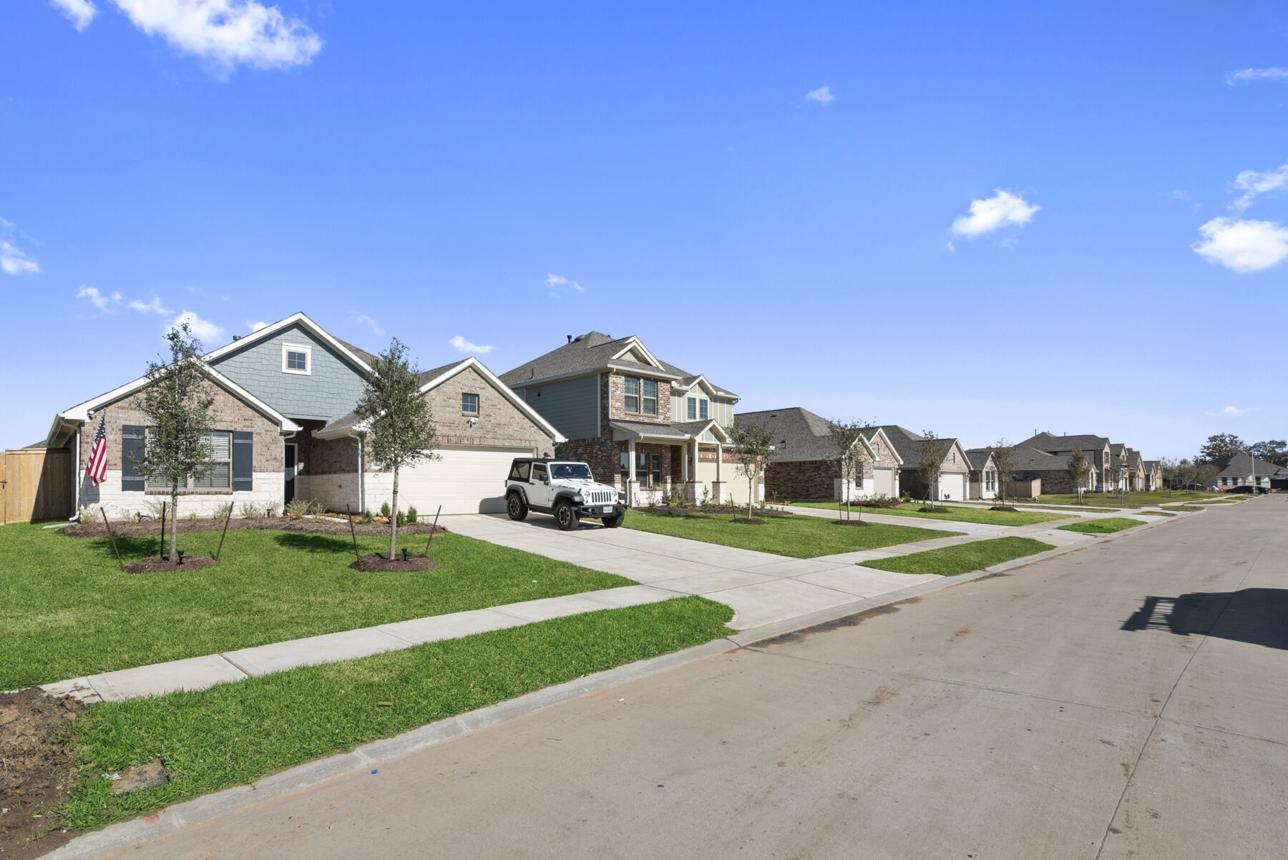
Your Street May Take Time to Feel Finished
This is something buyers rarely picture.
When you close, neighboring homes may still be under construction.
Trees may be small.
Landscaping may be young.
Some lots may be empty.
Fast-forward several years and the street may feel completely different.
If you like watching a community mature, that can be exciting.
If you want an established environment immediately, resale may deserve consideration.
New Landscaping and Mature Landscaping Feel Different
A newer Cypress home may offer:
Fresh landscaping.
New sidewalks.
Modern community design.
An established property may offer:
Larger trees.
More mature screening.
A settled streetscape.
Neither is automatically superior.
But don't expect new landscaping to look established immediately.
Time is part of the equation.
Compare New Construction With Resale Before Deciding
Even if you think you definitely want new, tour a few resales.
Why?
It gives you context.
Compare:
Lot size.
Trees.
Included upgrades.
Window treatments.
Pool.
Patio.
Landscaping.
Storage.
Price.
Taxes.
HOA.
Location.
New construction may still win.
But now you'll know why.
The Model Home Can Hide the Cost of “Finished”
Your new house may not initially include everything you're seeing in an established resale.
After closing, you may still want:
Window coverings.
Additional landscaping.
Patio improvements.
Pool.
Storage.
Lighting.
Furniture.
Fence modifications where allowed.
Add those costs to your comparison.
A resale may already include some of them.
Use the “Today vs. Five Years” Test
Stand at the lot.
Ask:
Today
Do we like this location as it exists now?
Then:
Five Years
Based on available information, how could the surroundings potentially evolve?
You need to be comfortable with today's reality and reasonably informed about tomorrow's possibilities.
Don't Buy Based Only on Future Appreciation
Growth can make buyers optimistic.
New roads.
New retail.
New schools.
New amenities.
More development.
But real estate markets are influenced by many factors, and future value isn't guaranteed.
Buy because the home and location fit your needs and financial situation today.
Potential future appreciation should not be the only reason the purchase works.
Ask One Question the Sales Center May Not Expect
Instead of:
“What's coming?”
Ask:
“What about the future development around this particular homesite should I understand before buying it?”
That's much more specific.
Now you're discussing your lot.
Your street.
Your surroundings.
That's what matters.
Final Thoughts
Buying new construction in Cypress can be exciting.
You may get:
A newer floor plan.
Current design.
Newer systems.
Customization opportunities.
Modern community amenities.
But the newness extends beyond the house.
You may also be buying into a neighborhood that is still becoming itself.
That means buyers need to evaluate more than:
Floor plan.
Countertops.
Elevation.
Cabinets.
Model-home furniture.
Look outside.
Study the lot.
Understand what is currently around it.
Ask what's planned.
Investigate roads.
Amenities.
Schools.
Construction.
Taxes.
And future development.
Most importantly, make sure the home works based on today's reality.
Because the model home shows you what your house could look like.
The more important question is:
“What could life around this house look like?”
When you understand both, you're no longer simply buying new construction.
You're buying into the growth with your eyes open.
Frequently Asked Questions
Should I use my own inspector when buying new construction in Cypress?
Many buyers choose independent inspections even with new construction. The appropriate stages depend on the property, construction progress, builder access, and your inspector's recommendations.
Can I rely on the builder's future community plans?
Use current plans as useful information, but understand that future development, amenities, roads, timelines, and other plans can change.
Why might the current tax record for a new home be misleading?
A tax record may reflect land or incomplete construction rather than the future assessment of the completed home. Buyers should obtain property-specific guidance when estimating future taxes.
Is buying early in a new Cypress section better?
Not automatically. Earlier buyers may have different lot or home choices but may experience more nearby construction. Later buyers may have more established surroundings. The better option depends on your priorities.
Should I choose the floor plan or lot first?
Both matter, but lot characteristics can be difficult or impossible to change later. Buyers should carefully evaluate orientation, surroundings, shape, easements, drainage, street position, and future development before choosing.
What's the biggest takeaway?
When buying new construction in Cypress, don't let the model home become the entire decision. Study the actual homesite, current surroundings, remaining construction, and what is known about future development before deciding whether the property truly fits you.