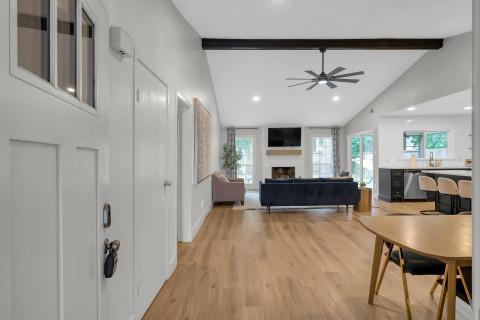
The Listing Says “Updated.” Your Next Question Should Be: “Updated How?”
You see the listing.
“Beautifully updated home in The Woodlands.”
Then the photos.
White kitchen.
New countertops.
Modern lighting.
Fresh flooring.
Beautiful bathroom.
Looks fantastic.
You schedule the showing.
And maybe it really is fantastic.
But there's one word buyers should never accept without asking another question:
Updated.
Because “updated” can describe everything from a weekend of painting and changing cabinet hardware to a major renovation involving plumbing, electrical systems, windows, HVAC, roofing, and structural changes.
Those are not remotely the same thing.
So when you find a beautifully renovated home in The Woodlands, enjoy the finishes.
Then look deeper.
Pretty Is Easy to Photograph
Real estate photography naturally focuses on what buyers can see.
Kitchen.
Bathroom.
Flooring.
Lighting.
Paint.
Backyard.
That's understandable.
Those are the things that make you stop scrolling.
But some of the most important components of a house aren't particularly photogenic.
HVAC equipment doesn't usually make the photo carousel.
Neither does:
Electrical work.
Plumbing.
Drainage.
Roofing.
Insulation.
Water heaters.
Structural components.
Those things may not make you fall in love with the house.
But they can matter considerably after closing.
Start With the Renovation Timeline
If a home has undergone significant improvements, try to understand when they occurred.
Was everything renovated recently?
Or did improvements happen gradually over ten years?
Neither is automatically better.
You simply want context.
A house described as “updated” may have:
A kitchen remodeled last year.
Bathrooms renovated eight years ago.
HVAC replaced at another time.
An older roof.
Newer flooring.
The word doesn't tell you any of that.
The details do.
Cosmetic Updates Are Still Real Updates
There's nothing wrong with cosmetic renovation.
Fresh paint can transform a house.
New flooring can make it feel completely different.
Lighting can modernize a space.
Hardware can refresh cabinetry.
But cosmetic improvements should be understood as cosmetic improvements.
A beautiful new kitchen faucet doesn't tell you anything about plumbing elsewhere in the home.
The Kitchen Deserves More Than a Compliment
Don't simply say:
“I love this kitchen.”
Look at how it was renovated.
Ask yourself:
Does the layout function well?
Are the cabinets properly installed?
How does the island affect movement?
Are there enough outlets?
How is the lighting?
What appliances are included?
Was plumbing relocated?
Were walls removed?
If significant changes occurred, additional documentation may be relevant.
Open-Concept Renovations Deserve Questions
Established homes are sometimes renovated by removing walls to create more open layouts.
That can produce fantastic spaces.
But buyers should understand what was changed.
If structural alterations were made, available permits, engineering information, contractor documentation, or other records may provide useful context depending on the project.
Your inspector and other appropriate professionals can also help identify areas that deserve further evaluation.
Don't assume:
“It looks good”
means:
“I know how it was done.”
Ask About Permits When Appropriate
Permit requirements vary depending on the work and applicable jurisdiction.
Not every cosmetic improvement requires a permit.
Some larger projects may.
If significant renovations were completed, ask what documentation is available and investigate requirements relevant to the specific property and work performed.
The goal isn't to become a building inspector.
It's to understand what you're buying.
Don't Assume Expensive Materials Mean Quality Work
A beautiful slab of stone can sit on poorly installed cabinetry.
Expensive tile can be installed incorrectly.
Luxury fixtures can be attached to questionable plumbing work.
Price and workmanship aren't the same thing.
Pay attention to:
Alignment.
Transitions.
Caulking.
Cabinet doors.
Flooring edges.
Tile installation.
Trim.
Paint details.
Small workmanship issues don't automatically indicate a major problem.
But they may tell you to look more carefully.
Open the Cabinets
Seriously.
A kitchen can look fantastic from six feet away.
Open drawers and cabinets where appropriate during the showing.
Do they operate smoothly?
Are shelves useful?
Does storage make sense?
What's underneath the sink?
Are there awkward gaps?
A renovation should work from twelve inches away—not only through a camera lens.
Look Down
Flooring can make an enormous visual impact.
But walk slowly.
Notice:
Transitions.
Uneven areas.
Gaps.
Changes between rooms.
Installation around doors.
Condition near exterior entrances.
If something feels unusual, make a note for appropriate further evaluation.
Don't diagnose it yourself.
Just don't ignore it because the flooring is fashionable.
Look Up Too
Ceilings can tell stories.
Notice:
Patches.
Staining.
Texture changes.
Cracks.
Recently painted isolated areas.
None automatically means something is wrong.
But if something catches your attention, ask questions and allow your inspector to evaluate it.
A buyer's job isn't to know the answer.
It's to notice when a question should be asked.
Bathrooms Can Hide Expensive Work Behind Beautiful Tile
A renovated shower looks fantastic.
But what you really want to know is whether the installation works properly.
Waterproofing.
Drainage.
Plumbing.
Ventilation.
Those aren't easily judged from listing photos.
Appropriate inspection and, when warranted, specialist evaluation can matter more than the brand of tile.
Ask What Happened Behind the Walls
This is one of the most useful renovation questions.
Was the project purely cosmetic?
Or were systems updated too?
Depending on the renovation, work may have involved:
Plumbing.
Electrical.
Insulation.
Structural changes.
HVAC modifications.
Ventilation.
Again, documentation can help provide context.
New Kitchen, Old HVAC
This combination isn't necessarily a problem.
It just needs to be understood.
Imagine two homes.
Home A
Spectacular kitchen.
Beautiful bathrooms.
Older major mechanical systems.
Home B
Less trendy interior.
Recent major system replacements.
Which is better?
There's no automatic answer.
But Home A may have the stronger Instagram photos while Home B may have received money in places you can't see.
That's why you need the complete picture.
Ask About the Roof
The roof doesn't care that the kitchen is beautiful.
If available, understand:
Approximate age.
Known work performed.
Documentation.
Condition information.
Your inspector can provide observations, and additional professional evaluation may be appropriate depending on findings.
A renovated interior doesn't reset the age of every component of the house.
Same With HVAC
An established home may have:
One system.
Multiple systems.
Components replaced at different times.
Ask what information is available.
Look at maintenance records when provided.
A newer thermostat mounted on the wall does not mean the HVAC equipment itself is new.
Windows Can Be a Significant Upgrade
Windows don't generate the same excitement as a waterfall countertop.
But replacing large numbers of windows can represent a meaningful property improvement.
If windows were replaced, ask:
When?
Which ones?
What documentation is available?
Don't assume all windows are the same age because several look newer.
Renovation Shouldn't Distract You From the Lot
This is particularly important in The Woodlands.
You're so impressed with the interior that you forget to evaluate:
Trees.
Drainage.
Privacy.
Lot orientation.
Backyard.
Surroundings.
Street.
The renovation may be new.
The lot is still the lot.
Walk outside.
Mature Trees Deserve Attention
Large trees can be part of what makes an established Woodlands property special.
They can contribute:
Shade.
Character.
Privacy.
A beautiful setting.
They also require appropriate care.
If a significant tree appears to concern you because of its condition or proximity to the home, a qualified tree professional may be able to provide additional evaluation.
Appreciate the canopy.
Don't ignore maintenance.
Don't Pay Twice for Renovations You Don't Like
Here's an interesting problem.
The seller renovated the kitchen.
It's new.
But you don't like it.
Now you may be paying a price that reflects recent improvements only to remove them later.
Be honest.
If you already know you'd replace:
Flooring.
Countertops.
Lighting.
Bathroom finishes.
Don't give those renovations the same value as a buyer who loves them exactly as they are.
“New” doesn't automatically mean valuable to you.
Trendy and Timeless Are Different
Renovations follow trends.
Colors.
Tile.
Lighting.
Cabinet styles.
Hardware.
Some age gracefully.
Others can become strongly associated with a particular period.
If you're paying a premium for a renovated home, ask:
“Will I still like this in five years?”
You can't predict design trends perfectly.
But you can determine whether you genuinely like the finishes or simply recognize that they're currently popular.
Beware the “Flip Effect”
Not every recently renovated home is a flip.
And not every flipped property is poorly renovated.
But if a property was purchased, extensively updated, and quickly returned to market, understand the work performed.
Ask:
What changed?
Who completed it?
What documentation is available?
Were significant systems addressed or primarily visible finishes?
The transaction history may provide useful context for questions.
It shouldn't be used to jump automatically to conclusions.
Inspection Matters Even More When Everything Looks Perfect
A highly polished home can create a strange psychological effect.
Buyers relax.
Everything looks new.
So they assume everything is fine.
Don't.
A home inspection and other appropriate due diligence remain important regardless of how beautiful the property appears.
New paint doesn't make a home self-inspecting.
Keep the Inspection Separate From the Décor
During the inspection process, try to mentally remove:
Furniture.
Artwork.
Rugs.
Staging.
Paint colors.
Decor.
Focus on the property.
Your beautiful sectional will look good in many houses.
You're buying the structure around it.
Ask for Improvement Information
Depending on the property and transaction, sellers may have:
Receipts.
Invoices.
Warranties.
Contractor information.
Permit records.
Product documentation.
Before-and-after information.
Not every seller will have every document.
But when records exist, they can help you understand the property's history.
Create a “Visible vs. Invisible” List
For serious contenders, make two columns.
Visible Improvements
Kitchen.
Bathrooms.
Flooring.
Paint.
Lighting.
Landscaping.
Less Visible Improvements
Roof.
HVAC.
Plumbing work.
Electrical work.
Windows.
Drainage.
Structural work.
Now ask:
Which side received most of the investment?
The answer can help you understand what “updated” really means.
Compare Renovated Homes Differently
Don't simply compare:
Home A kitchen vs. Home B kitchen.
Compare:
Condition.
Systems.
Lot.
Location.
Renovation quality.
Age of improvements.
Maintenance.
Floor plan.
Future projects.
Price.
That's a much more useful comparison.
Sometimes the Less Renovated Home Wins
Imagine:
Home A is completely renovated.
You love the finishes.
But the lot is less appealing to you.
Home B needs cosmetic updating.
But it has:
A floor plan you prefer.
A beautiful wooded lot.
Better privacy for your preferences.
Major systems that have been well maintained or recently addressed.
Which should you buy?
There isn't one correct answer.
But don't automatically choose Home A because it photographs better.
And Sometimes Paying for Finished Is Absolutely Worth It
Maybe you:
Work constantly.
Have no interest in renovation.
Don't want contractors in your home.
Don't enjoy design decisions.
Want to unpack and live.
Then a properly renovated home may be worth a premium to you.
Convenience has value.
Just make sure you're paying for quality and completeness, not simply appearance.
Final Thoughts
“Updated” is one of the easiest words to fall in love with when searching for a home in The Woodlands.
And there's nothing wrong with wanting something beautifully renovated.
But don't stop at the photographs.
Ask:
What was updated?
When?
Who did the work?
What documentation exists?
What happened behind the walls?
What major systems remain older?
What wasn't touched?
Because countertops are easy to see.
The quality of the entire property isn't.
The best renovated home isn't necessarily the one with the trendiest kitchen.
It's the one where the visible improvements make sense alongside the condition, systems, lot, location, and quality of the home underneath them.
So when the listing says:
“Completely updated.”
Don't simply admire it.
Ask:
“Tell me exactly what that means.”
That question can tell you much more about the house than the listing photos ever will.
Frequently Asked Questions
Does “updated” have a standard meaning in a real estate listing?
Not necessarily. The term can describe anything from relatively minor cosmetic improvements to extensive renovations. Buyers should investigate what specific work was completed.
Should I ask whether renovations were permitted?
For significant work, it can be appropriate to investigate available permits and documentation and understand applicable requirements for the specific property and project.
Do I still need an inspection if the home was recently renovated?
A recently renovated appearance doesn't replace appropriate inspections or other due diligence.
What renovation records should I ask about?
Depending on the property, useful records may include invoices, warranties, contractor information, permits, product documentation, and information about major systems or structural changes.
Is a recently renovated home always worth more than an unrenovated home?
Not automatically. Market value can depend on renovation quality, location, lot, condition, floor plan, market conditions, buyer preferences, and many other factors.
What's the biggest takeaway?
When buying a renovated Woodlands home, don't evaluate only what was made prettier. Find out what was actually improved, what remains original or older, and whether the quality of the work supports the premium you're being asked to pay.