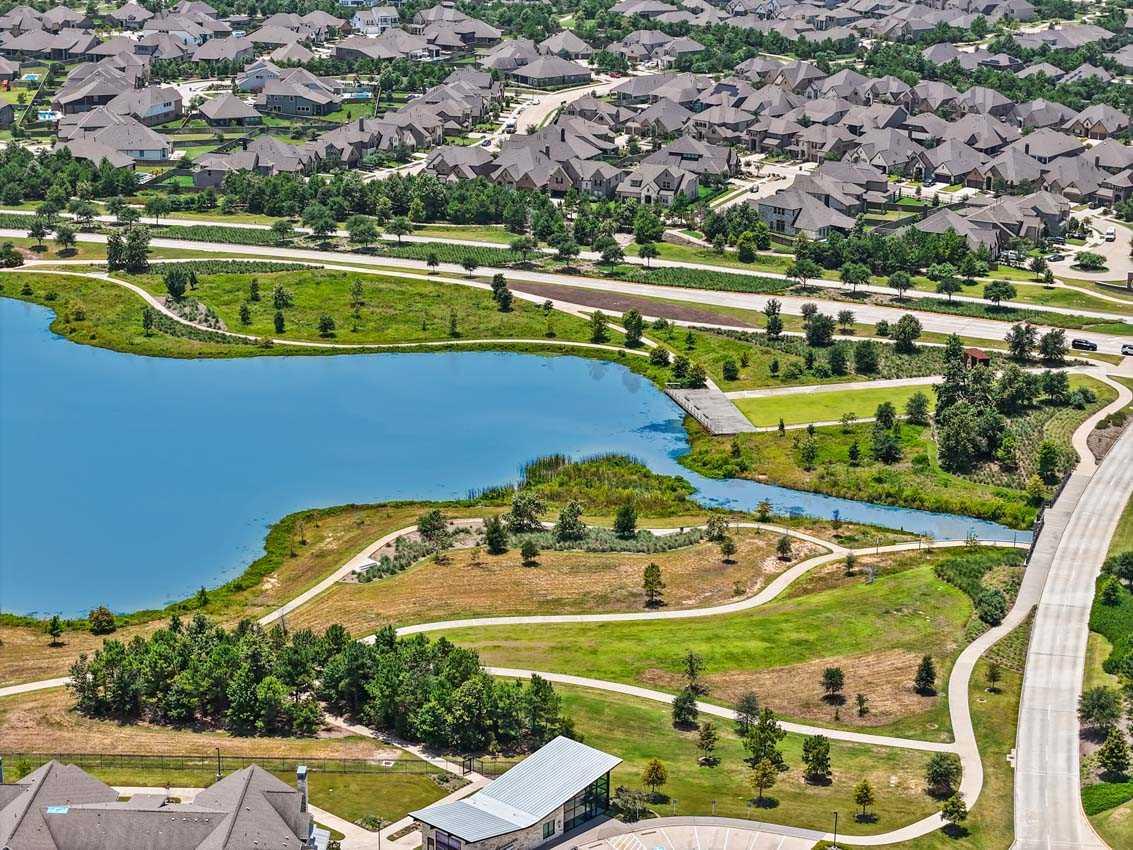
Two Cypress Communities Can Look Equally Impressive. Living in Them May Feel Completely Different.
How Do You Choose Between Cypress Communities That All Look Great Online?
You start researching Cypress.
And immediately run into a problem.
Almost every community looks incredible online.
Resort-style pool.
Trails.
Lakes.
Parks.
Beautiful landscaping.
Newer homes.
Community events.
Great-looking entrances.
You open one tab.
Then another.
Then six more.
And eventually you’re thinking:
“How are we supposed to tell which one is actually better for us?”
The answer is not by counting amenities.
Because two Cypress communities can have similar feature lists and still create completely different daily lives.
The better question is:
“Which community fits the way we actually want to live every week?”
Start With the Lifestyle You Already Have
Before comparing communities, describe your current routine.
Do you:
Walk every morning?
Run?
Bike?
Use pools?
Spend time at parks?
Eat out frequently?
Work from home?
Commute daily?
Have children in activities?
Golf?
Entertain?
The best community is the one that supports habits you actually have—or realistically want to build.
Don’t Let the Amenity List Choose for You
This is one of the easiest traps.
Community A has:
Two pools.
Community B has:
Three pools.
Community B wins?
Not necessarily.
If you use a pool twice a year, the difference may mean almost nothing.
But if your household swims constantly, the pool location, hours, design, and convenience may matter a lot.
Quantity is not the same as value.
Ask Which Three Amenities Matter Most
Force yourself to choose.
Maybe:
Trails.
Pool.
Parks.
Or:
Golf.
Dining.
Fitness.
Or:
Lakes.
Playgrounds.
Community events.
Once you identify your top three, comparing communities becomes much easier.
Proximity Matters More Than Presence
A trail can exist in the community and still feel inconvenient from the house you choose.
The same goes for:
Pool.
Park.
School.
Clubhouse.
Lake.
Retail.
Amenity value is partly about location.
Ask:
How far is the actual home from the feature we care about?
Test the Amenity From the Address
Don’t just look at the community map.
Leave from the house.
Walk or drive to the amenity.
How long does it take?
Does the route feel easy?
Would you realistically make that trip several times a week?
This turns the amenity from marketing into something practical.
Trails Can Be One of the Best Everyday Features
For the right buyer, trail access can change daily life.
Morning walk.
Run after work.
Bike ride.
Dog walk.
Weekend family time.
But not every home has equally convenient access.
Look at where pathways actually connect.
If walking matters, prioritize homes that make it easy.
Lakes Create More Than a Pretty View
Community lakes may contribute:
Walking routes.
Views.
Open space.
Recreation.
A more scenic environment.
But understand the specific lake.
Is it primarily decorative?
Recreational?
Used for trails?
Maintained by the community?
Different water features can serve different purposes.
Parks Matter More When They’re Easy to Reach
A beautiful park twenty minutes away inside the broader area may have less value than a smaller park you can walk to.
For families, dog owners, or buyers who spend time outdoors, nearby parks can become part of the weekly routine.
Again, practical access matters more than the brochure photo.
Community Pools Can Shape Summer
Some buyers will use them constantly.
Others want a private pool.
If you already know you want a pool at home, community pool access may matter less.
If you prefer not to maintain one, a strong community pool can become much more valuable.
Know which lifestyle fits you.
Private Pool vs. Community Pool Changes the Home Search
If community amenities are strong enough for you, maybe you don’t need:
Private pool.
Huge backyard.
Outdoor kitchen.
Now you may be able to prioritize:
Better location.
Newer home.
Lower maintenance.
Different lot.
That can change your search entirely.
Golf Communities Need a Separate Decision
If golf is important, don’t stop at:
“There’s a course nearby.”
Ask:
How often will we play?
How convenient is access?
Do we care about golf-course views?
Is membership separate?
What fees apply?
Are there club requirements or options?
The golf lifestyle can be central for one buyer and almost irrelevant for another.
Golf-Course Homes Are Not Automatically Better
A golf-course lot may offer:
Open views.
Green space.
Distinctive setting.
But it may also offer:
Different privacy.
Activity.
Potential stray-ball concerns.
Course maintenance nearby.
Again, lot experience matters more than the label.
Community Events Can Be More Important Than You Think
Some buyers want a social environment.
Neighborhood events.
Seasonal activities.
Clubs.
Gatherings.
For them, community programming can create real value.
Other buyers prefer privacy and rarely attend anything.
Neither is wrong.
But social expectations should match the community culture you want.
Don’t Buy Social Energy You Don’t Want
If your ideal weekend is:
Quiet backyard.
Coffee.
No schedule.
You may not care how many events the community hosts.
That’s fine.
Focus more on:
Lot.
Privacy.
Home.
Commute.
Outdoor space.
The best community is not necessarily the busiest one.
Master-Planned Does Not Mean Identical
Two Cypress communities can differ in:
Home age.
Builder mix.
Architecture.
Lot sizes.
Street design.
Tree maturity.
Amenity placement.
Commercial development.
Traffic.
Taxes.
HOA structure.
School assignments.
Overall atmosphere.
That is why broad labels are not enough.
Home Age Can Change the Feel of the Community
A newer section may offer:
Recent construction.
Current floor plans.
Young landscaping.
Ongoing development.
An established section may offer:
Mature trees.
Finished streetscapes.
Older homes with varying levels of renovation.
More certainty about surroundings.
Both can be appealing.
But they feel different.
Future Construction Can Matter
If you’re buying in a growing section, investigate what is currently known about:
Future homes.
Roads.
Retail.
Schools.
Amenities.
Open space.
Nearby construction.
Plans can change.
But understanding the current direction of development can help you avoid surprises.
Don’t Pay for a Future Amenity Like It Already Exists
A rendering looks amazing.
Large pool.
Clubhouse.
Park.
Commercial center.
Great.
But if it hasn’t been built, treat it differently from an amenity you can use today.
Future projects can be delayed or modified.
Buy a community you can enjoy based on current reality.
Taxes Can Change the Comparison
Two homes with similar prices can produce different property-tax obligations.
This may depend on:
Taxing jurisdictions.
Assessments.
Special districts.
Exemptions.
Other property-specific factors.
Always compare the actual address.
Don’t assume every Cypress community has the same tax structure.
HOA Costs Need Context
A higher HOA fee may support:
More amenities.
More landscaping.
Gated access.
Common-area maintenance.
Community programming.
A lower fee may come with fewer shared features.
The question isn’t:
“Which fee is lower?”
It’s:
“What are we paying for, and do we value it?”
Special Districts Deserve Address-Specific Research
Depending on the property, buyers may encounter MUD or other special-district taxes.
Instead of asking:
“Does this community have high taxes?”
ask:
“What taxing entities and rates apply to this property?”
The exact address is what matters.
School Assignment Can Vary
If public-school assignment is important, verify current information for the property through official district resources.
Do not assume:
Same community = same school.
Boundaries can be specific and may change over time.
School Traffic Matters Even If You Don’t Have Children
A home near a school or common school route may experience different traffic patterns.
Visit at realistic times if this affects your decision.
The school doesn’t have to serve your household for its location to affect your commute.
Commute Can Make or Break the Community Choice
A community can be beautiful.
But if getting out of it every morning takes longer than expected, the lifestyle may feel different.
Test:
Work route.
Return trip.
Neighborhood exit.
Major-road access.
Toll-road dependence.
Don’t evaluate commute from the community name.
Evaluate it from the actual house.
Internal Driving Matters Too
Large communities can have meaningful distances between:
Home.
Entrance.
Amenities.
Shopping.
Schools.
Recreation.
A home located deeper inside may feel more private.
Another near an entrance may be easier for commuting.
Neither is automatically better.
Retail and Dining Can Be Surprisingly Important
Some buyers want nearby:
Coffee.
Restaurants.
Grocery stores.
Services.
Others don’t mind driving.
If local convenience matters, experience it.
Leave the house and run a normal errand.
That tells you more than a map pin.
The “8 P.M. Milk” Test
Imagine it’s 8 p.m.
You need milk.
Or medicine.
Or pet food.
Where do you go?
How long does it take?
Everyday convenience is built from small moments like this.
Newer Community Doesn’t Always Mean Better Convenience
Sometimes newer areas have beautiful homes and amenities but are still waiting for surrounding retail and infrastructure to mature.
An established community may offer more completed nearby services.
Or the opposite may be true.
Verify what exists today.
Lot Types Can Differ More Than Buyers Expect
Within Cypress, you may compare:
Standard lots.
Oversized lots.
Cul-de-sac lots.
Water-view lots.
Greenbelt lots.
Golf-course lots.
Corner lots.
Each creates a different ownership experience.
If the lot matters, compare it separately from the house.
Privacy Can Vary Within the Same Community
One house may back to another home.
Another may back to:
Green space.
Water.
Golf course.
Open land.
Different street.
Same neighborhood.
Very different backyard.
This is why buyers should not overgeneralize entire communities.
Trees Change the Feel
Newer sections may have younger landscaping.
Established areas may offer more mature trees.
If shade and established character matter to you, that difference may be important.
If you care more about newer construction, it may matter less.
Don't Forget the Home Itself
A community can be so appealing that buyers compromise too much on the house.
Wrong layout.
Too little storage.
Lot they dislike.
Garage too small.
Price too high.
Don’t buy the community and tolerate the home.
The home still has to work.
The Opposite Happens Too
You find the perfect house.
But you don't really like:
The commute.
Amenities.
HOA structure.
Location.
Community feel.
Again, complete package.
The house and community should support each other.
Don't Assume More Amenities Automatically Mean Better Resale
Future buyers may value community amenities.
But resale also depends on:
House condition.
Price.
Lot.
Location.
Market conditions.
Inventory.
Schools.
Taxes.
Buyer preferences.
No amenity list guarantees a particular resale result.
Buy for Daily Use First
If the community improves your life every week, that's real value.
Walking.
Swimming.
Golf.
Parks.
Dining.
Shorter errands.
That matters.
Don't buy only because you think future buyers will like the brochure.
Visit on a Weekday
The community may feel quiet.
Construction may be active.
Traffic may be different.
Remote workers may notice different sounds.
This gives you one version of life there.
Then Visit on Saturday
Now watch:
Pools.
Parks.
Trails.
Community areas.
Roads.
Shopping.
How much activity is there?
Do you like the energy?
This helps you understand the weekend personality.
Visit After Dark
When practical, drive through at night.
Notice:
Lighting.
Traffic.
How easy turns are.
How the streets feel.
How comfortable you are navigating.
Daytime and nighttime experiences can differ.
Use the “Two-Hour Test”
Before buying, spend two hours acting as if you already live there.
Run errands.
Walk a trail.
Visit the park.
Get coffee.
Drive toward work.
Use the roads.
Then return to the house.
Now ask:
“Would we enjoy doing ordinary life here?”
This can be more useful than touring another five listings.
Use the “Weekly Use” Test
Take each amenity.
Ask:
Would we use this weekly?
If yes, give it more weight.
If once a month:
Less.
If once a year:
Treat it mostly as a bonus.
This keeps amenity excitement in perspective.
Use the “Would We Pay Separately?” Test
Imagine the amenity disappeared.
Would you pay separately for an equivalent?
Trails?
Gym?
Pool?
Golf?
Clubhouse?
If yes, that amenity probably has meaningful personal value.
Use the “Tuesday vs. Saturday” Test
Tuesday
Commute.
Work.
Groceries.
School traffic.
Errands.
Does the community work?
Saturday
Pool.
Trails.
Parks.
Dining.
Recreation.
Does it still work?
The strongest fit handles both.
Create a Cypress Community Scorecard
For your final contenders, rate:
Home
Does the actual property fit your needs?
Lot
Do you like the privacy, size, and setting?
Commute
How easy are your real routes?
Amenities
Which will you actually use?
Proximity
How easy is it to reach those amenities?
Taxes
What applies to the specific property?
HOA
Do the costs and rules make sense for you?
Schools
If relevant, have you verified the current assignment?
Development
Are you comfortable with the current and planned surroundings?
Everyday Convenience
How easy are groceries, dining, healthcare, and errands?
Lifestyle
Can you picture an ordinary week here?
Now compare.
The community with the biggest entrance monument may not win.
Final Thoughts
Cypress gives buyers a lot of options.
That is one of its strengths.
But it can also make the search confusing because many communities look impressive at first glance.
Pools.
Lakes.
Trails.
Parks.
Clubhouses.
New homes.
Beautiful landscaping.
The difference often appears only when you stop looking at the amenity list and start living the routine.
How long is the commute?
Which amenities are actually close?
What taxes apply?
What does the HOA provide?
What type of home can you buy?
How does Saturday feel?
How does Tuesday feel?
That’s how you find the community that fits.
So don’t ask only:
“Which Cypress community has the best amenities?”
Ask:
“Which one makes the life we actually want easiest to live?”
That question usually leads to a much better home search.
Frequently Asked Questions
Is there one best master-planned community in Cypress?
No. The best fit depends on your home preferences, budget, commute, amenities, schools where relevant, taxes, HOA structure, lot preferences, and lifestyle.
Should I choose the community with the most amenities?
Not automatically. Focus on the amenities your household will actually use and how convenient they are from the specific home.
Can taxes differ between Cypress communities?
Yes. Property-specific tax obligations may vary based on taxing jurisdictions, assessments, special districts, exemptions, and other factors.
Do HOA fees vary in Cypress?
Yes. HOA costs, rules, amenities, and maintenance responsibilities can vary by community and sometimes by section.
Should I consider future development?
Yes, especially in growing areas. Investigate available information about future roads, homes, retail, schools, and amenities, but remember plans can change.
Do all homes in the same Cypress community attend the same schools?
Not necessarily. Buyers should verify current school assignments for the specific address through official district resources when school assignment matters.
Is a newer Cypress community always better than an established one?
No. Newer communities may offer more recent construction, while established areas may offer mature landscaping, completed surroundings, and different conveniences. Compare the complete lifestyle.
What’s the biggest takeaway?
Don’t choose a Cypress community because it looks best in the brochure. Choose the one where the home, lot, commute, costs, amenities, and everyday routine all work together.