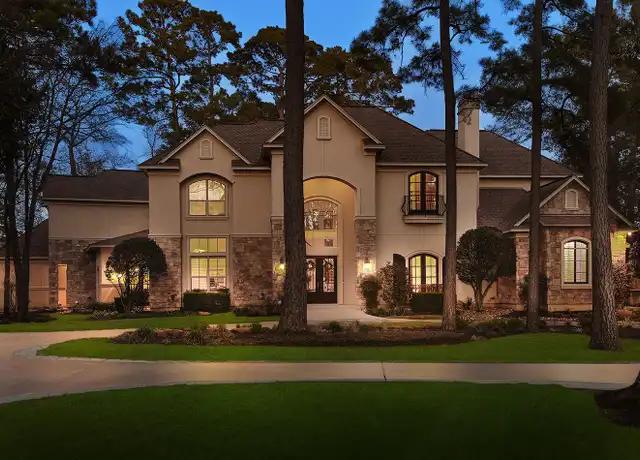
“They Could Build This for Less.” Could They Really?
It sounds logical.
A buyer walks through an established luxury home in The Woodlands and says:
“For this price, couldn't we just build something new?”
Maybe.
But that's not actually the complete question.
The better question is:
“Could we recreate everything we're standing in right now for less?”
Not just the house.
The lot.
The trees.
The landscaping.
The pool.
The outdoor living.
The improvements.
The location.
The time.
Suddenly, the comparison becomes more complicated.
Buyers Naturally Compare Price Per Square Foot
It's easy.
One home is 5,000 square feet.
Another is 5,200.
One costs more.
So buyers ask:
“Why?”
Price per square foot can provide one point of reference.
But luxury homes aren't manufactured products.
Two properties with similar square footage can offer very different things.
That's why sellers need to understand what exists beyond the number.
Start With the Lot
A house can be rebuilt.
A lot can't simply be moved.
Ask:
What surrounds the property?
How private does it feel?
What does the backyard face?
How established is the street?
How does the home sit among the trees?
Those characteristics may be difficult—or impossible—to recreate elsewhere.
Then Look Up
One of the defining visual characteristics of many established parts of The Woodlands is something nobody can install before closing.
Mature trees.
A builder can plant trees.
Time creates canopy.
Shade.
Scale.
Character.
Privacy.
That's why buyers comparing established properties with newer options should evaluate more than the house itself.
Landscaping Has a Timeline Too
Beautiful landscaping doesn't happen the day plants go into the ground.
It develops.
Trees mature.
Shrubs fill in.
Privacy improves.
Gardens become established.
If your property has benefited from years of thoughtful landscaping, show it.
Don't let buyers see it simply as:
“Plants.”
It's part of the finished environment they're purchasing.
The Pool Is Already Done
Imagine the buyer chooses another property and decides to add a pool later.
Now they may need to consider:
Design.
Contractors.
Approvals.
Construction.
Landscaping disruption.
Timing.
Cost.
And whether the lot accommodates what they envision.
Your existing pool isn't simply a line item.
For the right buyer, it's the ability to enjoy the backyard immediately.
The Outdoor Kitchen Matters for the Same Reason
The same principle applies to:
Covered patios.
Outdoor kitchens.
Fireplaces.
Landscape lighting.
Hardscaping.
Outdoor seating areas.
These improvements took time and planning.
A buyer may technically be able to reproduce them elsewhere.
But “possible to recreate” and “already complete” aren't the same thing.
Custom Details Can Be Easy to Miss
Some of the most expensive improvements in a luxury home don't scream for attention.
Custom cabinetry.
Built-ins.
Millwork.
Closet systems.
Whole-home technology.
Specialty lighting.
Storage improvements.
Buyers may simply assume:
“That's nice.”
They may have no idea how much planning went into creating it.
This doesn't mean sellers should hand buyers a stack of invoices and expect reimbursement.
It means meaningful improvements should be clearly documented and communicated.
Don't Sell the Cost
This distinction is important.
Saying:
“We spent $300,000 upgrading this home.”
doesn't automatically create $300,000 in market value.
Buyers don't reimburse sellers.
Instead, explain what those improvements provide.
Not:
“$80,000 outdoor renovation.”
But:
“A completed outdoor living environment that's ready to enjoy.”
Benefit beats receipt.
Location Is Part of Replacement Cost Too
Suppose buyers decide they can create a similar home elsewhere.
Can they create it in the same location?
That's a different question.
Real estate value is tied to place.
Access.
Surroundings.
Neighborhood character.
Lot position.
The relationship to the broader community.
You can't separate the structure from where it sits.
Time Has Value
This part is often overlooked.
Imagine two choices.
Option A
Purchase an established home where the landscaping, pool, window treatments, storage, outdoor living, and other improvements are already complete.
Option B
Purchase another property and spend the next two years gradually creating those things.
Some buyers will happily choose Option B.
Others will gladly pay for Option A.
Because they aren't only buying improvements.
They're buying back their time.
Construction Fatigue Is Real
Some buyers love projects.
They enjoy:
Selecting finishes.
Meeting contractors.
Designing spaces.
Watching everything come together.
Others have absolutely no interest.
They've already renovated homes.
They've already built.
They've already spent weekends making decisions about tile.
Those buyers may see a beautifully finished established home and think:
“We don't have to do anything.”
That's powerful.
But Condition Still Matters
An established home can't rely on history alone.
Mature landscaping doesn't excuse deferred maintenance.
Custom architecture doesn't excuse worn finishes.
A beautiful lot doesn't excuse obvious repairs.
If you're positioning the property as a premium established home, its condition should support that story.
Make an Improvement Timeline Before Listing
This can be incredibly useful.
Sit down and list significant improvements by approximate year.
For example:
Pool renovation.
Roof replacement.
HVAC systems.
Kitchen remodel.
Primary bathroom.
Outdoor living.
Windows.
Landscaping.
Flooring.
Major technology.
Not every improvement belongs in public marketing.
But having the information organized helps your REALTOR® understand the property and answer buyer questions accurately.
Before-and-After Photos Can Tell a Story
If you've completed significant renovations and have appropriate photos you own and can use, they may help document the scope of work.
A buyer seeing the finished kitchen may appreciate it.
Seeing that walls were moved, cabinetry was redesigned, lighting was changed, and the entire space was transformed provides additional context.
Again, this doesn't establish market value.
It helps buyers understand what has already been done.
“New” and “Better” Aren't Synonyms
New construction offers genuine advantages.
So do established properties.
Neither category automatically wins.
A buyer may prefer:
New systems.
Contemporary design.
Customization.
Another may prioritize:
Mature trees.
Established surroundings.
Finished outdoor living.
A particular lot.
Architectural character.
Move-in readiness.
That's why sellers shouldn't become defensive when buyers mention new construction.
Make the comparison complete.
Ask the Replacement Question
Before listing, walk around your property and ask:
“What would be hardest for a buyer to recreate somewhere else?”
Not the refrigerator.
Not the paint.
Not the chandelier.
Look deeper.
Maybe it's:
The wooded lot.
The privacy.
The pool placement.
The outdoor environment.
The architecture.
The location.
The relationship between all of those things.
That's where your strongest value story may be hiding.
Final Thoughts
When buyers say:
“We could build this.”
They may be right.
Almost any individual feature can be recreated somewhere.
But that's not the same as recreating the entire property.
The house.
On this lot.
Under these trees.
With this landscaping.
This pool.
These improvements.
In this particular part of The Woodlands.
Ready today.
That's a different calculation.
So when preparing an established luxury home for market, don't try to prove that every dollar you've spent should come back to you.
Instead, help buyers understand something much more meaningful:
What would it actually take—in money, time, location, and patience—to create another property that feels like this one?
Sometimes the answer is exactly why an established home deserves a second look.
Frequently Asked Questions
Is an established luxury home more valuable than new construction?
Not automatically. Value depends on the specific property, location, condition, market, improvements, lot, and buyer demand. Established and new homes offer different advantages.
Do mature trees affect buyer appeal?
They can. Mature trees may contribute shade, privacy, character, and an established setting that can take many years to develop.
Will buyers pay me back for all my renovations?
Not necessarily. Improvement cost and market value are different. Renovations may improve appeal, functionality, and marketability without returning their full original cost.
Should I provide buyers with improvement records?
Keeping accurate records of significant improvements can help answer questions about the property's history and condition.
Is price per square foot useful for luxury homes?
It can provide context, but it shouldn't be viewed in isolation. Lot characteristics, location, architecture, condition, improvements, outdoor living, and other property-specific factors can create meaningful differences.
What's the biggest takeaway?
Don't ask whether someone could build another house with similar square footage. Ask whether they could easily recreate the complete property—including its location, lot, trees, improvements, outdoor environment, and years of established character.