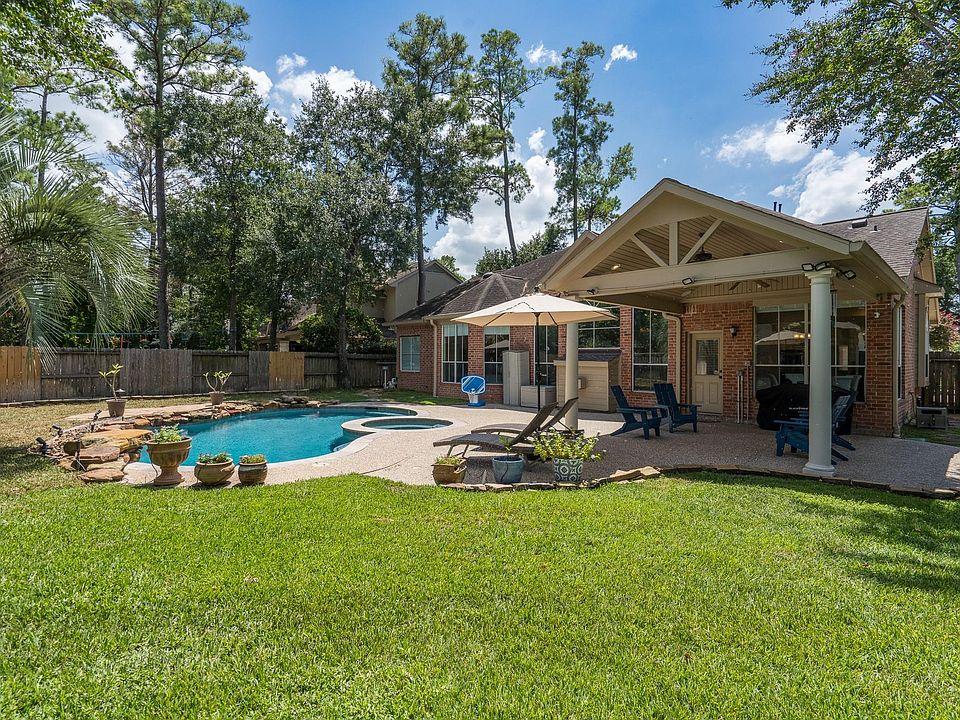
That Backyard Looks Amazing. But Will You Actually Use It in August?
Will You Actually Use That Cypress Backyard as Much as You Think?
You walk through the back door.
And immediately think:
“This is it.”
Covered patio.
Pool.
Outdoor kitchen.
Beautiful landscaping.
Plenty of seating.
The whole backyard feels like a resort.
You can already picture:
Saturday cookouts.
Summer evenings.
Friends around the pool.
Morning coffee outside.
Then August arrives.
It’s hot.
The afternoon sun hits the patio directly.
There isn’t as much shade as you expected.
The outdoor kitchen gets used less often than you imagined.
And half the beautiful backyard becomes something you mostly look at through the window.
That doesn’t mean the property was a bad choice.
It means buyers should evaluate outdoor living based on how the space actually functions, not just how good it looks during a showing.
Start With the Hours You’ll Actually Be Outside
This is the first question.
When would you realistically use the backyard?
Morning?
Late afternoon?
Dinner time?
Weekends?
If you usually get home around 5:30 p.m., evaluate the outdoor space around that time when practical.
A patio that feels wonderful at 10 a.m. may feel completely different later.
Shade Can Be More Valuable Than Another 200 Square Feet of Patio
A huge uncovered patio looks impressive.
But if the sun is intense during the hours you’d use it, the space may be less practical.
A smaller covered patio can sometimes provide more usable outdoor living.
Look at:
Depth of cover.
Orientation.
Roofline.
Trees.
Fans.
Pergolas or shade structures where applicable.
Where the sun actually lands.
Usability beats raw square footage.
Covered Patio Does Not Always Mean Well-Shaded Patio
This catches buyers off guard.
A patio can technically be covered while late-day sun still reaches much of the seating area.
Stand underneath it.
Look toward the sun.
Imagine where furniture would sit.
Would the shade actually protect the space during your preferred hours?
That matters more than whether the listing says covered patio.
Orientation Changes the Experience
The direction the backyard faces can influence:
Morning light.
Afternoon heat.
Pool sunlight.
Patio shade.
Interior light.
Outdoor comfort.
There is no universally best orientation.
The right one depends on what you want.
If you love sunny pools, one orientation may appeal.
If you prioritize shaded evening dinners, another may work better.
Run the 5 P.M. Test
This is one of the easiest ways to evaluate a Cypress backyard.
Visit around late afternoon if possible.
Stand:
On the patio.
At the pool.
In the yard.
How does it feel?
Where is the shade?
Where does the sun hit?
Would you happily sit outside?
This can tell you more than a perfect listing photo.
Morning Buyers Should Test Morning Light Too
Maybe your outdoor dream is:
Coffee outside before work.
Then morning sun may actually be a positive.
Look at whether the patio feels:
Bright.
Comfortable.
Too exposed.
Too dark.
Again, personal preference determines value.
Pools Need Their Own Sun Analysis
Some buyers want lots of sun on the pool.
Others prefer shade nearby.
Ask:
How much sun does the water receive?
Where will people sit?
Is there shaded seating?
Does the pool deck get extremely hot?
How do you expect to use the space?
The pool and patio should work together.
The Pool Should Fit the Household, Not Just the Lot
A large pool can look amazing.
But think about your actual use.
Swimming?
Entertaining?
Exercise?
Children?
Relaxing?
A smaller pool with better deck space may fit some households better than a larger pool that consumes nearly the entire backyard.
Look at What Remains After the Pool
This is important.
After accounting for:
Pool.
Decking.
Patio.
Equipment.
Landscaping.
How much usable yard is left?
Do you still have room for:
Dogs?
Children?
Garden?
Open lawn?
Outdoor games?
Extra seating?
The pool shouldn't automatically become the only usable feature.
Pool Equipment Placement Matters
Look at where the equipment is located.
Can you see it from the patio?
Hear it?
Is there room for service access?
Is it screened?
Equipment placement can affect how polished and peaceful the backyard feels.
Ask About Pool Equipment Age
A beautiful pool can have older:
Pump.
Filter.
Heater.
Automation.
Lighting.
Surface.
Evaluate the pool as a system.
Not just as blue water.
If the pool is a major reason you're paying more for the house, understand what you're buying.
Outdoor Kitchens Can Be Valuable—or Decorative
Ask yourself:
How often do we cook outside now?
If the answer is:
Every weekend,
great.
If the answer is:
Almost never,
don't automatically assume you'll suddenly become an outdoor chef.
You may.
But don't pay heavily for a feature based on aspirational behavior alone.
Look at the Outdoor Kitchen Setup
Does it actually work?
Consider:
Grill location.
Counter space.
Sink if present.
Refrigeration if present.
Storage.
Ventilation.
Shade.
Distance from indoor kitchen.
Seating.
An outdoor kitchen can look expensive and still be awkward to use.
The Indoor Kitchen Should Connect Easily
Imagine carrying:
Food.
Drinks.
Plates.
Ice.
Utensils.
Back and forth all evening.
How easy is the route?
The best outdoor spaces usually connect naturally to the indoor kitchen and main living areas.
Doors Affect Indoor-Outdoor Flow
Look at the connection.
Single door?
French doors?
Large sliders?
Multiple access points?
Does the transition feel natural?
A beautiful backyard may get used less if getting outside feels inconvenient.
Covered Outdoor Living Can Function Like Another Room
A well-designed patio may become:
Dining room.
Living room.
Entertaining space.
Morning coffee area.
But only if it is:
Comfortable.
Shaded.
Well connected.
Large enough.
Protected enough.
That kind of outdoor space can sometimes provide more lifestyle value than another formal interior room.
Fans Matter More Than They Look
Outdoor ceiling fans aren't glamorous.
But they can make covered spaces noticeably more comfortable.
Look at:
How many.
Placement.
Condition.
Electrical setup.
Again, boring features often matter once you actually live there.
Screened Outdoor Space May Appeal to Some Buyers
Depending on the property and community rules, screened areas may reduce:
Insects.
Debris.
Some weather exposure.
But they also change:
Views.
Airflow.
Appearance.
If you're considering adding screening later, investigate HOA and construction requirements first.
Mosquitoes Are Part of the Reality Check
Outdoor living in the Houston area may involve insects.
Think about:
Mosquito control.
Drainage.
Standing water.
Landscaping.
Screens.
Fans.
You don't need to fear the backyard.
Just recognize that maintaining a comfortable outdoor environment may take some effort.
Landscaping Can Make or Break Outdoor Comfort
Landscaping can provide:
Shade.
Privacy.
Visual appeal.
Wind buffering.
A finished feeling.
But it can also require:
Water.
Trimming.
Seasonal maintenance.
Replacement.
Know whether you want:
Low-maintenance landscape.
Or:
Lush, heavily planted outdoor environment.
Mature Trees Can Be an Asset
Trees can provide:
Shade.
Character.
Privacy.
A cooler-feeling yard.
But evaluate:
Condition.
Placement.
Roots.
Branches.
Distance from pool.
Distance from roof.
Maintenance needs.
Trees improve a lot of outdoor spaces—but they are also living structures that require care.
Pool Plus Mature Trees Is a Trade-Off
The shade can be wonderful.
The debris can be less wonderful.
Leaves.
Seeds.
Branches.
Pollen.
If a heavily wooded pool property appeals to you, understand that the setting may require more cleaning and maintenance.
That doesn't make it a bad choice.
It makes it a specific choice.
Privacy Can Matter More Outdoors Than Indoors
You may not mind seeing neighbors from inside.
Then you sit by the pool and realize:
Upstairs windows overlook the entire yard.
If outdoor privacy matters, look at:
Rear windows.
Side windows.
Second-story views.
Fence height.
Landscaping.
Lot spacing.
You cannot fully judge privacy from listing photos.
Sit Down Instead of Standing
This is surprisingly important.
Views change from chair height.
Sit where the patio furniture would go.
What do you see?
Fence?
Trees?
Neighbor windows?
Pool?
Water?
Green space?
Your everyday view happens while sitting, not standing in the middle of the yard during a showing.
Noise Can Change the Outdoor Experience
A backyard can look peaceful and sound busy.
Listen for:
Roads.
Schools.
Community pools.
Sports fields.
Construction.
Mechanical equipment.
Nearby commercial activity.
Aircraft.
Some sounds won't bother you.
Others may.
Listen before deciding.
Visit at the Time You'll Entertain
If your ideal backyard use is:
Saturday afternoon,
see the property around that time.
Activity may differ.
Neighbors may be outside.
Community facilities may be busier.
Traffic may sound different.
This gives you a more realistic picture.
Outdoor Lighting Matters After Sunset
A daytime showing tells you very little about nighttime use.
Look at:
Patio lighting.
Landscape lighting.
Pool lighting.
Walkway lighting.
Exterior fixtures.
If you plan to entertain after dark, lighting quality can meaningfully affect how usable the space feels.
Too Much Lighting Can Be a Problem Too
Some buyers want dramatic outdoor lighting.
Others prefer a more subtle atmosphere.
Also notice lighting from neighboring properties or nearby facilities.
Nighttime privacy and ambiance can differ from daytime.
Fire Features Need Practical Evaluation
Fire pits and fireplaces look amazing in photos.
But ask:
Will we use it?
Is it placed comfortably?
What fuel does it use?
Are there maintenance considerations?
Does the seating layout work?
Again, buy for use.
Drainage Is Part of Outdoor Living
A beautiful yard is much less enjoyable if heavy rain leaves large areas unusable.
Observe:
Slope.
Drainage paths.
Drains.
Downspouts.
Low areas.
Neighboring elevation.
If concerns exist, seek appropriate professional evaluation.
Outdoor Hardscape Can Affect Drainage
Patios.
Pool decking.
Walkways.
Outdoor kitchens.
Additional concrete.
These change how water moves.
More hard surface is not automatically bad.
But drainage should be considered when large portions of the lot are covered.
Yard Drainage Can Change After Pool Installation
If you're buying a home where a pool was added after construction, consider whether the remaining lot appears to drain appropriately.
An inspection or specialist evaluation may be useful if you have concerns.
Flood Risk Is a Separate Question
Good backyard drainage does not answer every flood-related question.
Likewise, a property outside a particular mapped area should not be assumed to have zero risk.
Use property-specific information, current maps, disclosures, insurance guidance, and appropriate professional resources.
Outdoor Furniture Needs a Storage Plan
Where will cushions go?
Umbrellas?
Pool toys?
Serving items?
Decorations?
Storm prep may require moving or securing outdoor belongings.
Look at:
Garage.
Storage room.
Shed where permitted.
Closets.
A beautiful outdoor setup needs somewhere to put everything when it's not being used.
Pool Toys Multiply Quickly
Floats.
Towels.
Basketball hoop.
Cleaning equipment.
Children's toys.
Life jackets.
If you dislike clutter, ask where everything will go.
The garage often becomes the answer—until the cars no longer fit.
The Outdoor Shower Question
Some homes may have an outdoor shower.
Very nice.
Would you use it?
Maybe after the pool.
Maybe for pets.
Maybe never.
Again, specialized features have specialized value.
Outdoor Bathrooms Can Be Extremely Convenient
A pool-access bathroom can reduce:
Wet floors.
Traffic through the house.
Guest disruption.
For frequent entertainers, that may be far more valuable than a decorative backyard feature.
Think About Entertaining Flow
Imagine twelve guests.
Where do people:
Sit?
Eat?
Enter the house?
Use the bathroom?
Get drinks?
Put bags?
Move between inside and outside?
A visually impressive backyard may still have awkward flow.
Parking Can Be Part of Outdoor Entertaining
If you host frequently, where do guests park?
Driveway?
Street?
Are there restrictions?
Does the street feel crowded during gatherings?
The backyard can hold twenty people while the property struggles to accommodate ten vehicles.
Shade Structures Can Potentially Be Added Later—but Verify
You may think:
“We'll add a pergola.”
Maybe.
But future improvements can depend on:
HOA approval.
Setbacks.
Permitting.
Utilities.
Lot configuration.
Existing structures.
Always investigate feasibility before buying based on an improvement plan.
The Same Goes for Patio Extensions
The yard may look like it has plenty of room.
But check:
Easements.
Drainage.
Setbacks.
Pool equipment.
Utilities.
Tree placement.
A future project should be verified, not assumed.
Don’t Pay a Huge Premium for Outdoor Space You Won’t Use
This is the financial part.
A home with:
Pool.
Outdoor kitchen.
Large covered patio.
Fireplace.
Premium landscaping.
may cost considerably more.
If you love and use those features, that may be worth it.
But if you spend most of your free time indoors, the premium may not improve your life nearly as much as another feature would.
The Opposite Is True Too
If outdoor living is central to your lifestyle, don't underestimate the value of having it already completed.
Building:
Pool.
Patio.
Outdoor kitchen.
Landscaping.
Lighting.
can involve significant:
Money.
Time.
Planning.
Construction.
If you'd definitely create those features anyway, a finished backyard may deserve more weight.
Compare Existing Outdoor Living With Creating It Later
For two serious contenders, list:
Already Present
Pool.
Patio.
Kitchen.
Shade.
Landscaping.
Lighting.
Missing
What would you genuinely add?
Then get realistic information on major project costs where those plans affect your decision.
The cheaper house may not remain cheaper once the backyard is finished.
Outdoor Living Has Operating Costs Too
Don't stop at construction cost.
Depending on the property, ongoing expenses may include:
Pool service.
Utilities.
Water.
Landscaping.
Irrigation.
Repairs.
Pest control.
Outdoor kitchen maintenance.
Tree care.
The lifestyle has an ownership budget.
Bigger Backyards Aren’t Automatically Better
A large yard may mean:
More lawn.
More irrigation.
More landscaping.
More maintenance.
If you prefer low maintenance, a smaller but better-designed outdoor area may be a stronger fit.
Low Maintenance Is Its Own Luxury
For some buyers, the ideal backyard is:
Compact.
Covered.
Beautifully landscaped.
Easy to maintain.
No pool.
Enough room to sit outside.
That can be more luxurious to them than a huge property requiring constant attention.
Use the “August Test”
Imagine:
August.
5 p.m.
It’s hot.
Would you still use the patio?
What makes the answer yes?
Shade?
Fans?
Pool?
Deep cover?
This may be the most important outdoor-living test in Cypress.
Use the “Rainy Saturday” Test
Friends are coming over.
It starts raining.
Can the covered space still function?
Is furniture protected?
Can people move between inside and outside comfortably?
A well-designed outdoor area can still be useful even when the weather is imperfect.
Use the “No Pool Party” Test
Nobody is visiting.
It's just you.
Would you use this space?
Coffee?
Reading?
Dinner outside?
If the backyard only makes sense when twenty people are there, ask how often that will happen.
Use the “Five Years Later” Test
The newness is gone.
What do you still appreciate?
Shade?
Privacy?
Good flow?
Covered seating?
Functional pool?
Mature landscaping?
Those characteristics are more likely to keep delivering value.
Create an Outdoor-Living Scorecard
For serious Cypress contenders, rate:
Shade
Can you comfortably use the patio during your preferred hours?
Orientation
Does the sun exposure fit your lifestyle?
Covered Space
Is it deep and functional enough?
Pool
Does the size and layout fit how you intend to use it?
Remaining Yard
Is there enough open space after the pool and patio?
Privacy
How exposed do you feel?
Indoor-Outdoor Flow
How easily do the kitchen and living spaces connect outside?
Outdoor Kitchen
Will you actually use it?
Landscaping
Does the maintenance level fit your preferences?
Drainage
Does the property appear to manage water appropriately, subject to professional evaluation?
Storage
Where will outdoor equipment and furniture go?
Ownership Cost
Can you comfortably maintain the entire setup?
Now compare.
A simpler backyard may actually score higher.
Final Thoughts
Outdoor living can be one of the best parts of owning a home in Cypress.
Pool.
Patio.
Grill.
Shade.
Landscaping.
Space to entertain.
But the best backyard isn't necessarily the one with the longest upgrade list.
It's the one you actually use.
That means buyers should look beyond:
Pretty pool.
Large patio.
Outdoor kitchen.
Perfect listing photos.
And ask:
When will we sit here?
Where is the shade?
How private does it feel?
How much maintenance does it require?
How does it handle rain?
Where will everything be stored?
What does this space cost to own?
Because a backyard should not simply make you say:
“Wow.”
during the showing.
It should make you say:
“Let’s go outside.”
after you've lived there for three years.
That is the outdoor-living premium worth paying for.
Frequently Asked Questions
Is a covered patio important when buying in Cypress?
It can be very valuable for buyers who plan to use outdoor space regularly. Evaluate the depth, orientation, actual shade, and connection to the home rather than relying only on the word “covered.”
Does backyard orientation really matter?
Yes. Orientation can affect morning and afternoon sun, patio comfort, pool exposure, natural light, and how outdoor areas feel at different times of day.
Should I buy a home with a pool or add one later?
That depends on whether you genuinely want a pool, the existing pool's condition and design, the property's lot, and the feasibility and cost of adding one elsewhere.
Is an outdoor kitchen worth paying more for?
Only if it fits your lifestyle. Buyers who cook and entertain outside frequently may value it much more than buyers who rarely use outdoor cooking spaces.
Should I visit a home at different times to evaluate the backyard?
If outdoor living is a major purchase factor, seeing the property during the hours you'd realistically use it can help you understand sun, shade, noise, and activity.
How should I evaluate drainage?
Observe grading, downspouts, drains, low areas, and surrounding elevations, and seek appropriate inspection or professional evaluation if concerns arise.
Are large backyards more expensive to maintain?
They can be, depending on lawn area, landscaping, irrigation, trees, pool, and other outdoor features. Maintenance preferences should be part of the buying decision.
What's the biggest takeaway?
Don't pay more for a Cypress backyard because it looks impressive. Pay more when the shade, layout, pool, privacy, flow, and maintenance level make it a space you will realistically use and enjoy throughout the year.