The House Looks Affordable. The Next Five Years Might Tell a Different Story.
You find two Spring homes.
Both are around the same price.
Similar square footage.
Similar number of bedrooms.
Both are in locations you'd consider.
Home A
Beautiful kitchen.
Fresh flooring.
Updated bathrooms.
Trendy lighting.
You immediately love it.
Home B
The kitchen is fine.
Not exciting.
Bathrooms are a little dated.
But then you learn:
The roof is newer.
HVAC equipment has been replaced more recently.
Water heaters are newer.
Windows have been improved.
Drainage work has been completed.
Now which house is the better buy?
The answer isn't obvious anymore.
Because buyers naturally focus on the cost of buying a home.
Experienced homeowners also think about the cost of owning it.
Your Mortgage Isn't Your Only Housing Expense
When buyers calculate affordability, they often focus on:
Purchase price.
Down payment.
Interest rate.
Taxes.
Insurance.
HOA fees where applicable.
Those absolutely matter.
But after closing comes another category:
The house itself.
Things wear out.
Things need servicing.
Things break.
Things eventually need replacement.
The question isn't whether you'll spend money maintaining a home.
You will.
The question is:
What might this particular house ask from you during the first few years?
Start With the Expensive, Boring Stuff
Here's an easy test.
During your next showing, notice what your eyes naturally go toward.
Probably:
Kitchen.
Flooring.
Bathroom.
Backyard.
Primary bedroom.
Now intentionally look at:
Roof.
HVAC.
Water heaters.
Windows.
Exterior condition.
Drainage.
Electrical components.
Plumbing-related information.
Pool equipment if applicable.
These things aren't exciting.
They're also not cheap to ignore.
Ask the Five-Year Question
Don't only ask:
“Can we afford this house?”
Ask:
“What could this house reasonably need over our first five years of ownership?”
You can't predict everything.
But you can investigate.
That's different from guessing.
The Roof Deserves More Attention Than the Countertops
This is where buyer psychology gets interesting.
A gorgeous countertop can influence which house you choose.
The roof?
You barely look at it.
Yet one is primarily aesthetic.
The other protects the entire structure.
When evaluating a serious contender, try to understand available information about:
Age.
Condition.
Repairs.
Replacement history.
Documentation.
Your inspection can provide additional observations, and further evaluation may be appropriate depending on findings.
“It Doesn't Leak” Isn't the Same as “It's New”
A roof doesn't need to be brand new for you to buy the house.
That's not the point.
You simply want context.
There's a big difference between:
“The roof is older, we've accounted for that, and we're comfortable.”
and:
“Wait—the roof is how old?”
after you've already emotionally committed to the property.
HVAC Is Another Big One
Texas buyers know air conditioning isn't exactly an optional luxury.
During a beautiful springtime showing, the house may feel perfect.
But your future July self cares very much about the HVAC system.
Ask what information is available about:
Age.
Maintenance.
Repairs.
Replacement.
Number of systems.
Different components may have different ages.
A shiny thermostat tells you almost nothing about the equipment behind it.
Multiple HVAC Systems Mean Multiple Systems to Understand
Larger homes may have more than one HVAC system.
That's useful for comfort and zoning.
It also means buyers should understand each system separately.
One may be newer.
Another older.
Don't hear:
“The AC was replaced.”
and automatically assume that means every component serving the house is the same age.
Ask.
Water Heaters Are Easy to Forget
Nobody falls in love with a house because of the water heater.
You may not even see it during the showing.
Still, ask about it.
Age.
Type.
Number of units where applicable.
Condition.
Maintenance.
A buyer's five-year ownership plan should include the unglamorous equipment too.
Windows Can Change the Comparison
A house full of windows is beautiful.
Replacing large numbers of windows can also be a significant project.
If windows have been updated, ask:
Which ones?
When?
Is documentation available?
Don't assume every window is original.
And don't assume every window was replaced because several look newer.
Drainage Can Matter More Than Landscaping
The backyard is beautiful.
Fresh mulch.
Flowers.
Green grass.
Great.
Now look at where water goes.
After heavy rain, how does drainage function around the property?
Are there drainage improvements?
Visible low areas?
Gutters?
Downspouts?
Other systems?
If you have concerns, appropriate inspection and professional evaluation can help.
A beautiful yard and effective drainage are not the same thing.
Visit After Rain When Possible
This can be incredibly informative.
If you're seriously considering a property and timing allows, seeing the lot after significant rainfall may reveal things a sunny showing can't.
Where does water collect?
How does the yard drain?
What does the street look like?
Don't diagnose problems yourself.
Just observe.
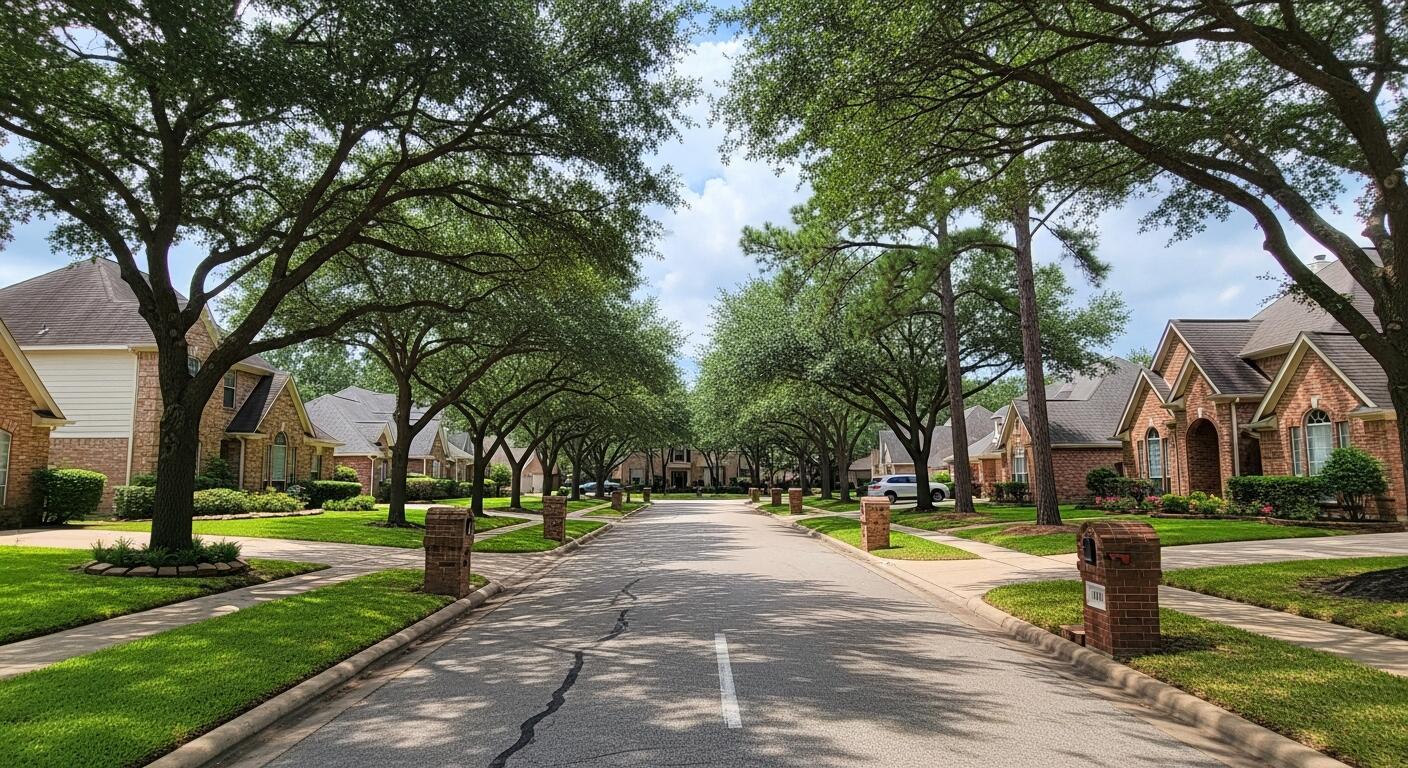
Mature Trees Are Beautiful—and They Need Care
Established Spring neighborhoods can offer something buyers love:
Large trees.
Shade.
Character.
Privacy.
But mature trees are living parts of the property.
They may require:
Trimming.
Monitoring.
Storm cleanup.
Professional care.
If a large tree's condition or proximity to the home concerns you, consider appropriate professional evaluation.
Don't avoid mature trees.
Just include them in your ownership thinking.
Pools Have Their Own Budget
You see the pool.
Your brain immediately goes:
Summer!
Fair.
Now look at:
Surface condition.
Equipment.
Pumps.
Filters.
Heater if present.
Decking.
Plumbing.
Maintenance history where available.
A pool can be a fantastic lifestyle feature.
It's also another system attached to the property.
Ask How Old the Pool Equipment Is
The pool itself may have been built years ago.
Equipment may have been replaced at different times.
Don't treat “pool age” as one number.
Understand what you can about the individual components.
The same logic applies throughout the house.
Fresh Paint Can Make an Older Home Feel New
This is exactly why cosmetic renovation is so powerful.
New paint.
Flooring.
Fixtures.
Hardware.
Suddenly, the property feels twenty years younger.
But the house didn't actually become twenty years younger.
The underlying systems still have their own timelines.
Enjoy the improvements.
Just don't let them reset the home's age in your mind.
Look at the Electrical System
You don't need to become an electrician during a showing.
Please don't.
But the inspection process should include appropriate attention to the home's electrical components.
If concerns arise, qualified professional evaluation may be recommended.
The important thing is recognizing that beautiful lighting fixtures don't tell you everything about the electrical system.
Plumbing Is Similar
New faucets photograph beautifully.
But buyers should distinguish fixtures from the broader plumbing system.
Depending on the home's age and circumstances, you may want to understand available information about:
Supply lines.
Drainage.
Previous repairs.
Water heaters.
Fixtures.
Sewer or other property-specific considerations.
Again, rely on qualified professionals rather than assumptions.
The Foundation Question Makes Buyers Nervous
Texas buyers often hear the word “foundation” and immediately panic.
Don't.
Homes should be evaluated based on actual information.
If your inspector observes something that warrants further evaluation, an appropriate professional can provide more specific guidance.
Don't diagnose from:
A crack you saw online.
A door that sticks.
A friend's opinion.
Get facts.
Deferred Maintenance Is Where Costs Can Stack Up
One older component isn't necessarily a problem.
But imagine:
Older roof.
Older HVAC.
Older water heaters.
Exterior needs work.
Pool equipment aging.
Trees need professional attention.
None may be an emergency individually.
Together?
You may be looking at a very different first few years of ownership.
This is why the whole-house picture matters.
Build a Five-Year House List
For serious contenders, create four categories.
Recently Addressed
Major items that appear to have been replaced, repaired, or improved relatively recently based on available information.
Mid-Life
Items that aren't new but aren't currently expected to need immediate attention based on the information you have.
Watch
Components you want to monitor or obtain additional information about.
Possible Near-Term Expense
Items that inspection findings or professional advice suggest may require attention sooner.
This isn't a prediction.
It's planning.
Don't Assign Replacement Dates Yourself
This is important.
A component's age doesn't automatically tell you exactly when it will fail.
Equipment can perform differently depending on:
Quality.
Installation.
Maintenance.
Usage.
Weather.
Environment.
Other factors.
Use age as context—not a countdown clock.
Your Inspector Is Part of the Team
A home inspection can help identify observations about the condition of many property components.
Depending on findings, you may need additional specialists.
Potential examples include:
HVAC professional.
Electrician.
Plumber.
Roofer.
Structural professional.
Pool specialist.
Tree professional.
Other qualified experts.
Not every house needs every specialist.
Let the property's actual condition guide the process.
The Cheapest House Can Become the Expensive House
Imagine:
Home A — $425,000
Beautiful interior.
Several major systems are older.
Home B — $440,000
Less exciting cosmetically.
Several significant systems have been addressed more recently.
Which is cheaper?
At closing?
Home A.
Over five years?
You don't know yet.
That's exactly why the comparison deserves more investigation.
And the More Expensive House Can Still Be the Wrong Choice
Don't overcorrect.
A newer roof and HVAC don't automatically make Home B worth $15,000 more.
You still need to evaluate:
Location.
Lot.
Layout.
Condition.
Market value.
Your budget.
Your preferences.
The point is to understand what you're comparing—not automatically choose whichever home has newer equipment.
Cosmetic Work Is Usually Easier to Understand
You dislike the paint?
You can estimate painting.
Don't like the light fixtures?
Straightforward.
Want different flooring?
You can investigate pricing.
Those projects may be inconvenient or expensive, but buyers generally understand them.
Major systems can feel more intimidating because they aren't the fun projects you planned.
Sometimes the “Dated” House Is Worth Another Look
This is where buyers can find themselves surprised.
You walk into an older Spring home.
Brown cabinets.
Traditional tile.
Light fixtures you'd replace immediately.
Your first reaction:
“Too much work.”
But then you learn the property has received meaningful improvements to major components.
Now ask:
Is this actually too much work?
Or is it mostly work you can see?
That's an important distinction.
Don't Spend Your Entire Improvement Budget Before Inspection
You've already decided:
$10,000 for flooring.
$8,000 for paint.
Furniture.
New appliances.
Then the inspection identifies something you weren't expecting.
This is why maintaining financial flexibility matters.
Your first year of ownership may have different priorities than your Pinterest board.
Keep Reserves After Closing
This isn't as exciting as talking about the dream kitchen.
But it's important.
Buying a home without leaving room for maintenance and unexpected expenses can make normal homeownership problems much more stressful.
Talk with appropriate financial professionals about a purchase budget that leaves room for life after closing.
Your home should not require every dollar you have.
Home Warranties Don't Replace Due Diligence
Depending on the transaction, a home warranty may be available or purchased.
Understand:
Coverage.
Exclusions.
Limits.
Service requirements.
Don't treat a warranty as a reason to ignore the current condition of major systems.
Insurance, warranties, maintenance, and inspections all serve different purposes.
Ask Sellers for Information, Not Guarantees
Available seller disclosures, receipts, invoices, warranties, permits, maintenance information, and other records may help you understand the property.
But remember:
Past performance isn't a guarantee that nothing will break after closing.
You're gathering information to make a better decision.
Not trying to eliminate every future repair.
That's impossible.
The Goal Isn't to Find a House That Needs Nothing
That house doesn't exist.
Even new homes require maintenance.
The goal is to understand what you're buying well enough that future expenses are less surprising.
That's a much more realistic standard.
Use the “What Would Scare Me in Year One?” Test
Look at your inspection information and property records.
What potential expense would be difficult for you to absorb shortly after closing?
Roof?
HVAC?
Pool?
Something else?
If a major expense would put you in a difficult financial position, that deserves serious consideration before purchase.
Your comfort level matters.
Then Use the “Would I Rather Renovate?” Test
Suppose you have $30,000 available after closing.
Would you rather spend it on:
A kitchen you chose?
Or replacing aging systems?
There isn't a financially universal answer.
But emotionally, most buyers know which one they'd prefer.
That preference can help you compare homes.
Don't Forget the Exterior
Walk all the way around the house where accessible and appropriate.
Notice:
Siding or brick condition.
Trim.
Paint.
Gutters.
Windows.
Doors.
Fencing.
Driveway.
Patio.
Drainage.
Exterior maintenance can quietly become a significant portion of the ownership budget.
The House Should Compete on More Than Looks
When comparing Spring homes, give each one several scores:
Lifestyle: Does the house fit how we live?
Location: Does the address work?
Condition: What do we know about the property today?
Future Projects: What do we want to change?
Potential Ownership Costs: What major components deserve planning or further investigation?
Now you're comparing homes.
Not photographs.
Final Thoughts
The purchase price gets your attention.
The monthly payment determines whether the home fits the budget.
But the next five years can determine how comfortable that purchase actually feels.
That's why Spring buyers should look beyond:
Countertops.
Paint.
Flooring.
Fixtures.
Staging.
And start asking about the parts of the house nobody posts on Instagram.
Roof.
HVAC.
Water heaters.
Windows.
Drainage.
Pool equipment.
Exterior condition.
Trees.
Maintenance history.
Not because every older component is a problem.
It isn't.
And not because you can predict exactly what will break.
You can't.
The goal is simply to understand the home well enough to make an informed decision.
So when two Spring homes appear to cost about the same, don't ask only:
“Which one do we like better?”
Ask:
“What might each one ask us to spend after closing?”
Sometimes the prettier house still wins.
Sometimes the slightly dated house suddenly makes much more sense.
And sometimes that one question completely changes which home feels affordable.
Frequently Asked Questions
What major home components should Spring buyers investigate?
Depending on the property, buyers may want information about the roof, HVAC, water heaters, windows, plumbing, electrical components, drainage, foundation, exterior condition, pool equipment, trees, and other significant systems.
Does an older HVAC system mean I shouldn't buy the house?
No. Age is only one factor. Condition, maintenance, installation, performance, inspection findings, and professional evaluation where appropriate can provide additional context.
Should I avoid homes with older roofs?
Not automatically. Understand the roof's condition and available history, obtain appropriate inspection information, and consider how it fits your budget and overall purchase decision.
Is a cosmetically dated home sometimes a better buy?
Potentially. A dated appearance doesn't necessarily mean the property's major systems are in poor condition. Likewise, a recently renovated appearance doesn't guarantee that major components are newer.
Can a home inspection predict future repair costs?
An inspection provides information about observable conditions at the time of inspection. It cannot guarantee future performance or predict exactly when every component will require repair or replacement.
What's the biggest takeaway?
Don't compare Spring homes based only on purchase price and appearance. Compare the condition of the entire property and think about what each home may realistically require from you after closing. The best value may be the house that leaves you financially comfortable enough to enjoy owning it.