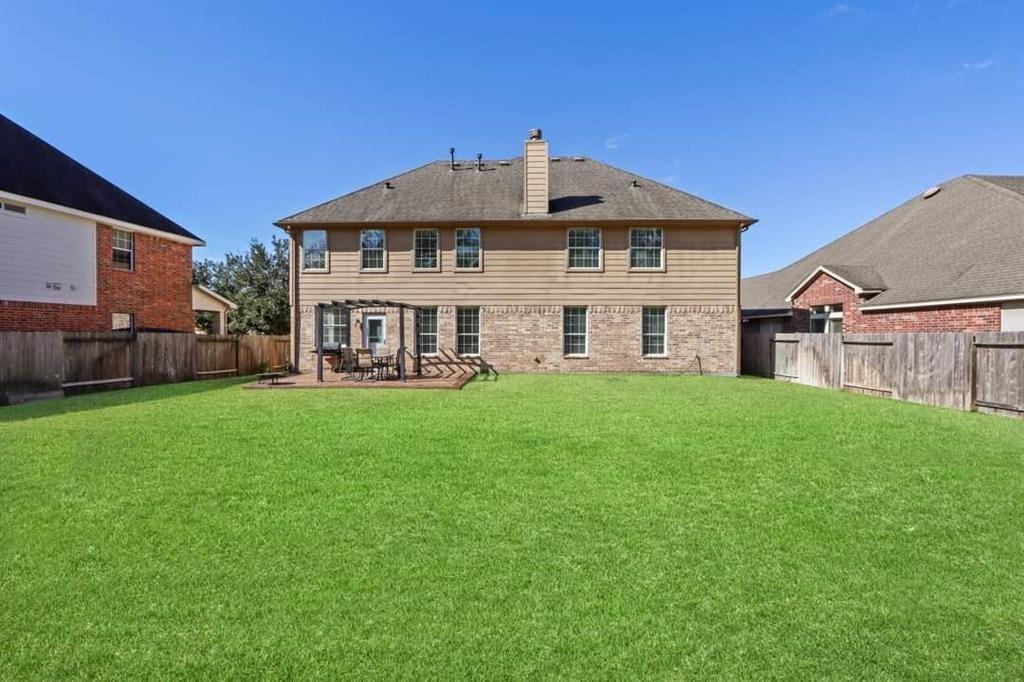
You Can Remodel the House. You Can’t Remodel the Lot.
What Should You Look for in a Lot Before Buying a Home in Cypress?
You walk through the front door.
Perfect.
The kitchen has the island.
The primary suite is beautiful.
There’s an office.
Game room.
Three-car garage.
The finishes are exactly what you wanted.
You’re already mentally arranging furniture.
Then you step outside.
And realize:
The backyard is smaller than you expected.
The house behind you feels close.
There’s very little privacy.
The afternoon sun hits the entire patio.
Or maybe the yard has plenty of square footage—but very little of it is actually usable.
This is where buyers learn an important lesson:
You can change almost everything about a house.
But you cannot pick up the lot and replace it.
The Lot Deserves Its Own Showing
Most buyers spend thirty minutes inside a house.
Then five minutes outside.
Reverse that occasionally.
Walk the entire property when access allows.
Stand in different parts of the yard.
Look toward neighboring homes.
Look behind the fence.
Notice the sun.
Listen.
Look at the slope.
Ask yourself:
“If the house disappeared, would I still like this piece of property?”
That question can be surprisingly revealing.
Lot Size Is Only the Beginning
The listing says:
10,500-square-foot lot.
Sounds great.
But what does that actually give you?
A large front yard?
Deep backyard?
Wide side yards?
Irregular shape?
Large easement?
The total number doesn't tell you how usable the property is.
Usable Space Matters More Than Total Space
Imagine two Cypress homes.
Home A
12,000-square-foot lot.
But much of the space sits in:
Front yard.
Narrow side areas.
Irregular corners.
Home B
9,500-square-foot lot.
But the backyard is:
Wide.
Rectangular.
Private.
Easy to use.
Which lot is better?
Depends on what you want.
But bigger doesn't automatically mean more useful.
Start With What You Want to Do Outside
Before comparing yards, decide what you want the yard to accomplish.
Pool?
Play area?
Dogs?
Garden?
Outdoor kitchen?
Covered patio?
Sports?
Entertaining?
Privacy?
Minimal maintenance?
Once you know the purpose, lot evaluation becomes much easier.
Pool Buyers Need to Think Ahead
You see a large backyard.
You think:
“Plenty of room for a pool.”
Maybe.
But don't assume.
Potential pool feasibility may be affected by:
Easements.
Setbacks.
Utilities.
Drainage.
Existing structures.
HOA requirements.
Lot configuration.
Permitting.
Access for construction.
If adding a pool is essential, investigate before purchasing.
“Pool-Sized Yard” Is Not a Guarantee
Marketing language may describe a backyard as:
Pool-sized.
That is not the same as confirming a particular pool can be built there.
Your preferred design may require:
Specific dimensions.
Decking.
Equipment placement.
Access.
Setbacks.
Professional evaluation.
Treat the phrase as an invitation to investigate—not a guarantee.
Existing Pools Need Lot Evaluation Too
A home already has the pool.
Great.
Now ask:
What's left?
Is there still:
Grass?
Dog space?
Play area?
Outdoor dining?
Privacy?
Room to move?
Some buyers want the pool to dominate the backyard.
Others don't.
Neither is wrong.
A Beautiful Pool Can Consume the Entire Yard
The photos look incredible.
Blue water.
Chairs.
Landscaping.
Then you visit and realize there's almost no usable lawn.
If you have:
Children.
Dogs.
Outdoor hobbies.
Plans for gardening.
that may matter.
Evaluate the complete yard after mentally removing the staging.
Backyard Width Can Be More Important Than Depth
A deep, narrow yard may offer substantial square footage but limit certain designs.
A wider yard may create better possibilities for:
Pool placement.
Outdoor living.
Views.
Play areas.
Furniture.
Again, shape matters.
Cul-de-Sac Lots Need Individual Evaluation
Buyers often say:
“We want a cul-de-sac.”
Why?
Maybe for:
Less through traffic.
Different street feel.
Potential lot configuration.
But cul-de-sac lots can vary dramatically.
Some are wide.
Some narrow toward the front.
Some are pie-shaped.
Some have unusual backyard geometry.
Buy the actual lot—not the label.
Corner Lots Come With Trade-Offs
A corner lot may provide:
More visual openness.
Different driveway configuration.
Potentially more side exposure.
But it may also mean:
More sidewalk.
More visible yard.
Different fencing.
More street frontage.
Different maintenance considerations.
Some buyers love them.
Others prefer interior lots.
Greenbelt Lots Can Create Valuable Separation
A home backing to green space may provide:
No immediate rear neighbor.
More visual depth.
Natural surroundings.
Potential privacy.
That can be very attractive.
But investigate what the land actually is.
Don't assume:
Green today = permanently protected green space.
Understand What Is Behind the Fence
This is critical.
Look at maps and available property information.
Ask questions.
What is behind the home?
HOA property?
Drainage area?
Utility easement?
Public land?
Future development?
Another subdivision?
Commercial property?
Vacant land?
A beautiful view deserves context.
Vacant Land Is Not Automatically Permanent Open Space
You stand in the backyard.
Nothing behind you.
Perfect.
But if the land isn't protected from development, the view could potentially change.
If that open setting is a major reason you're buying, investigate ownership and available land-use information.
Water-View Lots Need More Than a Sunset Test
A Cypress home overlooking water can be beautiful.
But evaluate:
What type of water feature is it?
Who maintains it?
How close is the home?
What does the view look like from inside?
How much privacy remains?
Are there trails or common areas nearby?
Does activity occur behind the home?
The word waterfront or water view does not describe the entire experience.
Stand at Eye Level Inside the House
This is an excellent test.
Look at the view from:
Kitchen sink.
Family room sofa location.
Primary bedroom.
Patio.
You may discover that the premium view is fantastic from the upstairs game room but barely visible from where you actually spend time.
Value the view you will use.
Water Can Improve Privacy—or Reduce It
You may have no rear neighbor directly behind you.
Great.
But if a trail circles the lake, people may regularly pass behind the home.
Would that bother you?
Maybe not.
Some buyers love seeing community activity.
Others want maximum privacy.
Again, specific lot experience matters.
Trail-Adjacent Homes Have Similar Trade-Offs
Being near a trail can be fantastic.
Especially if you walk or bike regularly.
But a home directly adjacent to one may experience:
Pedestrian activity.
Cyclists.
Dogs.
Different privacy.
If trail access matters, decide whether you want to be:
On it.
Near it.
Or a short walk away.
Those are different lifestyles.
Rear Neighbors Aren't Automatically a Problem
Many suburban homes have rear neighbors.
The important question is how the relationship feels.
Look at:
Distance between homes.
Fence height.
Window placement.
Elevation.
Trees.
Landscaping.
Patio placement.
You may have excellent privacy even with another house behind you.
Look Up
This is where buyers sometimes notice something important.
A neighboring two-story home may have windows looking directly into:
Backyard.
Pool.
Patio.
Primary bedroom.
If privacy matters, stand in the yard and look at surrounding second-story windows.
Landscaping Can Create Privacy
A less-private lot may have opportunities for:
Trees.
Shrubs.
Screens.
Outdoor structures where permitted.
But landscaping takes:
Money.
Space.
Time.
Maintenance.
If immediate privacy matters, existing conditions may deserve more weight.
Mature Trees Can Be a Premium Feature
In some Cypress neighborhoods, mature trees may create:
Shade.
Privacy.
Character.
A more established feel.
You cannot instantly reproduce mature landscaping.
But large trees should also be evaluated for:
Health.
Placement.
Maintenance.
Relationship to structures.
Young Trees Are Not Necessarily a Negative
A newer neighborhood may have smaller trees today.
But buyers may prefer:
Newer homes.
Newer infrastructure.
More contemporary community design.
Landscaping evolves.
Decide whether mature surroundings are a priority or simply a nice bonus.
Orientation Can Change How the Backyard Feels
The direction a home faces can affect how sunlight reaches:
Backyard.
Patio.
Pool.
Interior rooms.
Outdoor living spaces.
There is no universally perfect orientation.
The right one depends on how you use the home.
Visit in the Late Afternoon
This is particularly useful if outdoor living matters.
A patio that feels comfortable at 10 a.m. may feel completely different at 5 p.m.
Stand outside.
Where is the sun?
Is the covered patio deep enough?
Where would you sit?
Where would the pool be?
Real conditions beat assumptions.
Shade Can Be More Valuable Than Buyers Expect
A beautiful patio isn't very useful if you never want to sit there.
Look at:
Roof coverage.
Trees.
Orientation.
Fans.
Outdoor layout.
The goal isn't merely having outdoor space.
It's having outdoor space you will use.
Drainage Deserves Serious Attention
Cypress buyers should evaluate property-specific drainage and flood-related information carefully rather than making assumptions about an entire neighborhood.
Look at:
Grading.
Drainage paths.
Swales.
Drains.
Downspouts.
Neighboring elevation.
Street drainage.
If concerns arise, seek appropriate professional information.
Don't Diagnose Flood Risk From Appearance
A home can sit on a beautiful lot and still require careful flood-risk research.
Likewise, don't assume a property has a problem because of the broader area's reputation.
Evaluate the specific address using current authoritative information, disclosures, insurance considerations, and appropriate professional guidance.
Flood Zone Is Not the Only Question
Buyers sometimes ask only:
“Is it in a flood zone?”
Flood risk can be more nuanced.
Consider available information about:
Flood maps.
Property history.
Drainage.
Nearby waterways.
Prior events.
Insurance.
Elevation information where relevant.
The goal is property-specific due diligence.
Ask About Prior Water Intrusion
Where appropriate, review seller disclosures and other available property information.
If you have questions or concerns, investigate further.
Do not rely on neighborhood rumors.
And don't assume that because one nearby property experienced something, every home did.
Specific facts matter.
Easements Can Affect What You Do With the Lot
An easement may affect where certain improvements can be placed.
That could matter if you're planning:
Pool.
Patio extension.
Outdoor kitchen.
Shed.
Other structures.
Review available survey and title information and obtain professional guidance when needed.
Keep the Survey in the Conversation
The survey can help you understand:
Property boundaries.
Easements shown.
Existing improvements.
Lot configuration.
It is much more useful than mentally estimating where the property ends.
Fence Placement Can Be Misleading
Don't automatically assume the fence equals the exact property boundary.
Sometimes it may.
Sometimes it may not.
Use appropriate property documentation rather than visual assumptions.
Utility Equipment Can Affect the Yard
Look for:
Transformers.
Utility boxes.
Drainage structures.
Other equipment.
They may be completely normal.
But if aesthetics or future improvements matter to you, know what you're buying.
Side Yards Can Matter More Than Buyers Think
Side-yard width can affect:
Pool construction access.
Trash-can storage.
Equipment placement.
Dogs.
Gardening.
General movement.
A narrow side yard isn't automatically bad.
But it may affect future plans.
Think About Outdoor Storage
Where will you put:
Lawn equipment.
Bikes.
Pool equipment.
Garden supplies.
Trash cans.
Outdoor toys.
If you don't want those items in the garage, understand what outdoor-storage options are permitted and practical.
Noise Is Part of the Lot
Stop talking for thirty seconds.
Listen.
Can you hear:
Major roads?
Community amenities?
Schools?
Sports fields?
Commercial activity?
Construction?
Mechanical equipment?
Some buyers won't care.
Others will.
The key is noticing before closing.
Test Noise at Different Times
A quiet Sunday afternoon may not represent:
Weekday traffic.
School hours.
Saturday sports.
Pool activity.
Construction hours.
If noise matters to you, revisit.
Street Position Changes the Experience
A home near a community entrance may offer convenience.
But possibly more passing traffic.
A home deeper inside may feel quieter.
But add time every time you leave.
A cul-de-sac may reduce through traffic.
A corner may feel more open.
Again, no universally best answer.
Look at Where Cars Actually Park
During the showing, streets may be empty.
Return in the evening.
Are vehicles:
In garages?
Driveways?
Along the street?
Does that affect:
Visibility?
Street width?
The feel of the block?
The experience may differ from midday.
Street Parking Can Matter for Entertaining
If you regularly host:
Family.
Friends.
Parties.
Holiday gatherings.
consider where guests will park.
A beautiful home with limited practical guest parking may still work—but know the trade-off.
Don't Forget the Front Yard
Buyers focus heavily on backyards.
But front-yard configuration affects:
Curb appeal.
Maintenance.
Driveway space.
Guest parking.
Tree placement.
Street relationship.
Your lot is the whole property.
Driveway Length Can Matter
How many vehicles fit without blocking the sidewalk where applicable?
Can you comfortably park larger vehicles?
Does the driveway slope significantly?
Will teenagers eventually have cars?
Small details become everyday issues.
Three-Car Garage Doesn't Always Mean Three Easy Parking Spaces
Garage configuration matters.
Tandem?
Separate bay?
Double plus single?
Door widths?
Storage reducing usable space?
Look at how the garage connects to the driveway and lot.
Lot Premiums Should Buy Something You Actually Value
You may see premiums for:
Water.
Greenbelt.
Cul-de-sac.
Oversized lot.
Golf.
Corner.
Before paying more, ask:
What does this premium improve for us every day?
Privacy?
View?
Space?
Recreation?
If you cannot identify the benefit, the premium may matter more to another buyer than to you.
Don't Pay for a View You Barely See
This is particularly important.
If the premium lot costs substantially more but the view is mostly visible from a room you rarely use, ask whether it's worth it.
Maybe it is.
But evaluate honestly.
Privacy May Be Worth More Than Square Footage
Suppose you can afford:
Home A
4,500 square feet.
Standard lot.
Little backyard privacy.
Home B
4,000 square feet.
Better lot.
More privacy.
Better outdoor setting.
Which feels more luxurious?
For many buyers, Home B.
Space isn't the only form of luxury.
The Better Lot Can Make a Smaller Home Feel Bigger
A great backyard creates visual extension.
Large windows overlooking:
Trees.
Water.
Green space.
Open yard.
can make interior rooms feel more expansive.
The relationship between home and lot matters.
Don't Let Interior Upgrades Beat an Irreplaceable Lot Too Easily
Home A:
Perfect flooring.
Perfect counters.
Perfect lighting.
Average lot.
Home B:
Older finishes.
Exceptional lot.
If you can afford renovations, Home B deserves serious consideration.
You can replace:
Flooring.
Counters.
Fixtures.
You cannot create another fifty feet of backyard.
But Don't Buy a Great Lot With a House You Hate
Balance still matters.
If the home requires:
Major structural changes.
More space than you need.
Less space than you need.
A floor plan you strongly dislike.
the lot may not rescue it.
You're buying both.
Future Development Can Change the Lot Experience
That beautiful open land behind the home may eventually change if it is developable.
If the current view is central to your decision, investigate what is known about the surrounding property.
Don't assume.
A Finished Community Can Offer More Certainty
In more established sections, you may have a clearer picture of:
Neighboring homes.
Roads.
Landscaping.
Amenities.
Traffic patterns.
Surrounding development.
Newer sections may involve more future change.
Neither is automatically better.
But certainty has value.
Use the “Remove the House” Test
Imagine the home disappears.
You're standing on the empty lot.
Do you still like:
Location?
Shape?
Privacy?
View?
Street?
Orientation?
Surroundings?
If yes, that's a strong sign.
Use the “No Landscaping” Test
Now mentally remove:
Furniture.
Pool floats.
Fresh mulch.
Decorative plants.
Staging.
Look at the underlying property.
Does it still work?
Good staging can make an average yard look exceptional.
Use the “Five-Year Backyard” Test
Imagine five years from now.
Children are older.
Trees have grown.
You may want a pool.
Or remove play equipment.
Or add an outdoor kitchen.
Does the lot allow your lifestyle to evolve?
Flexibility can be extremely valuable.
Use the “Saturday at 4 P.M.” Test
Imagine:
Friends over.
Children outside.
Grill going.
Maybe swimming.
Where is everyone?
Is there shade?
Enough seating?
Privacy?
Usable lawn?
This helps translate lot measurements into actual life.
Use the “Stormy Tuesday” Test
Now imagine heavy rain.
Where does water go?
How does the street drain?
What does the yard look like?
Where are downspouts?
Again, don't diagnose.
Observe and investigate.
Create a Cypress Lot Scorecard
For serious contenders, rate:
Usable Size
How much of the lot supports your actual plans?
Shape
Does the configuration help or restrict your goals?
Privacy
How exposed does the backyard feel?
Orientation
How does sunlight affect outdoor spaces?
View
Is it meaningful from the rooms you actually use?
Drainage
What information and observations are available?
Flood Considerations
Have you reviewed property-specific information?
Easements
Could they affect future plans?
Future Development
What is known about surrounding land?
Noise
Are you comfortable with what you hear?
Street Position
Does it fit your traffic and privacy preferences?
Outdoor Flexibility
Can the property evolve with you?
Now compare.
The home with the prettiest kitchen may not be sitting on the best piece of land for your life.
Final Thoughts
When buyers compare Cypress homes, the house usually gets all the attention.
Square footage.
Kitchen.
Bedrooms.
Bathrooms.
Game room.
Office.
Garage.
But after closing, the lot becomes part of your everyday experience too.
It's the:
View from the kitchen.
Privacy from the patio.
Space where the dog runs.
Place where children play.
Area where you may eventually build a pool.
Sun hitting the backyard.
Distance from the neighbor.
Street you pull into every evening.
Those things are difficult—or impossible—to change.
So when two Cypress homes are close contenders, don't ask only:
“Which house do we like better?”
Walk outside.
Stand in the yard.
Look around.
And ask:
“Which piece of property would we rather own?”
Because countertops can be replaced.
Flooring can be replaced.
Paint can be replaced.
Even kitchens can be remodeled.
But the lot?
That's the one upgrade you have to get right when you buy it.
Frequently Asked Questions
Is a larger lot always better when buying in Cypress?
No. Usable shape, privacy, orientation, easements, drainage, and how the home sits on the property may matter more than total square footage.
What should I consider if I want to add a pool later?
Investigate lot dimensions, easements, setbacks, utilities, drainage, HOA requirements, permitting, construction access, and other property-specific limitations before assuming a pool can be added.
Are cul-de-sac lots better?
Not automatically. They may offer less through traffic, but lot shapes, street configurations, privacy, and yard usability vary.
Is a water-view lot worth paying more for?
It depends on how much you value the view, privacy, setting, and specific relationship between the home and water feature. Evaluate what you can actually see from the spaces you use most.
Should Cypress buyers research flood risk for individual properties?
Yes. Flood and drainage considerations should be evaluated at the property level using current authoritative information, disclosures, insurance considerations, and appropriate professional guidance.
Is a greenbelt lot always protected from future development?
Do not assume it is. Buyers should investigate the ownership, designation, and available information about land behind a property when permanent open space is important to the purchase.
Does home orientation matter in Cypress?
It can. Orientation may affect sunlight, shade, indoor comfort, pool exposure, and how usable outdoor areas feel at different times of day.
What's the biggest takeaway?
When comparing Cypress homes, treat the lot as a separate purchase decision. Evaluate its usable space, privacy, orientation, drainage, surroundings, future flexibility, and location before allowing interior finishes to make the decision for you.