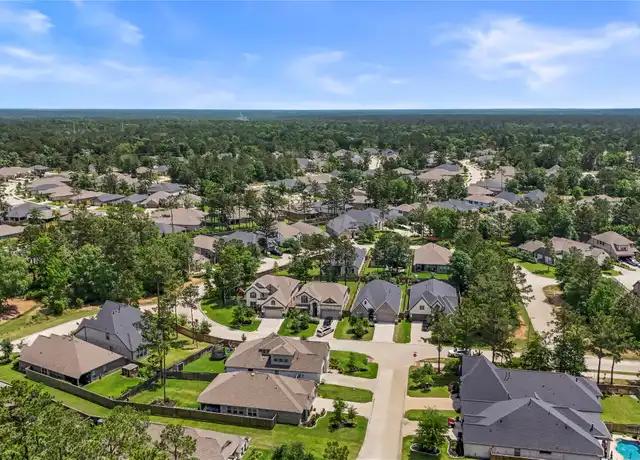
Same Woodforest. Completely Different Daily Routine.
Where Should You Buy Within Woodforest? The Location Inside the Community Matters More Than You Think
You tell your agent:
“We want Woodforest.”
Good.
That narrows the search.
But not nearly as much as you might think.
Because once you decide you like Woodforest, another question becomes just as important:
Where inside Woodforest should you live?
Two homes can both have a Woodforest address.
Similar price.
Similar square footage.
Similar number of bedrooms.
Maybe even similar builders.
But your everyday experience can be surprisingly different depending on where those homes sit within the community.
One may make getting out of the neighborhood easier.
Another may put recreation closer.
One may feel more connected to activity.
Another may feel more tucked away.
One lot may give you the backyard privacy you want.
Another may give you the convenience you didn't realize you'd appreciate until you've lived there.
The right answer isn't simply finding the best house in Woodforest.
It's finding the house in the part of Woodforest that works with your life.
Start With Your Routine Before Looking at the Map
Buyers often study a community map by asking:
Where are the amenities?
Where are the entrances?
Where is the home?
Instead, start with your actual week.
Where do you go most often?
Work?
School?
Grocery store?
Gym?
Restaurants?
Family?
Medical appointments?
Church?
Children's activities?
Your most frequent destinations should influence how you evaluate location inside the community.
A Few Extra Minutes Become Different When You Drive Them Every Day
Imagine Home A takes four additional minutes to reach the route you normally use.
Does four minutes matter?
Once?
Not really.
Twice every weekday?
That's roughly eight additional minutes per day.
Forty minutes over five days.
And that's before weekend trips.
This doesn't mean you should automatically choose the home closest to an exit.
It means internal drive time has real lifestyle value.
Test the Drive From the Actual House
Don't estimate from the listing.
Drive it.
Start at the driveway.
Travel to the route you'd realistically use.
Notice:
Turns.
Intersections.
Traffic.
Stop signs.
Community activity.
Then compare another property.
The difference may be smaller than expected.
Or much more noticeable.
Entrance Convenience Can Matter More to Commuters
If you're leaving Woodforest every morning and returning every evening, easy access in and out may rank high.
Someone working from home may care much less.
That's why the “best location” changes depending on the buyer.
For one household:
Commute wins.
For another:
Walkability wins.
For another:
Privacy wins.
Don't Buy Closest to the Entrance Automatically
Convenience has trade-offs.
Depending on the exact location, areas closer to frequently used routes may experience:
More passing vehicles.
Different traffic patterns.
More activity.
Your goal isn't minimum drive time at all costs.
It's the right balance.
Pine Market Proximity Can Change How the Community Feels
For buyers who enjoy being closer to:
Dining.
Services.
Gathering places.
Community activity.
the relationship to Pine Market may be meaningful.
But ask yourself:
How often would we actually use it?
If the answer is:
Several times each week,
proximity may deserve more weight.
If the answer is:
Occasionally,
don't sacrifice another priority simply to be closer.
Walkable and Drivable Convenience Are Different
Something can feel close on a map but not necessarily be a walk you'd want to make regularly.
Consider:
Distance.
Route.
Weather.
Crossings.
Time.
Whether you'd actually walk it.
Don't pay a premium for theoretical walkability.
Pay for walkability you'll use.
Texas Weather Changes the Walkability Question
Imagine the walk in:
October.
Beautiful.
Now imagine it in:
August.
Different calculation.
If proximity to amenities is important because you plan to walk or bike frequently, think about the conditions under which you'd realistically do it.
Parks Matter Most When You Use Them
Living close to a park can be valuable for households that regularly want:
Play space.
Walking.
Outdoor recreation.
Dog walks.
Casual family time.
But the closest possible house isn't automatically the best.
Some buyers may prefer a short walk while maintaining more separation from park activity.
Backing to Recreation Is Different From Living Near It
A park a few streets away may be perfect.
A property directly adjacent to recreational activity may feel different.
Depending on the setting, consider:
People.
Noise.
Lighting.
Parking.
Privacy.
Many buyers love being immediately next to activity.
Others prefer convenient access without seeing it from the backyard.
Pools Create the Same Trade-Off
Community pool nearby?
Fantastic if your household uses it frequently.
But define nearby.
Walkable?
Short bike ride?
Quick drive?
Directly behind the house?
These are different experiences.
The sweet spot may be close enough to use easily without being closer than you personally want.
Think About How Children Will Reach Amenities
For households with children, consider:
Walking route.
Bike route.
Street crossings.
Distance.
Whether an adult would need to drive.
A recreation center that looks “close” on the map may function differently depending on the route from the actual house.
Trails Can Be More Valuable Than Buyers Expect
A good trail connection can make everyday exercise easier.
Instead of loading up the car, you step outside.
Walk.
Run.
Bike.
That convenience can change behavior.
If trail use is part of your lifestyle, look at actual access points rather than simply measuring distance to the trail system.
Direct Trail Access Can Have a Privacy Trade-Off
A home near a trail may provide excellent access.
A home backing directly to one may potentially experience:
Walkers.
Runners.
Cyclists.
Dogs.
Depending on landscaping and positioning, you may notice them from the backyard.
Decide whether you see that as:
Energy and connection.
Or reduced privacy.
One Street Away Can Be the Perfect Compromise
This idea applies throughout the community.
You may want to be:
Near Pine Market.
Near a pool.
Near a park.
Near trails.
But not necessarily directly beside them.
Sometimes being one or two streets removed gives you most of the convenience with a different residential feel.
Golf Proximity Should Be Evaluated Based on Your Actual Interest
A golf-course setting can provide:
Views.
Open space.
A distinctive backyard environment.
But if golf isn't important to you, don't automatically assume proximity deserves a large personal premium.
Evaluate the property for:
View.
Privacy.
Lot.
Home.
Not just the word golf.
Golf-Course Lots Have Their Own Considerations
Depending on the exact position, buyers may want to evaluate:
Where the home sits relative to play.
Privacy.
Landscaping.
Views.
Outdoor exposure.
Potential golf-ball activity.
Every golf-course lot is different.
Stand in the backyard.
Don't evaluate it solely from an aerial map.
View Orientation Matters
Two homes may both be described as having a golf-course or open-space relationship.
One may have the view directly behind the main living area.
Another may see it primarily from one side.
Ask:
Where do we actually experience the view?
Kitchen?
Family room?
Primary bedroom?
Patio?
That determines how much lifestyle value it provides.
Lot Position Can Matter More Than Section Name
Buyers sometimes become focused on one particular part of a community.
But within that area, lot differences can be substantial.
Interior lot.
Corner.
Cul-de-sac.
Backing to another home.
Backing to open space.
Near an intersection.
Near community activity.
The individual lot deserves its own evaluation.
Don't Judge Backyard Privacy From the Fence
Stand inside the home.
Look out.
Then stand on the patio.
Look around.
Consider:
Neighboring windows.
Second stories.
Lot elevation.
Home spacing.
Landscaping.
Rear property use.
A tall fence doesn't automatically create the type of privacy you want.
Newer Areas and More Established Areas Can Feel Different
Depending on the specific part of Woodforest, buyers may encounter differences in:
Tree maturity.
Landscaping.
Home age.
Construction activity.
Architectural mix.
Overall feel.
Some buyers love newer surroundings.
Others prefer a more established atmosphere.
Neither is automatically better.
Construction Nearby Can Be Temporary—but Still Worth Understanding
If you're buying near ongoing development, ask:
What's being built?
Where?
How much surrounding construction remains?
What information is currently available about nearby land?
Today's construction noise may disappear.
Today's open land may eventually become something else.
Investigate both.
Don't Pay for an Open View You Assume Will Stay Open
This is important in growing communities.
You look behind the house.
Open land.
Beautiful.
Ask what you can verify about that land.
Is it:
Permanent open space?
Future residential?
Commercial?
Undetermined?
Do not assume undeveloped means permanently undeveloped.
Community Maps Can Help—but Verify Current Information
Maps are useful for understanding:
Amenities.
Road connections.
Sections.
Open space.
Commercial areas.
But communities evolve.
When a location feature materially affects your decision, verify current information through appropriate community, HOA, developer, public, or other authoritative resources.
Future Roads Can Change Today's Quiet Location
A road may currently feel lightly traveled because nearby development isn't complete.
If future connections are planned, traffic patterns may eventually change.
That doesn't mean you should avoid the home.
It means you should understand the possibility before deciding.
The Quietest Location Isn't Automatically the Best
Some buyers want:
Minimal traffic.
Maximum separation.
A tucked-away feeling.
Others eventually find that being deep inside the community makes every errand feel longer.
Know which inconvenience bothers you more:
Activity?
Or driving?
The Most Convenient Location Isn't Automatically the Best Either
You may save several minutes leaving the community.
But perhaps another location gives you:
Better lot.
More privacy.
Better view.
Closer recreation.
Quieter street.
The goal is balance.
Work-From-Home Buyers Should Weight Location Differently
If you commute twice per month instead of ten times per week, entrance proximity may deserve less weight.
You may prioritize:
Office quality.
Backyard.
Walking.
Parks.
Community amenities.
Quiet street.
Your routine determines your location priorities.
Hybrid Workers Need to Calculate Frequency
Three office days per week?
Commute matters.
But maybe not enough to override everything else.
Think in weekly frequency instead of vague labels like:
“I commute.”
How often?
How far?
At what time?
Weekend Habits Matter Too
Your work commute isn't your entire life.
Where do you go Saturday?
Groceries?
Sports?
Restaurants?
Lake Conroe?
The Woodlands?
Houston?
Family?
Your location inside Woodforest may make some of those trips easier than others.
Run Your Real Saturday
This is a great test.
Start from the property.
Drive to:
Coffee.
Grocery store.
Children's activity.
Dinner.
Whatever your normal Saturday includes.
Now you understand the home's location in your actual life.
Grocery Convenience Is More Important Than It Sounds
You'll probably go to the grocery store far more often than:
Golf club.
Community event.
Special restaurant.
So identify where you realistically expect to shop.
Then drive it.
Ordinary errands reveal location quality.
Healthcare Access Deserves Consideration for Long-Term Buyers
If you're planning to remain in the home for many years, consider access to:
Primary care.
Specialists.
Urgent care.
Hospital.
Pharmacy.
You may not need these services frequently today.
Long-term convenience can still matter.
Relocators Should Test More Than Their Work Commute
This is particularly important.
You're moving from another city.
You map:
House to office.
Twenty-eight minutes.
Great.
But you haven't considered:
Airport.
Shopping.
Family.
Healthcare.
Restaurants.
Weekend destinations.
Daily life is a network, not one route.
Don't Let the Model Home Choose Your Location
You tour a beautiful model.
Fall in love with the floor plan.
Then focus exclusively on where that builder has inventory.
Pause.
The right floor plan in the wrong location may create a compromise you notice longer than the new-home feeling lasts.
Compare location first.
Builder Choice and Location Can Compete
Maybe your preferred builder is available in one part of the community.
Your preferred location is elsewhere.
Now you need to decide:
Which difference is harder to live with?
Builder/style?
Or location?
There is no universal answer.
But make the trade consciously.
New Construction Buyers Should Ask About Future Surroundings
Your lot currently looks toward:
Trees.
Empty land.
Construction.
What is planned nearby?
Ask what information is available about:
Future homes.
Roads.
Amenities.
Commercial areas.
Utilities.
Open space.
Again, plans can change.
But informed decisions beat assumptions.
Resale Buyers Should Consider the Existing Street Pattern
An established resale property gives you an advantage:
You can see more of what already exists.
Trees.
Neighboring homes.
Traffic.
Street parking.
Views.
Privacy.
Use that information.
You don't have to imagine as much.
Street Parking Can Change How a Location Feels
Visit during:
Evening.
Weekend.
See how the street functions when residents are home.
Does parking feel:
Open?
Busy?
Fine?
Too crowded for your preference?
A daytime showing may not reveal it.
Cul-de-Sac Isn't Automatically the Winning Location
Cul-de-sac can be appealing.
But compare:
Lot shape.
Guest parking.
Driveway.
Distance to entrance.
Nearby amenities.
Actual traffic.
Don't pay for the label without evaluating the experience.
Corner Lots Need Their Own Analysis
Potential benefits:
More openness.
Different landscaping opportunities.
Distinctive appearance.
Potential trade-offs:
More street exposure.
Different fencing.
More visible yard.
Potentially more sidewalk or landscape maintenance depending on property.
Choose based on the actual lot.
Orientation Can Affect Daily Comfort
Consider how the home sits relative to:
Morning sun.
Afternoon sun.
Backyard.
Patio.
Driveway.
Main living areas.
A location can look identical on a community map while orientation creates a different experience.
Afternoon Sun Matters for Outdoor-Living Buyers
You love the backyard.
Pool.
Patio.
Outdoor kitchen.
Now visit late afternoon.
Where is the sun?
Where is the shade?
If you expect to use the backyard after work, this matters.
Mature Landscaping Can Change the Feel of a Location
Trees and landscaping can provide:
Shade.
Privacy.
Character.
Visual separation.
Newer areas may develop more of this over time.
But if you want mature surroundings immediately, evaluate what exists today rather than imagining future growth.
Community Events Can Be a Feature or Background Noise
Living near an activity center may make events incredibly convenient.
Walk over.
Participate.
Walk home.
But buyers who prefer a quieter setting may want more separation.
Community connection has a geography.
Decide how close you want to be.
Holiday Activity Can Change Certain Streets
Communities can become lively around:
Halloween.
Holiday decorations.
Events.
Garage sales where permitted.
Other neighborhood activities.
If you enjoy that, proximity to active areas can feel fun.
If you value quiet, evaluate accordingly.
Your Dog Has a Location Preference Too
Dog owners should consider:
Trail access.
Sidewalks.
Shade.
Traffic.
Open space.
Distance to walking routes.
If you walk the dog twice daily, these features may affect you hundreds of times each year.
That's real lifestyle value.
Runners and Cyclists Should Map Their Routes
Don't simply ask:
“Are there trails?”
Ask:
Where do I enter them from this house?
How easily can I create the distance I normally run or ride?
Do I need to cross roads?
Location within the community can change recreational convenience significantly.
Families Should Think Five Years Ahead
Today:
Toddler.
You care about playgrounds.
Later:
Bike.
Sports.
Friends.
More independence.
Think about how the location might work as routines evolve.
You don't need to predict everything.
But a flexible location can be valuable.
Empty Nesters May Want a Different Kind of Convenience
Maybe you're not thinking about playgrounds at all.
You may care more about:
Restaurants.
Walking.
Golf.
Easy community access.
Lower-maintenance lot.
Quick exit for travel.
Same community.
Different priorities.
Don't Let Someone Else Define the “Best Section”
This is important.
People will tell you:
“This is the part everyone wants.”
Maybe.
But does it fit you?
The most desirable location for someone with young children may not be the most desirable location for a commuter.
Or remote worker.
Or golfer.
Or frequent traveler.
Or empty nester.
Marketability Still Deserves Attention
Personal fit comes first.
But when two homes are close, consider broadly useful location characteristics such as:
Practical access.
Functional lot.
Reasonable privacy.
Convenient community relationship.
These may help future marketability.
Don't attempt to predict exactly what a future buyer will want.
Focus on strong fundamentals.
Don't Sacrifice Your Life for Hypothetical Resale
You plan to live there for ten years.
Yet you choose the location you like less because someone says:
“It might resell better.”
Be careful.
You are the current buyer.
Future marketability matters.
So do ten years of your daily life.
Use the “Monday Morning” Test
Start from the house.
Drive your normal departure route.
Does the location work?
Use the “Saturday Morning” Test
Could you easily:
Walk?
Bike?
Reach recreation?
Get coffee?
Run errands?
Does the location support your weekend?
Use the “5 P.M.” Test
Come back during late afternoon.
How does the street feel?
Traffic?
Sun?
Activity?
Parking?
This may be the version you experience most often.
Use the “One Car Down” Test
Imagine one household vehicle is unavailable.
Could someone reasonably:
Walk.
Bike.
Get a ride.
Reach nearby amenities.
This isn't essential for every buyer.
But it reveals how connected the location really is.
Use the “We Forgot Milk” Test
It's 8 p.m.
You need one thing.
How annoying is the trip?
Sounds trivial.
But homeownership is mostly made of ordinary moments.
Use the “Guests Are Coming” Test
Can visitors easily:
Find the home?
Park?
Reach community amenities?
Get to nearby dining?
If you entertain often, location can influence the guest experience too.
Use the “Five Years Later” Test
The house no longer feels new.
The kitchen is just your kitchen.
What do you still appreciate?
Easy exit?
Trail access?
Privacy?
View?
Park proximity?
Those are the location characteristics that tend to keep delivering value.
Create a Woodforest Location Scorecard
For each serious contender, rate:
Commute
How practical is the location for regular work travel?
Community Exit
How easily can you reach your normal outside destinations?
Pine Market
Does proximity match how often you'll use it?
Parks and Pools
Close enough to enjoy without being closer than you prefer?
Trails
How easy is actual access?
Street
Traffic, parking, and overall feel.
Lot
Privacy, orientation, shape, and surroundings.
Outdoor Living
Does sun and shade fit how you'll use the yard?
Future Surroundings
What is known about nearby undeveloped land or planned connections?
Weekend Convenience
Does the location support your normal routine?
Long-Term Fit
Will it still make sense if work or family routines change?
Now compare.
The prettiest house may not win.
And that's okay.
Final Thoughts
Choosing Woodforest is only the first location decision.
The second is much more personal.
Where inside the community should you live?
Closer to an entrance?
Closer to Pine Market?
Near trails?
Near recreation?
Tucked farther away?
Golf-course setting?
More established surroundings?
Newer area?
There isn't one answer that works for everyone.
The right location depends on what you do repeatedly.
Because convenience is really about frequency.
If you commute ten times each week, entrance access matters.
If you walk every morning, trail access matters.
If you dine nearby several times each week, proximity matters.
If you spend every evening in the backyard, privacy and orientation matter.
So when you're comparing Woodforest homes, don't ask only:
“Which house do we like best?”
Ask:
“Which location makes our normal week easier and more enjoyable?”
The house will get your attention.
But the location inside Woodforest will quietly shape your life long after moving day.
Frequently Asked Questions
Does location within Woodforest really make a significant difference?
It can. Internal drive time, proximity to amenities, street activity, trail access, lot position, and nearby development can create different everyday experiences within the same community.
Is it better to live near a Woodforest entrance?
For frequent commuters, easier access may be valuable. Other buyers may prefer a more interior location because they prioritize privacy, recreation, or a different street environment.
Should I buy close to Pine Market?
That depends on how frequently you expect to use nearby dining, services, and gathering spaces. Proximity has more value when it supports your actual routine.
Is backing to a trail a good feature?
It can provide excellent access, but some buyers may prefer more separation for privacy. Evaluate the exact relationship between the property, trail, landscaping, and backyard.
Is a golf-course lot automatically better?
No. Buyers should evaluate the actual view, privacy, lot position, outdoor exposure, price, and how much they personally value the setting.
Should I worry about undeveloped land near a Woodforest home?
If the surrounding land materially affects your decision, investigate currently available information about planned uses rather than assuming it will remain undeveloped.
Should relocators test the commute before buying?
Yes. When practical, driving from the actual property to regular destinations during realistic travel periods can provide more useful information than relying only on map estimates.
What's the biggest takeaway?
Don't search for the universally “best” part of Woodforest. Search for the location that best matches your commute, errands, recreation, privacy preferences, outdoor lifestyle, and everyday routine.