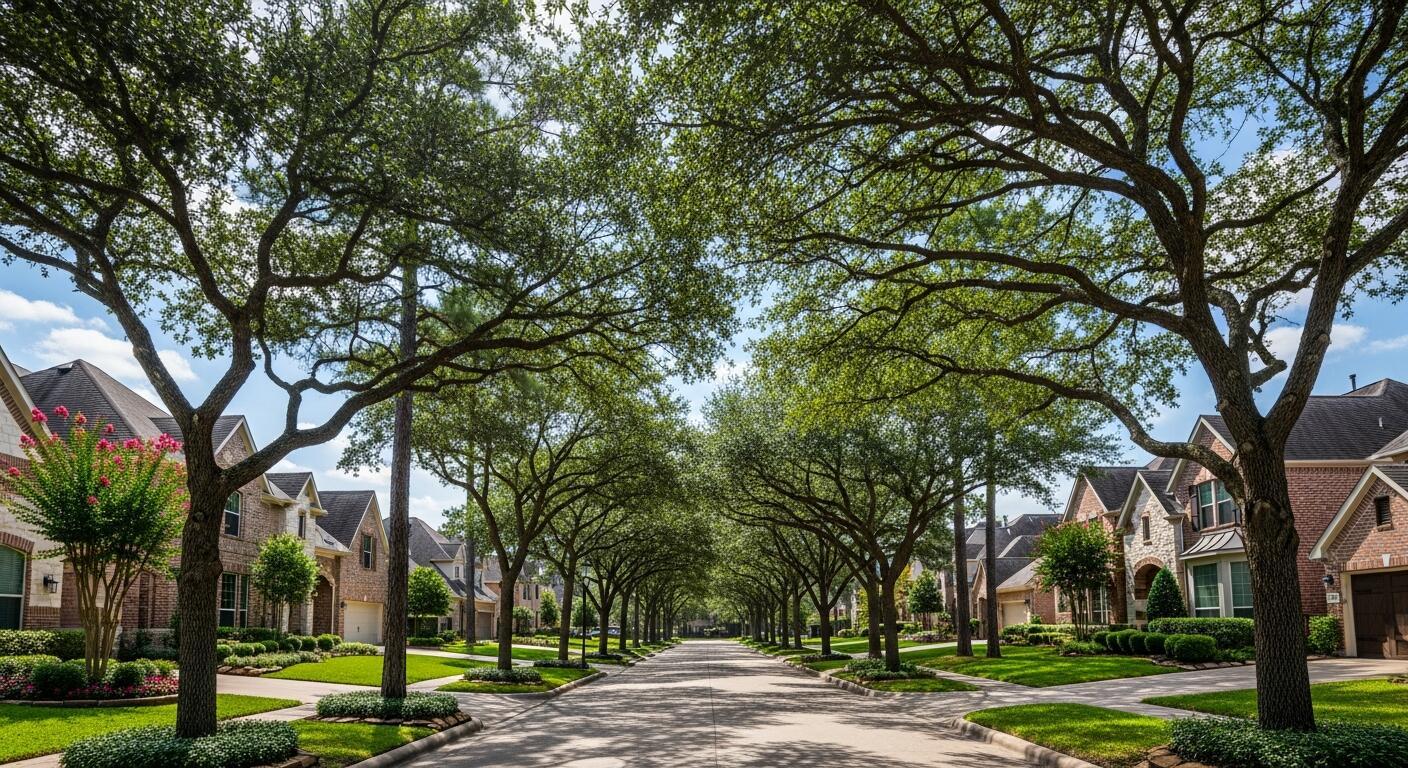
You Found the Right Village. But What About the Street?
How Much Does the Street Matter When Buying a Home in The Woodlands?
You finally narrow it down.
Right village.
Right neighborhood.
Right price range.
Two homes remain.
They're only a few streets apart.
Similar size.
Similar age.
Both have the bedrooms you need.
Both have good backyards.
So you assume location is basically a tie.
Then you spend a little more time outside.
House A sits on a quiet interior street.
House B is closer to the neighborhood entrance.
House A has less passing traffic.
House B gets you out of the neighborhood several minutes faster.
One backs near a pathway.
The other sits near a busier road.
One has easy guest parking.
The other feels tighter when cars line the street.
Suddenly:
“They're in the same neighborhood.”
doesn't tell you nearly enough.
Because once you've chosen the right part of The Woodlands, there is another location decision to make:
Which street do you actually want to live on?
Street-Level Differences Are Easy to Miss During a Home Search
Buyers naturally focus on larger location categories.
The Woodlands.
Village.
Neighborhood.
School assignment where relevant.
Commute.
Those matter.
But your daily experience happens at a much smaller level.
Your driveway.
Your immediate neighbors.
The traffic passing your house.
The path behind the fence.
The intersection at the end of the street.
That is why homes that look almost identical on a map can feel surprisingly different in person.
Start With the Type of Street
Ask what kind of street you're buying on.
Interior residential street?
Cul-de-sac?
Through street?
Near a neighborhood entrance?
Near a larger collector road?
Corner?
Dead end?
Each creates a different balance of:
Traffic.
Convenience.
Privacy.
Parking.
Activity.
There is no universally best street type.
There is a better fit for your preferences.
A Quiet Interior Street Can Be Worth More to Some Buyers
If your priorities include:
Less passing traffic.
A more residential feeling.
Greater separation from neighborhood entrances.
A quieter front-yard experience.
then an interior street may appeal.
But the trade-off can be more driving each time you leave the neighborhood.
If you commute daily, that difference may matter.
Entrance Proximity Can Be Surprisingly Convenient
A home near the entrance may mean:
Faster access to major roads.
Shorter grocery trips.
Less internal driving.
Easier commute.
That can create real everyday value.
But depending on the specific location, it may also mean:
More passing vehicles.
More turn activity.
Different street noise.
Look at the actual property.
Don't automatically label entrance proximity as good or bad.
Time the Trip From Driveway to Main Road
This is simple.
Start at the property.
Drive to the road you'd normally use to leave the community.
How long does it take?
Now do the same from another contender.
A three- or four-minute difference may feel meaningless.
Or it may happen twice a day, five days a week, for years.
Frequency changes value.
Cul-de-Sac Living Has Real Appeal—but Don't Stop at the Label
Many buyers request:
“Cul-de-sac only.”
Usually because they're looking for:
Reduced through traffic.
A quieter setting.
A distinctive street environment.
Potentially more front-yard space.
Those are reasonable goals.
But cul-de-sacs vary.
Some are extremely quiet.
Others sit near entrances or connecting streets.
Some provide great guest parking.
Others feel crowded once several households have visitors.
Evaluate the actual street.
Cul-de-Sac Lots Can Have Unusual Shapes
The street may be perfect.
The lot may not be.
Pie-shaped lots can create:
Narrow frontage.
Wide rear yards.
Narrow rear yards depending on position.
Unusual side boundaries.
Different driveway angles.
Don't assume cul-de-sac automatically means better lot.
Walk it.
The Turning Area Matters Too
Look at the end of the street.
How much space is there?
Where do people park?
How easily do:
Delivery vehicles.
Moving trucks.
Guests.
Service vehicles.
turn around?
A cul-de-sac with frequent parking around the bulb can function very differently from the empty street you saw during the showing.
Corner Lots Create Another Kind of Street Experience
Corner lots can provide:
More visual openness.
Different side-yard exposure.
More street frontage.
Potentially distinctive landscaping.
But they may also involve:
More sidewalk.
More yard visible from the street.
Different fencing.
More passing activity along one side.
Some buyers love corner lots.
Others strongly prefer interior ones.
Don't Decide Based on Curb Appeal Alone
Corner homes can photograph beautifully because more of the property is visible.
But ask how the increased exposure feels once you're:
On the patio.
In the side yard.
Inside rooms facing the secondary street.
Parking.
Maintaining the lawn.
Again, lifestyle over appearance.
Through Traffic Can Be More Important Than Traffic Volume
A street may not look busy during your showing.
But ask:
Where does it go?
Does it connect one section to another?
Is it commonly used as a neighborhood shortcut?
Does it lead toward:
School?
Park?
Pool?
Major exit?
Traffic patterns can be driven by purpose, not simply road size.
Visit During Morning and Evening Activity
If street traffic matters, a noon showing may tell you almost nothing.
Return during:
Morning departure.
School-related periods where relevant.
Late afternoon.
Early evening.
Notice:
Vehicle flow.
Pedestrians.
Cyclists.
Delivery activity.
Street parking.
You aren't looking for zero activity.
You're deciding whether the level fits you.
Schools Can Influence Streets Beyond School Boundaries
You may not have school-age children.
School traffic can still affect you.
A nearby campus or common route may influence:
Morning traffic.
Afternoon traffic.
Pedestrian activity.
Bus traffic.
Turning patterns.
If the street feels different during those hours, that's useful information regardless of whether your household uses the school.
Pathways Can Be a Major Advantage
The Woodlands pathway system is a meaningful lifestyle feature for many buyers.
Living close to pathway access can make:
Walking.
Running.
Biking.
Dog walks.
much easier.
But “near a pathway” and “backing directly to a pathway” are different.
A Pathway Behind the Property Can Affect Privacy
Imagine your backyard backs to a trail.
Great access.
Beautiful wooded setting.
But now consider:
Walkers.
Cyclists.
Dogs.
Occasional conversations.
Visibility into the yard.
Some buyers love that activity.
Others want more separation.
There is no right answer.
Stand outside and decide how it feels to you.
Being One Street Away May Be the Sweet Spot
Sometimes the best balance is not directly on the amenity.
It's close enough to use easily while still offering more separation.
That may apply to:
Trails.
Parks.
Pools.
Schools.
Shopping.
Golf.
Proximity has degrees.
“Closest possible” is not always the best version.
Parks Can Change Nearby Street Activity
Living near a park may mean:
Easy walking access.
Convenient recreation.
Open space.
But depending on the park, you may also see different:
Parking patterns.
Pedestrian activity.
Weekend use.
Again, don't assume that's negative.
Many buyers specifically want it.
Just know what you're choosing.
Listen for Road Noise From the Yard
The Woodlands' trees can make a property look incredibly secluded.
Sound can tell a different story.
Stand in the backyard quietly.
Do you hear:
Major roadway?
Busy internal road?
Nearby activity?
Construction?
Almost nothing?
Now decide whether it matters.
Buyers have very different sound tolerances.
Interior Sound Matters Too
Close the doors.
Stand in:
Primary bedroom.
Family room.
Office.
Listen.
A street that feels active outside may be surprisingly quiet indoors.
Or the opposite.
If remote work, sleep, or quiet interiors matter to you, test those spaces.
Homes Near Intersections Need a Different Look
A property near an intersection may provide easier access.
It may also experience:
More braking.
Acceleration.
Headlights.
Turning.
Pedestrian movement.
This is highly property-specific.
Sometimes landscaping and positioning make it almost irrelevant.
Sometimes you notice it immediately.
Headlights Can Be an Overlooked Issue
If a home sits facing the end of another street or near a turn, vehicles may direct headlights toward portions of the property at night.
That may not bother you.
But it's difficult to evaluate during a midday showing.
If the positioning raises the question, return after dark when practical.
Streetlights Can Be Either Helpful or Annoying
Street lighting can improve:
Visibility.
Walking comfort.
Arrival after dark.
But a light located directly outside a bedroom window may feel different.
Again, one buyer's feature is another buyer's annoyance.
Check the specific placement.
Guest Parking Is Part of the Street Decision
Imagine Thanksgiving.
Birthday party.
Friends over for dinner.
Where does everyone park?
Driveway?
Street?
Around the cul-de-sac?
Is there enough room without creating a difficult situation?
If you entertain often, this deserves more attention than buyers usually give it.
Look at the Street in the Evening
A neighborhood can look spacious during the workday because many cars are gone.
Return around dinner time.
Now you may see:
Vehicles in driveways.
Street parking.
Teen drivers.
Guests.
Work trucks.
Different curb activity.
This is the version of the street you'll often come home to.
Garage Use Changes Street Parking
A three-car garage doesn't guarantee three cars are stored inside.
Garages often become:
Storage.
Workshop.
Gym.
Bike area.
Holiday-storage room.
If nearby homes use garages heavily for storage, more vehicles may remain outside.
Don't judge that.
Just notice how the street actually functions.
Driveway Length Can Matter
If your household has multiple vehicles, ask:
How many fit comfortably?
Can everyone leave without moving another car?
Does parking block the sidewalk where applicable?
Can guests fit?
This is part of choosing the street because limited driveway space often pushes more vehicles curbside.
Teen Drivers Can Change Your Needs Later
Today:
Two vehicles.
Five years from now:
Three.
Maybe four.
If you expect to stay and household vehicle count could grow, think ahead.
You don't need to overbuy parking.
But understand the limitation.
Work Vehicles May Need Special Consideration
If someone drives:
Large truck.
Commercial vehicle.
Trailer.
Other specialized vehicle.
review applicable HOA or deed restrictions and evaluate practical parking.
Do not assume a vehicle that fits physically is automatically permitted in every way you plan to use or store it.
Delivery Traffic Is Now Part of Residential Life
Packages.
Groceries.
Furniture.
Food delivery.
Service providers.
Delivery vehicles visit neighborhoods constantly.
A narrow street or unusual driveway configuration may make these interactions more noticeable.
Usually not a deal-breaker.
But still part of how a street functions.
Moving Day Is a Useful Thought Experiment
Imagine the moving truck.
Where does it park?
Can vehicles pass?
How close can movers get to the home?
Any tight turns?
Tree limbs?
Cul-de-sac maneuvering?
One moving day shouldn't determine your purchase.
But the exercise reveals access characteristics you may otherwise ignore.
Tree Canopy Can Make Streets Feel Completely Different
One of the qualities many buyers appreciate in established portions of The Woodlands is mature tree coverage.
A heavily wooded street may feel:
More private.
More established.
Shadier.
Visually softer.
Another street may feel more open.
Neither is automatically better.
Choose the atmosphere you genuinely prefer.
Tree Coverage Also Changes Maintenance
Large street and lot trees may mean:
Leaf debris.
Storm cleanup.
Branches.
Tree-care needs on your own property.
If trees are a big part of why you love the street, include maintenance in the ownership picture.
Street Orientation Can Affect the House
How the lot sits along the street may influence:
Front-room sunlight.
Driveway sun.
Backyard orientation.
Garage heat.
Exterior landscaping.
The street and lot orientation work together.
If sun exposure matters, evaluate both.
Street Position Can Change Backyard Privacy
Two homes with similar rear neighbors can feel different based on the way they're positioned.
One may sit:
Higher.
Lower.
At an angle.
On a curve.
At the end of a sightline.
These subtle differences can affect what you see from:
Patio.
Pool.
Windows.
Don't evaluate privacy from the map alone.
Curved Streets Can Create Interesting Lot Relationships
A home on the outside of a curve may have a different:
Frontage.
Sightline.
Driveway relationship.
Neighbor orientation.
than one on the inside.
Sometimes this improves the setting.
Sometimes it creates more visual exposure.
Again, actual property over broad rules.
Don't Assume a Quiet Street Will Stay Exactly the Same Forever
Neighborhood conditions can change.
Families move.
Children grow.
Traffic patterns shift.
Nearby projects can alter routes.
You cannot guarantee future quiet.
The goal is to understand:
Current street design.
Current surrounding land use.
Known road connections.
Characteristics unlikely to change easily.
Future Road Connections Deserve Research
In developing or adjacent areas, ask whether a street:
Currently dead-ends.
May eventually connect elsewhere.
Could serve future sections.
If future traffic potential materially affects your decision, investigate available community or public planning information.
Plans can change.
But awareness is better than assumption.
Street Names Don't Define the Property
Two houses may both be on:
Quiet sounding residential streets.
That doesn't mean they function the same.
Don't infer from:
Street name.
Neighborhood reputation.
Map appearance.
Visit.
Walk.
Drive.
Listen.
Talk to the Street, Not Just the Seller
You cannot literally talk to a street.
But you can observe it.
Spend ten minutes outside.
What happens?
Cars?
Walkers?
Bikes?
Nothing?
Delivery truck?
Neighbor mowing?
This little observation period can tell you how the setting feels without anyone explaining it.
Don't Ask Neighbors Whether the Street Is “Good”
That's subjective.
If you happen to speak with neighbors naturally, better questions might be:
“What surprised you after living here?”
“When is the street usually busiest?”
“Do people use this road mainly to get to somewhere else?”
These invite practical observations instead of asking someone to make your buying decision.
One Neighbor's Experience Is Still One Experience
Use neighbor conversations as perspective.
Not fact.
Verify objective things independently.
Your tolerance for:
Noise.
Traffic.
Activity.
Children playing.
Dogs.
may be completely different.
The Most Convenient Street Can Save Real Time
Suppose House A is four minutes deeper into the neighborhood.
Eight minutes round trip.
Five workdays:
Forty minutes per week.
Over 48 workweeks:
About 32 hours each year.
That doesn't automatically make House B more valuable.
But it helps quantify what convenience may mean.
The Quieter Street Can Be Worth the Extra Drive
Now reverse it.
Maybe those additional minutes buy you:
Less traffic.
More privacy.
Preferred street setting.
Better lot.
Cul-de-sac.
You might happily make that trade every day.
The goal isn't maximizing speed.
It's choosing the trade intentionally.
Don't Pay a Premium for Cul-de-Sac If You Don't Care About It
A listing emphasizes:
Premium cul-de-sac location.
Great.
But if street traffic doesn't bother you and the lot isn't meaningfully better for your needs, that premium may have limited personal value.
Buyers should value features according to use—not terminology.
Don't Underestimate a Street You Love
There is another side.
You drive onto the street and immediately like:
Trees.
Spacing.
Quiet.
Architecture.
Lot positions.
Walking environment.
That daily arrival can have meaningful lifestyle value.
You will experience it far more often than certain interior upgrades.
The Street Is Part of Your Curb Appeal
Curb appeal isn't only the house.
It's the approach.
Turning onto the street.
Driving under the trees.
Seeing neighboring homes.
Pulling into the driveway.
If that arrival experience matters to you, don't dismiss it as purely emotional.
Home is partly how a place makes you feel.
But Don't Let the Street Rescue the Wrong House
Perfect street.
Wrong house.
Too small.
Bad floor plan.
No storage.
Major condition issues.
A street can add value.
It cannot fix everything.
You still need the complete property to work.
And Don't Let the Perfect Kitchen Make You Ignore the Street
This may be the more common mistake.
You love:
Kitchen.
Primary bath.
Flooring.
Paint.
Then discover the street has a characteristic you strongly dislike.
Interior finishes can often change.
Street position generally cannot.
Give permanent characteristics enough weight.
Use the “Front Porch” Test
Stand at the front of the property.
Imagine sitting there.
What do you see?
What do you hear?
How much activity passes?
Does it feel:
Peaceful?
Connected?
Too busy?
Too quiet?
Your reaction is useful.
Use the “7:30 A.M.” Test
Imagine you're backing out Monday morning.
What's happening?
School traffic?
Walkers?
Commuters?
Easy exit?
Busy intersection?
This is the street as transportation infrastructure.
Use the “6:30 P.M.” Test
Now you're coming home.
How many vehicles are parked?
Are neighbors outside?
Can you easily pull in?
Does the street feel welcoming?
This is the street as home.
Use the “Saturday Morning” Test
Walk outside.
Could you:
Start a trail walk?
Bike?
Walk the dog?
Comfortably let children use the front area where appropriate?
Do you enjoy the activity level?
This is the street as lifestyle.
Use the “Rainy Night” Test
Imagine coming home in heavy rain after dark.
How is:
Street lighting?
Drainage?
Visibility?
Driveway entry?
Do you feel comfortable navigating the route?
Perfect weather shouldn't be the only version you evaluate.
Create a Street-Level Scorecard
For serious Woodlands contenders, rate:
Traffic
How much passing activity exists?
Convenience
How quickly can you leave the neighborhood?
Noise
What can you hear inside and outside?
Street Parking
Does evening parking affect how the street functions?
Guest Access
How easily can visitors park and find the home?
Pathways
Is trail access convenient without creating privacy concerns you dislike?
Parks and Amenities
Are you the right distance from the features you use?
Lot Position
Interior, corner, cul-de-sac, curve, intersection, or other configuration.
Trees and Setting
Does the street deliver the atmosphere you want?
Nighttime Feel
Have you experienced it after dark?
Everyday Arrival
Do you enjoy driving onto the street and coming home?
Now compare.
Sometimes the houses remain tied.
The street breaks the tie.
Final Thoughts
Buyers spend a lot of time choosing the right part of The Woodlands.
They should.
Village matters.
Neighborhood matters.
Commute matters.
But eventually the search gets much more specific.
One street.
One lot.
One driveway.
That's where homeownership actually happens.
The difference between two nearby Woodlands properties may come down to:
Traffic.
Cul-de-sac versus through street.
Pathway access.
Road noise.
Guest parking.
Trees.
Neighborhood entrance distance.
Street lighting.
Lot position.
And how the street feels when you come home every evening.
Those characteristics don't appear prominently in the kitchen photographs.
But you may experience them every single day.
So when you narrow your search to two similar homes, don't say:
“They're basically in the same location.”
Get out of the car.
Walk the street.
Listen.
Return in the evening.
Drive the route.
And ask:
“Which one would we rather come home to?”
Sometimes the biggest difference between two Woodlands homes isn't inside the front door.
It's everything that happens just before you open it.
Frequently Asked Questions
Is a cul-de-sac always better when buying in The Woodlands?
No. Cul-de-sacs may offer less through traffic and a distinctive street setting, but lot shape, parking, entrance proximity, and individual buyer preferences still matter.
Should I avoid homes near neighborhood entrances?
Not automatically. Entrance proximity can reduce internal drive time and improve convenience. Buyers should balance that against any additional traffic or activity at the specific property.
Are homes near The Woodlands pathways less private?
It depends on the property's exact relationship to the pathway, landscaping, elevation, fencing, and other surroundings. Some buyers value direct access while others prefer more separation.
Should I visit the street at different times before buying?
If traffic, parking, noise, pathway activity, or street atmosphere are important to you, seeing a serious contender at different times can provide useful context.
Does street parking matter to home value?
Its importance varies by property and future buyers. For your purchase, focus on how parking affects access, guest use, street appearance, and your everyday comfort.
Is a corner lot better than an interior lot?
Neither is universally better. Corner lots may offer more openness and street frontage, while interior lots may provide a different privacy and maintenance profile.
Can a street that is quiet today become busier later?
Traffic patterns can change. When potential future road connections or development materially affect your decision, investigate available current planning information rather than assuming conditions will remain identical.
What's the biggest takeaway?
After choosing the right village and neighborhood, evaluate the actual street. Traffic, convenience, noise, pathways, parking, lot position, trees, and your everyday arrival experience can make two nearby Woodlands homes feel completely different.