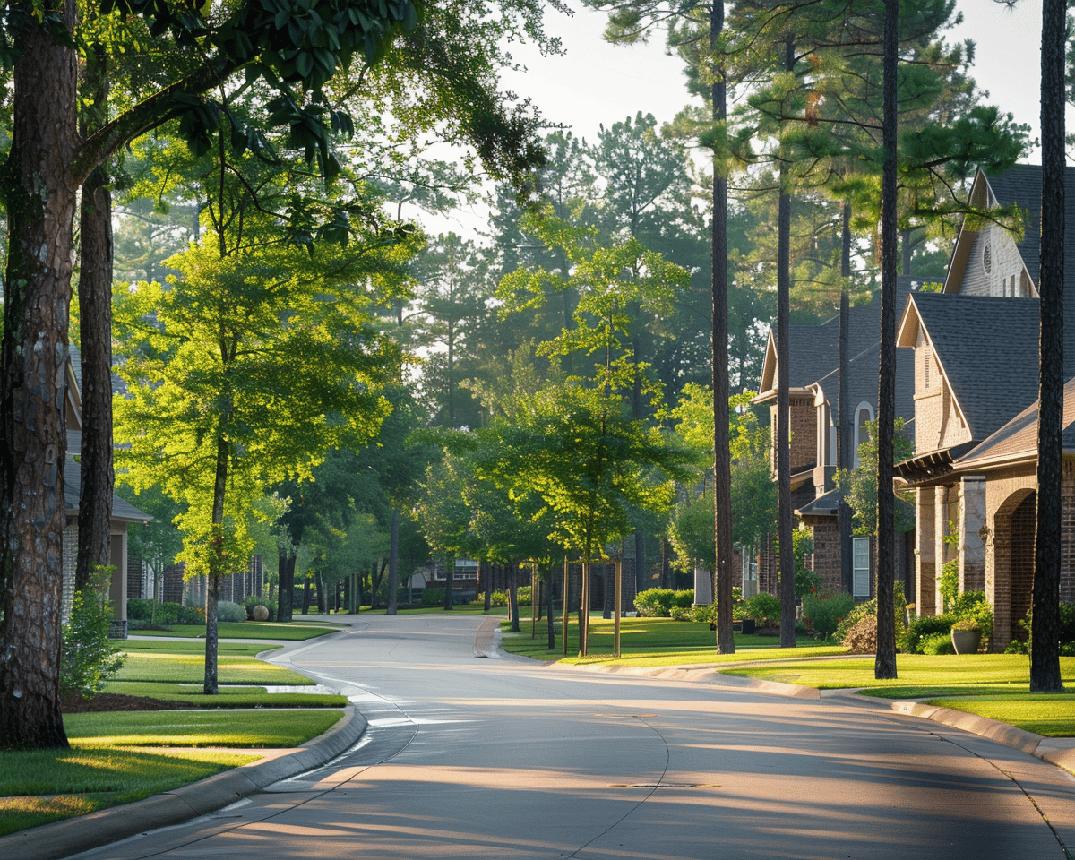
The House Is Right. But Is It in the Right Part of The Woodlands?
How Do You Choose the Right Part of The Woodlands to Live In?
You tell your REALTOR®:
“We want to live in The Woodlands.”
Great.
But that still leaves a pretty big question.
Where in The Woodlands?
Because choosing The Woodlands is only the first decision.
The next is figuring out which location within the community actually fits the way you live.
One buyer wants to be close to restaurants, shopping, and entertainment.
Another wants mature trees and an established neighborhood.
Someone else wants newer construction.
Another buyer cares most about getting to work without spending unnecessary time in the car.
And another wants trails practically outside the front door.
They can all want “The Woodlands” and still be looking for very different homes.
That's why buyers shouldn't start by asking:
“Which village is the best?”
A much better question is:
“Which part of The Woodlands works best for our everyday life?”
The Woodlands Isn't One Neighborhood
One of the first things relocation buyers discover is that The Woodlands is made up of multiple villages and neighborhoods developed over different periods.
That matters.
As you move through the community, you may notice differences in:
Home age.
Architecture.
Lot size.
Tree maturity.
Street layout.
Proximity to commercial areas.
Access to major roads.
Nearby parks.
Overall neighborhood feel.
Those differences are part of what gives buyers choices.
But they also mean you shouldn't evaluate every Woodlands address as though the location is interchangeable.
Start With Your Daily Routine, Not a Village Name
This is where I would start.
Forget the map for a moment.
Describe a normal Tuesday.
Where do you work?
Do you commute?
Work from home?
Have children going to school?
Go to a gym?
Walk every morning?
Eat out frequently?
Spend weekends around Market Street or Hughes Landing?
Prefer staying close to home?
Your routine can quickly reveal which locations deserve more attention.
Your Commute Can Change the Search
A home can be perfect.
Four bedrooms.
Beautiful kitchen.
Great backyard.
Excellent condition.
Then Monday morning arrives.
If getting from that particular neighborhood to your regular destination becomes frustrating, the house may start feeling less perfect.
This is why commute testing matters.
Don't rely only on:
“It's about 15 miles.”
Distance and drive time aren't the same thing.
Test the Route During the Time You'll Actually Drive It
If you normally leave for work at 7:15 a.m., test the route around that time when practical.
If you return around 5:30 p.m., try the reverse trip.
Navigation apps are useful.
But physically experiencing the route can tell you:
How the drive feels.
Where traffic tends to build.
How easy it is to enter and exit the neighborhood.
Whether you're comfortable doing it repeatedly.
The right home needs to work Monday morning too.
Remote Workers Have a Different Location Equation
If you work from home, commute may barely matter.
Now your priorities might become:
Walking trails.
Coffee.
Restaurants.
Parks.
Gym.
Grocery stores.
Natural surroundings.
Home-office environment.
A buyer who works remotely may happily choose a location another commuter would consider inconvenient.
That's exactly why “best village” isn't a useful universal answer.
Don't Confuse Central With Better
Being closer to major destinations can be convenient.
But some buyers don't need that convenience every day.
They may happily trade a few additional driving minutes for:
A larger lot.
Different home style.
More privacy.
A quieter-feeling setting.
Newer construction.
A particular floor plan.
The question isn't whether central is better.
It's whether central is better for you.
Older Sections Can Offer Something Newer Areas Can't Manufacture Quickly
Time.
Established areas may offer:
Mature trees.
Developed landscaping.
Long-established streetscapes.
Homes with architectural character from different periods.
That can create an atmosphere some buyers specifically want.
But older housing may also bring different maintenance considerations.
Don't choose based on age alone.
Compare the complete property.
Newer Homes Have Their Own Advantages
Some buyers prefer newer construction or more recently developed neighborhoods because they're looking for:
More contemporary floor plans.
Larger kitchens.
Different primary-suite layouts.
More open living spaces.
Newer building materials or systems.
Different garage configurations.
But newer doesn't automatically mean better.
And older doesn't automatically mean more maintenance.
Individual property condition matters more than the year on the listing.
Your Floor Plan Preference May Narrow the Map for You
Suppose you want:
Large open kitchen.
Home office.
Game room.
Three-car garage.
Large primary closet.
Modern indoor-outdoor connection.
You may find those features more frequently in certain generations of homes.
Another buyer wants:
Traditional architecture.
Separate rooms.
Established landscaping.
Smaller footprint.
More character.
Their search may naturally lead somewhere different.
Let the house you actually want help shape the location search.
Trees Can Change How a Neighborhood Feels
Two streets can be only a few miles apart and feel surprisingly different because of the tree canopy.
For some buyers, mature trees are non-negotiable.
They want that unmistakable wooded feeling every time they drive home.
Others care more about the home itself.
Neither preference is wrong.
But if the trees are one of the reasons you're choosing The Woodlands, make sure your actual neighborhood delivers the environment you're imagining.
Trails Can Become Part of Everyday Life
It's easy to look at trails on a community map and think:
“Great. There are trails everywhere.”
But proximity still matters.
There's a difference between:
Driving somewhere to walk.
And:
Leaving your front door and immediately starting your walk.
If walking, running, or biking is part of your daily routine, look at how the specific property connects to the pathway system.
Do the “Front Door to Trail” Test
Stand at the house.
If you wanted to walk for thirty minutes right now, where would you go?
Is there convenient access nearby?
Do you need to cross a larger road?
Is the route attractive?
Would you realistically use it?
This turns an abstract community amenity into an actual lifestyle feature.
Parks Are Similar
Having a park “nearby” can mean very different things.
For one property, it may be an easy walk.
For another, you'll probably drive.
If you have younger children—or simply enjoy parks yourself—map the parks you expect to use.
Then visit them.
You may discover that proximity to one particular park matters more than you expected.
Shopping Convenience Is Personal
Some buyers want groceries within minutes.
Others don't care.
Some want to be close to:
Market Street.
The Woodlands Mall area.
Hughes Landing.
Restaurants.
Entertainment.
Everyday retail.
Others intentionally want more separation from commercial activity.
Again, don't buy someone else's version of convenience.
Run Your Real Errands From the House
Here's a useful exercise.
When you're seriously considering a property, map:
Your preferred grocery store.
Gym.
Work.
School or childcare if relevant.
Favorite shopping.
Medical providers.
Places you visit regularly.
Now look at the actual routes.
A home that seems slightly farther away on a general map may work perfectly for your specific routine.
Don't Underestimate Internal Driving
The Woodlands has a distinctive road network and wooded design.
That's part of its character.
But buyers unfamiliar with the area should experience how they actually move through it.
A property may be physically close to something while the driving route feels different than expected.
This is another reason to test your routine rather than judging distance alone.
Think About How Often You Leave The Woodlands
This can dramatically affect which location works best.
If most of your life happens inside The Woodlands, your priorities may center on internal convenience.
But suppose you frequently travel toward:
Houston.
George Bush Intercontinental Airport.
Other employment centers.
Family elsewhere in the metro area.
Now access to major roads may become much more important.
Your search should reflect where you actually go.
Airport Access May Matter More Than Buyers Expect
If you travel frequently for work, an extra amount of driving each way can add up over dozens of airport trips.
If you fly twice a year?
Probably less important.
This is exactly how buyers should think about location.
Not:
“Is this convenient?”
But:
“Convenient for what we actually do?”
Families Should Verify School Information by Address
If public-school assignment matters to your purchase, verify current information for the specific property through the appropriate school district resources.
Don't assume two nearby homes necessarily have identical assignments.
And remember that attendance boundaries can change over time.
School considerations should be evaluated alongside:
House.
Commute.
Budget.
Location.
Daily routine.
Not in isolation.
Don't Choose a Neighborhood Based Only on Reputation
Someone tells you:
“You have to live in this village.”
Why?
Maybe it was perfect for them.
But perhaps they:
Worked somewhere different.
Had children of different ages.
Wanted a different home style.
Had a different budget.
Valued different amenities.
Recommendations are useful starting points.
They're not substitutes for your own priorities.
Visit the Neighborhood Without Looking at Houses
This is one of my favorite strategies.
You've toured three houses.
Now stop touring.
Drive around.
No appointment.
No pressure.
No listing sheet.
Just experience the area.
Notice:
People walking.
Traffic.
Trees.
Home styles.
Parks.
Pathways.
Street layout.
How the neighborhood feels.
You're deciding whether you want to live there—not merely whether you want to own one particular house.
Go Back in the Evening
A neighborhood at 11 a.m. can feel very different at 6 p.m.
When practical, revisit serious contenders at different times.
What happens after work?
Are people walking?
Does traffic change?
How does the street feel after dark?
You don't need to conduct an investigation.
You're simply experiencing the place when you'd actually be home.
Weekend Life Matters Too
Saturday morning may reveal another side.
Trails become active.
Parks may be busier.
Neighbors are outside.
Restaurants and retail areas feel different.
If weekends are when you'll enjoy the community most, see what your future weekend could actually look like.
Your House Budget and Location Budget Are Connected
Sometimes buyers say:
“We want this exact type of house in this exact location.”
Then the numbers don't cooperate.
This is where priorities matter.
Would you rather have:
Smaller home in your preferred location?
Or:
Larger home farther away?
Older home with mature surroundings?
Or:
Newer home in another section?
Premium lot?
Or:
Updated interior?
There isn't one correct answer.
But you need to know which trade you're willing to make.
Don't Stretch for a Location You Barely Use
Suppose being near a major entertainment and shopping area adds meaningfully to the price.
But you go there three times a year.
Is that proximity worth stretching your budget?
Maybe not.
Another buyer eats out several nights a week and uses those amenities constantly.
For them, the same location may be worth far more.
Value follows use.
The Same Rule Applies to Trails and Parks
Don't pay emotionally for amenities because they sound like things you should want.
If you don't walk, bike, or use parks regularly, proximity may have less value to you.
That's okay.
Put your money toward the characteristics that actually improve your life.
Think About the Home Five Years From Now
Your routine may change.
Children grow.
Jobs change.
Remote work changes.
Driving needs change.
You can't predict everything.
But ask:
Does this location give us reasonable flexibility?
Can we imagine our routine still working if life changes somewhat?
The goal isn't predicting the future perfectly.
It's avoiding a location that works only under extremely narrow circumstances.
Resale Should Be Considered—but It Shouldn't Run Your Life
Buyers naturally wonder which locations will be easiest to sell later.
That's reasonable.
But future demand depends on many factors:
Market conditions.
Inventory.
Property condition.
Pricing.
Schools.
Lot.
Home features.
Buyer preferences.
Location.
There is no guarantee that one village or neighborhood will outperform another.
Choose a location that works for your life first while keeping general marketability in mind.
Don't Buy a House You Love in a Location You Tolerate
This is the big one.
You walk inside.
Perfect kitchen.
Perfect primary suite.
Pool.
Great price.
So you start negotiating with yourself:
“The location isn't ideal, but we'll get used to it.”
Maybe you will.
But before making that compromise, ask how often the location issue will affect you.
Twice a year?
Probably manageable.
Twice a day?
That's different.
And Don't Reject the Right Location Because of Paint
The opposite happens too.
You find a house in a location that works beautifully.
Commute.
Trails.
Trees.
Routine.
Everything.
But the interior feels dated.
Remember which characteristics can change.
Paint can change.
Lighting can change.
Flooring can change.
A kitchen can change.
The property's location within The Woodlands cannot.
Use the “Monday Morning” Test
Imagine waking up Monday.
What happens?
School.
Work.
Gym.
Coffee.
Commute.
Does the location make your morning easier or harder?
That's often more useful than asking whether the village is popular.
Use the “Saturday Morning” Test
Now imagine Saturday.
No work.
You want:
Breakfast.
Walk.
Park.
Shopping.
Coffee.
Lunch.
Maybe nothing.
How does the location support the life you want on your days off?
The right neighborhood should work for both versions of you.
Use the “Unexpected Tuesday” Test
It's 7:30 p.m.
You suddenly need:
Groceries.
Prescription.
Something for tomorrow.
How inconvenient is the errand?
This sounds minor.
But homeownership is mostly made up of ordinary moments like this.
Create a Location Scorecard
Before choosing between your final Woodlands homes, rate each location based on your actual priorities.
Commute
How does the route work during realistic travel times?
Everyday Errands
How convenient are groceries, healthcare, gym, and other frequent destinations?
Trails and Parks
Will you realistically use what's nearby?
Home Style
Does the neighborhood contain the type of property you prefer?
Trees and Setting
Does the environment deliver the Woodlands atmosphere you're looking for?
Entertainment and Dining
Are you close enough—or far enough away—for your preference?
Schools
If relevant, have you verified current property-specific information?
Weekend Lifestyle
Does the area support what you actually enjoy doing?
Budget
Does choosing this location force compromises elsewhere that you're comfortable making?
Now compare.
The winner may not be the village you originally expected.
Final Thoughts
When buyers say:
“We want to live in The Woodlands,”
that's a great starting point.
But it isn't the finished search.
The Woodlands offers different combinations of:
Home styles.
Ages.
Trees.
Lots.
Trails.
Parks.
Shopping.
Dining.
Road access.
And everyday convenience.
The goal isn't to identify one village that is universally “best.”
There isn't one.
The goal is finding the part of The Woodlands that makes your own routine work.
So before choosing a neighborhood based on reputation, ask:
Where do we actually go?
How often?
What do we want outside our front door?
What type of home do we prefer?
How much driving are we comfortable with?
Which amenities will we really use?
Then go experience the area.
Drive it Monday morning.
Walk it Saturday.
Run your errands.
Test the commute.
Because the right house is important.
But when you find the right house in the part of The Woodlands that makes everyday life easier, that's when the entire purchase starts to make sense.
Frequently Asked Questions
What is the best village in The Woodlands?
There isn't one village that is best for every buyer. The right choice depends on your preferred home style, budget, commute, schools where relevant, amenities, lot characteristics, and daily routine.
Do homes throughout The Woodlands have the same style and age?
No. The Woodlands developed over many years, so buyers can encounter different home ages, architectural styles, lot configurations, and neighborhood environments.
Should I choose my village before searching for houses?
You can identify preferred areas, but keeping some flexibility can be useful. Your ideal home type, budget, commute, and lifestyle may lead you toward locations you hadn't initially considered.
How important is commute when choosing where to live in The Woodlands?
That depends on how frequently you commute and where you're going. Buyers with regular commutes should consider testing routes during realistic travel times rather than relying only on distance.
Should buyers verify school assignments for individual homes?
Yes, when school assignment is important to the purchase. Verify current information for the specific property through appropriate official school district resources because boundaries and assignments can change.
Is it better to buy an older home in an established area or a newer home?
Neither is automatically better. Compare the individual property's condition, floor plan, systems, lot, location, ownership costs, and how well it fits your lifestyle.
Should I prioritize location or house condition?
It depends on the trade-off, but remember that many cosmetic and interior features can be changed. Location generally cannot. Consider how frequently the location difference will affect your everyday life before deciding.
What's the biggest takeaway?
Don't search for the “best village” in The Woodlands. Search for the location that best matches your actual commute, routines, preferred home style, budget, and lifestyle. That's a much more useful definition of the right neighborhood.