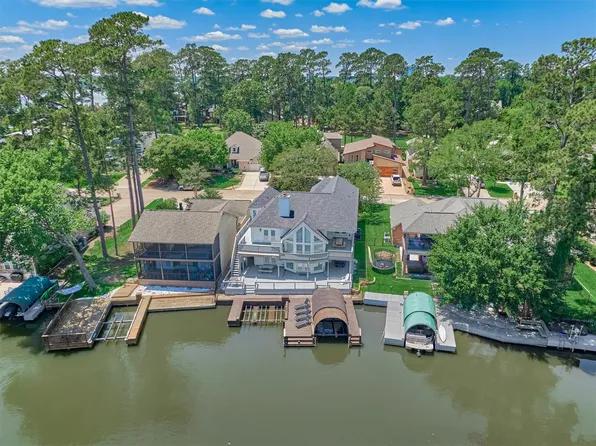
Before You Fall in Love With the Lake View, Price the Risk Too
What Should You Know About Flood Risk and Insurance Before Buying on Lake Conroe?
You find the house.
The view is incredible.
You stand on the patio looking across the lake and start imagining:
Morning coffee.
Sunsets.
Boat behind the house.
Friends visiting.
Weekends outside.
Then someone asks:
“Have you checked the insurance yet?”
And suddenly the conversation becomes much less glamorous.
But it is one of the most important conversations a Lake Conroe buyer can have.
Because waterfront and near-water properties should be evaluated as complete ownership packages.
That includes:
The house.
The view.
The dock.
The shoreline.
The insurance.
The flood information.
The deductibles.
And the potential costs associated with maintaining a property exposed to the lake environment.
The goal is not to become afraid of waterfront property.
The goal is to understand what you're buying before emotion makes the decision for you.
Start Insurance Research Earlier Than You Think
Many buyers wait until they're deep into a transaction before obtaining property-specific insurance information.
That can create unnecessary surprises.
If you're seriously considering a Lake Conroe property—particularly one on or close to the water—begin talking with an insurance professional early enough for the information to influence your decision.
You want to know whether the property can be insured in a way that:
Meets lender requirements where applicable.
Provides the coverage you want.
Uses deductibles you're comfortable carrying.
Fits your overall ownership budget.
Don't Use Someone Else's Insurance Premium
Your friend owns a house three streets away.
They pay a certain amount.
Helpful conversation.
Not your quote.
Insurance pricing can depend on many property- and policy-specific factors.
Potential considerations may include:
Construction.
Roof information.
Age.
Coverage limits.
Deductibles.
Claims-related information where applicable.
Property location.
Additional structures.
Insurer underwriting.
Your own policy choices.
Get information for the actual address.
Premium Is Only Half the Insurance Question
Buyers naturally ask:
“How much is it?”
Good question.
Now ask:
“What am I getting for that amount?”
A lower premium is not automatically a better policy.
Understand:
Coverage limits.
Deductibles.
Exclusions.
Endorsements.
Replacement-cost provisions where applicable.
Coverage for detached or waterfront structures.
Other relevant terms.
Insurance should be evaluated as a contract—not simply another monthly bill.
The Deductible Can Change How Comfortable the Policy Feels
This deserves particular attention in Texas.
Ask what deductibles apply to different types of loss.
Do not assume every claim uses the same deductible.
Depending on the policy, certain weather-related losses may have different deductible structures.
Your insurance professional can explain the policy you're considering.
The important question is:
If we actually had to use this policy, would we be financially comfortable with our portion of the loss?
Convert Percentage Deductibles Into Dollars
If a deductible is expressed as a percentage, don't leave it as an abstract percentage in your head.
Ask your insurance professional to help you understand what it means in actual dollars based on the applicable insured value.
A percentage can sound small.
The dollar amount may feel very different.
Budget with the number you'll actually have to pay.
Homeowners Insurance and Flood Insurance Are Different Conversations
This is critical.
Standard homeowners insurance and flood insurance generally address different types of risk and coverage.
Do not assume:
“We have homeowners insurance, so water damage is covered.”
The source and nature of water can matter.
Talk with qualified insurance professionals about what your policies cover and where separate flood coverage may be required or advisable.
Don't Ask Only: “Is It in a Flood Zone?”
That's a starting question.
Not the complete due-diligence process.
Buyers may also want to understand available information concerning:
Property-specific flood maps.
Elevation.
Drainage.
Prior flooding or water intrusion disclosed or otherwise documented.
Nearby waterways.
Historical conditions.
Insurance requirements.
Property topography.
The specific home matters more than a broad neighborhood assumption.
Flood Maps Are Useful—But They Are Not Crystal Balls
Flood maps provide important information.
They do not guarantee what will or will not happen at a property in the future.
Likewise, a property being outside a particular higher-risk mapped area does not mean it has zero flood risk.
Use flood-map information as one part of a broader investigation.
Look at the Elevation of the House Relative to the Water
When touring waterfront property, don't look only outward toward the lake.
Turn around.
Look back at the house.
How does it sit relative to:
Shoreline.
Dock.
Yard.
Neighboring properties.
Street.
Understanding the physical relationship between the structure and surrounding land can help you know what questions to ask.
Elevation Certificates Can Provide Useful Information When Available
Depending on the property and circumstances, an elevation certificate may exist or may be relevant to the buyer's due diligence or insurance process.
Ask qualified professionals whether one is available or useful for the specific property.
Don't assume every waterfront home has the same documentation.
Seller Flood History Is Important Information
Review applicable seller disclosures and other available records carefully.
Questions may include:
Has the property experienced flooding?
Water intrusion?
Storm-related damage?
Shoreline damage?
Dock damage?
What repairs were completed?
Documentation may help provide context.
The important thing is to investigate rather than assume.
“It Has Never Flooded” Is Not a Future Guarantee
Past history can be reassuring.
But it does not guarantee future conditions.
Weather.
Drainage.
Development.
Lake conditions.
Storm intensity.
Other factors can change.
Treat historical information as context—not certainty.
And Prior Flooding Does Not Automatically Mean “Never Buy”
The opposite overreaction can also occur.
If a property experienced a prior event, investigate.
What happened?
When?
How much water?
What was damaged?
What repairs were made?
Who completed the repairs?
What documentation exists?
Were preventive measures added?
A fact deserves investigation, not an automatic emotional conclusion.
Drainage Still Matters on Waterfront Property
Buyers may think:
“The lake is right there. Water just drains toward it.”
Don't assume.
Look at:
Lot grading.
Low areas.
Gutters.
Downspouts.
Drains.
Patios.
Pool decking.
Neighboring elevations.
Retaining structures.
Water movement around a home can be more complicated than it appears.
Heavy Rain Tells You More Than a Sunny Showing
When timing and weather make it practical, revisiting a serious property after meaningful rainfall can provide useful observations.
Look at:
Standing water.
Drainage paths.
Street conditions.
Low areas.
How water moves around patios and structures.
You are not diagnosing the property yourself.
You are gathering information and identifying questions for qualified professionals.
The Shoreline Is Part of the Ownership Picture
Depending on the property, the shoreline may include:
Bulkhead.
Seawall.
Natural shoreline.
Retaining structures.
Other stabilization.
These features can play an important role in the property and may eventually require maintenance or repair.
Understand what exists.
Bulkhead Condition Can Matter Financially
A waterfront home may have a beautiful kitchen and a beautiful view.
But if significant shoreline infrastructure requires work, that may deserve more immediate financial attention than cosmetic renovations.
If you have questions about a bulkhead or other shoreline structure, appropriate specialist evaluation may be worthwhile.
Ask About Shoreline Work History
When information is available, ask:
When was the bulkhead installed?
Has it been repaired?
Has shoreline stabilization work been completed?
Is documentation available?
Was engineering involved where relevant?
Don't assume age from appearance alone.
Dock Coverage Should Be Discussed Specifically
If the property has a dock that is important to your purchase, ask your insurance professional how the proposed policy treats it.
Do not assume the dock receives the same type or amount of coverage as the main residence.
Ask about:
Structure coverage.
Limits.
Exclusions.
Storm damage.
Electrical equipment.
Boat lift.
Other attached or detached waterfront improvements.
The exact policy language matters.
A Boat Lift May Need Its Own Conversation
For a serious boater, the lift can be a valuable piece of equipment.
It may also be costly to repair or replace.
Understand:
What is included with the property.
Approximate age where known.
Condition.
Capacity.
Maintenance.
How your insurance handles it.
A lift is more than a convenience.
It is another system you're acquiring.
The Boat Is Not Automatically Covered by the Home Policy
If you're planning the full Lake Conroe lifestyle, remember that the boat itself may require separate insurance considerations.
Discuss:
Boat coverage.
Liability.
Physical damage.
Storage.
Navigation area.
Other relevant terms
with an appropriate insurance professional.
The home and boat are connected in your lifestyle but may be insured differently.
Liability Deserves Attention Around Water
Waterfront properties may create additional lifestyle considerations involving:
Dock use.
Swimming.
Boats.
Guests.
Pools.
Outdoor entertaining.
Ask your insurance professional whether your liability coverage appropriately reflects how you plan to use the property.
Some owners may also discuss umbrella coverage with their insurance or financial professionals depending on their situation.
Pools Create Their Own Insurance Questions
If the property has both a pool and lake access, understand how each relates to:
Liability.
Safety features.
Policy requirements.
Coverage.
Maintenance.
A beautiful backyard can contain several separate ownership systems.
Don't Forget Detached Structures
Waterfront properties can include:
Guest houses.
Boat houses.
Detached garages.
Outdoor kitchens.
Gazebos.
Storage buildings.
Other improvements.
Make sure your insurance conversation includes the complete property, not simply the main house.
Replacement Cost Matters More Than Purchase Price Alone
You may buy a home for one amount.
The cost to rebuild it after a major covered loss may be different.
Insurance professionals use their own methods to estimate appropriate dwelling coverage.
Don't assume:
Purchase price = required dwelling coverage.
Ask how the coverage recommendation was developed.
Luxury Finishes May Need Additional Consideration
A Lake Conroe property may include:
Custom cabinetry.
Premium appliances.
Extensive outdoor improvements.
Specialty materials.
High-end fixtures.
If the home contains features that would be expensive to replace, make sure the proposed coverage appropriately reflects the property.
Review What Happens to Personal Property Too
Lake homes can contain valuable:
Furniture.
Electronics.
Outdoor equipment.
Fishing gear.
Water-sports equipment.
Tools.
Artwork.
Other belongings.
Understand personal-property coverage and any special limitations that could apply to certain categories.
Second Homes Can Be Underwritten Differently
If the Lake Conroe property will not be your primary residence, tell the insurer.
Don't assume a policy designed for an owner-occupied primary residence automatically fits a second home.
Potential considerations may include:
Occupancy.
How often the home is vacant.
Security.
Property monitoring.
Rental activity.
Distance from primary residence.
Other underwriting factors.
Accurate use information matters.
Vacancy Is Not the Same as Normal Second-Home Use
A second home may regularly sit unoccupied.
Policies can define vacancy and occupancy in particular ways.
Ask how the proposed coverage treats periods when nobody is there.
Do not wait until a claim to learn that a policy condition mattered.
Smart Monitoring Can Be Useful for Second Homes
Depending on your setup, technology may help monitor:
Water leaks.
Temperature.
Power.
Security.
Doors.
Garage.
Cameras.
Some insurers may have specific requirements or potential discounts related to certain systems, but verify rather than assume.
Technology is helpful.
It is not a replacement for proper coverage or maintenance.
Short-Term Rental Plans Can Change Insurance Needs
You may think:
“We'll rent the property occasionally when we're not using it.”
That should trigger several separate investigations.
Verify:
HOA rules.
Deed restrictions.
Applicable regulations.
Lender requirements where relevant.
Tax considerations.
Insurance.
A policy intended for personal use may not automatically provide the coverage appropriate for short-term rental activity.
Don't Assume Rental Platforms Solve the Insurance Question
If a rental platform advertises certain protections, understand exactly what those protections are and how they interact with your own policy.
Do not treat platform coverage as an automatic replacement for appropriate insurance.
Your insurance professional should know how you intend to use the property.
Insurance Cost Is Part of Affordability
The home is listed at $850,000.
You calculate the mortgage.
Fine.
But affordability also includes:
Property taxes.
Homeowners insurance.
Flood coverage if applicable or desired.
HOA.
Maintenance.
Dock.
Pool.
Boat.
Landscaping.
Potential waterfront infrastructure.
The monthly payment is only one part of the Lake Conroe ownership budget.
Two Homes at the Same Price Can Have Different Risk Costs
Imagine two $900,000 properties.
Home A
Direct waterfront.
Dock.
Pool.
Shoreline infrastructure.
Home B
Nearby lake access.
No direct waterfront.
No dock.
Different lot.
Their purchase price may be similar.
Their insurance and maintenance structures may not be.
Get property-specific information.
The Cheaper Waterfront Home Can Become the More Expensive One
A lower purchase price can be appealing.
But if the property also has:
Higher insurance.
Older dock.
Bulkhead work.
Pool repairs.
Exterior maintenance.
the total ownership picture may change quickly.
Compare beyond price.
Build a Waterfront Ownership Budget
For serious contenders, include:
Housing
Mortgage-related payment.
Property taxes.
HOA where applicable.
Insurance
Homeowners.
Flood-related coverage where applicable or desired.
Boat or other coverage if relevant.
Waterfront
Dock maintenance.
Lift.
Bulkhead or shoreline.
Outdoor
Pool.
Landscaping.
Tree care.
Reserves
Money available for unexpected repairs.
Now you have a more realistic picture of affordability.
Don't Use an Insurance Quote From Six Months Ago
Insurance markets and property-specific underwriting can change.
When you're making an actual buying decision, obtain current information.
The number that mattered during an earlier search may not reflect the property or policy you're considering now.
Ask What Information the Insurer Needs
Obtaining an accurate quote may require property details.
Potential examples can include:
Roof age.
Construction type.
Square footage.
Previous claims information where available and relevant.
Distance or relationship to water.
Additional structures.
Intended occupancy.
The more accurate the property information, the more useful the quote.
Roof Condition Can Affect the Insurance Conversation
Roof age and condition may influence:
Eligibility.
Premium.
Deductibles.
Coverage options.
Depending on the insurer and policy.
This is another reason buyers should investigate roof information early rather than treat it as only an inspection issue.
Don't Confuse Insurability With Condition
An insurer being willing to write a policy does not mean the home is in excellent condition.
And an inspector identifying maintenance does not automatically mean the property cannot be insured.
Insurance and inspection answer different questions.
Use both.
Lender Requirements and Personal Risk Tolerance Are Different
Your lender may require certain insurance.
That establishes a minimum for the loan.
But you may personally want additional coverage or lower deductibles.
Your goal isn't only satisfying the lender.
It's protecting yourself in a way that fits your comfort level and financial situation.
Cash Buyers Still Need the Insurance Conversation
No lender?
You may have more freedom.
That does not make risk disappear.
Cash buyers should still consider:
Property protection.
Liability.
Flood risk.
Waterfront structures.
Their ability to absorb a major loss.
No mortgage requirement does not mean no insurance decision.
Understand What You Could Comfortably Self-Insure
Insurance always involves deciding which risks are transferred and which you retain.
Higher deductible?
Lower deductible?
Additional coverage?
Your financial reserves matter.
Talk with appropriate insurance and financial professionals about what fits your situation.
The Emergency Fund Looks Different on a Waterfront Property
Every homeowner should expect maintenance.
A waterfront owner may also eventually face specialized expenses involving:
Dock.
Lift.
Shoreline.
Pool.
Storm-related repairs.
Outdoor structures.
That doesn't mean all of these will occur.
It means reserves can make ordinary ownership issues less stressful when they do.
Don't Spend Every Available Dollar at Closing
This becomes particularly important when the property contains many systems.
A buyer may want to put every available dollar into:
Down payment.
Closing.
Furniture.
Boat.
Then have very little left for:
Maintenance.
Deductible.
Unexpected repair.
Keeping post-closing liquidity can be valuable.
Discuss your specific situation with appropriate financial professionals.
Don't Let the Sunset Make You Stop Asking Questions
This is the emotional part.
You are standing on the dock.
Sunset.
Lake is calm.
Everything feels perfect.
Someone says:
“Can you imagine living here?”
Yes.
Of course you can.
That's why you're buying near Lake Conroe.
Enjoy the moment.
Then return to the practical questions.
What does the insurance cost?
What is the deductible?
What flood information is available?
What is the condition of the shoreline?
What does the dock need?
What are our reserves?
Emotion chooses what you love.
Due diligence helps determine whether you can comfortably own it.
Use the “Deductible Tomorrow” Test
Imagine a covered event occurs one month after closing.
Could you comfortably pay the applicable deductible?
If the answer is:
“That would wipe out everything we have left,”
you may need to reconsider:
Policy structure.
Purchase budget.
Post-closing reserves.
The goal is financial resilience.
Use the “No Boat for a Year” Test
Suppose you're repairing the dock.
Or the boat is unavailable.
Would you still love owning the property?
If yes, the waterfront has broader value to you.
If not, you may be paying heavily for one narrow part of the lifestyle.
Use the “Storm Is Coming” Test
Imagine significant weather is forecast.
What does ownership require?
Secure furniture.
Check dock.
Monitor boat.
Protect equipment.
Prepare property.
Does that responsibility fit you?
Some buyers enjoy hands-on ownership.
Others prefer simpler property management.
Know yourself.
Use the “Five-Year Ownership” Test
Don't ask only what insurance costs today.
Think about the broader five-year ownership picture.
Could you comfortably handle:
Premium changes.
Maintenance.
Deductibles.
Dock work.
Pool repair.
Tree care.
Other normal expenses?
You cannot predict exact amounts.
You can make sure your purchase leaves room for uncertainty.
Create a Lake Conroe Risk-and-Cost Scorecard
For your serious contenders, rate:
Insurance Availability
Can you obtain the coverage you want?
Premium
How does the cost fit your budget?
Deductibles
Could you comfortably absorb them?
Flood Information
What property-specific information is available?
Drainage and Elevation
What do you know, and what deserves further evaluation?
Shoreline
What is the condition of bulkhead or other infrastructure?
Dock and Lift
What condition and insurance considerations apply?
Prior Damage
What do disclosures and available records show?
Additional Structures
Are they properly understood and insured?
Maintenance Exposure
How many specialized systems are you taking on?
Financial Reserves
Would you still have appropriate breathing room after closing?
Now compare.
A slightly more expensive home with stronger infrastructure may sometimes feel financially safer than a cheaper property with several unknowns.
Final Thoughts
Waterfront living on Lake Conroe can be extraordinary.
But the lake should not make the financial questions disappear.
If anything, it makes property-specific due diligence more important.
Before buying, understand:
Insurance.
Deductibles.
Flood information.
Drainage.
Elevation where relevant.
Dock.
Boat lift.
Bulkhead or shoreline.
Previous damage.
Maintenance.
Financial reserves.
Not because something is necessarily wrong.
But because the best waterfront purchase is one where you understand both:
what makes the property special
and
what taking care of that property may require.
So when you find the Lake Conroe house with the view you cannot stop thinking about, enjoy it.
Take the photo.
Imagine the mornings.
Then make the phone calls.
Get the quotes.
Review the records.
Ask the questions.
Because loving the lake is easy.
The smarter goal is making sure you can comfortably protect and maintain the home that lets you enjoy it.
Frequently Asked Questions
Should I get an insurance quote before making an offer on a Lake Conroe home?
When insurance cost or availability could materially affect your decision, obtaining property-specific information early can help reduce surprises. Discuss timing with your real estate and insurance professionals.
Is homeowners insurance the same as flood insurance?
No. They generally address different types of losses. Buyers should discuss property-specific coverage and flood considerations with qualified insurance professionals.
Does being outside a higher-risk mapped flood area mean a property cannot flood?
No. Flood maps are important tools, but no property should be considered completely free of flood risk based solely on a map designation.
Should I ask whether a Lake Conroe home has flooded before?
Yes. Review applicable seller disclosures and other available property information, and investigate further when water intrusion or prior damage is material to your purchase decision.
Does homeowners insurance automatically cover a dock?
Do not assume it does. Coverage for docks, boat houses, lifts, and other waterfront structures can vary by policy. Ask your insurance professional specifically.
What should I know about a bulkhead before buying?
Understand the type, condition, available age and repair history, and whether professional evaluation is appropriate. Shoreline infrastructure can represent an important maintenance responsibility.
Should second-home buyers tell the insurance company the property will not be occupied full time?
Yes. Intended occupancy and use should be accurately disclosed so the insurer can recommend appropriate coverage.
Does renting a Lake Conroe home occasionally affect insurance?
It can. Buyers considering rental use should investigate HOA and deed restrictions, applicable regulations, lender requirements where relevant, taxes, and appropriate insurance coverage.
Should cash buyers still consider flood and homeowners insurance?
Yes. A lack of lender requirements does not eliminate property, liability, flood, or waterfront risks. Cash buyers should evaluate what risks they are willing and financially able to retain.
What's the biggest takeaway?
Before buying a Lake Conroe home, don't ask only “Can we afford the purchase?” Ask “Can we comfortably insure, maintain, and financially absorb the risks that come with this specific property?” That is a much stronger definition of waterfront affordability.