Your Cypress Home May Be Beautiful—But Is It Easy for Buyers to Understand?
A luxury home can be impressive and still leave buyers confused.
It may have soaring ceilings.
A large kitchen.
Multiple living areas.
A game room.
A study.
A flex space.
An upstairs landing.
Plenty of square footage.
Yet after the showing, buyers say something frustratingly vague:
“We liked it, but we couldn’t quite figure out how we would use the space.”
That sentence matters.
Because buyers are more likely to connect with a home when they can quickly understand how it supports their everyday life.
Beauty captures attention.
Clarity builds confidence.
Buyers Shouldn't Have to Solve the Floor Plan
Some homes immediately make sense.
You walk inside and understand:
This is where everyone gathers.
This is where dinner happens.
This is the home office.
This is where guests stay.
Other homes require more imagination.
A formal dining room has become storage.
The study is filled with exercise equipment.
A game room has no furniture.
A large upstairs landing feels forgotten.
Buyers begin mentally working instead of emotionally connecting.
The more effort it takes to understand a home, the harder it becomes to imagine living there.
Every Room Needs a Clear Job
Luxury homes often include extra spaces, which is a major advantage—when buyers understand their purpose.
Before listing, walk through every room and ask:
“What is this space telling buyers it is?”
A flex room might become:
A home office
A playroom
A fitness room
A reading lounge
A guest retreat
A media room
It doesn't need to appeal to every buyer.
It simply needs to demonstrate possibility.
An empty or cluttered room asks buyers to do too much work.
A thoughtfully presented room gives them a starting point.
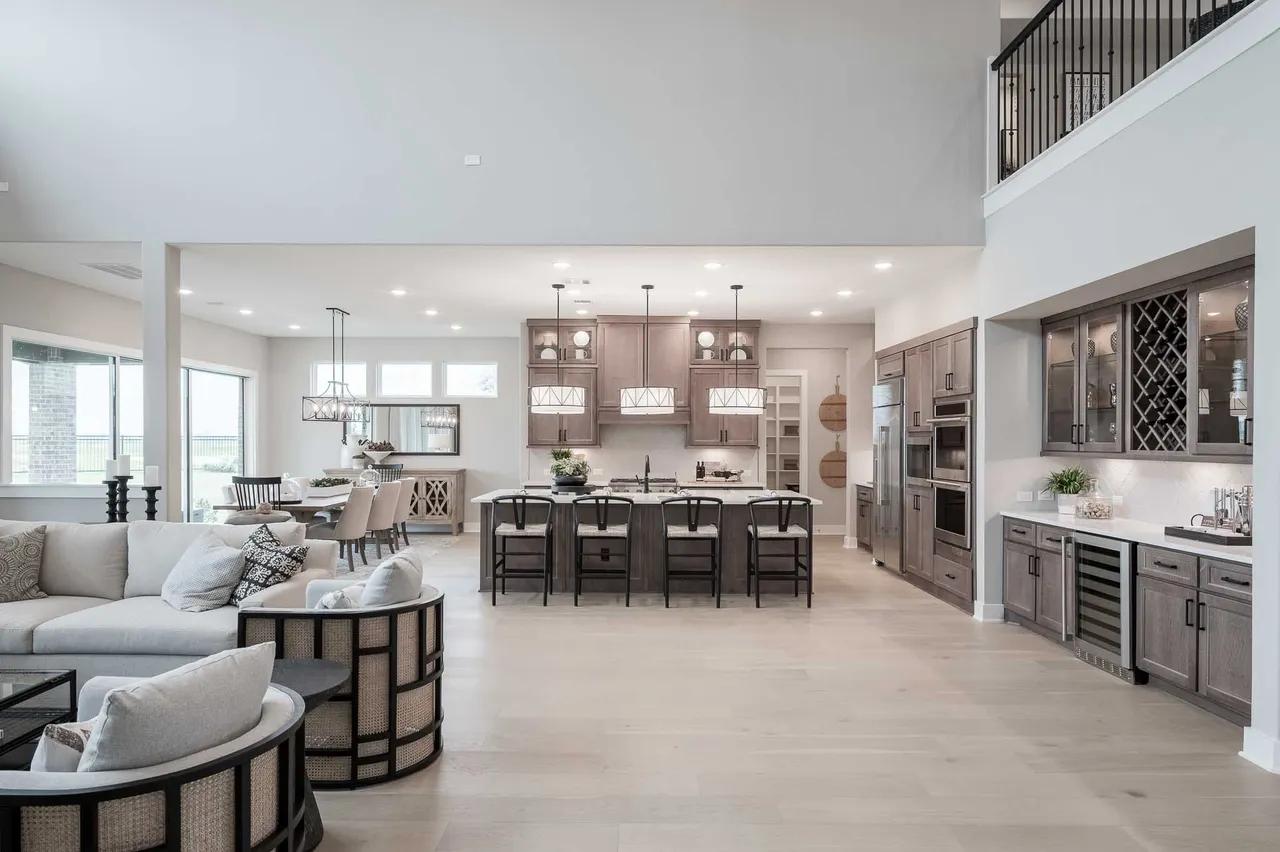
Open-Concept Homes Still Need Definition
Open layouts are popular because they feel spacious and connected.
But without thoughtful furniture placement, they can also feel like one enormous room without direction.
Use furniture to create visual zones.
For example:
A sofa can define the family room.
A rug can anchor the seating area.
Pendant lighting can establish the kitchen.
A dining table can create a natural transition.
Patio furniture can extend the living space outdoors.
The goal isn't to divide the home.
It's to help buyers understand how the spaces work together.
Luxury Buyers Are Visualizing Their Routine
During a showing, buyers aren't only admiring finishes.
They're mentally walking through a typical day.
Where would they drink coffee?
Where would children complete homework?
Could two people work from home comfortably?
Where would guests gather during the holidays?
Would the kitchen become crowded while entertaining?
When the floor plan answers these questions naturally, buyers feel more confident.
When it doesn't, uncertainty begins to grow.
The Best Feature Can Get Lost in the Wrong Setup
Imagine your home has an incredible wall of windows overlooking a lake, greenbelt, or landscaped backyard.
Now imagine a large sectional blocks half the view.
The feature is still there.
But buyers can't fully experience it.
The same thing happens when:
Furniture blocks natural pathways.
Oversized pieces make rooms feel smaller.
Heavy curtains hide natural light.
Exercise equipment distracts from a guest suite.
Too much furniture conceals the architecture.
Presentation should reveal the home's strengths, not compete with them.
Cypress Buyers Often Want Flexible Living
Many buyers moving to Cypress are looking for homes that can adapt to changing needs.
They may want:
A home office today
A nursery next year
A homework area later
A guest suite for visiting family
A media room for teenagers
A downstairs space for multigenerational living
Flexibility is valuable.
But buyers need to see how the home can provide it.
A clearly staged flex space often communicates more value than simply describing it as “an additional room.”
Don't Let Square Footage Feel Wasted
Large homes sometimes include spaces sellers rarely use.
Buyers notice that.
They may begin wondering whether they're paying for rooms they don't need.
The solution isn't to hide those spaces.
It's to give them purpose.
A quiet corner can become a reading area.
An upstairs landing can become a study zone.
A formal living room can become an elegant conversation space.
A wide hallway can feature art and intentional lighting.
When every area contributes to the experience, the entire home feels more valuable.
Try the Five-Second Test
Stand at the entrance of each room.
Give yourself five seconds.
Can you immediately tell:
What the room is?
How furniture fits?
Where people would move?
What the focal point should be?
Why the space adds value?
If not, buyers may feel the same uncertainty.
Sometimes the solution is as simple as removing one piece of furniture, changing the room's arrangement, or giving the space a more obvious purpose.
Final Thoughts
Luxury buyers appreciate beautiful finishes, generous square footage, and impressive amenities.
But they also want a home that feels easy to understand.
When every room has a purpose, every pathway feels natural, and the floor plan supports real life, buyers can stop analyzing the property and start imagining their future.
That transition is important.
Because buyers rarely fall in love while trying to solve a house.
They fall in love when the home already feels like it works.
Frequently Asked Questions
Why does room purpose matter when selling?
Rooms with a clear purpose help buyers understand the floor plan and imagine how the home could support their lifestyle.
Should every room be fully furnished?
Not necessarily. A room only needs enough furniture and décor to demonstrate scale, function, and potential without feeling crowded.
Can an open floor plan feel confusing?
Yes. Open spaces still need visual definition through furniture placement, lighting, rugs, and clear pathways.
What should I do with an unusual flex space?
Give it one realistic purpose that is likely to appeal to your target buyer, such as a home office, fitness room, playroom, or guest retreat.
What's the biggest takeaway?
A luxury home shouldn't make buyers work to understand it. Clear, intentional presentation helps them recognize the home's value and picture themselves living there more quickly.