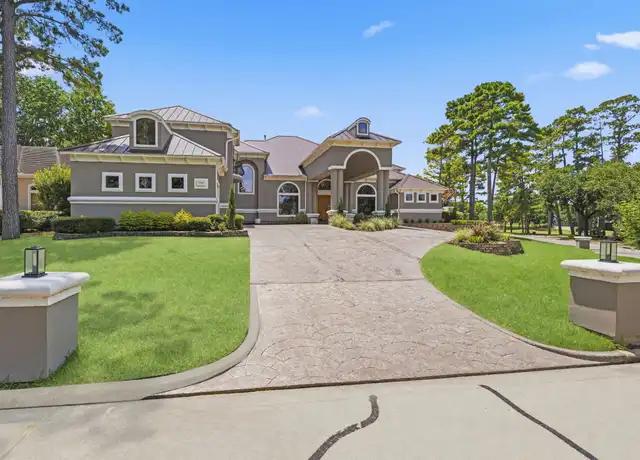
The Lake House Is Perfect. But Can Everyone Actually Get There—and Park?
You love the house.
You love the dock.
You love the view.
Then Saturday happens.
Two friends arrive.
Then family.
Someone brings a truck.
Someone else has a boat trailer.
Now the driveway is full.
The street is tight.
One vehicle is blocking another.
And suddenly the property feels a lot less effortless.
This is why buyers shouldn’t evaluate a Lake Conroe home only from the backyard.
Turn around.
Look at the driveway.
Because lake life often comes with more vehicles, more guests, more gear, and more moving parts than buyers first expect.
Start With Your Actual Household
How many vehicles do you own?
Not someday.
Today.
Cars.
SUVs.
Trucks.
Work vehicles.
Teen drivers.
Boat trailer.
Golf cart where applicable and permitted.
Now compare that with the property.
Does it fit?
Comfortably?
Or technically?
Those are different answers.
A Two-Car Garage Doesn’t Always Mean Two-Car Comfort
Listings are simple.
Two-car garage.
But garages can differ in:
Width.
Depth.
Door size.
Equipment placement.
Storage.
Columns.
Steps.
Ceiling height.
If you drive a large truck or SUV, verify actual fit rather than relying on the label.
Measure the Vehicle You Actually Own
This is easy to overlook.
You know your truck fits your current garage.
That doesn’t mean it fits the next one.
If garage fit matters, know:
Vehicle length.
Width.
Height.
And remember you still need room to:
Open doors.
Walk around it.
Store household items.
A vehicle fitting with two inches to spare may not feel functional.
The Boat Trailer Changes Everything
If you own a boat trailer, ask:
Where does it go?
Garage?
Driveway?
Off-site storage?
Side yard where allowed?
Community storage?
Marina?
HOA rules and property restrictions may affect what is permitted.
Never assume:
“We’ll just leave it beside the house.”
Verify first.
Boat Ownership Creates a Parking Plan
You may have:
Truck.
Trailer.
Boat.
Guest vehicles.
Now you need to understand how the whole property works on launch day.
Can you maneuver the trailer?
Turn around?
Back in?
Get out without moving three cars?
The house may be waterfront, but you may still trailer other recreational equipment.
Think through the routine.
Driveway Shape Matters
A wide driveway can be easier for multiple vehicles.
A long driveway may provide extra parking but require more maneuvering.
A circular drive may simplify arrivals.
A steep driveway may create another set of considerations.
There is no universally best configuration.
Evaluate how it works for your vehicles and guests.
Slope Can Become More Noticeable Than You Expect
That dramatic home elevation may look beautiful.
Now imagine:
Heavy rain.
Groceries.
Older guests.
A trailer.
A low-clearance vehicle.
Walking from the street.
The slope itself isn’t automatically a problem.
You simply need to decide whether it fits your lifestyle.
Look at the Garage Approach
Can you enter straight?
Do you need a sharp turn?
Is there enough room to back out comfortably?
Does landscaping restrict maneuvering?
What happens when another vehicle is parked in the driveway?
These details matter more after closing than they do during a five-minute exterior tour.
Test It With Your Own Vehicle
If practical and permitted, park the vehicle you actually drive in the driveway or garage.
This is better than estimating.
You may discover:
Plenty of room.
Or:
The turning radius is awkward.
Both are valuable things to know before buying.
Guest Parking Deserves Its Own Question
Lake homes can attract visitors.
People hear:
“We bought on Lake Conroe.”
Suddenly everyone wants to come over.
Great.
Now where do they park?
Look at:
Driveway capacity.
Street parking.
Applicable HOA rules.
Nearby restrictions.
Fire lanes.
Private roads.
Other community-specific conditions.
Never assume street parking is unrestricted.
“We Rarely Entertain” Can Change Quickly on the Lake
Maybe today you rarely host.
Then you buy a home with:
Pool.
Dock.
Outdoor kitchen.
Lake view.
Guess what?
You may host more.
The property itself can change your social routine.
Buy enough access for the way you’re likely to use the house, not only the way you currently use your home.
Think About Holidays
Fourth of July.
Memorial Day.
Labor Day.
Birthdays.
Family weekends.
Those can become the days parking matters most.
Imagine eight or ten vehicles arriving.
Does the property still function?
You don’t need to design your entire purchase around one weekend each year.
But know the limitation.
Street Width Matters Too
Some lake-area streets feel spacious.
Others are narrower.
Look at what happens when cars park along both sides.
Can vehicles pass comfortably?
How does the street feel after dark?
How easy is it for guests unfamiliar with the area?
Again, the goal is not to judge.
It’s to understand.
Private Roads Deserve More Research
If the property is on a private road, buyers may need to understand:
Maintenance responsibilities.
Association arrangements.
Access rights.
Costs.
Rules.
Who handles repairs.
Do not assume private automatically means either better or worse.
It simply means the ownership structure may be different.
Road Condition Can Matter for Boats and Trailers
A normal passenger car handles roads differently from a truck pulling a trailer.
If towing is part of your lifestyle, think about:
Turns.
Width.
Grade.
Clearance.
Road surface.
Entry gates.
Access points.
The route to the property becomes part of boating convenience.
Gates Can Be Convenient—or Complicated for Guests
Gated communities may offer a controlled entry environment.
But ask:
How do guests enter?
What happens with deliveries?
Contractors?
Boat service?
Large vehicles?
Are there access codes or procedures?
A system that feels simple once you live there may initially require some planning.
Delivery Access Matters More Than Ever
Think about:
Furniture delivery.
Appliances.
Pool service.
Dock contractors.
Landscapers.
Moving trucks.
Boat maintenance.
Can larger vehicles reach the property easily?
Are there turning constraints?
Gate restrictions?
Street limitations?
Your lake house will occasionally need service vehicles.
Moving Day Is a Good Test
Imagine the moving truck.
Where does it park?
How close can it get to the house?
Are there stairs?
Long carries?
A steep driveway?
This isn’t a reason to reject a property.
But it may affect logistics and cost.
The Garage May Need to Store More Than Cars
Lake living can create gear.
Life jackets.
Fishing equipment.
Coolers.
Water toys.
Tools.
Boat supplies.
Outdoor cushions.
Bikes.
Maybe a freezer.
Now the garage has two jobs:
Parking and storage.
Make sure it can realistically do both.
Storage Can Push Cars Outside
This is how a “three-car garage” becomes a one-car garage.
One bay for:
Boat gear.
One bay for:
Storage.
Now only one car fits.
If inside parking matters, mentally subtract the storage footprint before evaluating capacity.
A Detached Garage Can Be Valuable
Some lake properties may offer detached or additional garage space.
That can provide flexibility for:
Vehicles.
Workshop.
Boat gear.
Storage.
Hobbies.
But evaluate:
Access.
Condition.
Utilities.
Distance from the house.
Rules governing use.
Space is only valuable if it works for you.
Carports and Covered Parking Need the Same Evaluation
Covered parking may be useful.
But ask:
What dimensions?
What clearance?
Is it protected from the weather the way you expect?
How does it integrate with the house?
Again, label versus actual use.
Low-Clearance Vehicles and Boat Towers Matter
If your boat, truck, or trailer has significant height, think about:
Garage-door height.
Carport clearance.
Tree branches.
Entry structures.
Gates.
Overhead utilities where relevant.
Measure before assuming.
Outdoor Gear Needs a Dry Home
Lake properties accumulate things you don’t want sitting outside permanently.
Life jackets.
Electronics.
Fishing equipment.
Cushions.
Tools.
Inflatables.
If storage is limited, those items migrate into:
Garage.
Laundry room.
Guest closets.
Spare bedroom.
The house can feel cluttered surprisingly quickly.
The Dock Doesn’t Replace the Garage
It’s tempting to think:
“Boat stuff stays at the dock.”
Some may.
But weather, security, maintenance, and convenience can make indoor or protected storage important.
Ask where everything actually goes.
A Pool Creates More Gear Too
Pool home?
Add:
Floats.
Cleaning equipment.
Towels.
Chemicals requiring appropriate storage.
Outdoor toys.
Furniture cushions.
If you have pool plus lake, storage can multiply.
Think About Trash Day
Yes, seriously.
Where are trash bins stored?
How far do they travel to pickup?
Are there HOA rules?
Does the driveway slope matter?
Ordinary tasks can reveal how functional a property really is.
Think About Packages Too
Is the front entry easy to access?
Are deliveries protected from rain?
Is there a gate?
Do drivers need special access?
Remote buyers or second-home owners may care even more about delivery logistics.
Second-Home Buyers Have a Different Parking Question
If you’ll use the property only on weekends, you may arrive with:
Two cars.
Boat trailer.
Coolers.
Guests.
Lots of gear.
Everything happens at once.
Your parking needs can actually be more intense during each visit than those of a full-time resident.
Full-Time Buyers Need Daily Ease
If this is your primary residence, ask:
How easy is it to leave for work?
Can two people come and go without moving vehicles?
What happens when a teenager starts driving?
Can the garage support your everyday routine?
The spectacular view doesn’t solve driveway frustration every morning.
Retirees May Prioritize Access Differently
A buyer planning long-term ownership may care more about:
Flat approach.
Minimal stairs.
Easy guest access.
Covered parking.
Short walk from vehicle to entry.
What feels irrelevant at 45 may matter more later.
You don’t need to buy for every possible future.
But long-term accessibility deserves thought.
Outdoor Stairs Can Affect Arrival
Some elevated lake homes may have stairs between parking and the main living level.
That can be perfectly workable.
But imagine carrying:
Groceries.
Luggage.
Coolers.
Packages.
Guests.
Everyday access is part of the floor plan, even when it happens outside.
An Elevator Can Change the Equation
Some multi-level properties may include an elevator or lift.
If so, understand:
What it serves.
Condition.
Maintenance.
Capacity.
Operating requirements.
An elevator can be very useful, but like any mechanical system, it deserves proper evaluation.
Don't Assume You Can Expand Parking Later
That extra lawn looks perfect for another parking pad.
Maybe.
But future changes may depend on:
HOA restrictions.
Impervious-cover limitations where applicable.
Drainage.
Setbacks.
Utilities.
Permitting.
Property configuration.
Do not make the purchase depend on a future parking solution you haven’t verified.
The Same Applies to RVs
If you own or plan to own an RV, investigate before buying.
HOA restrictions.
Driveway size.
Storage rules.
Height.
Length.
Access.
Off-site options.
A large lot does not automatically mean RV storage is permitted.
Golf Carts Need Rules Too
Some lake-area communities may permit or commonly use golf carts under certain conditions.
If that matters to you, verify current applicable rules and street-use requirements rather than assuming.
And ask:
Where would you store it?
Every recreational vehicle takes space.
Build an Arrival Scenario
Picture Friday afternoon.
You arrive with:
Truck.
Boat trailer.
Two children.
Cooler.
Groceries.
Luggage.
Another family arrives ten minutes later.
Does the property still feel easy?
That is a better parking test than looking at an empty driveway during the showing.
Then Build the Quiet Tuesday Scenario
No guests.
Just your normal vehicles.
Can everyone come and go independently?
Can cars fit comfortably?
Is garage access easy?
Does the routine feel simple?
The home should pass both.
Don't Overvalue a Huge Driveway Either
A massive driveway can be useful.
It also means:
More surface to maintain.
More runoff to manage.
More area to clean.
Maybe less landscaped yard.
Everything has a trade-off.
Buy what you need.
Parking Should Support the Lifestyle, Not Dominate It
The goal isn’t maximizing pavement.
It’s ensuring the property functions for:
Your vehicles.
Your guests.
Your recreational equipment.
Your storage.
Your plans.
without creating unnecessary frustration.
Compare Finalists With a Logistics Score
For each home, rate:
Garage Fit
Do your actual vehicles fit comfortably?
Driveway
Can multiple vehicles maneuver?
Guest Parking
What happens during gatherings?
Trailer Access
If relevant, can you tow and store easily?
Storage
Where does lake equipment go?
Road Access
Are routes practical?
Future Flexibility
Do you need improvements, and are they feasible?
This can reveal differences the lake view hides.
The Perfect Dock With the Wrong Access Can Still Be the Wrong House
This is the key.
You can have:
Perfect water.
Perfect dock.
Perfect sunset.
But if every weekend arrival becomes a game of moving cars and trailers, frustration accumulates.
Likewise, a slightly less dramatic waterfront property with excellent logistics may fit your life much better.
Final Thoughts
Lake Conroe buyers naturally look toward the water.
They should.
That’s part of why you’re there.
But before making an offer, turn around and look the other direction.
At the driveway.
Garage.
Street.
Gate.
Parking.
Storage.
Road access.
Because lake living often means more than one car in a garage.
It can mean:
Guests.
Boats.
Trailers.
Coolers.
Equipment.
Contractors.
Deliveries.
Family weekends.
And ordinary Monday mornings.
The best Lake Conroe home should make all of that feel manageable.
So yes, ask:
“How quickly can we get from the dock to open water?”
But ask another question too:
“How easily can everyone get from the road to our front door?”
If both answers work, you may have found a property that supports the lake lifestyle from both sides.
Frequently Asked Questions
Should Lake Conroe buyers measure the garage?
If vehicle fit is important, actual garage dimensions can be more useful than relying only on a “two-car” or “three-car” label.
Can I store a boat trailer in the driveway?
Rules vary by property and community. Buyers should verify HOA, deed restriction, and other applicable requirements before assuming trailer storage is permitted.
Should guest parking affect my home choice?
If you expect to entertain frequently, yes. Consider driveway capacity, street parking rules, and how the property functions during gatherings.
Can I add more driveway or parking after buying?
Possibly, but buyers should investigate HOA requirements, permitting, drainage, utilities, setbacks, and other property-specific restrictions before relying on future expansion.
Are steep driveways a problem?
Not automatically. Their importance depends on your vehicles, trailers, mobility needs, weather, and personal preferences.
What’s the biggest takeaway?
When buying a Lake Conroe home, evaluate access and logistics as carefully as the waterfront. A beautiful property works best when your vehicles, guests, boats, trailers, and everyday routines fit comfortably too.