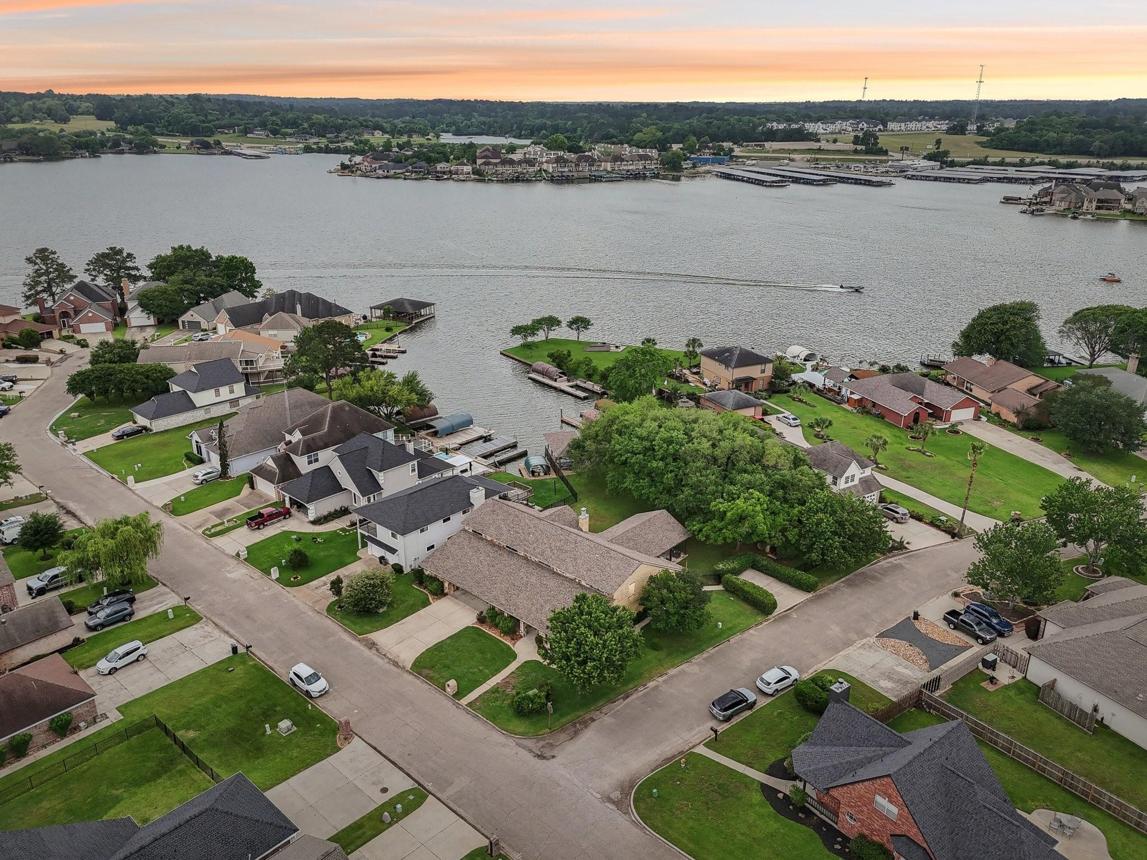
Weekend Lake House or Everyday Home? Don't Buy One Expecting It to Be the Other
Friday afternoon.
You arrive at the lake.
Open the back door.
Drop the bags.
Change clothes.
Walk outside.
Water.
Boat.
Sunset.
Everything about the house feels perfect.
Now imagine the same property at 6:15 Tuesday morning.
You're getting ready for work.
Someone needs to leave for school.
You're out of groceries.
A package is arriving.
The internet needs to handle two video meetings.
The boat isn't going anywhere.
Suddenly, you're evaluating an entirely different house.
That's why Lake Conroe buyers should answer one question early:
Is this property primarily a weekend escape, an everyday residence, or does it genuinely need to do both?
Because those are not always the same home.
Weekend Buyers Can Forgive Things Full-Time Buyers Can't
A weekend property doesn't necessarily need to solve every daily-life problem.
Maybe the pantry is small.
You bring groceries for two days.
Maybe closet space is limited.
You keep a few clothes there.
Maybe the commute isn't ideal.
You're not doing it every morning.
Maybe the kitchen is smaller.
You're grilling outside half the weekend.
Those compromises can be perfectly reasonable.
Move into that same property full time?
They may start feeling very different.
Start With Monday Morning
Forget Saturday afternoon for a minute.
If you're considering full-time Lake Conroe living, imagine Monday.
What time do you wake up?
Where are you going?
How long does it take?
Who else needs to leave?
What happens if traffic is heavier?
Where do you stop on the way home?
The house needs to work when the lake isn't the day's main event.
Your Commute Becomes Part of the Property
Lake views can make buyers generous with commute times.
During the showing:
“I wouldn't mind driving a little farther for this.”
Maybe you won't.
But test it.
Drive the route during your actual commute window when practical.
Do it both directions.
Think about frequency.
A 15-minute difference doesn't sound dramatic until you're doing it twice a day, several days a week.
Weekend Buyers Need a Different Location Test
If you're buying primarily for weekends, your question may not be:
“How close is work?”
Instead:
How easy is it to reach the property Friday evening?
How convenient are groceries?
How quickly can we get to the lake?
Where will guests come from?
Can we arrive late without the trip becoming exhausting?
A second home's convenience should be measured from the life you're leaving to get there.
Friday Traffic Matters
This is easy to overlook.
Your weekend home may be an easy drive Tuesday at noon.
But when will you actually travel there?
Friday afternoon.
Holiday weekends.
Saturday morning.
Test realistic travel conditions.
A weekend property you rarely use because getting there feels like an ordeal isn't serving its purpose.
Now Talk About Groceries
Full-time residents need everyday convenience.
Weekend owners may approach things differently.
But both should know:
Where will you buy groceries?
How far is it?
What happens when you forget one ingredient?
Where are the pharmacies?
Where are the everyday services you use?
Lake life feels less relaxing when every small errand becomes a project.
Restaurants Aren't the Same as Everyday Convenience
Lake Conroe offers waterfront dining and recreational destinations that can be a fun part of the lifestyle.
But full-time living requires more than Saturday-night dinner.
Think about your ordinary week:
Coffee.
Dry cleaning.
Gym.
Medical appointments.
Pet care.
Home improvement supplies.
Takeout.
Groceries.
The boring stuff matters.
Because most of life is made of boring stuff.
Internet Is Not a Small Detail
If you're working remotely, this moves near the top of the list.
Don't assume.
Investigate service options available to the specific property.
Think about:
Connection type.
Available providers.
Expected speeds.
Reliability.
Backup options if connectivity is critical.
A spectacular lake view is not especially helpful when your video meeting freezes every twelve seconds.
Remote Work Changes the Floor Plan Too
A weekend house may need somewhere to occasionally open a laptop.
A full-time remote worker may need:
A dedicated office.
Door.
Natural light.
Privacy.
Reliable internet connection.
Separation from household activity.
If two adults work remotely, one office may not solve the problem.
Tour accordingly.
Storage Is Completely Different Full Time
Weekend home:
Swimsuits.
Towels.
Boat gear.
A few clothes.
Full-time home:
Everything you own.
Holiday decorations.
Documents.
Tools.
Luggage.
Seasonal clothing.
Cleaning supplies.
Sports equipment.
Kitchen appliances.
The same house can feel spacious in one scenario and cramped in the other.
The Garage Matters More Than You Think
Lake-area households can accumulate equipment.
Depending on your lifestyle:
Vehicles.
Boat trailer.
Golf cart where applicable and permitted.
Bikes.
Fishing gear.
Coolers.
Water toys.
Tools.
Outdoor equipment.
A garage can fill quickly.
Don't simply count bays.
Decide what needs to fit inside them.
Weekend Houses Need Storage Too—Just Different Storage
You may want somewhere to leave:
Life jackets.
Fishing equipment.
Water toys.
Coolers.
Outdoor cushions.
Boat supplies.
Extra towels.
Cleaning products.
The goal of a second home is convenience.
If you have to transport half your belongings every weekend, it starts feeling less like an escape.
Maintenance Feels Different When You're Not There
This is a major second-home consideration.
If the property sits empty during the week, ask:
Who notices when something goes wrong?
A leak?
HVAC issue?
Storm damage?
Pool problem?
Irrigation issue?
Security concern?
A primary residence is usually observed every day.
A second home may not be.
That changes how you think about maintenance and monitoring.
Smart-Home Features Can Be Particularly Useful
For a second home, buyers may appreciate technology that helps them monitor certain aspects of the property remotely.
Depending on the system, that might include:
Security.
Cameras.
Locks.
Thermostats.
Water-leak sensors.
Garage doors.
Lighting.
Other devices.
Technology isn't a substitute for proper maintenance, but remote visibility can be useful when you're miles away.
Who Takes Care of the Pool on Wednesday?
You love the pool.
Great.
If you're only at the property on weekends, decide how it will be maintained.
Same with:
Lawn.
Landscaping.
Dock.
Exterior.
Irrigation.
Pest control.
A low-stress weekend home often requires a good maintenance plan.
Otherwise, Saturday morning becomes:
“Let's spend four hours working on the house.”
That's Fine—If You Enjoy It
Some people love maintaining a second property.
Yard work.
Boat work.
Projects.
Cleaning.
It's part of the experience.
Others want to arrive Friday and immediately relax.
Know which person you are.
Your maintenance tolerance should influence the property you buy.
Bigger Isn't Always Better for a Weekend House
You imagine:
Five bedrooms.
Game room.
Huge kitchen.
Massive yard.
Perfect for guests.
But how often will twenty people actually be there?
A larger property can mean more:
Furniture.
Cleaning.
Utilities.
Maintenance.
Repairs.
For some buyers, that's absolutely worth it.
For others, a smaller, incredibly functional lake property may create a much easier weekend experience.
But Full-Time Buyers May Need the Extra Space
If Lake Conroe will be your primary residence, you may need the rooms a weekend buyer can skip.
Office.
Storage.
Larger pantry.
Utility room.
Garage.
Guest space.
Multiple living areas.
Don't buy a charming weekend floor plan and assume you'll somehow make it function like a full-time family home.
Guest Space Can Become a Trap
Lake homes attract guests.
Suddenly everyone wants to visit.
That's fun.
But don't buy an enormous property solely for the three weekends each year when everyone comes.
Ask whether flexible spaces could work instead.
Bunk room.
Game room with sleeping options.
Guest room plus flex space.
The right answer depends on how often you actually host.
Your Outdoor Space May Matter More Than Another Bedroom
For many Lake Conroe buyers, the most valuable “room” isn't inside.
It's:
Covered patio.
Pool deck.
Outdoor kitchen.
Dock.
Seating area.
Yard overlooking the lake.
If entertaining is central to your lake lifestyle, outdoor functionality may deserve more attention than an additional interior room.
Shade Is a Feature
Texas summer.
Three o'clock.
Your enormous patio has no cover.
You now understand.
When evaluating outdoor living, look at:
Covered areas.
Home orientation.
Trees.
Fans.
Shade structures.
Relationship between indoor and outdoor areas.
Outdoor square footage isn't useful if you never want to sit there.
The Kitchen-to-Patio Route Matters
This is a small thing that becomes a big thing.
You're entertaining outside.
Someone needs:
Ice.
Drinks.
Plates.
Food.
Napkins.
Repeat that twenty times.
How far is the kitchen?
Are there stairs?
Does the route make sense?
A lake house designed around outdoor living should make movement between inside and outside easy.
Full-Time Buyers Should Imagine February
Not just July.
What happens when:
It's cold.
It's raining.
You're not boating.
Nobody is sitting on the patio.
Do you still love the house?
The floor plan?
The neighborhood?
The location?
The interior?
A full-time home has to survive the months when the lake isn't the star of the day.
Weekend Buyers Should Imagine a Rainy Saturday Too
Same principle.
You drove all the way there.
Now it's raining.
Everyone is inside.
Is there enough room?
Games?
Movies?
Comfortable seating?
Covered outdoor area?
A good weekend property should still be enjoyable when the weather refuses to cooperate.
The “Both” Buyer Has the Hardest Job
Maybe you're saying:
“We'll use it on weekends now and move there full time later.”
That's common.
Now the property has to pass two tests.
Does it work as an easy second home today?
And:
Could it realistically become our primary residence later?
Think ahead about:
Commute.
Office.
Storage.
Healthcare access.
Daily errands.
Stairs.
Maintenance.
Space.
The future version matters.
Don't Overpay for a Lifestyle You'll Use Twice a Month
This is where buyers should be especially honest.
How often will you realistically visit?
Every weekend?
Twice a month?
Summer only?
Occasional holidays?
There's no wrong answer.
But the frequency should influence how much of your budget you want tied to the property.
A dream home that sits empty 90% of the year deserves a different financial analysis from your primary residence.
And Don't Underbuy a Home You're About to Live In Every Day
The reverse mistake happens too.
You think:
“It's the lake. We can compromise.”
Then you move in permanently.
Six months later:
Not enough storage.
Commute is exhausting.
No office.
Garage is packed.
Kitchen feels tiny.
The lake is still beautiful.
But the house isn't working.
Full-time living deserves full-time-home standards.
Use the Tuesday/Saturday Test
This is the simplest way to evaluate the property.
Saturday
Friends are visiting.
Weather is beautiful.
You're outside.
The boat is ready.
Does the property work?
Tuesday
Work.
Laundry.
Groceries.
Packages.
School routines if applicable.
Dinner.
Does the property still work?
If the answer is yes to both, you may have found something special.
Final Thoughts
Lake Conroe can support very different versions of home.
A weekend escape.
A full-time residence.
A future retirement home.
A property that begins as one and eventually becomes another.
But the best house for each scenario isn't automatically the same.
Weekend buyers may prioritize:
Easy lake access.
Outdoor living.
Low-maintenance convenience.
Guest flexibility.
Full-time buyers may place more weight on:
Commute.
Storage.
Office space.
Everyday services.
Garage.
Functional floor plan.
And buyers planning to do both need to evaluate both versions honestly.
So don't simply stand on the dock and ask:
“Could we see ourselves here?”
Of course you can.
It's Lake Conroe.
Ask something harder:
“Can we see ourselves here on an ordinary Tuesday?”
If the answer is yes—and Saturday looks pretty great too—you may have found a home that works long after the weekend is over.
Frequently Asked Questions
Is Lake Conroe suitable for full-time living?
Many people use the Lake Conroe area as their primary residence. Whether a specific location works for you depends on your commute, daily destinations, housing needs, services, and lifestyle.
What should I prioritize in a Lake Conroe weekend home?
Consider ease of access, maintenance, outdoor living, lake access, storage for recreational equipment, guest accommodations, and how frequently you'll realistically use the property.
What should remote workers investigate?
Property-specific internet availability and reliability should be investigated, along with whether the floor plan provides appropriate work space.
Is a larger Lake Conroe home better for entertaining?
Not automatically. Outdoor living, flexible guest spaces, kitchen layout, parking, and how rooms connect may matter more than maximum square footage.
Should I buy differently if I plan to move into the property full time later?
Yes. Evaluate both your current second-home needs and likely future primary-residence needs, including storage, accessibility, commute, office space, maintenance, and everyday convenience.
What's the biggest takeaway?
Decide whether you're buying a weekend lifestyle, an everyday home, or both before choosing the property. The right Lake Conroe house should work on the ordinary days—not only when the boat is out and the sunset is perfect.