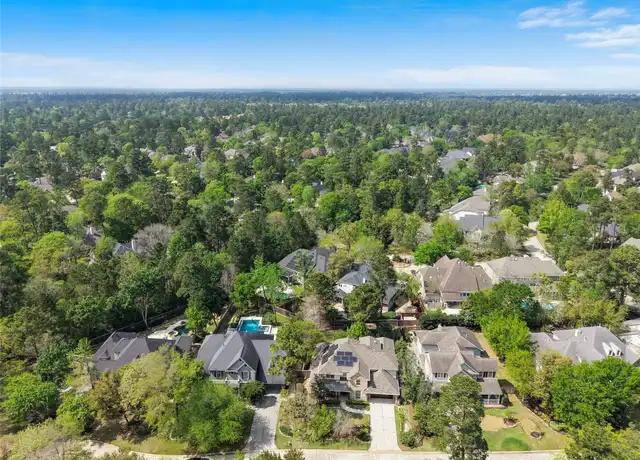
Moving to The Woodlands? Don't Assume You Have to Buy a House Immediately
Should You Buy Immediately When Moving to The Woodlands—or Rent for a Year First?
The relocation offer arrives.
New job.
New city.
New routine.
And suddenly you have:
60 days.
Maybe 90.
You start searching homes online.
Within a week you have saved:
47 houses.
Three villages.
Two completely different price ranges.
And at least one property with a pool that has convinced you:
“Maybe we should just buy something now.”
Then someone says:
“You should rent for a year first.”
Now you are confused.
Because that sounds sensible too.
So which is better?
For someone relocating to The Woodlands, there is no universal answer.
Buying immediately can make perfect sense.
Renting first can also be the smarter decision.
The important question is not:
“What do most relocators do?”
It is:
“How much do we already know about the life we're moving into?”
Buying Immediately Is Not Automatically a Mistake
There is sometimes an assumption that every person moving from another city should:
Rent for one year.
Learn the area.
Then buy.
That can work.
But it can also mean:
Two moves.
Two sets of moving expenses.
Temporary housing.
Storage.
Another home search.
Another transition for the household.
If you already understand The Woodlands well enough to make a confident decision, buying immediately may be perfectly reasonable.
Renting First Is Not “Throwing Money Away”
This phrase creates unnecessary pressure.
Rent can purchase something valuable:
Time and flexibility.
For some relocators, one year of flexibility may prevent a much more expensive real estate mistake.
The decision needs to be evaluated as a whole.
Ask How Well You Actually Know The Woodlands
Have you:
Visited repeatedly?
Spent weekdays here?
Driven your commute?
Explored multiple areas?
Experienced different neighborhoods?
Looked at resale and newer homes?
Understood what different price points actually buy?
If yes:
You may be more prepared to purchase.
If your entire experience consists of:
One weekend relocation trip,
renting deserves consideration.
The Woodlands Is Not One Uniform Neighborhood
A common relocation mistake is searching:
“Homes for sale in The Woodlands.”
Then assuming the results represent one interchangeable lifestyle.
They do not.
Different locations can create different relationships to:
Major roads.
Employment.
Shopping.
Dining.
Parks.
Trails.
Healthcare.
Entertainment.
Even homes themselves can vary considerably in:
Age.
Architecture.
Lot size.
Renovation level.
Neighborhood setting.
That makes location education particularly valuable.
Your First Favorite Area May Not Stay Your Favorite
This happens constantly during relocation.
Before arriving:
“This is definitely where we want to live.”
After spending time here:
“Actually, we prefer this other area.”
That is exactly why exploration matters.
Renting Can Give You Time to Learn Your Routine
After six months you may discover:
Which grocery store you actually use.
Which road you prefer.
How often you go to Market Street.
Whether you use the pathways.
How frequently you travel to Houston.
What your real commute feels like.
Where your friends or coworkers live.
Those patterns can influence where you ultimately buy.
But Renting Creates a Second Move
Do not underestimate this.
You move:
Out of your current home.
Into a rental.
Then:
Out of the rental.
Into your purchased home.
That can mean:
Moving costs.
Deposits.
Utility changes.
Packing twice.
Address changes twice.
Potential storage.
Families May Feel the Second Move More
Especially when the relocation already involves major changes.
A second move can create additional logistical considerations around:
Work.
Activities.
Childcare.
Household routines.
That does not mean renting is wrong.
It means the inconvenience should be included in the decision.
Buying Immediately Can Create Stability
One move.
One home.
Unpack once.
Settle in.
Decorate.
Build routines.
For households already confident in their location:
That can be valuable.
But Do Not Let “We Only Want to Move Once” Force the Wrong Purchase
Moving twice is inconvenient.
Selling a home you regret buying can be considerably more complicated.
Your Job Situation Matters
Ask:
How certain is the position?
Is this a long-term relocation?
Could your work location change?
Are you on a temporary assignment?
Will you travel frequently?
Are you still evaluating the employer?
Someone expecting to stay many years may approach buying differently from someone whose future remains uncertain.
Your Expected Ownership Period Matters
Buying and later selling involve transaction costs.
If there is a meaningful possibility you will relocate again relatively soon:
Discuss the financial implications before rushing into ownership.
Do Not Assume the Home Will Appreciate Enough to Solve Everything
Real estate markets move.
There is no guaranteed appreciation timeline.
Do not make a short-term purchase dependent on:
“We'll just sell it for more in two years.”
Financing Should Be Evaluated Before the House Search Gets Serious
A relocation package does not automatically answer:
How much you should spend.
Speak with an appropriate lender about:
Qualification.
Down payment.
Interest rate.
Monthly payment.
Taxes.
Insurance.
Other housing costs.
Compare Monthly Ownership Cost—Not Just Mortgage Payment
Your housing budget may include:
Principal and interest.
Property taxes.
Homeowners insurance.
Potential flood insurance depending on the property.
HOA-related expenses where applicable.
Utilities.
Maintenance.
Pool expenses if applicable.
Other property-specific costs.
Renting Has Costs Beyond Base Rent Too
Potentially:
Deposits.
Pet fees.
Application fees.
Utilities.
Insurance.
Moving.
Storage.
Lease termination considerations.
Compare complete scenarios.
Your Employer's Relocation Package May Change the Math
Some employers provide assistance with:
Temporary housing.
Moving expenses.
Closing costs.
Home-sale assistance.
Storage.
Other relocation expenses.
Understand exactly what your package provides.
Do Not Assume Every Expense Is Covered
Get the policy in writing.
Timing Can Favor Buying
Maybe:
Your current home has already sold.
You have strong financing.
You know The Woodlands.
You have several months before starting work.
The right property is available.
Buying immediately may be realistic.
Timing Can Favor Renting
Maybe:
You start work in three weeks.
You have never visited The Woodlands.
Your current home has not sold.
Your household is moving later.
You do not understand the area.
Trying to buy under that pressure may be unnecessary.
Temporary Housing Can Be a Third Option
The decision does not always need to be:
Buy now.
or:
Sign a 12-month lease.
Depending on availability and circumstances, temporary housing may provide time to conduct a more deliberate home search.
Read Short-Term Housing Terms Carefully
Consider:
Minimum stay.
Pets.
Furniture.
Utilities.
Parking.
Storage.
Extension options.
Cancellation.
Renting First Does Not Mean Stop Watching the Market
Use the rental period strategically.
Track:
Listings.
Sale prices.
Inventory.
Price reductions.
Days on market.
Different neighborhoods.
You will become a much more informed buyer.
Tour Homes Even Before You're Ready
Not every weekend.
But enough to learn:
What $600,000 buys.
What $900,000 buys.
What renovated versus original condition looks like.
How lots vary.
What different locations feel like.
Your Preferences Will Become More Specific
Initially:
“We want a nice house.”
Six months later:
“We want an established property with mature trees, an office, three-car garage, usable backyard, and convenient access to the places we actually use.”
That is progress.
Renting Can Reveal What You Don't Need
Maybe you thought:
Pool is mandatory.
Then realize:
You rarely swim.
Maybe you thought:
Huge backyard is essential.
Then realize:
You prefer low maintenance.
Maybe you thought:
You need to be near shopping.
Then discover:
You value privacy more.
Living somewhere teaches you things touring cannot.
Buying Immediately Can Work When Your Priorities Are Already Clear
You may already know:
Exact budget.
Desired home style.
Commute requirements.
Lot preference.
Space needs.
Lifestyle priorities.
If the right property appears:
Waiting a year solely because someone says relocators should rent first may not be necessary.
Remote Work Changes the Decision
If you work primarily from home:
Commute may matter less.
But other factors may matter more:
Office space.
Internet.
Quiet.
Outdoor environment.
Access to daily errands.
Airport travel.
Frequent Travelers Should Test Airport Logistics
If you travel every week:
Your relationship to airport routes may deserve more weight than someone who flies twice a year.
Don't Buy a House for Your Relocation Weekend
A relocation weekend can create artificial urgency.
You may have:
Two days.
Ten showings.
Flight Sunday evening.
That does not mean:
You must choose a house.
“Nothing Else Will Come Up” Is Usually a Poor Reason to Buy
Inventory changes.
Your decision should be based on:
Property.
Price.
Condition.
Location.
Fit.
Not panic.
But Waiting for the “Perfect” House Has Risks Too
There may never be:
Perfect location.
Perfect kitchen.
Perfect pool.
Perfect price.
Perfect lot.
Perfect timing.
The goal is not perfection.
It is a home that meets your meaningful priorities.
Use a Buy-Now Readiness Test
Ask:
Do we understand our budget?
Do we understand The Woodlands?
Have we tested our commute?
Do we know our preferred lifestyle?
Are we comfortable with the expected ownership period?
Can we evaluate homes without panic?
If yes:
Buying may make sense.
Use a Rent-First Readiness Test
Ask:
Are we uncertain about work?
Do we know very little about the area?
Are we making decisions under extreme time pressure?
Are our housing priorities still changing daily?
Would flexibility have meaningful value?
If yes:
Renting may deserve serious consideration.
Do Not Let Pride Decide
Renting first does not mean:
You failed to buy.
Buying immediately does not mean:
You are more committed.
These are logistical and financial decisions.
The Best Choice Is the One That Reduces Your Biggest Risk
For one buyer:
Biggest risk = buying the wrong house.
Rent first.
For another:
Biggest risk = disrupting the family with two moves despite already knowing exactly where they want to live.
Buying may be better.
Make a Two-Column Relocation Comparison
Before deciding, compare:
Buy Now
One move.
Immediate stability.
Start building ownership.
Less flexibility.
Greater commitment.
Transaction costs.
Rent First
More flexibility.
Time to learn.
Less immediate commitment.
Second move.
Potential storage.
Another home search later.
Now apply those factors to:
Your household.
Not someone else's.
Final Thoughts
There is no rule that says:
“Smart relocators always rent first.”
There is also no rule that says:
“If you can afford to buy, you should buy immediately.”
The Woodlands offers enough variety that taking time to understand:
Location.
Housing.
Lifestyle.
Commute.
Budget.
can be valuable.
But if you have already done that work:
Buying immediately may allow you to settle into your new life with one move.
The decision becomes much easier when you stop asking:
“Should relocators buy or rent?”
and start asking:
“What information are we still missing?”
If the answer is:
A lot,
flexibility may be valuable.
If the answer is:
Very little,
you may be ready to purchase.
The objective is not simply getting into a house as quickly as possible.
It is making your first housing decision in The Woodlands one you will still feel good about after:
The boxes are unpacked.
The relocation excitement fades.
And Tuesday becomes normal.
Frequently Asked Questions
Should I rent for a year before buying in The Woodlands?
Not necessarily. Renting first can be useful if you are unfamiliar with the area or uncertain about your long-term plans, but buyers who already understand their location, budget, and priorities may be comfortable purchasing immediately.
How long should I rent before buying?
There is no universal period. The useful question is how much time you need to understand your routine, housing preferences, finances, and preferred locations.
Is renting first a waste of money?
Not automatically. Rent may provide valuable flexibility and time to make a more informed purchase decision. The tradeoff is that you may incur another move and related expenses.
What are the advantages of buying immediately?
Potential advantages include moving only once, establishing your household sooner, avoiding another home search, and beginning ownership immediately when the property and financial circumstances make sense.
What is the biggest risk of buying immediately after relocating?
One significant risk is choosing a home before you fully understand your commute, lifestyle, preferred location, or long-term plans.
Should I buy if I might move again in a few years?
Consider expected ownership length carefully because buying and selling involve transaction costs and future appreciation is not guaranteed.
Does an employer relocation package make buying immediately better?
It can affect the financial comparison if the employer provides benefits such as moving assistance, temporary housing, or certain transaction expenses. Review your specific package rather than assuming coverage.
Can I start house hunting while renting?
Absolutely. In fact, watching listings and touring selected homes while renting can help you understand pricing, neighborhoods, inventory, and your own preferences.
Is temporary housing better than a one-year lease?
For some relocators, it can provide flexibility without committing to a full-year lease. Availability, cost, pets, furnishings, storage, and lease terms should all be considered.
What's the biggest takeaway?
When deciding whether to buy or rent first after moving to The Woodlands, focus on how much uncertainty you still have. If you are still learning your job, routine, preferred location, and housing needs, renting can buy valuable flexibility. If those answers are already clear, purchasing immediately may allow you to settle in with one move.