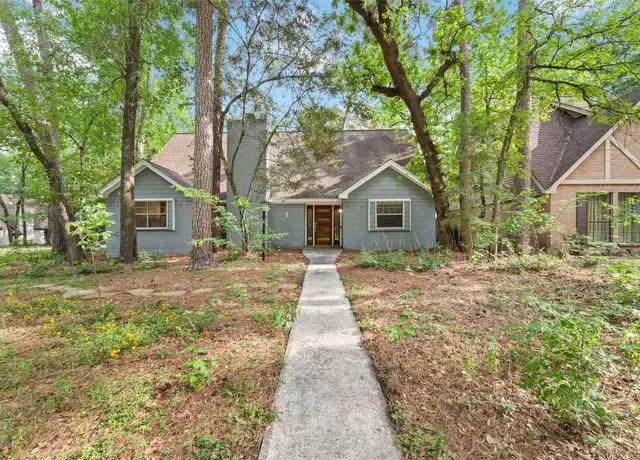
Moving to The Woodlands? Don’t Assume the Newest House Is the Best Fit
Moving to The Woodlands? Older, Renovated, or Newer—Which Home Actually Fits You?
You are relocating to The Woodlands.
Your wish list says:
Four bedrooms.
Home office.
Three-car garage.
Good outdoor space.
Nice kitchen.
Then your search produces three very different homes.
House A:
Older.
Beautiful street.
Mature trees.
Great location.
Interior needs updating.
House B:
Similar age.
Completely renovated.
Move-in ready.
Higher price.
House C:
Newer.
Modern floor plan.
Newer systems.
But the location and neighborhood feel completely different.
Which one should you buy?
For relocators unfamiliar with The Woodlands, there can be a natural instinct to choose:
The newest house available.
Newer can absolutely be the right answer.
But in a community that developed over decades, home age is often connected to something you cannot renovate later:
Location.
Understand What You Are Really Comparing
This is not simply:
Old house versus new house.
You may actually be comparing:
Established location versus newer location.
Mature trees versus younger landscaping.
Traditional floor plan versus modern layout.
Older systems versus newer equipment.
Renovation opportunity versus move-in convenience.
The complete package matters.
Start With the Things You Cannot Change
You can change:
Paint.
Flooring.
Counters.
Lighting.
Cabinets.
Fixtures.
You cannot easily change:
Lot.
Street.
Village.
Commute.
Surrounding neighborhood.
Orientation.
Location Should Survive the Renovation Question
Ask:
If this older home had the exact interior we wanted, would we choose it immediately?
If yes:
The house may deserve a closer look.
Established Homes Can Offer a Different Neighborhood Feel
Depending on the property, established sections may offer:
Mature landscaping.
Larger established trees.
Distinctive architecture.
Long-developed streetscapes.
Established parks and pathways.
Mature Trees Take Time
You can renovate a kitchen in months.
You cannot create:
Decades of tree growth
in months.
If wooded surroundings are one of the reasons you like The Woodlands:
Give them real value in your decision.
But Trees Are Not Free
Mature trees may require:
Trimming.
Storm cleanup.
Gutter maintenance.
Professional evaluation.
Potential root-related attention around improvements.
Beautiful and maintenance-free are not the same thing.
Newer Homes May Offer More Contemporary Floor Plans
Relocators often prioritize:
Open kitchen.
Large island.
Home office.
Game room.
Large primary closet.
Modern bathroom.
Mudroom.
Better storage.
Newer homes may deliver those features without remodeling.
Established Floor Plans Can Feel More Defined
Some buyers love:
Separate dining room.
Formal living.
Defined spaces.
Others immediately think:
“We need to remove walls.”
Know which type of buyer you are.
Do Not Assume Every Wall Can Be Removed
Structural.
Electrical.
Plumbing.
HVAC.
Other considerations
can make a seemingly simple renovation more complicated.
Renovated Homes Can Offer a Middle Ground
A well-renovated established home may combine:
Mature neighborhood.
Preferred location.
Updated kitchen.
Updated bathrooms.
Modern flooring.
Improved lighting.
Newer mechanical systems.
That can be highly attractive to relocators who do not want a major project.
But “Renovated” Is a Marketing Word
It does not tell you:
Who performed the work.
What permits were required or obtained.
Whether systems behind the finishes were updated.
How old the roof is.
How old the HVAC is.
What was cosmetic versus structural.
Look Beyond the White Countertops
A beautiful renovation can still have:
Older HVAC.
Older water heaters.
Older windows.
Older pool equipment.
Older roof.
Understand the complete home.
Ask for Improvement Information
For serious renovated homes, review available information about:
Scope of work.
Approximate dates.
Contractors where available.
Permits where applicable.
Warranties.
Receipts.
Newer Does Not Mean Maintenance-Free
A newer home still needs:
HVAC service.
Caulking.
Irrigation maintenance.
Pest control.
Landscaping.
Roof monitoring.
Normal upkeep.
It May Reduce Certain Near-Term Replacement Concerns
That can be valuable.
Especially if you are relocating and want:
Predictability.
Relocators Often Underestimate Renovation Fatigue
You think:
“We'll just redo the kitchen.”
Then you move.
New job.
New schools.
New doctors.
New routines.
Boxes everywhere.
Suddenly:
Choosing tile
is not fun anymore.
Be Realistic About Your First Year
Do you actually want a project?
Or do you simply like:
The idea of customizing?
Renovating While Relocating Can Create Temporary Housing Issues
Depending on project size:
You may need to delay move-in.
Live around construction.
Store furniture.
Use temporary housing.
That adds cost and inconvenience.
Calculate the Finished Cost
Do not compare:
$700,000 older home
to:
$850,000 updated home
and assume the older property saves:
$150,000.
Calculate:
Purchase.
Renovation.
Temporary housing if needed.
Storage.
Design.
Unexpected work.
Landscaping.
Immediate repairs.
Renovation Budgets Need Contingency
Especially in older homes.
Once work begins:
Additional conditions may be discovered.
Newer Homes Can Have Move-In Costs Too
Do not compare:
Older home + renovation
against:
Newer home purchase price only.
A newer property may still need:
Window treatments.
Landscaping.
Outdoor living.
Pool.
Storage.
Lighting.
Furniture.
Established Resales May Already Include Expensive Extras
Potentially:
Pool.
Mature landscaping.
Plantation shutters.
Outdoor kitchen.
Generator.
Built-ins.
Garage storage.
Those features have value if you actually want them.
Do Not Pay for Extras You Do Not Care About
A $100,000 outdoor setup has little lifestyle value to you if:
You never spend time outside.
Compare the Pool Question Carefully
An established home may already have:
Pool.
Spa.
Decking.
Landscaping.
A newer home may offer:
Large blank backyard.
Which is better?
Depends on whether you want:
Immediate pool use
or:
Control over future design.
Building a Pool Later Is Not Just a Price Question
Consider:
Access.
Yard size.
Utilities.
Drainage.
Community requirements.
Construction disruption.
Do not assume every backyard can accommodate your plan.
Lot Size Can Change Between Neighborhoods
A newer house may give you:
More efficient interior space.
An established property may offer:
A different lot character.
Do not compare only:
Square footage.
Walk the Entire Lot
Look at:
Side yards.
Backyard depth.
Tree placement.
Drainage.
Pool location.
Neighboring homes.
Privacy Can Be Very Different
Mature vegetation can create:
Natural screening.
Newer landscaping may take time to develop.
But an established property may also have:
Closer neighboring improvements.
Evaluate the actual lot.
Natural Light Deserves Attention
Heavily wooded homes can feel:
Beautiful.
Private.
Cool.
But sometimes:
Darker inside.
If bright natural light is important:
Visit during the day.
Home Orientation Matters
Consider:
Morning light.
Afternoon sun.
Backyard exposure.
Pool exposure.
Home-office light.
Energy Efficiency Should Be Evaluated, Not Assumed
Newer homes may incorporate:
More recent building practices.
Newer windows.
Newer HVAC.
Improved insulation.
But evaluate the actual property.
Older Homes May Have Significant Efficiency Updates
Possibly:
Replacement windows.
Updated insulation.
New HVAC.
Smart thermostats.
Other improvements.
Ask.
Historical Utility Bills Can Provide Context
But household behavior differs.
Use them as:
Information.
Not a guarantee.
HVAC Age Matters More Than Paint Color
For every serious home, determine:
Number of systems.
Approximate age.
Service history when available.
Condition.
Multiple Systems Mean Multiple Future Replacements
Especially in larger homes.
Build that into your long-term budget.
Roof Age Deserves the Same Attention
An established home with a recent roof may compare favorably with another home where:
Major replacement is approaching.
Windows Can Be a Significant Upgrade
Replacing many windows can be substantial.
If an older home has updated windows:
Understand when and what was installed.
Plumbing and Electrical Deserve Appropriate Inspection
Age alone does not tell you condition.
Use:
Property information.
Inspection.
Qualified professionals where needed.
Pools Have Their Own Mechanical Age
Even if the pool looks beautiful:
Ask about:
Pump.
Filter.
Heater.
Automation.
Cleaner.
Spa equipment.
The Garage Can Reveal the Difference Between Old and New Floor Plans
Measure it.
Especially if you own:
Large SUV.
Truck.
Multiple vehicles.
Golf cart.
Storage equipment.
“Three-Car Garage” Does Not Tell You Dimensions
A tandem layout and three side-by-side bays are:
Different.
Storage Is Easy to Miss During a Relocation Tour
Look at:
Pantry.
Linen storage.
Closets.
Attic access.
Garage storage.
Utility room.
Compare Your Current Belongings to the New House
Relocators often focus on:
Bedrooms.
Then discover:
No place for everything else.
Work-From-Home Space Needs to Be Real
A listing may call:
Almost anything
an office.
Ask:
Door?
Natural light?
Noise?
Privacy?
Internet?
Enough room for actual equipment?
Newer Floor Plans May Prioritize Home Offices More Intentionally
But an older home may offer:
Study.
Formal living conversion.
Upstairs flex space.
Detached space.
Choose based on how you work.
Commute Can Override the Newness Advantage
Suppose:
Newer home is 20 minutes farther from your regular destination.
That difference repeats:
Week after week.
Would you trade:
Newer cabinets
for:
More time?
Only you can answer.
Calculate the Weekly Difference
Not:
One trip.
Neighborhood Character Is Difficult to Put on a Spreadsheet
Sometimes you drive into an established street and immediately think:
This feels like The Woodlands we pictured.
That matters.
But Emotion Should Still Be Tested
Visit:
Morning.
Afternoon.
Evening.
Weekend.
Make sure the feeling survives different conditions.
Newer Neighborhoods Can Offer Their Own Advantages
Potentially:
More contemporary architecture.
Newer infrastructure.
Different amenities.
Newer home systems.
Different community design.
The point is not:
Older is better.
It is:
Newer is not automatically better.
Renovation Quality Matters More Than Renovation Trendiness
A trendy house can age quickly.
Look for:
Workmanship.
Function.
Durability.
Consistency.
Do Not Overvalue Cosmetic Features
Paint is easy.
Lighting can be changed.
Flooring can be changed.
The wrong location:
Not so much.
Inspections Matter for Every Age
Do not assume:
Older home = needs inspection.
Newer home = does not.
Every property deserves appropriate due diligence.
New Construction Should Also Be Evaluated Carefully
If considering new construction:
Understand:
Builder process.
Warranty.
Included features.
Upgrade costs.
Completion timeline.
Independent inspection options.
Community development.
Compare Finished New Construction to Finished Resale
Not:
Builder base price
against:
Fully improved resale.
Include:
Lot premium.
Upgrades.
Window coverings.
Landscaping.
Appliances if needed.
Outdoor improvements.
Moving Timeline Can Make the Decision for You
If your job starts:
In three weeks,
a renovation project may be unrealistic.
If you have:
Six months
and temporary housing:
Different story.
Employer Relocation Benefits May Influence the Choice
Some relocation packages may place limits or requirements around:
Temporary housing.
Closing timeline.
Storage.
Home purchase.
Review your actual program.
Resale Risk Should Not Be Ignored
You may be relocating again in:
Three.
Five.
Seven years.
Think about whether the home has characteristics likely to appeal to future buyers.
Do Not Renovate Entirely for Hypothetical Future Buyers
But avoid creating something so personalized that:
Resale becomes unnecessarily difficult.
Build an Older-vs-Newer Scorecard
For each serious property, compare:
Location
Preferred?
Village
Fits lifestyle?
Commute
Works?
Lot
Preferred?
Trees
Preferred amount?
Privacy
Enough?
Floor Plan
Works without major changes?
Kitchen
Functional?
Bathrooms
Functional?
Office
Real workspace?
Storage
Enough?
Garage
Fits vehicles?
Roof
Age known?
HVAC
Ages known?
Windows
Condition understood?
Plumbing
Evaluated?
Electrical
Evaluated?
Pool
Condition understood?
Landscaping
Established or still needed?
Renovation
Needed?
Renovation Budget
Realistic?
Temporary Housing
Needed?
Immediate Purchases
Budgeted?
Total Finished Cost
Calculated?
Maintenance
Comfortable?
Resale
Reasonable?
Use the “Location Cannot Be Renovated” Test
Would you regret giving up:
The street.
Village.
Trees.
Commute.
for a newer kitchen?
Use the “One-Year Construction” Test
If the renovation took:
Longer.
Cost more.
Created more inconvenience
than expected:
Would you still choose the home?
Use the “Everything Is Beige Again in Five Years” Test
Trends change.
Location remains.
Use the “Finished Cost” Test
Which property actually costs more when both are:
Complete.
Furnished.
Landscaped.
Ready for your lifestyle?
Final Thoughts
When relocating to The Woodlands, you may encounter:
Older homes with incredible locations.
Renovated homes with established surroundings.
Newer homes with contemporary layouts.
There is no universal winner.
The mistake is assuming:
Newest equals best.
Instead, separate the home into two categories.
What can I change?
Paint.
Kitchen.
Bathroom.
Lighting.
Flooring.
Fixtures.
And:
What can't I realistically change?
Location.
Lot.
Street.
Village.
Commute.
Tree canopy.
Neighborhood character.
Then compare:
Systems.
Renovation.
Maintenance.
Energy use.
Outdoor space.
Move-in costs.
Timeline.
The best choice may be:
Brand new.
Completely renovated.
Or:
Twenty-plus years old with a kitchen you dislike.
Because sometimes the house that looks least impressive during the first showing has:
The lot.
The trees.
The street.
The location.
And the everyday lifestyle
you were actually hoping to find when you decided to move to The Woodlands.
Frequently Asked Questions
Are homes in The Woodlands generally older?
Home ages vary because The Woodlands developed over many decades. Buyers can encounter established homes, renovated properties, and newer construction depending on location.
Is an older home in The Woodlands a bad investment?
Age alone does not determine whether a property is a good purchase. Location, condition, improvements, major systems, lot characteristics, price, and future marketability all matter.
Should relocators buy a renovated home?
A renovated property can be appealing if you want an established location without managing a major remodeling project. Evaluate the quality and scope of the renovation rather than relying on appearance alone.
Is newer construction more energy efficient?
Newer construction may incorporate more recent building practices and equipment, but buyers should evaluate the actual home's insulation, windows, HVAC, size, orientation, and expected usage.
Should I choose location over an updated interior?
If the location better fits your long-term lifestyle and the home's deficiencies can realistically be improved within your budget, an established property may deserve serious consideration.
What should I check in an older Woodlands home?
Pay particular attention to the property's overall condition and major systems, including roof, HVAC, plumbing, electrical components, windows, drainage, pool equipment where applicable, and other age-related items identified during due diligence.
Is a renovated home automatically move-in ready?
Not necessarily. Cosmetic renovation does not guarantee that major systems have been replaced or that all work meets your expectations. Review the property carefully.
Should I compare renovation costs before making an offer?
Yes. If significant renovation is part of your plan, develop a realistic budget and consider timing, temporary housing, storage, and contingencies.
Does mature landscaping add value for a relocator?
It can add significant lifestyle value if you want shade, privacy, and the established wooded character associated with parts of The Woodlands. It also requires ongoing maintenance.
What's the biggest takeaway?
When relocating to The Woodlands, do not automatically choose the newest home. Compare the things you can renovate with the things you cannot—location, lot, village, commute, trees, and neighborhood character—then calculate the complete cost of making each property work for your lifestyle.