Moving to Cypress? The House Is Only Half the Decisionog Post
Moving to Cypress? Here's What Everyday Life Feels Like After the House-Hunting Weekend Is Over
Your relocation trip goes well.
You tour:
Beautiful homes.
Newer communities.
Established neighborhoods.
Pools.
Big kitchens.
Three-car garages.
Maybe a lake-view property.
By Sunday night, Cypress seems easy.
Then you actually move.
Monday morning:
Work.
Tuesday:
Groceries.
Wednesday:
Doctor.
Thursday:
Gym.
Friday:
Dinner.
Saturday:
Activities.
Now you start noticing the things listing photos never showed you.
How often you drive.
Which roads you actually use.
Where you shop.
How long errands take.
How much you use the backyard.
Whether community amenities really matter.
That is the difference between:
Touring Cypress
and
Living in Cypress.
For relocators, understanding that difference before buying can make the home search much more useful.
Cypress Is Suburban—But Not One Compact Town Center
One of the first things newcomers should understand is scale.
Cypress covers a broad suburban area.
Your home may be surrounded by:
Neighborhood streets.
Master-planned amenities.
Shopping corridors.
Schools.
Medical services.
Open areas.
New development.
Established communities.
That means daily life can vary significantly depending on your exact address.
Your ZIP Code Does Not Tell You Your Routine
Two Cypress homes may have similar:
Price.
Square footage.
Bedrooms.
But create very different access to:
Work.
Groceries.
Healthcare.
Dining.
Recreation.
That is why exact location matters.
Driving Is Usually Part of the Lifestyle
If you're relocating from:
A dense urban area.
Walkable downtown.
Transit-oriented city.
you may need to adjust expectations.
Many everyday destinations in suburban Cypress are likely to involve driving.
That Does Not Mean Everything Feels Far Away
A well-chosen location can create a very convenient routine.
The key is having the places you use most:
In logical directions.
Near routes you already travel.
Build Your Weekly Errand Pattern Before Buying
Write down:
Grocery.
Gym.
Pharmacy.
Coffee.
Healthcare.
Dining.
Activities.
Work.
Then map those destinations from serious properties.
Grocery Stores Become More Important Than Tourist Attractions
This sounds boring.
That is exactly why it matters.
You may visit:
A major entertainment destination
several times per year.
You buy groceries:
Every week.
Weight accordingly.
Your Preferred Grocery Store Matters More Than the Closest One
Maybe you prefer:
Warehouse shopping.
Specialty foods.
Organic options.
A particular chain.
Do not assume the nearest store is the one you'll use.
Dining Options Can Shape Your Social Routine
Relocators often ask:
“Are there restaurants in Cypress?”
The better question:
“Are there restaurants here that fit how we actually eat?”
Do you want:
Quick family dinners?
Date night?
Takeout?
Coffee shops?
Casual weekend brunch?
Explore those before deciding how much proximity matters.
Master-Planned Communities Can Keep More of Your Life Close to Home
Depending on the community, you may have access to:
Trails.
Pools.
Parks.
Playgrounds.
Lakes.
Fitness.
Community events.
That can reduce some recreational driving.
Established Neighborhoods May Create a Different Lifestyle
Maybe:
Private pool.
Larger backyard.
Mature trees.
Less emphasis on shared amenities.
You may spend more time:
At home.
Elsewhere in Cypress.
In surrounding Houston-area destinations.
Neither is better.
Outdoor Life Is Strong—but Texas Weather Matters
Relocators from cooler climates often picture:
Patio lunch.
Every afternoon.
All summer.
Then August arrives.
Outdoor living in Cypress often works best when a property includes:
Shade.
Covered patio.
Fans.
Pool.
Good orientation.
Visit the Backyard in Late Afternoon
If outdoor living matters:
This is important.
A patio that feels perfect at:
10:00 a.m.
may be much warmer later in the day.
Shade Can Matter as Much as Patio Size
A large uncovered patio may be less useful to you than:
A smaller covered one.
Pools Can Become a Major Part of Summer Life
For households that use them:
A private pool can become:
Exercise.
Family activity.
Entertainment.
Relaxation.
But it also requires:
Maintenance.
Utilities.
Equipment.
Insurance consideration.
Community Pools Offer a Different Tradeoff
You avoid maintaining your own pool.
But you may have:
Hours.
Rules.
Shared use.
Travel from your house.
Decide which fits you.
Trails Can Become More Useful Than You Expected
If you move into a neighborhood with convenient trail access:
You may find yourself:
Walking after dinner.
Running.
Biking.
Walking the dog.
Spending more time outside.
But Trail Proximity Should Be Property-Specific
A community can have extensive trails while your house sits:
Far from the connection you would actually use.
Check.
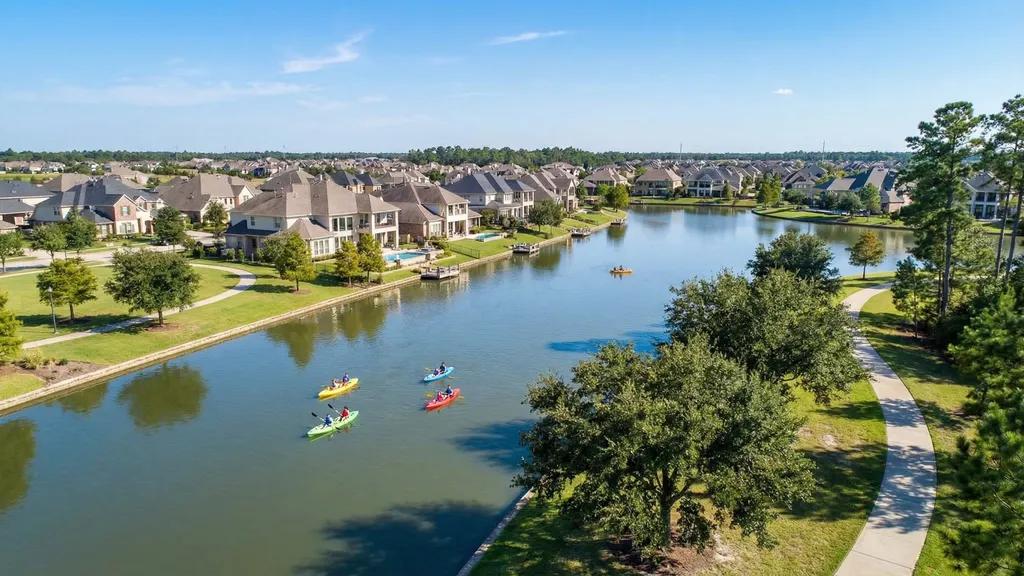
Water Features Create Atmosphere—but Verify Use
Cypress communities may include:
Lakes.
Ponds.
Detention features.
Decorative water.
Do not assume every water feature allows:
Fishing.
Kayaking.
Swimming.
Other recreation.
Verify applicable rules.
Healthcare Access Can Be a Major Practical Advantage
This becomes particularly important for households with:
Children.
Older relatives.
Recurring specialists.
Therapy.
Frequent appointments.
Map the providers you are likely to use.
Do Not Wait Until You're Sick to Understand the Route
Healthcare belongs on the relocation map.
Pharmacies Are Part of the Same Question
Routine convenience matters.
Schools Generate More Driving Than Many Relocators Expect
Even if your home is zoned appropriately, everyday logistics may include:
Campus.
Activities.
Sports.
Tutoring.
Music.
Friends.
Events.
School assignment is only one part of the daily routine.
Verify Schools by Address
Do not assume all Cypress properties share:
District.
Campus.
Transportation.
Attendance boundaries.
Use current information.
School Ratings Are Not a Complete Decision Tool
Consider:
Programs.
Extracurriculars.
Student needs.
Campus environment.
Commute.
Work Commute Can Define How You Experience Cypress
If you leave early and return late:
Your relationship to Cypress may mostly happen:
Evenings.
Weekends.
If you work from home:
You experience the neighborhood all day.
Those are different lifestyles.
Remote Workers Should Tour Midweek
Spend time nearby during:
Tuesday lunch.
See:
Traffic.
Noise.
Coffee.
Walking.
Errands.
Neighborhood activity.
Hybrid Workers Should Think Weekly
A longer commute two days per week may be worth:
Better lot.
Better community.
Better house.
Maybe not.
Calculate the tradeoff.
Traffic Should Be Treated as a Pattern, Not a Number
Do not ask:
“How long is the drive?”
Ask:
What does this route usually look like:
Morning?
Evening?
Friday?
During construction?
No estimate is guaranteed.
Road Growth Can Affect Future Routines
Cypress continues to evolve.
Road projects.
New development.
Retail.
Schools.
Traffic patterns.
can change.
Choose a location that works today rather than buying entirely around promised improvements.
Airport Access Matters Only in Proportion to Your Travel
Weekly traveler?
Important.
Twice-a-year traveler?
Probably lower priority.
Houston Is Not One Destination
If someone says:
“Cypress is X minutes from Houston,”
that tells you very little.
Houston could mean:
Downtown.
Galleria.
Medical Center.
Energy Corridor.
Airport.
North Houston.
Map your actual destination.
Your Social Life May Pull You in Another Direction
Maybe your:
Friends.
Family.
Church.
Restaurants.
Activities.
are concentrated somewhere else.
That counts too.
Weekend Life Can Look Very Different From Workweek Life
Weekdays:
Commute.
School.
Errands.
Weekends:
Sports.
Restaurants.
Parks.
Shopping.
Pool.
Home projects.
Build both maps.
Larger Homes Can Be Attractive to Relocators
Especially if you're moving from a market where:
Square footage is more expensive.
Cypress may make you feel like:
“We can get so much more house.”
Great.
But ask:
Do we need it?
More House Means More Responsibility
Potentially:
Higher utilities.
More furniture.
More cleaning.
More maintenance.
More roof.
More flooring.
More systems.
Do Not Buy Extra Rooms Just Because They Are Affordable
Make sure they serve:
Office.
Guests.
Children.
Fitness.
Hobbies.
Actual needs.
Garages Can Matter More in Texas Suburban Life
A larger garage may help with:
Vehicles.
Storage.
Bikes.
Tools.
Sports gear.
Holiday décor.
EV charging.
Test Your Vehicle Fit
Especially with:
Full-size trucks.
Large SUVs.
Multiple vehicles.
Garage labels do not tell the complete story.
Driveway Parking May Matter Too
Consider:
Teen drivers.
Guests.
Work vehicles.
Community restrictions.
HOA Rules Become Part of Daily Life
They may affect:
Parking.
Exterior changes.
Fencing.
Boats.
RVs.
Signs.
Landscaping.
Other uses.
Review applicable documents before buying.
Do Not Assume Your Current Habits Transfer Automatically
If you currently park:
Trailer.
Boat.
RV.
Work truck.
in your driveway:
Verify what is allowed.
Community Rules Can Also Protect the Environment You Like
Some buyers dislike restrictions.
Others value:
Consistency.
Maintenance expectations.
Community appearance.
Understand what you're choosing.
Taxes Need to Be Evaluated Early
Relocators from other states sometimes focus almost entirely on:
No Texas state individual income tax.
Then discover property taxes matter significantly to housing costs.
Evaluate the specific property.
Similar Purchase Prices Can Produce Different Monthly Costs
Depending on:
Taxes.
Insurance.
HOA.
Other property-specific expenses.
Insurance Is Not a Footnote
Obtain property-specific estimates for serious candidates.
Consider:
Roof.
Home age.
Flood considerations.
Coverage.
Deductibles.
Other characteristics.
Flood-Risk Research Should Be Address-Specific
Do not make the mistake of asking:
“Does Cypress flood?”
That is too broad.
Evaluate:
Exact property.
Flood information.
Drainage.
History.
Insurance.
Neighborhood Drainage Can Be Observed
When conditions are safe:
Look after normal rain.
See:
Street drainage.
Yards.
Low areas.
Newer Does Not Automatically Mean No Drainage Concerns
And older does not automatically mean worse.
Property-specific.
Summer Energy Use Can Surprise Relocators
Air conditioning matters.
Especially in:
Larger homes.
Two-story homes.
Homes with large windows.
Pools.
Remote workers may also use more daytime energy.
Historical Utility Bills Can Provide Context
But your future use will differ.
Ceiling Fans and Shade Are Practical Features
Not glamorous.
Very useful.
Covered Outdoor Areas Can Expand Your Usable Space
A strong patio may function like another living area during many parts of the year.
Storm Preparedness Becomes Part of Homeownership
Relocators unfamiliar with Gulf Coast weather should learn:
Their insurance.
Emergency plans.
Drainage.
Generator setup if present.
Tree maintenance.
General storm preparation.
No need for fear.
Just preparation.
Generators May Be Attractive—but Understand the System
If a property has one:
Ask about:
Capacity.
Maintenance.
Fuel.
What it actually powers.
Do not assume “whole house” means every load simultaneously.
Mature Trees Are Beautiful but Require Maintenance
Especially around:
Roof.
Driveway.
Pool.
Fence.
Newer Communities May Have Less Mature Shade
Tradeoff:
Newer home.
Younger landscape.
Again:
Which matters more?
Community Events Can Help Relocators Build Connections
If you're moving without an existing network:
Neighborhood events may help you meet people.
This can be especially valuable during the first year.
But You Do Not Need to Be Highly Social to Enjoy Cypress
Your community can simply provide:
Home.
Quiet.
Outdoor space.
Convenience.
Try Living Like a Cypress Resident During Your Relocation Visit
Do not spend every minute touring houses.
Spend one afternoon doing:
Grocery run.
Coffee.
Drive to work.
Visit a park.
Get dinner.
Drive home.
That teaches you more than another five showings.
Tour at Night Too
If practical.
Notice:
Lighting.
Traffic.
Navigation.
Activity.
How the neighborhood feels to you.
Ask Yourself Where You Would Spend a Normal Saturday
Would you:
Stay home by pool?
Go to sports?
Shop?
Head into Houston?
Walk trails?
Visit friends?
That tells you what location features matter.
Then Ask About Tuesday
Tuesday is even more important.
Work.
School.
Gym.
Groceries.
Dinner.
Ordinary life.
Build an Everyday-Life Scorecard
For each finalist property, rate:
Work
Manageable?
Groceries
Convenient?
Healthcare
Reasonable?
Schools/Activities
Works if relevant?
Dining
Fits habits?
Fitness
Convenient?
Trails/Parks
Would use?
Outdoor Living
Comfortable?
Pool
Right choice?
Garage
Fits?
HOA
Compatible?
Taxes
Understood?
Insurance
Estimated?
Flood/Drainage
Researched?
Airport
Relevant and manageable?
Houston Trips
Specific routes tested?
Community
Feels right?
Tuesday
Works?
Saturday
Works?
Final Thoughts
Moving to Cypress is not simply about finding:
More square footage.
A beautiful kitchen.
A pool.
A newer house.
Those things matter.
But they are only part of the relocation decision.
The rest is:
Where will we drive every day?
How much time will we spend in the car?
Will we use the trails?
Do we want community amenities?
Do we want a private pool?
How much yard do we really want?
Will the garage fit our vehicles?
How does the house feel in August?
Where are our doctors?
Where do we grocery shop?
How much will taxes and insurance affect the monthly budget?
Will our normal Tuesday feel easy?
When those answers fit:
The house starts making more sense.
Because the best relocation outcome is not:
“We bought the most impressive house we toured.”
It is:
“We chose a home that made living in Cypress feel natural.”
That's the difference between buying a house in a new city and actually building a life there.
Frequently Asked Questions
Is Cypress a walkable area?
Cypress is broadly suburban, and everyday walkability varies substantially by specific neighborhood. Some communities offer extensive trails and internal amenities, while many destinations may still require driving.
Is Cypress convenient for shopping and dining?
Many areas offer access to shopping and dining, but convenience depends on the exact property and the businesses you personally use.
Does Cypress have outdoor recreation?
Many communities offer trails, parks, pools, lakes, and other recreation, but amenities vary. Verify the options that matter to you.
Should I buy a home with a pool when relocating to Cypress?
Only if a private pool fits your lifestyle and maintenance preferences. Consider community pools, yard space, operating costs, safety, and how often you expect to use it.
Is Cypress good for remote workers?
It can be, particularly when the home offers a strong office setup, reliable internet options, and nearby amenities that support everyday life. Verify the specific property and service availability.
Do I need to worry about property taxes?
Property taxes should be part of the budget for any Texas home purchase. Evaluate the actual property and applicable taxing jurisdictions rather than estimating from purchase price alone.
Should I research flood risk in Cypress?
Yes, on a property-specific basis. Review current flood information, drainage, history, and insurance considerations for serious candidates.
Is it difficult to commute from Cypress to Houston?
That depends entirely on the specific Houston destination, home location, route, time, and frequency. Test your actual commute rather than relying on a generic estimate.
Are community amenities worth higher HOA dues?
They can be if you use and value them. Evaluate the current dues, included amenities, restrictions, and your likely usage before deciding.
What's the biggest takeaway?
When relocating to Cypress, evaluate everyday life as carefully as you evaluate the house. The right home should make your work routes, errands, recreation, outdoor living, costs, and ordinary weekly routine feel manageable—not just look impressive during a relocation tour.