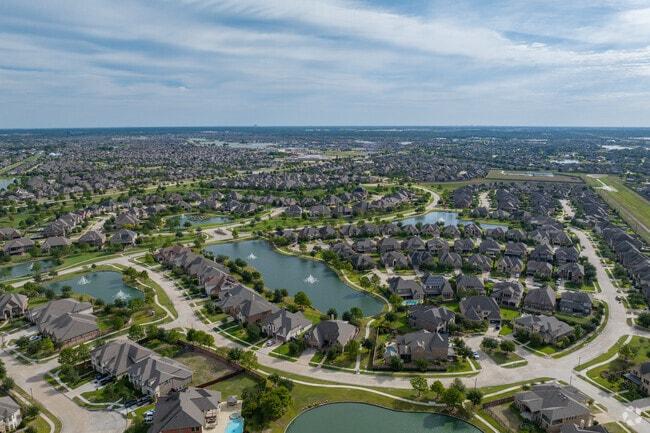
Moving to Cypress? Choose the Community Before You Choose the Kitchen
Moving to Cypress? Decide What Kind of Community You Want Before You Decide What Kind of House You Want
You start searching homes in Cypress.
At first, everything seems straightforward.
Four bedrooms.
Home office.
Good-sized backyard.
Maybe a pool.
Then you begin exploring neighborhoods.
One community has:
Trails.
Lakes.
Community pools.
Fitness facilities.
Playgrounds.
Events.
Newer homes.
Another neighborhood has:
Mature trees.
Larger-looking lots.
Established streets.
Private pools.
Fewer shared amenities.
And suddenly you realize:
You're not simply choosing between houses.
You're choosing between two different ways of living.
For someone relocating to Cypress, understanding that distinction early can save an enormous amount of time.
Because the house you love may not be in the community environment you actually want.
Cypress Is Not One Type of Suburb
This is the first thing relocators need to understand.
Search:
Cypress homes for sale
and you'll encounter very different environments.
Cypress includes large master-planned communities, newer residential developments, established subdivisions, gated sections, acreage-oriented properties, and other housing styles.
That variety is an advantage.
But it also means:
“We want to live in Cypress”
is only the beginning of your search.
Start With a Lifestyle Question
Before discussing:
Kitchen.
Pool.
Square footage.
Ask:
Do we want our community to provide a significant part of our recreation and social environment?
If yes:
A master-planned community may deserve serious consideration.
If no:
You may prefer an established neighborhood where more of your lifestyle happens independently.
What Does Master-Planned Living Actually Mean?
Generally, a master-planned community is designed on a larger scale with coordinated:
Housing.
Roads.
Amenities.
Parks.
Trails.
Green spaces.
Commercial areas.
Other community features.
The exact offerings vary.
Do Not Assume Every Master-Planned Community Has the Same Amenities
One may emphasize:
Lakes.
Another:
Trails.
Another:
Pools.
Another:
Sports.
Another:
Community programming.
Evaluate what actually exists and what is planned.
The Amenity List Can Be Seductive
You see:
Resort-style pool.
Fitness center.
Splash pad.
Tennis.
Pickleball.
Playground.
Miles of trails.
Lake.
Community events.
It sounds incredible.
But ask:
Will we actually use these?
Amenities Have Value Only if They Fit Your Life
If you swim:
Pool matters.
If you run:
Trails matter.
If you have young children:
Playgrounds may matter.
If you work constantly and spend weekends traveling:
You may barely use any of it.
HOA Costs Should Be Evaluated With Amenity Value
Do not simply ask:
“How much are the HOA dues?”
Ask:
“What do we receive, and do we value it?”
Review current property-specific information because costs and requirements can vary.
Established Neighborhoods May Offer a Different Value Proposition
Perhaps fewer community amenities.
But potentially:
More mature landscaping.
Different lot sizes.
Private pools.
Established surroundings.
Different HOA structure.
Location advantages.
Again:
Property-specific.
Mature Trees Can Completely Change How a Neighborhood Feels
You cannot see this on a floor plan.
A street with mature trees can feel:
Shadier.
More private.
More established.
Different from newer development.
Some relocators fall in love immediately.
Others prefer the clean, newer environment of a recently developed section.
Neither Is Better
This entire decision is about:
Fit.
Lot Size Deserves More Attention Than Relocators Give It
Master-planned communities may offer:
Different lot categories.
Premium lots.
Cul-de-sac lots.
Waterfront or water-view opportunities.
Greenbelt lots.
Established neighborhoods may offer:
Different setbacks.
Mature landscaping.
Larger or differently shaped yards.
Compare actual properties.
Do Not Assume “Bigger Lot” Means Better
Ask:
What are we doing with it?
Pool?
Pets?
Garden?
Children?
Entertaining?
Or:
Nothing except paying someone to maintain it?
Privacy Can Differ Dramatically
Walk into the backyard.
Look:
Left.
Right.
Behind you.
Can neighbors see directly into the space?
Are there mature trees?
Greenbelt?
Lake?
Another house?
Road?
Never Judge Backyard Privacy From Listing Photos Alone
Wide-angle photography can make relationships between homes difficult to understand.
Visit.
Or request detailed live video.
Water Views Can Be Appealing
Some Cypress communities include lakes and water features.
A water-view property may offer:
Beautiful outlook.
Fewer immediate rear neighbors.
Premium feel.
But evaluate:
Lot premium.
Maintenance considerations.
Sun exposure.
Privacy.
Community rules.
Do Not Assume Every Lake Is Recreational
Some community lakes or water features may serve stormwater or aesthetic purposes.
Verify permitted uses.
Trails Can Change Everyday Life
Imagine:
Instead of driving somewhere to exercise:
You walk out the door.
Get on a trail.
Run.
Bike.
Walk the dog.
Return home.
If that sounds like your lifestyle:
Trail proximity can matter.
But “Community Has Trails” Is Not Enough
Where is the closest connection from:
This exact house?
A House Beside a Trail Can Have Tradeoffs
Potentially:
Convenience.
Activity.
Less privacy.
People passing nearby.
Evaluate personally.
Community Pools Can Reduce the Need for a Private Pool
Some buyers arrive saying:
“We absolutely need a pool.”
Then tour a community with substantial aquatic amenities and reconsider.
Private Pools Offer Different Benefits
Convenience.
Privacy.
Entertaining.
Use whenever you want.
But also:
Maintenance.
Utilities.
Equipment.
Insurance considerations.
Yard space.
Families Should Think About the Ages of Their Children
A splash pad may be incredible today.
Will it matter:
Five years from now?
Likewise:
Sports fields.
Teen activities.
Trails.
Community events.
Buy for more than the next 12 months.
Couples Without Children Should Evaluate Amenities Differently
Master-planned communities are not exclusively for families.
You may value:
Walking.
Fitness.
Community events.
Water views.
Recreation.
Or none of it.
Choose accordingly.
Empty Nesters May Want Convenience Without Maintenance
Perhaps:
Smaller yard.
Trails.
Nearby restaurants.
Lock-and-leave flexibility.
A master-planned environment may fit.
Or:
An established home with a private pool and larger lot may be exactly what you want.
Lifestyle first.
Community Events Can Help Relocators Meet People
This is an underappreciated benefit.
Moving somewhere new can mean:
No nearby family.
Few local friends.
New workplace.
New routine.
Community programming may create opportunities to meet neighbors.
But Not Everyone Wants Organized Community Life
Some people prefer:
Privacy.
Quiet.
Independent social life.
That is equally valid.
Location Within the Community Matters
Large master-planned developments can cover substantial territory.
A home may be:
Near the main entrance.
Deep inside.
Near amenities.
Near commercial areas.
Near future construction.
Your experience changes accordingly.
Test the Drive Out
This is especially important for commuters.
Do not calculate commute from:
The community entrance.
Calculate from:
The actual house.
Five Minutes Inside the Community Counts
If you make that trip:
Twice every weekday,
it matters.
But Deeper Sections May Offer Benefits
Potentially:
Less through traffic.
Different lot opportunities.
More residential feel.
Different amenities.
Tradeoffs.
Established Neighborhoods Can Sometimes Offer Faster Access to Existing Roads
But again:
Test the actual property.
Commute Should Not Be Measured on Saturday
If you will travel toward:
Houston.
The Energy Corridor.
Another employment center.
Test realistic weekday conditions when possible.
Hybrid Workers Should Calculate Weekly Impact
If you commute:
Two days per week,
you may be willing to live farther inside a community for:
Better lot.
Newer home.
More amenities.
Remote Workers May Prioritize Community More Heavily
If you spend most weekdays near home:
Trails.
Coffee.
Fitness.
Parks.
Lunch.
Neighborhood environment
can matter significantly.
Shopping and Dining Patterns Matter
Some master-planned communities are designed with commercial areas nearby or integrated into the broader plan.
This can be convenient.
But ask:
Are these actually the stores and restaurants we will use?
Drive Your Grocery Route
Again:
Boring test.
Excellent information.
Established Areas May Have Different Access to Existing Retail
Sometimes closer.
Sometimes farther.
Specific property matters.
Healthcare Should Be Mapped
If your household regularly uses:
Specialists.
Hospital systems.
Pediatrics.
Therapy.
Other care,
map likely destinations.
Schools Should Be Verified by Address
Do not assume:
Master-planned community = one school assignment.
Large communities may span different attendance zones or jurisdictions.
Verify current information for the exact property.
Do Not Buy Solely for a School Rating
Consider:
Programs.
Activities.
Student needs.
Commute.
Current zoning.
Use ratings as one data point.
Property Taxes Can Differ
This is especially important for relocators.
Different properties may have different:
Taxing jurisdictions.
Special district considerations.
Overall tax obligations.
Do not compare homes solely by purchase price.
Newer Development May Include Costs You Haven't Encountered Before
If you are unfamiliar with Texas:
Ask about:
HOA.
Taxes.
Special districts where applicable.
Insurance.
All recurring property-related costs.
Understand the Full Monthly Housing Number
Mortgage is only one component.
Established Homes Need the Same Analysis
Do not assume older neighborhood automatically means:
Lower taxes.
Lower HOA.
Lower cost.
Verify.
Insurance Is Property-Specific
Home age.
Roof.
Construction.
Location.
Coverage.
Deductibles.
Other factors
can influence premiums.
Get quotes for serious finalists.
Flood and Drainage Research Is Still Property-Specific
Cypress is another area where broad statements are not enough.
Do not ask:
“Does Cypress flood?”
Research:
Exact property.
Current flood information.
Drainage.
History.
Insurance.
Community Lakes Do Not Automatically Tell You Flood Risk
Do not make conclusions simply because:
A home is near water.
Use actual data.
Future Development Matters More in Growing Areas
A beautiful open field behind your house may someday become:
Homes.
Road.
Commercial development.
School.
Something else.
Understand what is reasonably known.
Master-Planned Communities Can Give You More Visibility Into Plans
But plans may still evolve.
Do not buy solely based on future promises.
Established Neighborhoods Offer More Existing Context
You can often already see:
Trees.
Neighbors.
Traffic.
Retail.
Roads.
Development.
That certainty can be valuable.
But Established Areas Change Too
Nearby redevelopment.
Road improvements.
Commercial changes.
Nothing is completely static.
Architecture Can Influence Your Choice
Newer communities may offer:
Current exterior styles.
Open floor plans.
Modern finishes.
Established neighborhoods may offer:
Traditional architecture.
Custom homes.
Renovated properties.
Different layouts.
Which feels like home?
Do Not Buy Architecture for Instagram
You have to live there.
Storage Matters More Than Style
Relocators often bring:
Garage equipment.
Holiday decorations.
Sports gear.
Bikes.
Tools.
Boxes.
Look beyond staged interiors.
Check Garage Dimensions
Especially if you own:
Large SUV.
Truck.
Multiple vehicles.
Golf cart where applicable and permitted.
Bikes.
Workshop equipment.
Review Community Rules Before Buying
If you have:
Boat.
RV.
Trailer.
Work vehicle.
Plans for exterior changes.
Specific fencing needs.
Read applicable restrictions.
Do Not Assume Your Current Lifestyle Is Automatically Allowed
Ask first.
If You Want to Build a Pool Later, Check Before Buying
Review:
Lot.
Easements.
Setbacks.
Utilities.
Community requirements.
Construction access.
If You Want an Outdoor Kitchen, Do the Same
Future plans should influence today's property choice.
Your Dog Has a Vote Too
Maybe not literally.
But consider:
Fence.
Yard.
Trails.
Dog walking.
Heat.
Nearby green space.
Cypress Summers Change Outdoor Living
Shade matters.
Covered patios matter.
Pool orientation matters.
Trees matter.
Visit the Backyard in the Afternoon
A gorgeous patio at:
9:00 a.m.
may feel very different at:
5:00 p.m.
Home Orientation Can Matter More Than You Expected
Observe:
Sun.
Shade.
Windows.
Patio.
Driveway.
You cannot rotate the house later.
Make a Community-First Scorecard
Before rating the house:
Rate the community.
Lifestyle
Does it fit us?
Amenities
Will we use them?
HOA
Value makes sense?
Lot Environment
Preferred?
Privacy
Enough?
Trees
Important?
Trails
Useful?
Pool
Private or community?
Events
Valuable?
Commute
Realistic?
Shopping
Convenient?
Healthcare
Works?
Schools
Verified if relevant?
Taxes
Understood?
Insurance
Estimated?
Future Development
Investigated?
Then:
Rate the house.
Try the “Same House” Test
Imagine the exact same home exists in:
Master-planned Community A.
Established Neighborhood B.
Which would you choose?
That answer tells you a lot.
Try the “No Amenities” Test
If you never used:
Pool.
Trails.
Fitness.
Events.
Would you still choose the community?
Try the “Saturday” Test
Where do you picture yourself spending:
Saturday morning?
Try the “Tuesday” Test
What does:
Tuesday at 6:00 p.m.
look like?
That matters more.
Final Thoughts
Cypress gives relocating buyers something valuable:
Choice.
You do not have to choose one version of suburban Texas living.
You can consider:
Large master-planned communities.
Established neighborhoods.
Newer development.
Mature streets.
Community amenities.
Private amenities.
Different lot sizes.
Different housing styles.
But that choice becomes overwhelming if you begin with:
Which house has the prettiest kitchen?
Start instead with:
How do we want to live?
Do we want trails outside our door?
Would we use a community pool?
Do we want organized events?
Would we rather have a private pool?
How important are mature trees?
Do we want a larger yard?
How much privacy matters?
How far are we willing to drive inside the community?
What does our commute look like?
What recurring community costs are we comfortable with?
Once you answer those questions:
Your housing search gets smaller.
And better.
Because the goal is not simply to find:
A beautiful home in Cypress.
It is to find a home surrounded by the kind of community you'll still enjoy after:
The relocation is finished.
The boxes are unpacked.
And the neighborhood—not the house—is what you experience every single day.
Frequently Asked Questions
Are master-planned communities better than established neighborhoods in Cypress?
Neither is automatically better. Master-planned communities may offer extensive shared amenities and coordinated development, while established neighborhoods may appeal for mature landscaping, different lot configurations, location, or a more established environment.
Are HOA fees higher in master-planned communities?
They can vary substantially by property and community. Review current HOA information and what the fees support rather than assuming based on community type.
Do all Cypress master-planned communities have pools and trails?
No. Amenities vary. Verify current amenities for the specific community you're considering.
Are established Cypress neighborhoods more private?
Some may offer larger lots, mature landscaping, or different setbacks, but privacy varies property by property.
Are master-planned communities only good for families with children?
No. Trails, fitness, community events, outdoor recreation, water features, and lower-maintenance options can appeal to buyers at many life stages.
Should I choose a private pool or community pool?
That depends on how often you'll swim, your maintenance preferences, desired privacy, backyard needs, and community amenities.
Are property taxes the same throughout Cypress?
No. Tax obligations can vary based on the property and applicable taxing jurisdictions. Review property-specific information.
Should I worry about future development in Cypress?
It is worth investigating surrounding land use and known plans, particularly in actively developing areas. Do not assume today's open surroundings will remain unchanged.
How important is commute when choosing a large community?
Very important for frequent commuters. Measure travel from the actual property rather than the community entrance, and consider realistic weekday traffic.
What's the biggest takeaway?
When relocating to Cypress, choose the type of community before becoming emotionally attached to a particular house. Decide how much you value amenities, privacy, lot size, mature landscaping, convenience, community activity, and recurring costs—and then find the home that fits within that lifestyle.