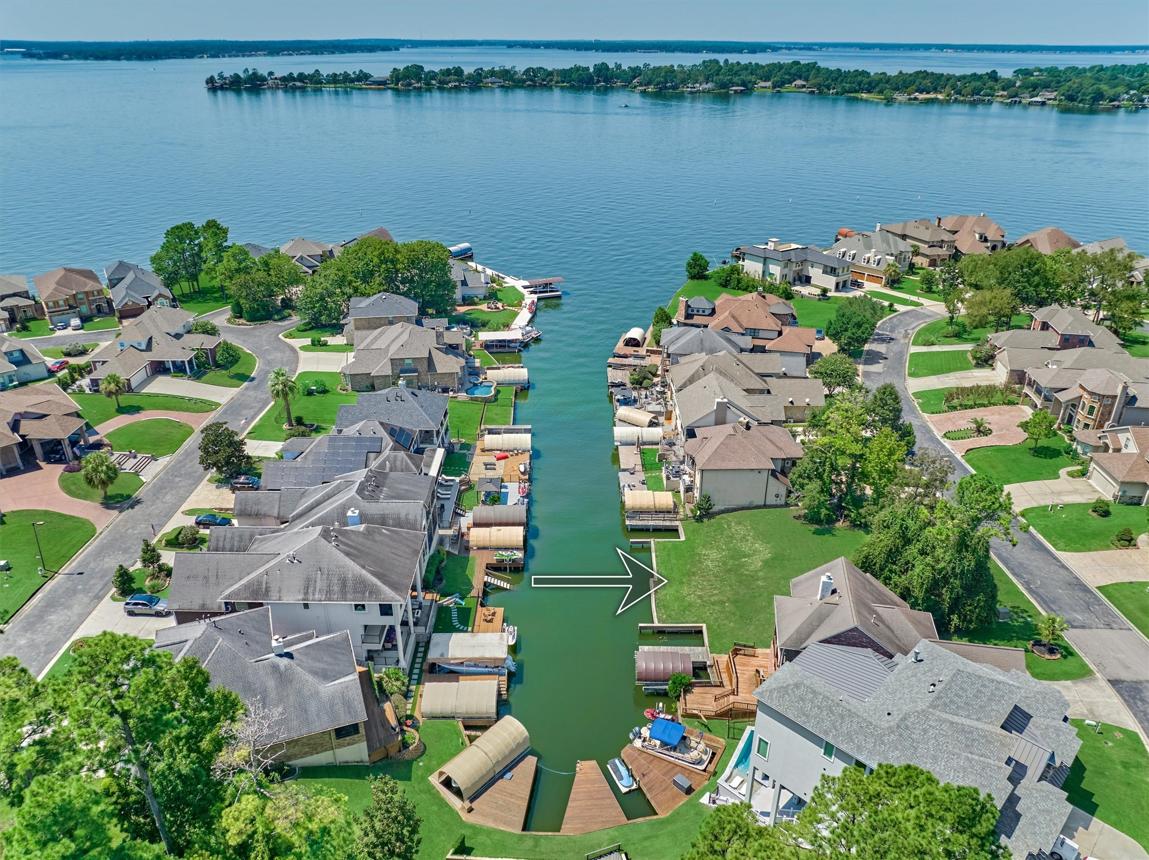
Moving to Lake Conroe? Decide Where the Boat Lives Before You Buy
Moving to Lake Conroe? Decide Where the Boat Lives Before You Buy
You are moving to:
Lake Conroe.
Naturally, you start imagining:
Saturday morning.
Coffee.
Boat.
Water.
Perfect.
Then comes the assumption:
“We need a house where we can keep the boat.”
Maybe.
But before making boat storage one of your biggest home-search requirements, ask:
How are we actually going to use the lake?
Because there is a major difference between:
Wanting to live near Lake Conroe
and:
Wanting to manage a boat from your property.
For some relocators, having a boat behind the house is:
Exactly the lifestyle they want.
For others:
Marina storage may make more sense.
And some households may discover:
They love the lake
without needing to own a boat at all.
Start With How Often You Will Actually Boat
This is the first question.
Not:
Do you like boating?
Ask:
How many days per month will we realistically take the boat out?
Every Weekend?
Direct access may be:
Extremely valuable.
Once a Month?
Marina or storage options may deserve:
More consideration.
A Few Times Per Year?
Owning and storing a boat at home may be:
More commitment than your actual use requires.
Do Not Answer Based on Vacation Mode
You may have visited Lake Conroe and spent:
Three days
doing:
Nothing but lake activities.
That does not mean your regular Tuesday in October will look:
The same.
Picture Your Normal Calendar
Work.
Errands.
Travel.
Children's activities if relevant.
Home maintenance.
Social commitments.
Where does boating realistically fit?
That is the boating lifestyle:
You should buy around.
Option One: Boat at Your Waterfront Home
For frequent boaters, this can be:
Hard to beat.
You walk outside.
Get on the boat.
Go.
Convenience Is the Major Advantage
No:
Trailer.
Drive.
Launch line.
Storage trip.
That convenience can make spontaneous boating
Much easier.
An hour on the water can become:
Realistic.
But You Are Also Buying Marine Infrastructure
A waterfront property may involve:
Dock.
Lift.
Electrical components.
Shoreline or bulkhead conditions where applicable.
These should be evaluated as
Property systems.
Not simply:
Scenery.
A Beautiful Dock Is Still Something You Own
Which means:
Understand its condition.
Ask About
Dock structure.
Lift.
Electrical.
Lighting.
Roof or cover if present.
Maintenance history where available.
Use Appropriate Inspections or Specialists
when conditions warrant.
Boat Size Matters Before You Choose the Property
Do you already own:
A boat?
Know
Length.
Beam.
Weight.
Height.
Lift requirements.
Do Not Assume
A dock or lift that exists:
Fits your boat.
If You Plan to Buy a Boat Later
Have at least a realistic idea of:
What type.
Otherwise you may buy a property around
Infrastructure
that does not match:
Your future boat.
Water Access Matters Too
A dock behind a home does not automatically mean:
Every boat works there
under:
Every condition.
If boating access is critical
investigate property-specific conditions such as:
Water depth.
Access route.
Dock configuration.
Do Not Rely Only on
How the water looks during:
One showing.
Option Two: Marina Storage
Suppose you love:
Boating.
But the home you prefer is:
Not waterfront.
That does not automatically eliminate:
The lake lifestyle.
Marina storage may allow you to
Live:
Elsewhere around Lake Conroe
while keeping the boat:
Near the water.
This Can Change Your Entire Home Search
You may gain:
More home options.
Different neighborhoods.
Different lots.
Different price points.
Instead of asking
“Which waterfront house?”
you can ask:
“Which house plus boating arrangement gives us the best overall lifestyle?”
That Is a Much Bigger Search
And sometimes:
A better one.
Marina Convenience Should Be Measured From Your House
If you choose marina storage:
How long does it take to get:
Door to boat?
Five minutes?
Fifteen?
Thirty?
That travel time can influence
How often you use:
The boat.
Convenience Still Matters
It simply moves from:
Backyard access
to:
Marina access.
Investigate the Actual Storage Arrangement
Depending on your needs, understand:
Availability.
Boat-size limitations.
Access.
Costs.
Services.
Rules.
Verify Current Information Directly
Because availability, pricing, and policies can:
Change.
Option Three: Store the Boat at Home and Trailer It
For some households:
This works.
But Before Assuming
“We'll just keep it at the house,”
check:
Property restrictions.
HOA rules where applicable.
Driveway configuration.
Garage dimensions.
Access.
A Boat and Trailer Need
Actual space.
Look at Turning Radius
Can you:
Back it in?
Is the driveway
Long enough?
Wide enough?
Does the street configuration make
Trailer maneuvering practical?
A Large Lot Does Not Automatically Mean
Easy boat storage.
Garage Storage Requires Measurements
Never rely on:
“Three-car garage.”
Measure:
Door opening.
Depth.
Width.
Ceiling height.
Then compare with
Boat.
Trailer.
Motor.
Accessories.
A Garage Can Be Large
and still:
Not fit your setup.
Outdoor Boat Storage May Be Restricted
Do not assume that because:
You can physically park it
you are:
Allowed to.
Review Applicable Restrictions
before making the property dependent on:
Outdoor boat storage.
Option Four: Off-Site Dry Storage
Another possibility:
Store the boat away from:
Your house.
This can reduce
Home storage requirements.
But now ask
How long does retrieval take?
What are:
Access procedures?
Hours?
Costs?
Convenience Determines Use
A boat that requires:
Too much effort
may eventually spend:
More time stored
than:
On the lake.
Launching Yourself Creates a Different Lifestyle
Some boat owners enjoy:
Trailering.
Launching.
Retrieving.
Others quickly discover
They hate:
Every part of it.
Be Honest
Would the launch process stop you from boating on:
A random Wednesday evening?
If Yes
Direct water or marina access may be:
More valuable to you.
Think About Who Handles the Boat
This is often overlooked.
Who:
Drives the trailer?
Launches?
Ties up?
Cleans?
Covers?
Maintains?
If One Person Handles Everything
That person's preferences matter:
A lot.
The Entire Household May Love Boating
But:
One person may be doing:
All the work.
Convenience Can Reduce That Work
But it usually comes with:
Different costs.
Understand the Full Boat Budget
The boat itself is only:
One part.
Potential expenses can include:
Storage.
Fuel.
Insurance.
Maintenance.
Repairs.
Cleaning.
Registration.
Equipment.
Plus
Dock or lift maintenance
if those belong to:
Your property.
Do Not Compare Only Home Prices
Compare:
Home + boating lifestyle.
A Less Expensive Home With Expensive Storage
may change the calculation.
A More Expensive waterfront home
may also involve:
Additional property responsibilities.
There Is No Universal Cheapest Option
Run:
Your numbers.
Think About Boat Maintenance Access
Where will maintenance happen?
At home?
Marina?
Service facility?
How does the boat get there?
If service is required:
Who handles transportation?
A Boat Is a Recreational Asset
But it also needs:
Logistics.
Consider Storm Preparation
Lake-area boat ownership should include:
A plan for severe weather.
Understand
Where the boat will be.
How it is secured.
What your insurance requires.
Do Not Create the Storm Plan
When the forecast becomes:
Urgent.
Your Home Choice Can Affect That Plan
Boat behind house?
Marina?
Trailer?
Dry storage?
Each setup creates
Different preparation.
Guests Can Change Your Boating Needs
If you expect:
Friends.
Family.
Visitors.
You may want
Easy access.
Dock seating.
Parking.
Outdoor living.
But ask how often guests will actually
Come.
Do Not Buy a Party setup
for:
Two weekends per year
unless:
You truly value it.
Waterfront Convenience Can Encourage More Use
This is one of the strongest arguments for:
Direct access.
When the boat is
Right there,
you may use it:
More.
Short Trips Become Practical
Sunset ride.
Dinner.
Quick morning trip.
That may be exactly why you are
Moving to Lake Conroe.
But Convenience Can Also Create More Maintenance
You now see:
Dock.
Boat.
Lift.
Waterfront.
every day.
Those systems become
Part of homeownership.
Ask Whether You Want
That responsibility.
A Non-Waterfront Home Can Still Deliver a Strong Lake Lifestyle
This is important.
Moving to Lake Conroe does not mean:
You failed
if the boat is not:
In the backyard.
Maybe your ideal home has
Better floor plan.
Larger lot.
More privacy.
Better commute.
Lower maintenance.
And the boat is
Ten minutes away.
That may be:
The better total lifestyle.
Some Relocators May Decide Not to Own a Boat
This is also:
Completely reasonable.
You can enjoy
Waterfront dining.
Views.
Community lake access where available.
Friends' boats.
Other recreational options.
Do Not Buy a Boat Because
“People at the lake have boats.”
Buy one because:
You want to:
Own and use one.
Renting Occasionally Can Be Part of the Comparison
For households expecting:
Limited boating,
compare ownership with:
Available rental alternatives.
The purpose is not to prove
One option is cheaper.
It is to understand:
What level of commitment fits:
Your lifestyle.
Do Not Let the Boat Choose the Entire House
Unless:
Boating is one of your highest priorities.
Your home still needs to work for
Work.
Commute.
Guests.
Pets.
Storage.
Daily errands.
Long-term plans.
Lake Life Is More Than
Boat life.
Use the “Wednesday Evening” Test
It is:
6 p.m.
You suddenly want:
An hour on the water.
How long until you are actually
Boating?
That reveals:
Convenience.
Use the “November Test”
Summer excitement is gone.
Are you still boating?
If yes:
Give access more weight.
Use the “Maintenance Test”
The boat needs:
Cleaning.
Service.
Preparation.
Who handles it?
If the answer is:
Nobody wants to,
reconsider:
The setup.
Use the “No Boat” Test
Imagine:
You sell the boat.
Would you still love
The house?
If not:
You may be buying too heavily around:
One activity.
Use the “Better House” Test
You find:
Home A.
Waterfront.
Good house.
Then:
Home B.
Not waterfront.
Fantastic house.
With marina access or storage available for your needs
which total lifestyle would you:
Prefer?
That is the real decision.
Build a Lake Conroe Boat-Lifestyle Scorecard
For each serious home, evaluate:
Boating Frequency
Realistic?
Direct Water Access
Necessary?
Dock
Needed?
Dock Condition
Understood?
Lift
Needed?
Lift Compatibility
Understood?
Water Access
Appropriate for intended use?
Marina Alternative
Practical?
Marina Distance
Acceptable?
Home Boat Storage
Possible?
Applicable Restrictions
Understood?
Garage
Actually fits?
Driveway
Works with trailer?
Trailer Maneuvering
Practical?
Dry Storage
Alternative available?
Launching
Would you actually do it?
Maintenance
Manageable?
Storm Plan
Understood?
Boating Budget
Comfortable?
House Without Boat
Still love it?
Overall
Does this setup make us more likely to enjoy the lake?
Final Thoughts
Moving to Lake Conroe can make boating feel like:
Part of the package.
But there is no rule that says:
Lake home = boat behind house.
Your best setup may be:
Direct waterfront access.
It may be:
Marina storage.
It may be:
Boat stored at home.
It may be:
Off-site storage.
Or:
No boat at all.
The right answer depends on:
How often you boat.
How much convenience matters.
How much maintenance you want.
Where you want to live.
What you want to spend.
And:
How much of your home purchase should revolve around:
The boat.
Before choosing the house:
Choose the boating lifestyle.
Ask:
How often will we use it?
Where will the boat stay?
How quickly can we get on the water?
Who handles maintenance?
What happens during severe weather?
What does the entire setup cost?
Then:
Compare homes.
Because the best Lake Conroe home is not necessarily:
The one with the boat sitting closest to your back door.
It is the one that lets you enjoy:
The amount of lake life you actually want—without creating more boat responsibility than you actually want.
Frequently Asked Questions
Do I need a waterfront home if I own a boat on Lake Conroe?
Not necessarily. Depending on your needs, marina storage, dry storage, home storage, or trailering may provide alternatives to keeping a boat at a private waterfront property.
Should I assume an existing boat lift will fit my boat?
No. Verify the lift specifications and compare them with the size and weight requirements of your specific boat.
Can I store a boat in the driveway of a Lake Conroe-area home?
Do not assume. Review applicable HOA rules, deed restrictions, and other property-specific requirements before relying on outdoor boat storage.
What should I consider if I want to keep a boat in the garage?
Measure the garage door opening, interior dimensions, ceiling clearance, and depth, and compare them with the boat and trailer configuration.
Is marina storage a good alternative to buying waterfront?
It can be for some households. Compare location, availability, access procedures, boat-size requirements, services, current costs, and how frequently you expect to boat.
Should I consider water depth before buying a waterfront home?
If boat access is important, property-specific water conditions and access should be investigated rather than assumed from appearance alone.
Does owning waterfront property create additional maintenance?
It can. Depending on the property, docks, lifts, shoreline improvements, and other waterfront components may require inspection, maintenance, repair, and eventual replacement.
Should I choose a home based primarily on my boat?
Only if boating is genuinely one of your household's highest priorities. The home should still support your commute, daily routine, maintenance preferences, budget, and long-term plans.
Can I enjoy living near Lake Conroe without owning a boat?
Absolutely. A lake-area lifestyle can include views, dining, recreation, community amenities, and proximity to the water without personally owning a boat.
What's the biggest takeaway?
When moving to Lake Conroe, decide how you want to access and use the lake before making boat storage a requirement for the house. The best boating setup is the one you will realistically use enough to justify its cost, convenience, and maintenance.