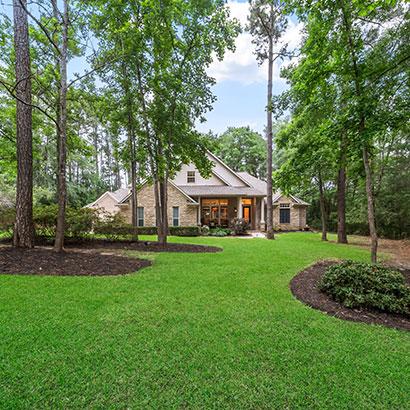
Moving to Lake Conroe? More Privacy Comes With Tradeoffs
Moving to Lake Conroe? How Much Privacy Do You Really Want?
You leave:
Traffic.
Noise.
Neighbors.
Busy schedules.
And move to:
Lake Conroe.
You picture:
Trees.
Water.
Space.
Quiet.
Maybe:
No house directly behind you.
It sounds:
Perfect.
And it might be.
But relocators should understand something before making:
“Privacy”
one of their biggest home-search requirements.
More privacy usually comes with tradeoffs.
The private property you love may also mean:
More land.
More landscaping.
Longer driveway.
More trees.
More maintenance.
Different access.
Farther errands.
Or:
Less connection to community amenities.
The goal is not:
Maximum privacy.
It is:
The right amount of privacy for the way you actually want to live.
First, Define Privacy
When you say:
“I want privacy,”
what do you mean?
No neighbors?
No rear neighbors?
Large lot?
Trees?
Quiet street?
Private backyard?
Distance from the road?
No one looking into your pool?
These Are Different Things
You may not need:
Two acres.
You may simply need:
A backyard that does not feel exposed.
Define the Problem Before Buying the Solution
Ask:
“What exactly are we trying to get away from?”
Maybe It Is Backyard Exposure
You want to sit outside without feeling:
Watched.
Then prioritize:
Rear separation.
Fence.
Landscaping.
Lot position.
Maybe It Is Noise
Then your priority may be:
Distance from roads.
Commercial activity.
Community amenities.
Maybe It Is Space
You want:
Room between houses.
That is:
Different again.
Do Not Use Lot Size as a Shortcut for Privacy
A larger lot can provide:
More space.
But it does not automatically create:
Better privacy.
Look at
House placement.
Neighboring windows.
Elevation.
Fence.
Trees.
Roads.
A Smaller Lot With Smart Positioning
may feel:
More private
than:
A much larger exposed lot.
Stand in the Backyard
Not:
For thirty seconds.
Stay there.
Look Around
What can you see?
What can:
See you?
Check the Neighboring Homes
Upper-story windows.
Balconies.
Patios.
Pools.
Outdoor kitchens.
Privacy Changes Vertically
A six-foot fence may block:
Ground-level views.
It does not necessarily block:
Second-story windows.
Sit Where You Would Actually Sit
Patio.
Pool.
Firepit.
Outdoor dining.
Then Ask
Does this feel:
Private enough?
Waterfront Privacy Works Differently
A waterfront backyard may have:
No house directly behind it.
That can feel:
Open.
Private.
Peaceful.
But the water itself can create
Exposure.
Boats may pass.
People may be:
Across the water.
Nearby docks may be active.
Waterfront Does Not Automatically Mean
Private.
It may mean:
Open.
Decide Which You Prefer
Open water views?
Or:
Seclusion?
Sometimes you can have:
Both.
But do not assume.
Cove and Open-Water Settings Can Feel Different
Rather than deciding from:
Listing photos,
visit the exact property.
Observe
Sightlines.
Neighboring docks.
Boat activity.
Home spacing.
The experience matters more than
The label.
Trees Can Create Excellent Privacy
Mature landscaping can make a property feel:
Completely different.
Trees may provide
Screening.
Shade.
Character.
But Trees Are Also Property Features
Understand:
Condition.
Placement.
Maintenance.
Look for
Large limbs.
Proximity to roof.
Roots near improvements.
Dead or declining trees.
Appropriate professional evaluation may be useful
when concerns exist.
Privacy Landscaping Requires Maintenance
Hedges.
Shrubs.
Trees.
Screening plants.
Ask
Who maintains them?
How often?
What happens if:
A major screening plant dies?
Natural Privacy Is Not Maintenance-Free Privacy
That matters if you are relocating because:
You want:
Less work.
Acreage Can Be Attractive
More land can provide:
Space.
Separation.
Flexibility.
But ask
What are you going to do with it?
If the answer is
“Nothing,”
you still may have to:
Maintain it.
More Land Can Mean
More mowing.
More irrigation concerns.
More fencing.
More tree care.
More exterior responsibility.
The Acreage Test Is Simple
Would we still want this much land if nobody else ever saw it?
If yes:
Great.
If the answer is
“It just feels impressive,”
think carefully.
Long Driveways Can Increase Privacy
The home sits:
Farther from the road.
Beautiful.
But a longer driveway may also mean
More surface to:
Maintain.
Think about
Lighting.
Drainage.
Delivery access.
Guest parking.
Privacy Starts at the Street
Look at:
Traffic.
Street width.
Parking.
Nearby intersections.
A quiet backyard does not completely solve
A busy front.
Visit at Different Times
When practical.
A street that feels:
Silent
at:
11 a.m.
may feel:
Different
after work.
Cul-de-Sac Does Not Automatically Mean Private
It may reduce:
Through traffic.
But depending on the layout
it can also concentrate:
Neighbors.
Parking.
Activity.
Evaluate the Exact Property
Not:
The street label.
Corner Lots Create Their Own Privacy Equation
Potential benefits may include:
Different neighbor configuration.
But they can also create
More street exposure.
More visible yard.
Different fencing considerations.
Again
There is no universal:
Best.
Greenbelt Lots Can Feel Private
Having no immediate rear home may be:
Very appealing.
But investigate
What the land is.
How it is used.
Whether trails or other activity are nearby.
“No rear neighbor” does not always mean
“No people behind you.”
Community Amenities Can Affect Privacy
A home close to:
Pool.
Park.
Trail.
Clubhouse.
may offer:
Excellent convenience.
It may also experience
More pedestrian activity.
Parking.
Noise.
If privacy is your priority
consider:
How close is too close?
If convenience is your priority
you may happily accept:
More activity.
Privacy and Community Connection Can Pull in Opposite Directions
Some relocators want:
Space.
But they also want:
Neighbors.
Events.
Amenities.
A highly secluded property may provide
Privacy
while reducing:
Spontaneous interaction.
Ask
Do we want:
Seclusion?
Or:
A neighborhood?
You Can Want Both
But understand which one:
Wins
when there is a tradeoff.
Privacy Can Affect How Safe a Home Feels to You
Some people feel safest:
With neighbors nearby.
Others prefer:
Distance.
Think About Your Comfort
Especially:
At night.
Visit After Dark If Practical
Ask:
How does the property feel?
Look at
Exterior lighting.
Street lighting.
Neighbor visibility.
Entry.
Driveway.
A Home Can Feel Completely Different After Sunset
This is worth:
Knowing before buying.
Frequent Travelers Should Think Carefully About Seclusion
If you travel:
Often,
a highly private property may require:
Different planning.
Consider
Packages.
Landscaping.
Pool service.
Storm preparation.
Home monitoring.
Some Buyers Prefer
A lock-and-leave feeling.
Others:
Do not care.
Your travel habits should influence
How much property responsibility you want.
Gates Can Create Privacy
But they are also:
Systems.
If a property has a private gate
understand:
Operation.
Power.
Maintenance.
Access.
Ask
What happens during:
A power interruption?
The same applies to
Community gates.
Know:
How access works.
Fencing Matters More Than Buyers Think
A fence can affect:
Privacy.
Pets.
Children.
Views.
Evaluate
Condition.
Height.
Material.
Placement.
If You Plan to Change It
Verify applicable:
Community or property restrictions
before assuming:
You can.
Do Not Assume You Can Add Privacy Later
That empty side yard might look like:
The perfect place for:
A privacy screen.
But restrictions may affect
Fencing.
Structures.
Landscaping.
Verify before making
Future modifications
part of:
Your buying decision.
Pool Privacy Deserves Its Own Test
If the home has:
A pool,
stand:
At the pool.
Look toward
Every neighboring property.
Then imagine
People actually being home.
Listing appointments often happen when
Neighbors are:
At work.
Your Saturday afternoon may feel
Different.
Outdoor Kitchens Can Face the Wrong Direction
Beautiful grill.
Great counter.
Nice patio.
But if you are staring directly at
The neighbor's windows,
will you use it?
Outdoor design should support
How you want to:
Live outside.
Noise Privacy Is Different From Visual Privacy
You may see:
Nobody.
But hear:
Road traffic.
Boats.
Music.
Dogs.
Community activity.
Or You May See Neighbors
but hear:
Almost nothing.
Decide Which Matters More
Visual privacy?
Sound privacy?
Both?
Trees and Fences Do Not Create Perfect Soundproofing
Do not assume:
“I'll plant something”
will eliminate:
A noise concern.
Evaluate the property
as it exists.
Open the Windows
When practical.
Then Close Them
How does the sound:
Change?
Stand Outside
Front.
Back.
Side.
Listen
Do not just:
Look.
Privacy Can Affect Convenience
Generally, more secluded properties may require:
Different driving patterns.
Ask how long it takes to reach
Groceries.
Healthcare.
Dining.
Work.
Major roads.
You May Happily Trade
Ten additional minutes
for:
Peace and space.
But Make That Trade
Intentionally.
Do Not Discover It
After moving.
Think About Deliveries and Service Providers
Can:
Moving trucks.
Furniture delivery.
Contractors.
Pool service.
Landscaping crews.
easily access:
The property?
A secluded property still needs
People
to occasionally:
Reach it.
More Privacy Can Mean More Home
Not necessarily in:
Square footage.
But in:
Responsibility.
More exterior.
More yard.
More trees.
More systems.
More things that:
Belong to you.
Ask the Bigger Question
Do we want privacy—or do we want low maintenance?
Sometimes:
You can have both.
Sometimes:
You trade one for the other.
Compare Privacy Cost, Not Just Purchase Price
If a private property requires:
More landscaping.
Tree service.
Fence maintenance.
Driveway maintenance.
Security systems.
Those costs become part of
The lifestyle.
Build Them Into Your Decision
Before:
Closing.
Do Not Buy Privacy for Guests
Maybe you imagine:
Everyone visiting.
Pool parties.
Lake weekends.
Family gatherings.
But your property should first work for
The people who:
Live there.
If Guests Never Came
Would you still want:
The lot?
Space?
Privacy?
If yes
That is a stronger reason.
Think About Future Development
If privacy depends heavily on:
What surrounds the property,
understand what you reasonably can about:
Nearby land.
Do Not Assume
An empty area will:
Remain empty forever.
Verify Available Information
when future surroundings are important to:
Your decision.
The Best Privacy May Be Strategic Privacy
You may not need:
A secluded estate.
Maybe you need
No immediate rear neighbor.
A screened patio.
Trees along one side.
A quiet street.
That could deliver
90% of the privacy you want
with:
Much less responsibility.
This Is Why Defining Privacy First Matters
Otherwise you may:
Overbuy it.
Use the “Saturday Patio” Test
Everyone nearby is:
Home.
Would you still feel comfortable:
Outside?
Use the “After-Dark” Test
It is:
10 p.m.
Does the property feel
Peaceful?
Or:
Too isolated?
Use the “Nobody Visits” Test
The property is not being used for:
Entertaining.
Do you still want
This much space?
Use the “Tree Bill” Test
The property needs:
Significant tree work.
Does your love of the wooded lot survive:
The maintenance bill?
Use the “Ten Extra Minutes” Test
More privacy adds:
Ten minutes
to several routine trips.
Still worth it?
If yes:
You probably genuinely value:
Privacy.
Use the “Neighbor Test”
Imagine the neighboring house has:
People outside.
Children playing.
Dog barking occasionally.
Guests.
Does the property still feel
Private enough?
Build a Lake Conroe Privacy Scorecard
For each serious home, evaluate:
Rear Privacy
Enough?
Side Privacy
Enough?
Front Privacy
Enough?
Neighbor Distance
Comfortable?
Second-Story Sightlines
Acceptable?
Waterfront Exposure
Comfortable?
Boat Activity
Acceptable if relevant?
Trees
Helpful?
Tree Maintenance
Manageable?
Landscaping
Manageable?
Fence
Adequate?
Pool Privacy
Good?
Patio Privacy
Good?
Road Noise
Acceptable?
Other Noise
Acceptable?
Lot Size
Actually wanted?
Driveway
Practical?
Lighting
Comfortable?
Nighttime Feel
Comfortable?
Travel
Easy to manage?
Convenience
Tradeoff acceptable?
Future Surroundings
Understood as much as practical?
Maintenance
Fits lifestyle?
Overall
Are we buying useful privacy or simply more property?
Final Thoughts
Moving to Lake Conroe can create an opportunity for:
More space.
More trees.
More separation.
More quiet.
And:
More privacy.
But more is not automatically:
Better.
The right question is not:
“How private can we get?”
It is:
“How much privacy will make our everyday life better?”
Maybe you want:
Acreage.
Long driveway.
Heavy tree coverage.
Almost no visible neighbors.
Perfect.
Maybe you want:
A neighborhood.
Community amenities.
Neighbors nearby.
But:
A backyard that feels private.
Also perfect.
The goal is:
Not maximum seclusion.
It is:
The right balance between:
Privacy.
Convenience.
Maintenance.
Community.
Cost.
And:
Peace of mind.
Before buying:
Stand in the backyard.
Sit on the patio.
Look toward neighboring windows.
Listen.
Visit at a different time.
Look at the property after dark if practical.
Think about the yard.
Trees.
Driveway.
Maintenance.
Then ask:
“Would we still want all of this privacy if we were responsible for everything that comes with it?”
If the answer is:
Yes,
you may have found exactly what you were:
Looking for.
Frequently Asked Questions
Do I need a large lot to have privacy near Lake Conroe?
Not necessarily. House placement, neighboring sightlines, landscaping, fencing, trees, and lot position can sometimes influence privacy as much as total lot size.
Are waterfront homes private?
They can feel open and private because there may be no home immediately behind them, but boat traffic, neighboring docks, properties across the water, and other activity can affect the experience.
Should I visit a Lake Conroe home at night before buying?
When practical, seeing a serious contender at different times can help you evaluate lighting, noise, traffic, surrounding activity, and how secluded the property feels after dark.
Does a wooded lot require more maintenance?
It can. Mature trees and extensive landscaping may require ongoing attention, so buyers should evaluate their condition and maintenance expectations.
Does a greenbelt lot guarantee privacy?
No. Understand what is behind the property, how that area is used, and whether trails or other activity may be nearby.
Can I add a taller fence after buying?
Do not assume. Review applicable deed restrictions, HOA requirements, and other property-specific rules before relying on a future fencing change.
Should frequent travelers avoid secluded homes?
Not necessarily, but frequent travelers may want to consider landscaping, packages, storm preparation, monitoring, pool care, and other responsibilities while the home is vacant.
Is acreage worth buying for privacy?
It depends on whether you genuinely want the space and are comfortable with the associated ownership responsibilities. More land should solve a problem or support a lifestyle you actually value.
How can I test backyard privacy during a showing?
Stand or sit in the places you would actually use, look toward neighboring windows and outdoor areas, listen for surrounding noise, and consider how the space might feel when nearby residents are home.
What's the biggest takeaway?
When moving to Lake Conroe, buy the amount of privacy you will actually enjoy maintaining. The best property is not necessarily the most secluded one—it is the one that gives you enough separation to feel comfortable without adding responsibilities you never wanted.