Moving to The Woodlands? Don’t Shop by “The Woodlands” Address Alone
Moving to The Woodlands? The Exact Address Matters More Than the Words “The Woodlands”
You search:
Homes for sale in The Woodlands.
Hundreds of listings appear.
They all seem to be in:
The Woodlands.
So naturally, you assume the location differences are relatively minor.
Then you begin touring.
One home feels close to:
Shopping.
Another feels surrounded by:
Trees and trails.
Another creates a completely different commute.
One property is near:
Town Center.
Another feels much more residential.
Then you discover something even more important:
Homes associated with The Woodlands can also differ in school district, tax situation, village location, neighborhood age, amenities, and everyday routes.
Suddenly:
“We want to live in The Woodlands”
is only the beginning of the search.
For relocators, the exact address matters.
A lot.
The Woodlands Is Built Around Villages
The Woodlands is organized around individual villages and neighborhoods rather than one traditional downtown surrounded by a single residential pattern.
That design is part of what makes the community distinctive.
Different villages can offer different combinations of:
Home ages.
Lot sizes.
Architecture.
Parks.
Pathways.
Shopping.
Golf.
Water features.
Access to major roads.
The official Woodlands community information describes the villages as having their own shopping, recreation, schools, and neighborhood environments.
Do Not Pick a Village Only Because Someone Told You It Is “The Best”
Best for:
Who?
A household commuting south may have different priorities from:
Someone working in Town Center.
A buyer wanting:
An established wooded lot
may prefer something different from someone prioritizing:
Newer construction.
Your routine should choose the location.
Start With the Address and Work Outward
For every serious property, map:
Work.
School if relevant.
Groceries.
Healthcare.
Gym.
Restaurants.
Airport.
Friends or family.
Then look at what happens within:
Five minutes.
Ten minutes.
Fifteen minutes.
That tells you much more than:
The city name.
A Village Can Change Your Morning Routine
Maybe one house gives you:
A more direct route toward work.
Another requires:
More internal neighborhood driving before reaching a major road.
That difference may look tiny on a map.
Five mornings per week?
It can matter.
Test the Route at the Time You Would Actually Drive It
Do not rely on:
Sunday afternoon.
Traffic patterns change.
Hybrid Workers Should Calculate Weekly Commute Burden
If you only commute:
Two days per week,
you may willingly trade some drive time for:
Better lot.
Different village.
More privacy.
Larger house.
Trails.
Remote Workers Have a Different Location Equation
Your immediate surroundings may matter more because:
You are actually home during the day.
Think about:
Home-office light.
Internet availability.
Walking routes.
Lunch options.
Noise.
Neighborhood activity.
School District Should Be Verified by Property
This is especially important for relocating families.
Do not assume every home associated with The Woodlands feeds into the same school district.
Current community information identifies multiple public school districts serving parts of The Woodlands, and Tomball ISD operates schools within Creekside Park.
Never Buy Based on a Listing's School Information Alone
School assignments can change.
Verify the exact address through the applicable district before purchasing.
“Good Schools” Is Too General Anyway
Your household may care about:
Specific programs.
Grade configuration.
Extracurriculars.
Transportation.
Special services.
Athletics.
Commute.
Verify what matters to you personally.
Village Boundaries Matter More Than Buyers Expect
A road may separate two areas that feel:
Almost identical.
But the properties may differ in:
Neighborhood identity.
School assignment.
HOA or association details.
Taxing jurisdictions.
Amenities.
Do Not Assume the House Across the Street Has the Same Details
Verify each property individually.
Town Center Access Can Be a Major Lifestyle Factor
Some relocators imagine that moving to The Woodlands means they'll constantly visit:
Restaurants.
Shopping.
Entertainment.
Waterway-area destinations.
Maybe you will.
If that lifestyle matters:
Map it from the actual house.
Ten Miles Does Not Tell the Whole Story
Road layout matters.
Traffic lights matter.
Time of day matters.
Other Buyers Prefer to Stay Inside Their Village
Your routine may revolve around:
Village shopping.
Nearby parks.
Neighborhood trails.
Schools.
Home.
If so:
Central proximity may matter less.
That Can Open More Housing Options
You may discover you do not need to pay specifically for:
Central location
if your weekly routine does not require it.
Pathway Access Should Be Checked From the Front Door
The Woodlands is known for its extensive trail and pathway environment.
But relocators sometimes make this assumption:
“The community has trails, so we'll walk everywhere.”
Not necessarily.
Ask Where the Nearest Useful Path Actually Goes
Can you reach:
Park?
Shopping?
Another neighborhood?
A long recreational route?
Or is it simply:
A short neighborhood segment?
Walk the Route Yourself
If trail access matters:
Test it.
A Home Near a Pathway Can Feel Different From One Backing Directly to It
Some buyers love:
Immediate access.
Others prefer:
More separation.
Look at:
Privacy.
Pedestrian activity.
Lighting.
Vegetation.
Mature Trees Can Change the Feel of the Property
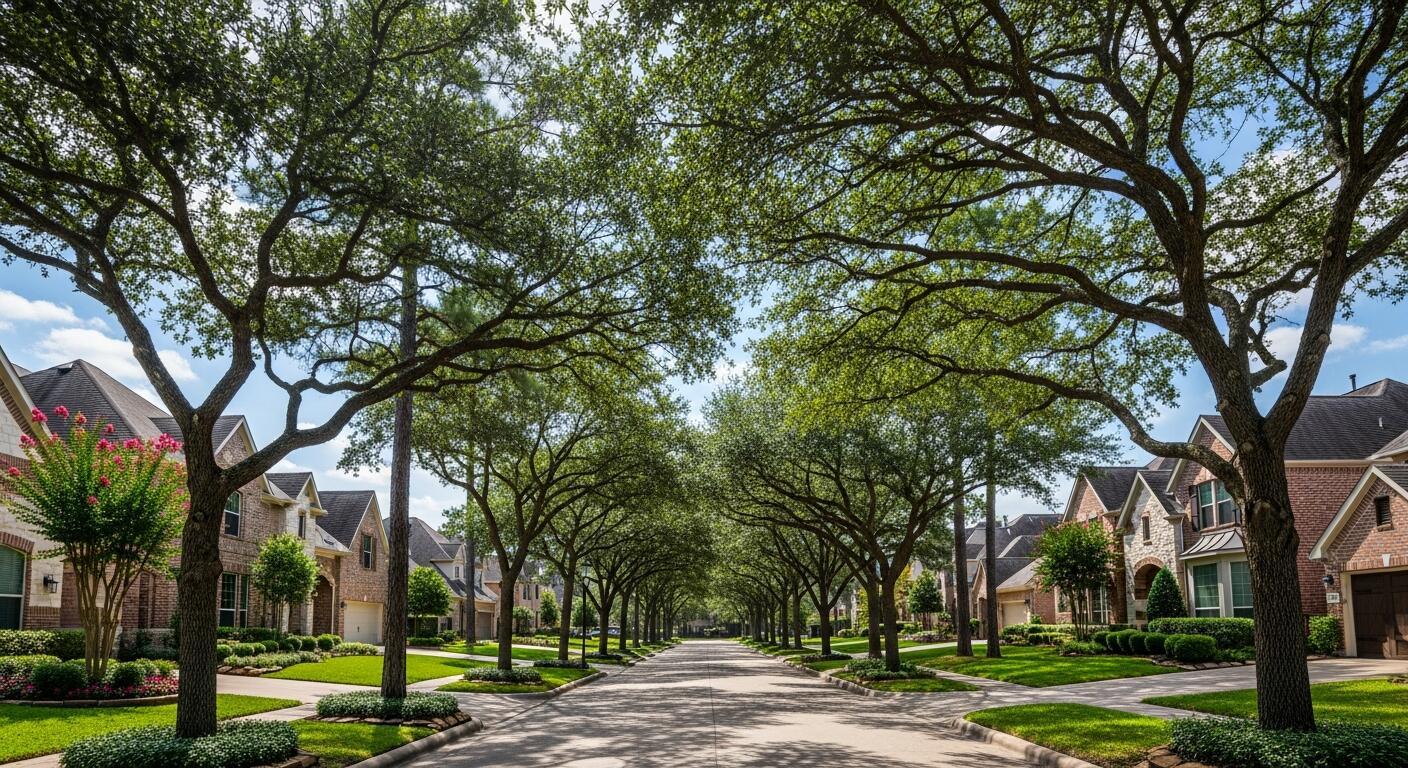
One of The Woodlands' strongest visual characteristics is its established tree canopy.
But different streets can feel very different.
Some lots may offer:
Heavy shade.
Others:
More open sun.
Visit in the Afternoon
Especially if you care about:
Pool use.
Patio comfort.
Natural light.
Gardening.
Tree Density Can Affect the Interior Too
A heavily wooded property may feel:
Private.
Cooler visually.
Atmospheric.
But perhaps darker inside.
Another buyer may prefer:
More natural light.
Neither is wrong.
Home Age Often Changes by Location
An established section may offer:
Older architecture.
Mature landscaping.
Larger established trees.
Updated resale homes.
Another area may offer:
Newer construction.
Different floor plans.
More contemporary finishes.
Do Not Automatically Choose Newer
Ask what matters more:
New kitchen?
Or:
Mature street?
Updated mechanical systems?
Or:
Different location?
Better lot?
An Older House Can Be the Better Relocation Choice
If it gives you:
The commute.
The street.
The trees.
The village.
The lot.
you actually prefer.
Finishes can be changed.
Location cannot.
But Understand Future Maintenance
For established homes, evaluate:
Roof.
HVAC.
Windows.
Plumbing.
Electrical.
Pool equipment.
Other major systems.
Shopping Convenience Is Extremely Property-Specific
When touring, buyers often ask:
“Is shopping nearby?”
That is too broad.
Ask:
Where is our grocery store?
Where is our pharmacy?
Where do we get coffee?
Where would we eat on a Tuesday?
Use Your Actual Preferences
A grocery store you never use is not:
Convenience.
Healthcare Should Be Mapped the Same Way
If you regularly need:
Primary care.
Specialists.
Pediatrics.
Therapy.
Hospital access.
Map your likely providers.
Do Not Assume Every Woodlands Address Has the Same Healthcare Route
Exact location changes the drive.
Airport Access Can Matter for Frequent Travelers
If you fly:
Weekly
or
several times per month,
airport routing should be part of the home search.
If you fly:
Twice a year,
it probably should not outweigh your daily lifestyle.
Weight Decisions by Frequency
This rule solves many relocation problems.
Weekly grocery trip?
Important.
Daily commute?
Very important.
Annual concert?
Less important.
Golf-Course Proximity Is Not Automatically an Advantage
A golf-course property may offer:
Views.
Open space.
Distinctive setting.
But ask:
Do you value it enough to prioritize it?
Golf Lifestyle and Golf View Are Different Things
You may love:
The view
without ever playing.
That is perfectly valid.
Parks Matter More for Some Households Than Others
If you have:
Children.
Dogs.
Running routine.
Outdoor hobbies.
Park proximity may strongly influence daily life.
If not:
It might rank lower.
Do Not Pay for Lifestyle Features You Will Rarely Use
This applies to:
Golf.
Pools.
Trails.
Community amenities.
Town Center proximity.
Large yards.
Buy for your life.
Property Taxes Should Be Evaluated by Address
Avoid assuming:
Every home in The Woodlands produces the same tax situation.
Review the actual property's current information and applicable taxing jurisdictions.
HOA or Community Charges Should Also Be Property-Specific
Ask:
What applies?
How much?
What does it cover?
When is it paid?
Insurance Should Follow the Address Too
Two homes with similar prices may receive different insurance quotes based on:
Roof.
Age.
Construction.
Pool.
Coverage.
Other property characteristics.
Flood Research Belongs at the Property Level
Avoid:
“Does The Woodlands flood?”
That is far too general.
Instead evaluate:
Exact property.
Current flood information.
History.
Drainage.
Insurance considerations.
Look at the Street, Not Only the House
Relocators often tour:
Kitchen.
Bedrooms.
Primary bathroom.
Backyard.
Then leave.
Spend five minutes outside.
Look Left and Right
Notice:
Street width.
Parking.
Trees.
Setbacks.
Traffic.
Sidewalk or pathway.
Drainage.
Neighboring homes.
Drive Through the Neighborhood Without Your Agent Leading You
Can you navigate it easily?
How does it feel?
Visit After Dark
When practical.
Look at:
Lighting.
Traffic.
Activity.
Navigation.
Visit on a Weekend
Especially if you are considering:
A busy park.
Golf course.
Community facility.
Major road.
Popular trail.
Then Visit During a Weekday
You need both experiences.
The Best House Can Still Be in the Wrong Location for You
This is the relocation trap.
You find:
Amazing kitchen.
Pool.
Office.
Huge primary suite.
Great price.
But the location makes:
Work difficult.
School routines awkward.
Errands inconvenient.
Your preferred lifestyle less accessible.
Do Not Let the House Win Every Argument
The property and location need to work together.
Build an Address-Level Scorecard
For each serious home, rate:
Village
Fits lifestyle?
Work
Actual route tested?
School District
Verified if relevant?
School Assignment
Verified?
Groceries
Preferred store convenient?
Healthcare
Mapped?
Restaurants
Fits routine?
Trails
Useful access?
Parks
Would use?
Town Center
Important and convenient?
Airport
Appropriate?
Home Age
Comfortable?
Trees
Desired amount?
Natural Light
Enough?
Street
Feels right?
Taxes
Property-specific estimate reviewed?
Association Costs
Understood?
Insurance
Quoted?
Flood Information
Reviewed?
Weekend
Works?
Tuesday
Works?
Use the “Same House, Different Village” Test
Imagine the exact same house somewhere else in The Woodlands.
Would you still choose:
This location?
If yes:
Good sign.
Use the “No Remodel” Test
Would you choose a less-updated home to get:
A location you prefer?
Maybe you should.
Use the “Five-Year Routine” Test
What if:
Work changes?
Children grow?
You commute less?
Parents move nearby?
Does the location still work?
Use the “Ordinary Tuesday” Test
Wake up.
Work.
School.
Grocery.
Gym.
Dinner.
How much friction does the address create?
That is often more revealing than:
Saturday's house tour.
Final Thoughts
Relocating buyers often begin with:
“We want to live in The Woodlands.”
That is a good starting point.
It is not a complete location decision.
The exact property may influence:
Village.
School district.
Daily commute.
Trail access.
Shopping.
Healthcare.
Tree coverage.
Home age.
Taxes.
Association costs.
And the way your ordinary week feels.
So do not choose a house simply because:
The listing says The Woodlands.
Zoom in.
Verify the address.
Map your life.
Drive the commute.
Walk the trail.
Check the schools if relevant.
Review property-specific costs.
Visit the street at different times.
Then ask:
“Does this exact address make our life easier?”
Because two homes can both be:
In The Woodlands.
And still create two completely different lives.
For a relocator, understanding that difference before closing is far more valuable than discovering it after the moving truck arrives.
Frequently Asked Questions
Are all homes in The Woodlands in the same school district?
No. Public-school districts serving The Woodlands vary by location, so buyers should verify the applicable district and current school assignments for the exact property.
Does the village matter when buying in The Woodlands?
Yes. Village location can influence housing style, home age, nearby shopping, parks, pathways, road access, and overall daily routine.
Should I choose a village before choosing a house?
It can help to identify several locations that work for your household rather than forcing yourself into one village before you understand the available homes.
Are some parts of The Woodlands newer than others?
Yes. The community developed over time, so housing age and neighborhood character can vary. Evaluate the specific home and surrounding area.
Is trail access the same throughout The Woodlands?
No. The broader community has an extensive pathway system, but usefulness from an individual property depends on the home's exact location and nearby connections.
Should I verify property taxes before buying?
Yes. Review current information for the specific property rather than assuming all Woodlands homes carry the same effective ownership costs.
Does living closer to Town Center automatically make a home better?
No. It depends on your lifestyle. Some relocators prioritize central shopping, dining, and employment access, while others prefer more residential surroundings.
Should I visit a neighborhood more than once before buying?
When possible, yes. Visiting during different days and times can help you better understand traffic, activity, lighting, noise, and general neighborhood feel.
Is an older home in a better location worth considering?
Absolutely. If the location, lot, street, and lifestyle fit are strong, an established home may be worth considering even if some cosmetic updates are needed.
What's the biggest takeaway?
When relocating to The Woodlands, shop by exact address—not simply by the words “The Woodlands.” Verify the village, school information when relevant, commute, trails, everyday destinations, property costs, and neighborhood environment before deciding which home truly fits your life.