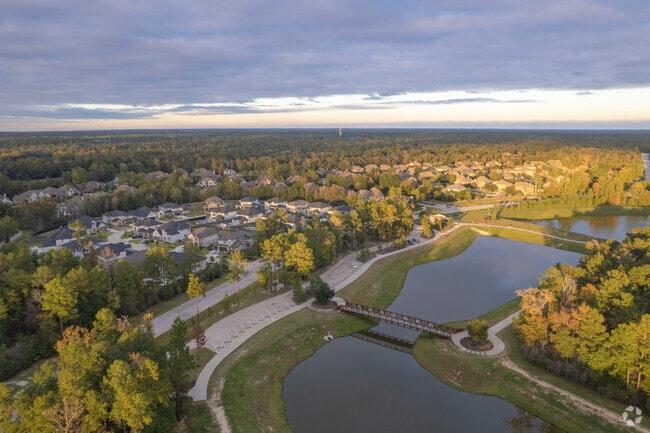
Moving to Woodforest? Pay Attention to What Hasn’t Been Built Yet
Moving to Woodforest? Pay Attention to What Hasn't Been Built Yet
You tour a house in Woodforest.
The backyard is:
Quiet.
Private.
Beautiful.
Behind it:
Trees.
Open land.
Nothing else.
Your immediate reaction:
“This is perfect. No rear neighbors.”
Maybe.
But before paying a premium for that view, ask:
Who owns the land behind us, and what can eventually be built there?
That question is especially important when relocating into a growing master-planned community.
You are not simply buying:
The home.
The street.
The amenities.
You are also buying into a community that may continue evolving after your moving truck leaves.
That can be exciting.
New:
Restaurants.
Retail.
Amenities.
Road connections.
Services.
Homes.
But growth can also mean:
Construction.
Changing traffic.
Different views.
More activity.
For relocators unfamiliar with Woodforest, understanding what exists today versus what could change tomorrow can prevent a lot of surprises.
Start With the Community Map, Not Just the Listing
A listing shows:
Your lot.
Maybe nearby streets.
That is not enough.
Zoom out.
Look at:
Surrounding sections.
Undeveloped land.
Road connections.
Commercial areas.
Amenities.
Community boundaries.
Nearby development.
Ask What Is Already Approved
There is a major difference between:
Rumored.
Proposed.
Planned.
Approved.
Under construction.
Completed.
Do not treat those words as interchangeable.
Marketing Materials Can Show a Vision
They can help you understand:
How a community may develop.
But plans can change.
Timelines can change.
Uses can change where legally permitted.
Verify current information when a future feature materially affects your purchase.
Never Buy Solely Because Someone Says “They're Building Something Great There”
If that future development is important enough to influence your offer:
Research it.
The Same Rule Applies to Things You Do Not Want
Someone may say:
“Nothing will ever be built behind this house.”
Verify.
An Empty Field Is Not a Guaranteed Permanent View
This is one of the most important lessons for relocators buying in growing suburban communities.
Today:
Trees.
Tomorrow:
Homes.
Road.
Commercial development.
Or perhaps:
Still trees.
The point is:
Do not assume.
Ask Who Owns Adjacent Land
For a property bordering undeveloped land, investigate:
Ownership.
Current zoning or applicable development controls.
Recorded plats where relevant.
Known plans.
Community plans.
“Green Space” Needs Verification Too
A beautiful wooded area may be:
Permanent reserve.
Drainage area.
Future park.
Future residential section.
Privately owned undeveloped land.
Those are very different things.
Understand the Difference Between a Reserve and Vacant Land
Do not use:
“It looks protected”
as your research method.
Construction Can Be Temporary but Significant
Buying near a developing section may mean experiencing:
Construction traffic.
Equipment.
Dust.
Noise.
Temporary road changes.
Contractor activity.
Ask Yourself How Much That Would Bother You
If you work:
From home,
construction nearby may matter more.
If you leave:
Every morning
and return in the evening,
maybe less.
Visit During Construction Hours
A Saturday afternoon can hide:
Monday morning reality.
New Sections Can Eventually Become a Benefit
Today's construction may eventually mean:
Completed homes.
Improved streets.
More nearby residents.
Additional services.
Finished landscaping.
The inconvenience may be temporary.
But “Temporary” Can Still Mean Years of Nearby Growth
Master-planned communities develop in phases.
Do not assume everything around your property will be completed shortly after you move in.
Roads Can Change Your Routine
A future road connection may:
Improve access.
Shorten a drive.
Create another route.
It may also:
Increase traffic near a property.
A Quiet Street Today May Not Function Exactly the Same Later
Ask whether nearby roads are:
Permanent dead ends.
Future connections.
Major internal routes.
Cul-de-Sacs Need Verification Too
Some buyers see an unfinished street and assume:
Future cul-de-sac.
Maybe.
Check the plan.
Retail Growth Can Make Daily Life Easier
Additional nearby businesses can reduce the need to travel farther for:
Food.
Services.
Dining.
Coffee.
Fitness.
Other errands.
Pine Market Already Provides a Commercial Center Within Woodforest
For many residents, the Pine Market area contributes to the convenience and community atmosphere of Woodforest.
But relocators should still ask:
Which businesses do we personally use?
A commercial center is only convenient if it supports your routine.
Future Retail Should Be Treated as a Bonus Until Confirmed
Do not buy a house because:
“A grocery store is supposed to be coming.”
Unless that information is sufficiently verified and the timing works for you.
Your Current Grocery Route Still Matters
Where would you shop:
Next week?
That matters more than:
What may arrive several years from now.
New Amenities Can Change the Value of a Location Within the Community
Imagine a future:
Park.
Trail connection.
Pool.
Retail area.
School.
Community facility.
A home that currently feels:
Far away
could become:
Very convenient.
The Reverse Can Happen Too
A quiet edge of the community may become:
Much more active.
Neither is necessarily bad.
But know what you are choosing.
Trail Connections Can Become More Useful as Development Expands
A short trail segment today may eventually connect into:
A larger network.
But again:
Verify what currently exists.
Do Not Buy Based Only on Renderings
Renderings are:
Visualizations.
Your purchase is:
Real property.
Evaluate the home based on what you know today.
Future Schools Can Be Especially Confusing for Relocators
If schools matter to your household:
Verify current zoning for the exact property through the applicable school district.
Do not assume:
A future school.
A nearby school.
Or a school shown on an old community map
will necessarily be your assigned campus.
School Boundaries Can Change
Growing communities may experience:
New campuses.
Rezoning.
Capacity changes.
That is another reason to verify current information.
Do Not Buy a House Solely for One School Assignment
Especially if you expect to remain for many years.
Assignments are not permanent guarantees.
Future Development Can Affect Traffic
More homes generally mean:
More residents.
More vehicles.
More demand on roads.
But development can also bring:
Additional routes.
Traffic improvements.
Nearby services that shorten errands.
Think in Terms of Traffic Distribution
Not simply:
More houses = worse traffic.
The actual road network matters.
Test Your Current Commute First
Do not sacrifice:
A workable commute today
for a promised future road.
If the New Road Happens Later
Great.
Treat it as:
Potential upside.
Construction Routes Matter
If your finalist property sits near:
A major development entrance
or
future section,
ask where construction traffic is likely to travel.
Lot Premiums Need Extra Scrutiny in Developing Areas
You may pay more for:
Greenbelt.
No rear neighbors.
Water view.
Corner.
Cul-de-sac.
Oversized lot.
Before paying the premium:
Understand what makes the lot special.
Then Ask Whether That Advantage Is Permanent
A current open-space view may not be.
A recorded permanent reserve may be a different situation.
Water Views Need Similar Research
Is the water feature:
Permanent?
Detention?
Community lake?
Who maintains it?
What rules apply?
Do Not Assume Every Pond Is Recreational
Some water features primarily serve:
Drainage or detention functions.
Verify use.
Future Homes Can Change Privacy
Suppose your backyard currently faces:
Open land.
If homes are eventually built:
Where would they sit?
Would they:
Back to you?
Face you?
Sit higher?
Sit lower?
Elevation Matters
Future neighboring homes may affect:
Sightlines.
Privacy.
Drainage perceptions.
Your Fence Is Not the Only Privacy Tool
Consider:
Tree placement.
Landscape buffers.
Lot depth.
Home orientation.
Buying Early Can Offer Advantages
Potentially:
More lot selection.
Different pricing environment.
Choice among builders.
Ability to watch the area mature.
But early buyers may also live through more:
Construction.
Change.
Uncertainty.
Buying Later Offers Different Advantages
More of the community may be:
Built.
Landscaping mature.
Traffic patterns visible.
Retail established.
Amenities operating.
But Choices May Be Different
Certain lots or new-home opportunities may no longer be available.
Again:
Tradeoff.
New Construction Incentives Can Distract From Location
Builder offers may include:
Rate incentives.
Closing-cost assistance.
Upgrade packages.
Other promotions.
Useful?
Potentially.
But do not let an incentive make:
The wrong lot
feel like:
The right home.
You Own the Location Long After the Incentive Ends
This is critical.
A temporary financing incentive lasts:
A limited period.
Your lot stays where it is.
Resale Buyers Will Eventually See the Same Location
When you sell:
Future buyers may evaluate:
Road.
Commercial proximity.
Neighboring homes.
Greenbelt.
Water feature.
Traffic.
Lot orientation.
Choose with future marketability in mind.
Do Not Try to Predict Future Value Exactly
Nobody can guarantee:
What a home will be worth.
Instead evaluate:
Desirability.
Scarcity.
Location.
Function.
Potential future surroundings.
A Growing Community Can Create New Resale Competition
If you sell while builders are still active nearby:
Your resale home may compete against:
New construction.
That can affect:
Buyer expectations.
Pricing strategy.
Presentation.
But Your Resale May Have Advantages
Such as:
Established landscaping.
Completed window treatments.
Pool.
Patio.
Finished backyard.
No construction wait.
Immediate availability.
Future Development Can Improve Lifestyle
Growth is not simply a risk.
It can bring:
Convenience.
Community activity.
More dining.
More services.
Additional recreation.
Better connectivity.
The Question Is Whether the Growth Fits Your Preferences
Some buyers love:
Watching a community evolve.
Others want:
Everything finished.
Know yourself.
Relocators Should Ask About Development Timeline—but Avoid Treating It as a Promise
You can gather current information.
But timelines may change because of:
Market conditions.
Approvals.
Construction.
Business decisions.
Other factors.
Build Your Decision Around Today's Reality
Then evaluate future development as:
Possible change.
Use the “Nothing Else Gets Built” Test
If the community remained exactly as it is today:
Would you still buy this house?
If no:
Be careful.
Use the “Everything Around Us Gets Built” Test
If nearby planned areas eventually become:
Homes.
Roads.
Retail.
Would you still like the property?
Use the “View Disappears” Test
If that open field becomes:
Something else,
does the home still work?
Use the “Construction for Two Years” Test
Would you still be comfortable?
Use the “Future Resale” Test
Would another buyer understand why this lot is desirable?
Woodforest Future-Development Scorecard
Before buying, evaluate:
Current Community
Do we like it today?
Adjacent Land
Use understood?
Green Space
Status verified?
Roads
Future connections researched?
Construction
Nearby?
Construction Traffic
Potential route understood?
Retail
Current options work?
Future Retail
Bonus rather than requirement?
Amenities
Current amenities sufficient?
Future Amenities
Verified where important?
Schools
Current assignment verified?
Trails
Current connections understood?
Water Features
Purpose understood?
Lot Premium
Justified?
View
Permanent or potentially changing?
Privacy
Future surroundings considered?
Commute
Works today?
Resale Competition
Considered?
New Construction
Potential nearby competition understood?
Timeline
Comfortable with uncertainty?
Questions to Ask Before Buying Near Undeveloped Land
What is currently planned behind the property?
Is the adjacent land part of Woodforest?
Is it privately owned?
Is it designated as a reserve?
Are there recorded plats?
Are future road connections shown?
Could commercial development be nearby?
Are additional homes planned?
What information is confirmed versus preliminary?
Do Not Expect the Sales Center to Predict Everything
Builders and community representatives can provide:
Useful current information.
But future conditions can change.
For decisions that materially affect your purchase:
Review appropriate records and sources.
Your Real Estate Agent Should Help You Ask Better Questions
Not:
“Will they ever build there?”
But:
“What information currently exists about that land?”
That produces a much more useful answer.
Final Thoughts
Relocating to Woodforest means choosing more than:
A house.
You are choosing a place inside a community that may continue changing around you.
That growth can be one of its strengths.
New:
Homes.
Roads.
Businesses.
Amenities.
Connections.
can make everyday life more convenient and expand what the community offers.
But growth also means:
Today's open land may not stay open.
Today's traffic pattern may change.
Today's quiet edge may become more connected.
Today's construction may eventually become another established neighborhood.
So before buying:
Look beyond the property line.
Study the community map.
Research adjacent land.
Understand current roads.
Ask about future connections.
Verify school information.
Distinguish current amenities from future ones.
Do not pay a premium for an assumption.
And most importantly:
Ask whether you would still love the house if everything around it developed differently than you imagined.
Because the strongest relocation decision is not:
“We bought because we were promised what Woodforest would become.”
It is:
“We loved what Woodforest already offered—and we understood that growth could continue around us.”
That gives you a much stronger foundation for buying confidently in a growing community.
Frequently Asked Questions
Is Woodforest still growing?
Woodforest is a master-planned community that has developed over time, and relocators should review current community and development information when purchasing, particularly near undeveloped areas.
Should I buy a home backing to undeveloped land?
It can be attractive, but never assume the land will remain undeveloped. Research ownership, current plans, recorded information, and applicable land-use details before paying a premium for the view.
Does “no rear neighbors” mean there will never be homes behind me?
Not necessarily. The phrase may describe current conditions rather than a permanent restriction. Verify the status of adjacent land.
Should I avoid buying near new construction?
Not automatically. Nearby construction can create temporary noise and traffic, but buying in a developing area may also offer access to newer homes, additional future amenities, and evolving community infrastructure.
Can future roads affect my home?
Yes. Future road connections may improve accessibility but can also change traffic patterns near a property. Review current plans when road location is important to your decision.
Should I rely on future retail when choosing a home?
It is safer to make sure the community works for you based on the businesses and services available today. Treat future retail as potential additional convenience rather than a guaranteed reason to buy.
Can school assignments change as Woodforest grows?
School attendance boundaries can change over time. Families should verify current assignments for the exact property directly with the applicable school district and understand that future assignments are not guaranteed.
Does buying early in a developing section have advantages?
It may provide different lot or home choices, but buyers may also experience more construction and uncertainty about future surroundings.
Could my resale home compete with new construction later?
Yes. If builders are still selling nearby when you eventually move, resale homes can compete with new construction. Resales may also offer advantages such as established landscaping, completed improvements, pools, window treatments, and immediate availability.
What's the biggest takeaway?
When relocating to Woodforest, do not evaluate only the home and what surrounds it today. Research undeveloped land, future roads, nearby construction, amenities, retail, schools, and potential changes—then make sure you would still be happy owning the property even if the community develops differently than you expect.