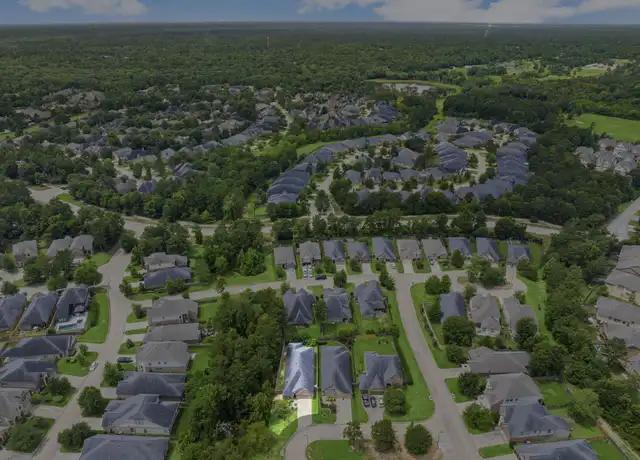
Moving to Woodforest? Don't Judge Privacy From the Front of the House
Moving to Woodforest? How to Evaluate Privacy Before You Buy
You walk into a Woodforest home.
Beautiful kitchen.
Great floor plan.
Plenty of space.
Then you step into the backyard.
And realize:
The neighbor's second-story windows look directly into it.
For some buyers:
No problem.
For others:
Immediate deal breaker.
Privacy is one of those home features that is difficult to understand from:
Listing photos.
Square footage.
Floor plans.
And sometimes even:
A quick showing.
For relocators unfamiliar with Woodforest, the exact position of the home can influence how private—or connected—the property feels.
The goal is not necessarily:
Maximum privacy.
It is:
The right amount of privacy for the way you want to live.
First, Define What Privacy Means to You
Buyers use the word:
Privacy
to mean different things.
For one person:
No rear neighbor.
For another:
Large distance between homes.
Another:
Backyard hidden by landscaping.
Another:
Quiet street.
Another:
No trail behind the fence.
Be Specific
Instead of saying:
“We want privacy,”
say:
“We don't want another two-story home directly behind our backyard.”
That gives you:
Something measurable.
Start With the Backyard
The backyard is usually where privacy becomes:
Most obvious.
Stand:
In the middle.
Then look:
Straight ahead.
Left.
Right.
Behind.
Up.
Especially Look Up
A fence may block:
Ground-level views.
It may not block:
Second-story windows.
Ask Yourself
If I were sitting here:
Would I feel comfortable?
Do Not Evaluate Privacy From Inside the House
A backyard can look secluded through:
A window.
Step outside.
Stand Where You Would Actually Spend Time
Future:
Patio.
Pool.
Outdoor kitchen.
Seating area.
Privacy Can Change Depending on Where You Stand
A patio near the house may feel:
Protected.
The back half of the yard may feel:
Exposed.
Rear Neighbors Are Only One Factor
Also consider:
Side neighbors.
Corner position.
Street behind the property.
Trail.
Park.
Amenity.
Open space.
Future development.
A No-Rear-Neighbor Lot Can Mean Many Things
It could back to:
Green space.
Road.
Trail.
Drainage area.
Community feature.
Undeveloped land.
“No Rear Neighbor” Does Not Automatically Mean Private
Ask:
“What is actually behind the house?”
Greenbelt Lots Can Appeal to Privacy-Focused Buyers
Trees or open space behind a home may create:
Visual separation.
But Investigate the Exact Setting
Is there:
Trail?
Drainage feature?
Utility infrastructure?
Other community use?
Walk the Area When Possible
The view from the backyard tells:
Only part of the story.
Trails Create an Interesting Tradeoff
A trail behind the home may provide:
Excellent access.
Walk out.
Exercise.
Bike.
Enjoy the community.
But It May Also Mean
People passing behind:
Your property.
Neither is automatically negative
It depends on:
Your priorities.
Ask Which You Value More
Immediate trail access?
Or:
Greater separation from activity?
Park Proximity Creates a Similar Tradeoff
Living near a park can make recreation:
Extremely convenient.
But Ask How Close Is Too Close for You
A park:
Two streets away
may feel different from:
Directly behind the backyard.
Visit During Likely Use Times
If possible.
A quiet park during:
A weekday morning
may feel different:
Saturday afternoon.
Amenity Proximity Should Be Evaluated Carefully
Pool.
Playground.
Recreation area.
Community gathering space.
Being Close Can Be Wonderful
Especially for households that:
Use it frequently.
But Direct Adjacency May Change
Traffic.
Parking.
Noise.
Foot activity.
Choose the Distance That Fits You
Not simply:
The closest possible house.
Corner Lots Can Feel More Open
Some buyers love:
Additional exposure.
More visual space.
Potentially larger yard configurations.
Others Prefer Interior Lots
Because they may feel:
More enclosed.
Look at Side-Street Relationships
Especially:
Fence lines.
Windows.
Traffic.
Sidewalks.
Cul-de-Sac Lots Deserve Their Own Evaluation
Buyers may associate cul-de-sacs with:
Privacy.
But lot shapes can vary.
The Front May Be Narrow
The rear:
Wide.
Or:
The opposite.
Look at How Neighboring Homes Angle Toward the Property
A site map can help.
But:
Stand there too.
Lot Width Can Affect Privacy
Two homes may have:
Similar square footage.
But very different:
Spacing.
Look at Side Windows
Can you see:
Directly into the neighboring house?
Can they see:
Into yours?
Window Placement Matters
Privacy is not only:
Lot size.
Architecture matters too.
Primary Bedroom Windows Deserve Attention
Especially if they face:
Neighboring windows.
Street.
Trail.
Amenity.
Bathroom Windows Too
Ask whether:
Existing treatments
provide the privacy you want.
Large Windows Are Beautiful
Until you realize:
You never want the blinds open.
Natural Light and Privacy Need to Work Together
If you love:
Bright rooms,
evaluate whether you can actually:
Use the windows.
Landscaping Can Create Privacy
Trees.
Shrubs.
Hedges.
But Do Not Assume Landscaping Is Permanent
Plants can:
Die.
Be removed.
Need trimming.
Identify What Creates the Privacy
Fence?
Trees on your lot?
Trees elsewhere?
Distance?
Structure?
Privacy You Control Can Be Different From Privacy You Borrow
A wooded area on:
Someone else's property
is not the same as:
Land you own.
Future Development Matters
This is particularly important when:
Open land
creates the home's current view or separation.
Ask What Is Planned
Where information is available.
Do Not Assume
Trees today
equal:
Trees forever.
New Construction Nearby Can Change the Feel
A resale home may currently overlook:
Open space.
But future homes could:
Change that relationship.
Review Community Maps and Available Development Information
Especially when:
Privacy is a major buying factor.
Street Position Matters Too
Some buyers want:
Very little passing traffic.
Others do not care.
Look at Where the Home Sits
Near:
Community entrance?
Intersection?
Amenity?
School route?
Major internal road?
A Convenient Location Can Bring More Movement
That may be worth it.
Or:
Not.
Drive the Street More Than Once
A showing captures:
One moment.
Try Different Times
Morning.
Afternoon.
Weekend.
Listen
Privacy also includes:
Sound.
Stand Outside Without Talking
For:
A minute.
What Do You Hear?
Traffic?
Construction?
Lawn equipment?
Community activity?
Nothing significant?
Do the Same Inside
Close:
Doors.
Windows.
Then listen again
The home's construction and window systems may change:
Your experience.
Pools Make Privacy More Important for Some Buyers
If you plan to spend significant time:
Swimming.
Entertaining.
Relaxing outdoors.
you may care more about:
Backyard exposure.
Think About Pool Placement
Where would:
The pool go?
Then Look Up Again
What would neighboring second-floor windows overlook?
Pool Feasibility and Pool Privacy Are Different Questions
A pool may:
Fit.
But will you like:
The setting?
Outdoor Kitchens Create Similar Considerations
If you plan to entertain:
Frequently,
look at where people will gather.
Is that area exposed?
Could landscaping improve it?
Some Privacy Problems Can Be Improved
Potentially through:
Landscaping.
Window treatments.
Fence modifications where permitted.
Patio design.
Others Are Harder to Change
Road behind property.
Two-story neighbor.
Public trail.
Amenity.
Lot position.
Prioritize Permanent Conditions
Before spending money fixing:
Adjustable ones.
HOA Rules May Affect Privacy Improvements
Before assuming:
“I'll just build a taller fence,”
verify:
Applicable restrictions and approval requirements.
The Same Applies to
Structures.
Screens.
Landscaping changes.
Outdoor additions.
Do Not Design the Solution Before Checking the Rules
Especially if the solution is:
Important to your purchase decision.
Front-Yard Privacy Matters Too
Some buyers enjoy:
Neighbors walking by.
Front porches.
Visible community activity.
Others prefer
A more secluded home experience.
Observe Sidewalk Placement
How close do pedestrians pass:
The house?
Look at Front Windows
Especially:
Office.
Dining room.
Primary bedroom if applicable.
Think About Evening Privacy
When interior lights are on:
The relationship between inside and outside changes.
Window Treatments May Become Important
Factor them into:
Move-in planning.
Home Elevation Can Affect Privacy
A slightly elevated property may:
See farther.
But may also be:
More visible.
Lower properties can feel
More enclosed.
Evaluate the Actual Lot
Do not generalize.
Larger Lots Do Not Guarantee Privacy
A large lot with:
Little landscaping
may feel more exposed than:
A smaller lot with thoughtful screening.
Conversely
Dense landscaping on a small lot may create:
Excellent separation.
Look at Usable Privacy
Not:
Lot size alone.
Fences Should Be Evaluated for Condition Too
A fence can create:
Visual privacy.
But if it is:
Aging.
Leaning.
Damaged.
you may need:
Replacement.
Determine Responsibility Where Appropriate
Especially along:
Shared boundaries.
Trees Can Provide Excellent Screening
But inspect their:
Condition.
Placement.
Relationship to structures.
Do Not Buy a Tree Problem Because You Love the Privacy
Privacy and property condition both matter.
Seasonal Changes Can Affect Screening
Some vegetation provides:
Different coverage
at different times.
Ask What the Yard Looks Like Throughout the Year
Especially if landscaping is doing most of:
The privacy work.
Think About Pets
If you have dogs:
Privacy may mean:
Secure fencing.
Limited pedestrian activity.
Less interaction with neighboring pets.
Or You May Want
Trail access
for frequent walks.
Again:
Lifestyle determines the answer.
Think About Children
Some households value:
Neighbors nearby.
Visible activity.
Easy park access.
Maximum seclusion may not be
Their priority.
Privacy Is Personal
Do not let someone else decide:
What should bother you.
Use the “Blinds Open” Test
Stand in:
Living room.
Kitchen.
Primary bedroom.
Office.
Imagine Every Blind Open
Are you comfortable?
If not:
Which windows would stay covered?
If every major window needs to remain closed
you may not enjoy:
The home's natural light
as much as you expected.
Use the “Pool Chair” Test
Stand where:
A pool chair
might eventually sit.
Look around
Does the space feel:
Comfortable?
Use the “Saturday Afternoon” Test
Imagine:
Neighbors outside.
Trail active.
Park busy.
People visiting.
Does the property still have enough privacy for you?
Use the “Trees Gone” Test
Identify which trees create:
Your privacy.
Then ask:
If some were removed,
would the property still work?
Use the “Future Homes” Test
If there is undeveloped land nearby:
Imagine homes there.
Would you still:
Buy this property?
Build a Woodforest Privacy Scorecard
For each serious home, evaluate:
Rear Neighbor
Comfortable?
Side Neighbors
Comfortable?
Second-Story Windows
Concern?
Backyard
Feels private enough?
Patio
Feels private?
Future Pool
Would feel private?
Green Space
Benefit?
Trail
Benefit or concern?
Park
Right distance?
Amenities
Right distance?
Road
Too close?
Street Traffic
Comfortable?
Noise
Comfortable?
Trees
Helpful and healthy?
Landscaping
Provides screening?
Fence
Adequate?
Windows
Can remain open?
Future Development
Understood?
HOA Restrictions
Understood?
Improvement Options
Realistic?
Overall
Does the privacy level fit us?
Final Thoughts
Privacy is easy to underestimate when:
Relocating.
You are looking at:
Kitchen.
Bedrooms.
Price.
Commute.
Schools if relevant.
Amenities.
And then:
You move in.
Suddenly you notice:
The trail behind the fence.
The second-story window next door.
The road beyond the trees.
Or maybe:
You discover the opposite.
Your backyard feels:
Quiet.
Protected.
Comfortable.
And you realize:
The lot was one of the best things you bought.
That is why relocators considering Woodforest should evaluate:
The house
and:
The space around the house.
Stand outside.
Look up.
Look behind the fence.
Walk the street.
Check the trail.
Visit at different times.
Understand future development.
Then ask:
“Is this enough privacy for the way we actually want to live?”
Not:
Is it private?
Enough privacy:
For you.
Because you can repaint:
A bedroom.
You can replace:
A countertop.
You can change:
Light fixtures.
But changing:
What sits behind your backyard
is usually much harder.
Choose the lot as carefully as:
The house.
Frequently Asked Questions
Are greenbelt lots always more private in Woodforest?
Not necessarily. Green space may provide visual separation, but buyers should determine whether trails, drainage areas, utilities, community facilities, or other uses are located behind the property.
Does having no rear neighbor guarantee privacy?
No. A property without a traditional rear neighbor may back to a road, trail, park, amenity, open land, or another feature that affects privacy differently.
Should I avoid buying next to a trail?
Not automatically. Buyers who regularly walk, run, or bike may value direct trail access. Others may prefer greater separation from pedestrian activity.
Can landscaping improve backyard privacy?
It can in some situations. However, consider HOA requirements, plant maturity, maintenance, available space, and whether landscaping can realistically address the specific privacy concern.
Should I worry about second-story windows from neighboring homes?
That depends on your preferences and how you plan to use the property. If backyard privacy is important, stand in the areas where you expect to sit, entertain, or place a pool and evaluate sightlines.
Is a larger lot automatically more private?
No. Home placement, neighboring structures, landscaping, window orientation, roads, trails, and lot configuration can matter as much as overall lot size.
Should I research undeveloped land near a Woodforest home?
If the current open land contributes significantly to the property's view or privacy, available information about future development can be important to your decision.
Can I simply install a taller fence if I want more privacy?
Do not assume so. Verify applicable HOA rules and approval requirements before depending on a particular fence or screening modification.
When should I visit a home to evaluate privacy?
When practical, visit serious contenders at different times, including periods when nearby roads, parks, trails, or amenities may be more active.
What's the biggest takeaway?
When moving to Woodforest, do not evaluate privacy from listing photos or the front of the house. Examine the backyard, neighboring windows, trails, roads, amenities, landscaping, and future surroundings so you understand what living on that exact lot may actually feel like.