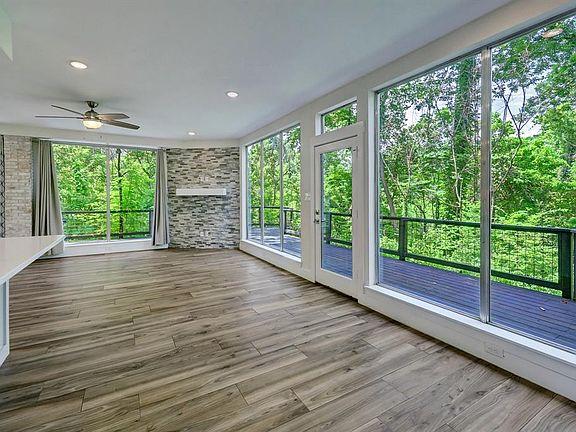
Renovated or Ready for Your Ideas? Which Woodlands Home Is the Better Buy?
Should You Buy the Renovated Home—or the One Everyone Else Thinks Needs Work?
You tour House A.
It is gorgeous.
Updated kitchen.
Modern bathrooms.
New-looking floors.
Current lighting.
Neutral paint.
Everything photographs beautifully.
Then you tour House B.
Older cabinets.
Traditional tile.
Lighting you would change immediately.
The house doesn't create the same instant reaction.
But House B has something else.
A lot you prefer.
Better privacy.
A floor plan that may actually work better.
Maybe a quieter street.
Maybe mature trees you can't reproduce.
And perhaps a lower price.
Now the decision becomes much more interesting.
Because when buyers compare renovated and less-updated homes in The Woodlands, they are not simply choosing between:
Pretty and dated.
They're choosing between:
paying for someone else's completed improvements
and
buying the underlying property and deciding what to improve themselves.
First, Stop Calling the Other Home “Unrenovated”
That word can create the wrong mental picture.
A home may have:
Older kitchen.
Older bathrooms.
Traditional colors.
But still have:
Newer roof.
Updated HVAC.
Improved windows.
Well-maintained plumbing.
Strong exterior condition.
Excellent landscaping.
The interior may be cosmetically dated while the property has received significant maintenance.
That distinction matters.
Cosmetic Age and Property Condition Are Different
This is one of the most important ideas in this comparison.
You can dislike:
Countertops.
Cabinet color.
Tile.
Paint.
Light fixtures.
Hardware.
and still be looking at a well-maintained home.
Conversely, a beautifully renovated interior does not guarantee every major component has been updated.
Judge appearance and condition separately.
The Renovated Home Has One Huge Advantage: Convenience
Let's acknowledge it.
Closing on a finished home can be wonderful.
You may avoid:
Contractors.
Dust.
Design decisions.
Material selections.
Construction delays.
Living through renovations.
If you don't enjoy projects, that convenience can have real value.
You move.
Unpack.
Live.
Time Is Part of the Renovation Budget
Buyers often compare:
Home A costs $60,000 more.
Home B needs $60,000 in updates.
So they're equal.
Not exactly.
Home B's renovation may also require:
Planning.
Contractor meetings.
Temporary disruption.
Decisions.
Potential unexpected costs.
Time.
Home A may be more expensive partly because someone else already went through that process.
But Convenience Shouldn't Make You Ignore the Property Underneath
A finished interior can create a powerful emotional effect.
Suddenly you are more willing to accept:
Less privacy.
Smaller lot.
Busier street.
Longer commute.
Less functional floor plan.
Ask yourself:
Are we buying the better property—or simply the easier first six months?
That's a very different question.
Start With What You Cannot Easily Change
Before comparing finishes, compare:
Location.
Street.
Lot.
Privacy.
Views.
Home orientation.
Overall floor plan.
Garage configuration.
Those characteristics may be difficult, expensive, or impossible to meaningfully change.
If House B clearly wins those categories, don't dismiss it because of beige tile.
The Lot Can Completely Change the Decision
Suppose:
House A
Fully renovated.
Backs directly to another home.
House B
Older interior.
Backs to mature trees or a setting you strongly prefer.
Which would you rather own after both interiors are eventually updated?
That question strips away the temporary difference.
Use the “Both Kitchens Are New” Test
Imagine five years from now.
You renovated House B.
Both homes now have kitchens you love.
Which property would you choose?
House A still has:
Its lot.
Street.
Privacy.
Orientation.
House B still has its permanent characteristics too.
This is a powerful way to compare homes.
But Be Realistic About Whether You Will Actually Renovate
This matters.
Buyers say:
“We'll redo the kitchen next year.”
Then:
Furniture.
Travel.
Car.
Children.
Unexpected repair.
Life.
Three years pass.
Same kitchen.
If you strongly dislike the current condition and know you will be unhappy living with it, don't pretend renovation timing doesn't matter.
Use the “No Renovation for Two Years” Test
Imagine you cannot change anything major for two years.
Which home would you rather live in?
This reveals your tolerance for dated finishes.
If House B suddenly feels unacceptable, the lower price may not compensate for the lifestyle frustration.
Renovation Tolerance Is Personal
Some buyers love the process.
Pinterest boards.
Samples.
Contractors.
Design.
They want the final home to feel uniquely theirs.
Others find the thought exhausting.
Know which one you are before buying a project.
Don't Buy a Project Because Someone Says It Has “Potential”
Potential is one of real estate's favorite words.
But potential requires:
Money.
Time.
Feasibility.
Professional expertise.
Possibly permits.
If the house only works after a major renovation, investigate whether that renovation is realistic before buying.
“We'll Open This Wall” Is Not a Renovation Plan
You walk in and say:
“Easy. We'll just remove that wall.”
Maybe.
But wall removal may involve:
Structural considerations.
Electrical.
Plumbing.
HVAC.
Flooring.
Ceiling repairs.
Engineering.
Permits where applicable.
Get qualified information before making the purchase dependent on the idea.
Floor Plan Problems Are Different From Finish Problems
You don't like the countertops?
Finish problem.
You need a downstairs bedroom and none exists?
Floor-plan problem.
You dislike the bathroom tile?
Finish problem.
The kitchen is isolated from the rest of the home and you want open living?
Potentially a much larger problem.
Distinguish between:
I don't like how it looks
and
I don't like how it functions.
Renovation Quality Matters in the Finished Home
Now look harder at House A.
Who completed the renovation?
What work was done?
When?
Was it:
Cosmetic refresh?
Major remodel?
Structural renovation?
Were walls moved?
Was plumbing relocated?
Was electrical changed?
Ask what documentation is available.
A renovation should be evaluated—not merely admired.
New Finishes Don't Automatically Mean New Systems
This deserves repetition.
Updated:
Kitchen.
Bathrooms.
Floors.
Lighting.
does not automatically mean updated:
Roof.
HVAC.
Water heaters.
Windows.
Plumbing.
Electrical system.
The word renovated can describe visible work while major systems remain older.
Ask for the Renovation Timeline
Understanding when improvements occurred can help.
For example:
Kitchen: 2025.
Primary bath: 2024.
Flooring: 2025.
Roof: 2016.
HVAC: systems from different years.
Now you understand the home more accurately.
One renovated appearance can contain several different timelines.
Look Closely at Workmanship
During the showing, examine:
Tile alignment.
Cabinet installation.
Floor transitions.
Trim.
Caulking.
Paint edges.
Doors.
Drawers.
Counter installation.
Small cosmetic imperfections don't automatically indicate serious problems.
But quality in visible areas can help you decide what deserves closer inspection elsewhere.
Open Every Cabinet You Care About
A kitchen can look spectacular and still function poorly.
Open:
Drawers.
Pantry.
Corner cabinets.
Island storage.
Ask:
Where do pots go?
Appliances?
Trash?
Food?
Dishes?
The prettiest kitchen is not necessarily the best kitchen.
Some Older Kitchens Function Exceptionally Well
You may dislike the cabinet finish.
But the layout could be excellent.
Plenty of counters.
Great storage.
Useful pantry.
Good traffic flow.
If the bones are strong, a future cosmetic update may deliver exactly what you want.
Don't Automatically Replace Good Cabinets
This is where renovation budgets grow unnecessarily.
Maybe the cabinetry is:
Solid.
Functional.
Well configured.
But visually dated.
Depending on materials and condition, you may have options other than complete replacement.
Talk with appropriate renovation professionals about realistic possibilities.
Bathrooms Can Be Similar
You see older tile and think:
Complete gut renovation.
Maybe.
But first evaluate:
Layout.
Storage.
Shower size.
Tub use.
Natural light.
Ventilation.
Closet relationship.
Sometimes the bathroom functions well and needs only selected cosmetic changes.
Other times the layout itself is the problem.
Don't Pay for Someone Else's Taste If You Plan to Change It
The renovated home has:
Trendy backsplash.
Statement lights.
Specific cabinet color.
Designer wallpaper.
You recognize that it was expensive.
But you don't really like it.
That means the upgrade may have less personal value to you than to the seller.
New does not mean your style.
This Is Especially Important in Luxury Homes
Higher-priced properties may contain:
Highly customized finishes.
Specialty rooms.
Wine storage.
Built-ins.
Unique lighting.
Premium materials.
Those features may have cost a lot.
But their value to you depends on whether they fit your lifestyle and taste.
The Seller's Renovation Cost Is Not Your Purchase Formula
You hear:
“They put $200,000 into this home.”
Useful context.
But it does not automatically mean the market value increased by $200,000.
Improvement cost and market contribution are not the same.
The current home should be evaluated against:
Comparable properties.
Condition.
Location.
Lot.
Market conditions.
Buyer demand.
Overall quality.
Completed Improvements Can Still Be Worth Paying For
This isn't an argument against renovations.
If the house already has the exact improvements you'd make yourself, that is valuable.
Maybe it includes:
Kitchen you love.
Bathrooms you wouldn't touch.
Updated flooring.
Excellent outdoor living.
Pool.
Window treatments.
Built-ins.
Now you may avoid years of projects.
That convenience may absolutely justify paying more.
Compare the Renovation You Would Actually Do
For House B, don't make a fantasy list.
Make a realistic one.
Would you truly renovate:
Kitchen?
Bathrooms?
Flooring?
Lighting?
Paint?
Outdoor area?
Then prioritize.
What would happen:
Immediately?
Year one?
Eventually?
Never?
This gives you a real project picture.
Not Everything Needs to Be Done at Once
This is where buyers can unnecessarily scare themselves.
They see a dated house and mentally renovate every room immediately.
Maybe you only need:
Paint.
Lighting.
A few fixtures.
Then live there.
After a year, you may discover some planned projects no longer matter.
Living in the home can change renovation priorities.
“Dated” Can Sometimes Mean “Perfectly Livable”
A kitchen from another design era may still:
Work.
Be clean.
Be maintained.
Have excellent storage.
If your budget doesn't allow immediate renovation, ask whether you can comfortably live with it rather than whether it looks current.
Those are very different standards.
The Less-Updated Home May Leave More Financial Flexibility
A lower purchase price could leave room for:
Renovations.
Savings.
Furniture.
Travel.
Emergency reserves.
Other goals.
But only if you resist renovating everything immediately.
If you spend the entire price difference within six months, the financial advantage disappears quickly.
Renovation Budgets Need a Contingency
Projects don't always go exactly as planned.
Once work begins, contractors may discover issues that weren't visible earlier.
Material pricing can change.
Scope expands.
Buyers should avoid budgeting renovations so tightly that any surprise becomes a financial emergency.
Discuss realistic contingencies with qualified professionals.
Consider Financing Before Assuming You'll Renovate
The house is $100,000 less.
You think:
“Perfect. We'll spend that on renovation.”
But the purchase-price difference isn't necessarily sitting in your bank account after closing.
Understand:
Down payment.
Loan structure.
Cash reserves.
Renovation financing options where relevant.
You need a real funding plan.
Don't Empty Your Reserves for Cosmetic Work
New kitchen feels urgent.
Until:
HVAC needs repair.
Car needs replacement.
Something unexpected happens.
Maintain appropriate financial breathing room.
Cosmetic renovation is much more enjoyable when it isn't competing with emergency savings.
Major Systems Can Change Which Home Is Actually “Turnkey”
Imagine:
House A
Beautiful renovation.
Older roof and HVAC.
House B
Dated kitchen.
Newer roof and HVAC.
Which is more move-in ready?
Depends on your definition.
This is why buyers should evaluate both:
Cosmetic readiness.
Mechanical readiness.
The Roof Doesn't Care About the Kitchen
A perfectly renovated interior does not extend roof life.
Understand available roof information separately.
Age.
Condition.
Repairs.
Documentation.
Inspection findings.
Every component has its own story.
HVAC Can Change the First-Year Budget
A renovated home may feel expensive enough that buyers assume all major systems were addressed.
Don't assume.
Ask about each system.
For multi-system homes, understand them individually.
The house can have new countertops and older air-conditioning equipment at the same time.
Windows Can Be a Quietly Valuable Upgrade
A home with extensively replaced windows may have received substantial investment buyers don't immediately notice.
If windows have been replaced, ask:
Which ones?
When?
What information is available?
Don't assign value solely to the photogenic improvements.
Exterior Improvements Matter Too
Roof.
Gutters.
Drainage.
Paint.
Fence.
Landscaping.
Trees.
Pool.
Patio.
Some of the most useful improvements are outside the kitchen.
Compare the entire property.
An Established Lot Can Be the Deciding Factor
In The Woodlands, mature surroundings can be difficult to reproduce.
Maybe House B offers:
Trees.
Privacy.
Natural view.
Better yard.
Shade.
If those are important to you, the older interior may become much easier to tolerate.
Again:
Permanent versus changeable.
Location Should Beat Countertops More Often Than It Does
Imagine the renovated home adds fifteen minutes to your daily commute.
The less-updated home is much better located.
You experience:
The countertop during meal preparation.
The location every time you leave home.
How often does each difference affect you?
That helps clarify value.
Don't Assume You'll “Get Used to” the Wrong Location
Buyers sometimes sacrifice location for finishes.
Then the finishes become normal.
The commute remains the commute.
If location is genuinely less convenient, make sure the renovation advantage is worth that permanent trade.
The Better Street Can Matter Too
Same general neighborhood.
Different street.
One home may offer:
Less traffic.
Better trees.
More privacy.
Better lot position.
If the dated home sits on the street you strongly prefer, don't dismiss that advantage.
You can't renovate a home onto another street.
Outdoor Living Can Be More Expensive to Add Than Buyers Expect
The renovated house may already include:
Pool.
Covered patio.
Outdoor kitchen.
Landscaping.
If those are features you absolutely want, reproducing them at House B could involve considerable cost, approvals, and construction.
Include real outdoor projects in your comparison.
But Don't Pay for a Pool You Don't Want
The seller spent heavily on it.
Great.
If you don't enjoy pool ownership, it may not have the same value to you.
Personal usefulness matters more than original expense.
Use the “What Would We Actually Change?” Test
Walk through House A.
Even though it's renovated, what would you change?
Paint?
Lighting?
Backsplash?
Flooring?
Now House B.
What would you change?
Make both lists.
Sometimes the supposedly turnkey home has a longer personal-change list than expected.
Use the “Could We Live With It?” Test
For each disliked feature in House B, ask:
Could we comfortably live with this for three years?
If yes:
Renovation urgency decreases.
If absolutely not:
Budget for it sooner.
This helps separate actual problems from design preferences.
Use the “$50,000 Tomorrow” Test
Imagine you receive $50,000 tomorrow specifically for the home.
Where would you put it?
In House A?
Maybe nowhere—you'd save it.
In House B?
Kitchen.
Bathrooms.
Now ask which situation you prefer.
A finished home plus reserves?
Or a project home plus control over your improvements?
Use the “Five-Year Equality” Test
Imagine both homes are equally updated five years from now.
Which one wins based on:
Lot?
Street?
Privacy?
Location?
Floor plan?
If House B wins easily, that tells you the renovation gap may be temporary.
Use the “Contractor-Free” Test
Imagine you never renovate House B.
Would you still be happy owning it?
If no, you are committing to a project.
That's fine.
Just acknowledge it.
Use the “Turnkey Fatigue” Test
Now imagine you buy House A at a premium.
Six months later, the renovation doesn't feel new anymore.
Would you still be happy with:
Lot.
Street.
Location.
Floor plan.
If yes, great.
If not, you may have paid too much attention to finishes.
Build a Renovated-vs.-Project Scorecard
For serious contenders, rate:
Location
Which address better supports your routine?
Street
Which immediate setting do you prefer?
Lot
Privacy, trees, views, outdoor usability.
Floor Plan
Which works without major structural change?
Major Systems
What is known about roof, HVAC, windows, plumbing, and other components?
Renovation Quality
How well was existing work completed?
Cosmetic Condition
How much do current finishes matter to you?
Project Cost
What would you realistically change?
Project Tolerance
Do you actually want to manage renovation?
Financial Flexibility
Which purchase leaves appropriate reserves?
Five-Year Fit
Once cosmetic differences fade, which property would you rather own?
Now compare.
The prettier house may win.
But it should win for more than being pretty.
Final Thoughts
A beautifully renovated home in The Woodlands can be an excellent purchase.
You may get:
Finished kitchen.
Updated bathrooms.
Modern flooring.
Improved outdoor living.
Convenience.
Less disruption after closing.
That has real value.
But buyers should avoid treating renovation as the entire property.
Because the less-updated house may offer:
Better lot.
Better street.
More privacy.
Better location.
More useful floor plan.
More financial flexibility.
And those characteristics can be much harder to recreate.
So when you compare the two, don't ask:
“Which home looks better today?”
Ask:
“Which property would we rather own once both homes eventually look the way we want?”
Sometimes that's the renovated one.
Sometimes it's the house everyone else walked past because the kitchen looked twenty years old.
And that is exactly why buyers need to look beyond the countertops.
Frequently Asked Questions
Is a renovated home always worth more than a dated home in The Woodlands?
Not automatically. Current value depends on renovation quality, location, lot, condition, floor plan, major systems, market conditions, and buyer demand.
Should I buy a dated home if it has the better lot?
It may be worth considering if the lot characteristics are important to you and you are comfortable with the home's current condition and realistic renovation costs.
How can I tell whether a renovation was done well?
Review available documentation and permits where relevant, examine visible workmanship, complete appropriate inspections, and seek specialist evaluation when particular work raises questions.
Does a renovated kitchen mean the rest of the home was updated too?
No. Buyers should investigate roof, HVAC, windows, plumbing, electrical components, exterior, and other major systems separately.
Is it cheaper to buy a dated home and renovate it myself?
Not always. It depends on purchase-price difference, project scope, contractor costs, financing, materials, unexpected conditions, and how much work you actually complete.
Should I prioritize location over renovation?
It depends on your priorities, but location is generally difficult to change while cosmetic finishes can often be modified. Consider how frequently each difference affects your everyday life.
Is turnkey worth paying more for?
It can be for buyers who value convenience and want to avoid construction, contractors, and design decisions. The premium should still make sense relative to the complete property.
What's the biggest takeaway?
When comparing renovated and less-updated homes in The Woodlands, prioritize the hard-to-change features first—location, street, lot, privacy, floor plan, and major systems—then decide how much the cosmetic renovation is truly worth to you.