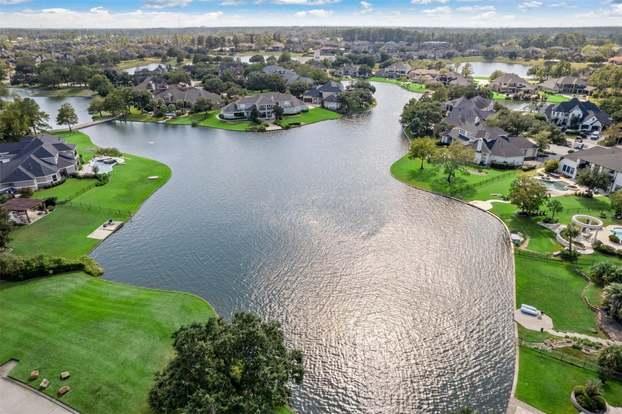
The Water View Can Sell the Backyard—If Buyers Understand What It Really Is
How Do You Sell a Cypress Home With a Water View Without Calling It Something It Isn’t?
The buyer walks through the house.
Kitchen looks good.
Primary suite works.
Then they step outside.
And stop.
There is water behind the home.
Maybe it is:
A community lake.
A neighborhood pond.
A detention or retention feature.
A canal-like waterway.
A landscaped water feature.
Whatever the technical description, visually it changes the entire backyard.
Instead of looking directly at another home, the buyer sees:
Water.
Sky.
Birds.
Open space.
Maybe a walking trail.
Maybe mature landscaping along the opposite bank.
That can make the property memorable.
Then come the questions.
Is this lakefront?
Do we own to the water?
Can we fish?
Can we kayak?
Who maintains it?
Does the water ever get low?
Are there mosquitoes?
Does it flood?
Can another house ever be built behind us?
Is the pond part of the drainage system?
Can we build a dock?
What happens during heavy rain?
This is where sellers need to slow down.
A water view can absolutely help differentiate a Cypress property.
But the strongest marketing is not the most dramatic description.
It is the one that makes buyers understand exactly what they are getting.
Start by Identifying What the Water Actually Is
Do not automatically call every body of water:
Lake.
Some community water features may function partly or primarily as:
Stormwater detention.
Retention.
Drainage infrastructure.
Amenity water feature.
Natural or modified waterway.
A buyer may still find it beautiful.
The technical purpose does not automatically eliminate the lifestyle benefit.
But terminology matters.
“Water View” Can Be Better Than an Unsupported “Waterfront” Claim
If the lot does not physically extend to or include rights at the water’s edge, be cautious about calling the property:
Waterfront.
Lakefront.
Instead, accurate language may include:
Water view.
Lake view where verified.
Pond view.
Backing to a community water feature.
The most impressive word is not always the best word.
The correct word is.
Verify the Property Boundary
Before marketing the home as:
“Your backyard reaches the lake,”
look at the available survey and property information.
There may be:
Common area.
Drainage easement.
Association property.
Utility area.
Open space.
between the private lot and water.
Do not assume grass behind the fence belongs to the homeowner.
The Survey Can Help Buyers Understand the Lot
Where available, a survey may show:
Property lines.
Easements.
Improvements.
Relationship to surrounding areas.
It can be particularly helpful when the visual backyard seems to blend into community land.
Do not use photography to imply ownership beyond the actual property.
A Fence Does Not Always Define the Legal Property Line
The fence may sit:
Inside the boundary.
On the boundary.
In another approved location.
Use formal property records rather than simply saying:
“Everything inside the fence is ours and everything outside isn’t.”
That may not always be technically correct.
Do Not Include Community Land in the Yard Size
A backyard may feel enormous because it visually opens into:
Water.
Green space.
Walking trail.
But the seller should market the actual private lot.
The open backdrop is the benefit.
It does not need to be counted as private land to be valuable.
Sell the View From the Places Buyers Will Actually Use
Do not only photograph the water standing at the rear fence.
Show it from:
Kitchen.
Breakfast area.
Living room.
Primary bedroom if applicable.
Covered patio.
Pool.
Outdoor kitchen.
The premium becomes stronger when the view is part of everyday life.
The Kitchen View Can Be More Important Than the Water’s Edge
A buyer may spend:
Thirty minutes a year standing at the fence.
They may spend:
Hundreds of hours in the kitchen.
If they see water while:
Making coffee.
Cooking.
Eating.
that is part of the lifestyle.
Photograph it.
Remove Anything Blocking the View
Before listing, evaluate:
Overgrown shrubs.
Unused equipment.
Old playsets.
Storage.
Heavy furniture.
You do not need to remove useful privacy landscaping.
But the buyer should immediately understand why the lot is different.
Preserve Privacy While Opening the View
This is the balance.
Too much trimming:
Exposed yard.
Reduced privacy.
Too little:
Water disappears.
Selective landscape work can create framed sightlines.
Think:
View.
Screening.
Usable yard.
All three.
Mature Landscaping Can Make the Water Feel More Natural
A bare rear fence with water beyond can feel very different from:
Established shrubs.
Shade trees.
Layered landscape.
The goal is to make the transition from private yard to open view feel intentional.
Do Not Plant a Wall Right Before Selling
Seller gets worried buyers will feel exposed.
Adds dense shrubs everywhere.
Now one of the home's strongest features is invisible.
Improve privacy strategically rather than eliminating the reason buyers may pay attention to the lot.
Pool Plus Water View Can Be a Powerful Combination
If the property has both:
Pool.
Water backdrop.
photography should show them together.
The buyer should understand:
Where the pool sits.
How much yard remains.
Where the water begins visually.
What privacy exists.
One strong image can explain more than five close-ups.
Do Not Make the Pool Look Like It Connects to the Lake if It Doesn’t
Photography angles can create misleading optical effects.
A pool may appear to flow directly into community water when there is actually:
Fence.
Grass.
Trail.
Common land.
Professional images should remain accurate.
Drone Photography Can Be Extremely Useful
For a water-view Cypress home, aerial photography can explain:
Lot.
House.
Pool.
Water.
Neighboring homes.
Walking trail.
Community layout.
This can help buyers understand the setting before scheduling a showing.
But Drone Photos Need Context
A dramatic aerial from 300 feet up may show:
Huge water feature.
Tiny house.
That can be visually interesting but not necessarily useful.
Include lower angles that clearly show the property's relationship to the water.
Do Not Use Aerial Photography to Imply Private Water Ownership
An image can accidentally suggest:
Entire shoreline belongs to home.
Private lake.
Exclusive access.
If that is not true, keep the marketing language precise.
Private Access and Water View Are Different Features
A buyer may ask:
“Can we walk directly from the backyard into the water?”
Maybe not.
Some communities may restrict:
Access.
Fishing.
Boating.
Swimming.
Dock construction.
Use of shoreline.
Do not assume that seeing water gives the homeowner unrestricted use rights.
Verify Community Rules Before Mentioning Recreation
If fishing is allowed:
Verify.
If non-motorized boating is allowed:
Verify.
If only community access points are permitted:
Say so accurately when relevant.
Do not write:
“Kayak from your backyard!”
unless that use and access are actually permitted.
Never Promise a Private Dock Can Be Added
Buyer sees water and says:
“We’ll build a little dock.”
Maybe the HOA does not allow it.
Maybe the water feature is drainage infrastructure.
Maybe the shoreline is common property.
Maybe permits would be required.
The seller should not promise future construction.
Existing Dock Features Need Documentation
If there actually is an approved private dock or platform:
That is different.
Gather:
HOA approval where applicable.
Permit information where required.
Maintenance history.
Dimensions.
Ownership information.
Then market what exists.
Buyers May Ask Who Maintains the Water
This is a fair question.
Depending on the community, responsibility could involve:
Association.
Municipality.
Drainage district.
Other entity.
Do not guess.
If the water feature is central to the property's marketing, identify the appropriate source of current information.
Do Not Say “The HOA Keeps It Perfect”
Water levels.
Vegetation.
Algae.
Weather.
Maintenance schedules.
can change.
Use factual descriptions about who is responsible rather than guaranteeing appearance.
Water Levels May Change
A beautiful full pond after heavy rainfall may look different during:
Dry periods.
Maintenance.
Seasonal conditions.
Do not promise:
“The water always stays exactly like this.”
If historic photographs show significantly different levels, be careful about how they are used.
Current Photography Should Reflect Current Conditions
Do not rely solely on:
Old listing images.
Photos from an unusually wet year.
Edited images.
The buyer should see what the property looks like now.
Do Not Digitally Add Water
If part of the water feature is low:
That is current reality.
Editing the shoreline to appear fuller can misrepresent the property.
Sunset Photography Can Be Excellent
If the backyard orientation gives a genuine sunset over the water:
That can be one of your strongest visual assets.
Use it.
But include daylight photography too.
Buyers need both:
Emotion.
Information.
Twilight Can Hide Things Buyers Need to See
At dusk, it may be harder to evaluate:
Fence.
Drainage.
Slope.
Yard size.
Waterline.
Neighbor proximity.
A balanced gallery uses twilight for atmosphere and daylight for understanding.
Orientation Can Be a Selling Feature
Some buyers care about:
Morning sun.
Afternoon shade.
Sunset view.
Pool exposure.
If orientation materially affects the outdoor experience and can be accurately determined, it may be useful.
Do not guess:
“East-facing backyard.”
Verify.
Buyers May Ask About Mosquitoes
Water naturally triggers that question.
Do not say:
“The lake means no mosquitoes.”
And do not say:
“The water creates a mosquito problem.”
Neither can be assumed universally.
If the property currently has:
Mosquito-control service.
Screened patio.
Outdoor fans.
those can be described factually.
Do Not Promise Pest-Free Outdoor Living
No outdoor environment comes with that guarantee.
Market physical features.
Not absolute outcomes.
Wildlife Can Add to the Experience
Buyers may see:
Birds.
Ducks.
Other wildlife.
That can add to the setting.
But avoid guarantees such as:
“You’ll see herons every morning.”
Use lifestyle photography carefully and accurately.
Do Not Feed Wildlife for Listing Photos
The goal is showing the actual environment.
Not manufacturing an artificial wildlife scene.
Water Views Can Increase Privacy—Sometimes
If there is no house immediately behind the property, buyers may appreciate:
Longer sightlines.
More sky.
Less direct rear residential exposure.
That can feel more private.
But the setting may still include:
Trail users.
Homes across the water.
Public or community activity.
Privacy needs to be evaluated honestly.
“No Rear Neighbors” May Need Qualification
A house may not sit directly behind you.
But there may still be:
Homes across the lake.
Trail.
Park.
Community property.
A more precise phrase is often:
“No immediate rear residential lot.”
when accurate.
Homes Across the Water Still Matter
The water may create:
Distance.
Open view.
But buyers can still see:
Rear elevations.
Second-story windows.
Activity.
Do not market:
“Complete privacy”
unless the physical setting genuinely supports that description.
Fence Style Can Affect the Water Experience
Solid privacy fence:
More screening.
Less view.
Wrought iron or open fence:
Better sightline.
Less screening.
Neither is inherently better.
The design should match the property and any community requirements.
Do Not Promise Fence Changes Are Allowed
Buyer wants:
Remove wrought iron.
Install solid wood.
Raise height.
That may require HOA approval or may not be permitted.
Direct them to current community guidelines.
The Backyard Grade Deserves Attention
Water-view lots may sometimes have:
Slope toward water.
Drainage swale.
Retaining area.
Graded common space.
Buyers may ask why.
Know the physical setting.
Do not diagnose engineering or drainage performance yourself.
Drainage Questions Are Especially Important
A water feature may also serve a stormwater function.
Buyer asks:
“Does that mean our yard floods?”
Do not automatically say yes.
Do not automatically say no.
Property flooding, yard drainage, and community stormwater systems are different questions.
Use factual property history.
Detention and Retention Features Can Be Functional Infrastructure
In many master-planned areas, ponds and lakes may play a role in stormwater management in addition to providing visual or recreational value.
That does not automatically make the view less attractive.
But sellers should avoid pretending every water feature is purely ornamental.
Flooding and Pond Function Are Not the Same Thing
A detention basin may be designed to receive stormwater.
That does not mean the house itself has flooded.
Likewise, living beside a decorative lake does not guarantee zero flood risk.
Keep the concepts separate.
Be Precise About the Property’s Flood History
If buyers ask:
Has water entered the house?
Has water entered the garage?
Has the yard held water?
Has the street flooded?
These are different questions.
Answer according to:
Seller knowledge.
Required disclosures.
Documented history.
Never Say “The Pond Protects Us From Flooding”
No seller should guarantee what will happen during future storms.
Stormwater infrastructure has a purpose.
Future weather cannot be guaranteed.
Do Not Say “This House Can Never Flood”
Even if:
Seller has never experienced water intrusion.
Home appears elevated.
Water has never approached the structure.
Historical experience is not a future guarantee.
Buyers Should Review Current Flood Information Independently
Flood maps, insurance requirements, and property-specific risk can change over time.
Sellers should provide accurate property history and direct buyers toward current authoritative information rather than making technical flood-risk interpretations themselves.
Drainage Improvements Can Be Worth Documenting
If you installed:
French drains.
Catch basins.
Downspout extensions.
Landscape drainage.
Document:
Year.
Contractor.
Scope.
That helps explain the property rather than allowing buyers to interpret every drain as evidence of a major past problem.
Do Not Hide Drainage Infrastructure
A buyer may eventually see it.
A professional drainage system can communicate responsible ownership when documented accurately.
Standing Water Should Be Investigated
If part of the private yard regularly holds water:
After ordinary rain.
For extended periods.
near the structure.
do not assume:
“That’s normal because we’re by the lake.”
If it is a meaningful concern, use appropriate professional evaluation.
Irrigation Can Be Confused With Drainage
Wet grass might be from:
Broken sprinkler.
Excess watering.
Rain.
Drainage.
Water feature.
Determine the source before making claims.
Bulkheads or Retaining Structures Need Attention if Present
Some water-adjacent properties may include:
Bulkhead.
Retaining wall.
Erosion control.
Other shoreline treatment.
If it belongs to or affects the property, buyers may ask about:
Age.
Condition.
Maintenance responsibility.
Repair history.
Keep documentation where available.
Do Not Assume Community Shoreline Structures Are Seller Responsibility
Ownership and maintenance responsibility can vary.
Verify rather than guessing.
Erosion Can Create Buyer Concern
Visible:
Soil loss.
Settlement.
Exposed roots.
Bank deterioration.
may cause buyers to wonder whether:
Shoreline is stable.
Yard is shrinking.
If the issue materially affects the property, seek appropriate professional or association guidance.
Landscaping Along the Water Needs Maintenance
Overgrown shoreline vegetation can:
Hide view.
Look neglected.
Make the property feel smaller.
But do not remove vegetation from community or protected areas without authorization.
Know what you own.
Never Trim Common-Area Vegetation Without Permission
The seller wants a better water view.
Cuts trees or shrubs outside the property.
That can create:
HOA issues.
Property disputes.
Environmental concerns.
Improve only what you are entitled to maintain.
Community Maintenance Can Change the View
Vegetation may be:
Trimmed.
Allowed to grow.
Replanted.
Changed over time.
Do not guarantee:
“This exact view will remain forever.”
The current view is what you can market.
Water-View Homes Need Clean Windows
This sounds simple.
But it matters enormously.
If the value is:
Seeing water from inside,
dirty glass undermines the entire feature.
Professionally clean:
Living-room windows.
Kitchen windows.
Primary-bedroom windows.
Patio doors.
Remove Heavy Window Coverings Where Appropriate
You may normally keep:
Curtains closed.
Blinds angled.
For photography and showings, open the view while maintaining appropriate privacy.
The buyer needs to notice the water without being told.
Frame the View With Furniture
Do not place:
Tall sofa.
Large cabinet.
Television.
directly in front of the strongest window.
Arrange furniture to guide attention toward:
Water.
Patio.
Outdoor setting.
The Patio Should Face the Feature
If your outdoor furniture currently faces:
Television.
Outdoor kitchen.
Side wall.
consider whether rearranging it toward the water improves the showing experience.
Buyers take cues from furniture placement.
A Simple Seating Area Can Do More Than Expensive Décor
Two chairs.
Small table.
View.
Enough.
Do not overwhelm the patio with:
Furniture.
Decorations.
Outdoor storage.
The water should remain the focal point.
Outdoor Kitchens Can Strengthen the Lifestyle
If the property has:
Covered patio.
Grill.
Outdoor kitchen.
Pool.
plus water view,
the backyard may be one of the strongest areas of the entire home.
Clean everything.
Make it feel:
Ready.
Not:
A maintenance project.
The Fence Should Be in Good Condition
Water-view buyers will stare through or along the rear fence frequently.
Loose:
Boards.
Rails.
Gates.
rust.
can distract from the premium setting.
Repair obvious defects where appropriate.
Open Fencing Should Be Clean
Wrought iron or metal fencing can show:
Rust.
Peeling finish.
Overgrowth.
Since buyers are looking through it toward the water, condition is highly visible.
Pets Can Affect Fence Questions
Buyer with a dog may ask:
Will this fence work?
Can animals pass through?
Can we add mesh?
Do not promise future modifications.
Describe what exists.
Community Trails Can Add Another Layer
Some water features have trails around them.
This can provide:
Walking access.
Scenic connection.
Community recreation.
It can also create:
People behind the property.
Cyclists.
Activity.
Do not hide the trail.
Trail and Water Together Can Be Highly Appealing
For some buyers, seeing activity at a distance makes the neighborhood feel:
Connected.
Active.
Enjoyable.
Others prioritize maximum privacy.
Your listing should accurately show the relationship so the right buyer self-selects.
Do Not Call a Community Trail Private
Even if it feels secluded.
If it is shared:
Call it shared/community.
Lighting Can Affect Privacy at Night
A house may feel very private during the day.
At night, interior lighting may make windows more visible from:
Trail.
Across the water.
Good window treatments can provide flexibility.
Show buyers the existing features.
Landscape Lighting Can Make Water Views Beautiful
Soft lighting around:
Patio.
Pool.
Trees.
can create a strong evening setting.
Avoid lighting that shines directly across the water or into neighboring properties.
Water-View Homes Can Stand Out Against Interior Lots
This is where pricing becomes interesting.
Two similar homes.
Same neighborhood.
Similar condition.
One backs directly to another house.
One overlooks water.
Some buyers may pay a premium for the second.
But there is no universal premium.
Do Not Use a Flat “Water-View Adjustment”
Seller says:
“Lake lots are always $50,000 more.”
Maybe a particular market comparison supports that.
But lot premiums can depend on:
Quality of view.
Water type.
Distance.
Privacy.
Lot size.
Orientation.
Pool.
Condition.
Current competition.
Market evidence matters.
Compare Water-View Sales Where Possible
Look for similar:
Neighborhood.
Home size.
Condition.
Lot type.
Water relationship.
A strong comparable can help explain whether buyers are paying more for the setting.
But Interior-Lot Sales Still Matter
They establish what buyers pay for:
The home itself.
Then the market analysis can consider how lot position changes buyer behavior.
Not Every Water View Is Equal
Wide open lake view.
Narrow pond corner.
Water visible only from upstairs.
Large detention basin across fence.
These may create very different buyer reactions.
Avoid treating all water adjacency the same.
Quality of View Matters
Ask:
How wide is the view?
How close is the water?
How much community infrastructure is visible?
Any power lines?
Trail?
Road?
Homes across?
The complete scene influences value.
The Best Water View May Be From the Second Floor
Maybe ground level is partially screened.
Upstairs game room or balcony opens to:
Big sky.
Water.
Sunset.
Photograph it.
Balconies Need Excellent Presentation
If the property has a balcony overlooking water:
Clean floor.
Railings.
Furniture.
Lighting.
Check condition.
It may become one of the listing's strongest emotional moments.
Balcony Railings Should Feel Solid
Loose railing creates immediate concern.
Address obvious maintenance before showings.
Do Not Call a Small Decorative Balcony an Outdoor Living Area
Use accurate scale.
A standing balcony is different from:
Large seating terrace.
Water Views Can Help an Older Home Compete With Newer Homes
A newer Cypress home may offer:
Newest finishes.
Current floor plan.
Fresh systems.
But if your established resale offers:
Pool.
Mature landscaping.
Water view.
Finished outdoor living.
that is a very different package.
Some features take time or specific lot position to obtain.
Buyers Cannot Renovate an Interior Lot Into a Water-View Lot
This is the permanent advantage.
They can change:
Counters.
Flooring.
Paint.
They cannot easily change:
Lot orientation.
Rear setting.
Water view.
That makes the lot worth highlighting.
But Permanent Advantage Does Not Excuse Poor Condition
Water view plus:
Dirty pool.
Broken fence.
Dated maintenance.
Overpricing.
can still lose buyers.
The lot is an advantage.
Not immunity from normal market standards.
Pricing Should Reflect the Complete Package
Consider:
Home.
Lot.
Water quality/view.
Pool.
Outdoor living.
Condition.
Updates.
Competition.
Buyer demand.
Do not price the view in isolation.
New Construction May Offer Man-Made Water Views Too
Buyers may compare your property with newer master-planned communities offering their own lakes or ponds.
That means your differentiators may include:
Mature landscaping.
Established neighborhood.
Finished pool.
Better location.
More complete backyard.
Again, sell the total ownership package.
Builder Lot Premiums Are Not Automatic Resale Premiums
A seller may remember:
“We paid a $40,000 lot premium when we built.”
Useful historical fact.
Not an automatic current market adjustment.
The resale market decides what that view is worth today.
The Original Lot Premium May Have Been Enjoyment Too
You benefited from the water view for years.
Resale does not need to reimburse every original upgrade or lot cost.
Market value is current.
Appraisers Need Accurate Lot Information
If the property is under contract and the water setting is significant, factual information about:
Lot.
View.
Community feature.
Comparable sales.
may be useful.
Do not pressure the appraiser with:
“This view is worth exactly $75,000.”
Let the professional determine contribution.
Water-View Photography Should Appear Early
If it is one of the top reasons to choose the property, do not hide it at Photo 38.
A buyer scrolling online should understand quickly:
This is not an ordinary interior lot.
But the Hero Photo Still Depends on the Property
Perhaps the strongest image is:
Front exterior.
Kitchen.
Pool and water.
Sunset backyard.
Choose the image most likely to stop the buyer while accurately representing the home.
Video Can Sell the Transition Beautifully
Imagine:
Front door.
Living room.
Kitchen.
Camera turns toward windows.
Patio doors open.
Water view.
That reveal can be highly effective.
Do Not Edit the Video to Hide the Actual Surroundings
If there is:
Trail.
Homes across water.
Fence.
Show enough context.
Buyer surprise destroys trust.
Create a Lot Information Sheet
For a significant water-view property, consider organizing verified information about:
Lot size.
Survey.
Water-feature designation where known.
HOA.
Trail.
Rear-land ownership.
Fence.
Major landscape work.
Drainage improvements.
Avoid legal interpretations.
Keep it factual.
Create a Water-View Improvement Timeline
If applicable:
Fence replaced — 2022.
Drainage installed — 2023.
Patio expanded — 2024.
Pool resurfaced — 2025.
Landscape screening — 2026.
This shows how the outdoor environment has been maintained.
Do Not Include Community Maintenance as a Seller Improvement
If HOA dredged or landscaped the pond:
That is not the seller's personal property improvement.
You may accurately note relevant current community conditions where appropriate, but do not claim someone else's work as your investment.
Buyers May Ask About HOA Fees
If the water feature is association-maintained, they may wonder:
Is maintenance included?
Do water-view lots pay more?
Any separate assessment?
Use current HOA documentation.
Do not guess.
Some Premium Lots May Have Different Fees or Assessments
Possibly.
Possibly not.
Verify property-specific records before making claims.
Buyers May Ask About Fishing
If fishing is permitted:
Use current community rules.
If unknown:
Say it needs verification.
Do not answer:
“Everyone fishes there, so it must be allowed.”
Observed behavior is not the same as a rule.
Same for Kayaking or Paddleboarding
Physical ability to put a kayak in the water does not establish permission.
Community policies can matter.
Swimming Is Another Separate Question
Never assume a community water feature is intended for swimming.
If buyers ask:
Direct them to official community information.
Do Not Turn the Water Feature Into Something It Was Never Designed to Be
A beautiful stormwater pond can still be:
Beautiful.
You do not need to call it:
Recreational lake.
Private lake.
boating lake.
to make it valuable.
Honest Language Can Actually Strengthen the Listing
For example:
“The backyard overlooks a landscaped community water feature, creating a more open rear setting with long views from the living room, patio, and pool.”
That is compelling.
And defensible.
Use the “What Is It?” Test
Can you describe the water feature accurately in one sentence?
If no:
Verify before listing.
Use the “Who Owns It?” Test
Seller?
HOA?
Drainage entity?
Other party?
Know enough not to imply ownership you do not have.
Use the “What Can Buyers Actually Do There?” Test
Look at current:
HOA.
Community.
Relevant authority rules.
Do not assume recreation.
Use the “Can Anyone See Into the Yard?” Test
Stand across the water or on nearby shared areas where allowed.
Look back.
How private is it really?
Use the “What Happens After Rain?” Test
Observe:
Yard.
Drainage.
Water level.
Do not make future-performance guarantees.
But understand the property you are selling.
Use the “Could the View Change?” Test
Vegetation.
Community maintenance.
Water level.
Future permitted changes.
Avoid permanent-view promises unless legally supported.
Use the “Would We Pay More?” Test
Compare the property with a similar interior lot.
What specifically would make you pay more?
Water view?
Privacy?
Sunset?
No immediate rear house?
Those reasons should appear clearly in your marketing.
Use the “Does the Price Still Work if the Buyer Doesn’t Value the Water?” Test
A premium lot narrows the audience somewhat.
Price should remain grounded in market evidence rather than requiring every buyer to love the feature as much as you do.
Create a Cypress Water-View Seller Scorecard
Before listing, evaluate:
Water Type
What exactly is behind the property?
Terminology
Lake, pond, community water feature, or another verified description?
Property Boundary
Survey available?
Rear Land
Who owns the area between yard and water?
View
Which rooms actually benefit?
Privacy
How exposed is the yard?
Fence
Condition and design?
Landscaping
Does it frame the view without hiding it?
Pool
If present, does photography show pool and water relationship accurately?
Trail
Any shared pathway behind the property?
Recreation
Fishing, boating, or access claims verified?
Drainage
Any known property drainage features documented?
Flood History
Accurately handled through seller disclosures and property records?
Shoreline Structures
Any seller responsibility understood?
HOA
Maintenance and rules verified?
Photography
Daylight, aerial, and twilight used appropriately?
Current Conditions
No old photos misrepresenting today's water level?
Competition
How do similar water-view and interior-lot homes compare?
Pricing
Is the lot premium supported by current buyer behavior?
Once these answers are organized, the water becomes much easier to market correctly.
Final Thoughts
A water view can change a Cypress home.
It can make:
A breakfast room feel calmer.
A patio feel larger.
A pool feel more private.
A backyard feel more open.
A sunset become part of the property.
And unlike:
Paint.
Flooring.
Countertops.
a buyer cannot simply renovate another interior lot into the same setting.
That makes lot position important.
But sellers can weaken that advantage when they oversell it.
Calling a drainage feature:
Private lake.
Promising:
Permanent water views.
Telling buyers:
They can build a dock.
Saying:
The pond prevents flooding.
Assuming:
Fishing or boating is allowed.
None of that is necessary.
The view can stand on its own.
Verify what the water feature actually is.
Understand where the property ends.
Use current photography.
Show the view from inside the home.
Maintain the fence and landscaping.
Be precise about privacy.
Handle drainage and flood-history questions factually.
Verify recreation and HOA rules before making claims.
And price the home based on what current buyers are actually paying for similar lot positions.
Because the strongest Cypress water-view listing does not need to exaggerate.
The buyer should simply walk outside, look across the backyard, and immediately understand:
“This lot feels different from the others we’ve seen.”
When the marketing makes that difference clear—and accurate—the water view can become one of the strongest reasons the property stays in the buyer’s mind long after the showing ends.
Frequently Asked Questions
Does a lake or pond view increase the value of a Cypress home?
It can. The market contribution depends on the quality of the view, privacy, water type, lot configuration, property condition, outdoor living, comparable sales, and current buyer demand.
Can I call my Cypress home waterfront if it overlooks a community pond?
Use accurate property-specific terminology. If the lot does not actually extend to or include rights at the water, “water view” or another verified description may be more appropriate than “waterfront.”
Can I advertise that buyers can fish in the community lake?
Only after confirming the current community or governing rules. Do not assume fishing is permitted simply because residents have been observed doing it.
Can I say buyers can build a dock?
Not without verifying ownership, HOA requirements, permits, shoreline rules, and other restrictions. Avoid promising future dock construction.
Is a detention pond bad for resale?
Not automatically. Some stormwater features also create an attractive open water view. Buyer response depends on appearance, privacy, lot position, maintenance, drainage perceptions, and the complete property.
Does backing to a water feature mean the home is more likely to flood?
Not necessarily. The presence of a water feature, community stormwater function, property drainage, flood mapping, and actual home flood history are separate considerations. Buyers should conduct current property-specific due diligence.
Should I use drone photography for a water-view home?
It can be very helpful for explaining the relationship among the house, private yard, water, trail, neighboring homes, and community space, provided the photography does not misrepresent boundaries or distances.
Can I market the property as having no rear neighbors?
If there is no immediate rear residential lot, describe that accurately. Avoid implying complete privacy if trails, homes across the water, or community areas remain visible.
Should the water view be one of my first listing photos?
If it is one of the property's strongest differentiators, yes. Buyers should understand early that the lot offers a different rear setting from a standard interior property.
What's the biggest takeaway?
When selling a Cypress home with a lake, pond, or community water view, market the actual setting rather than the most impressive label. Verify the water type, property boundary, access and recreation rules, show the view honestly, and let the lot's openness, privacy, and visual appeal create the premium.