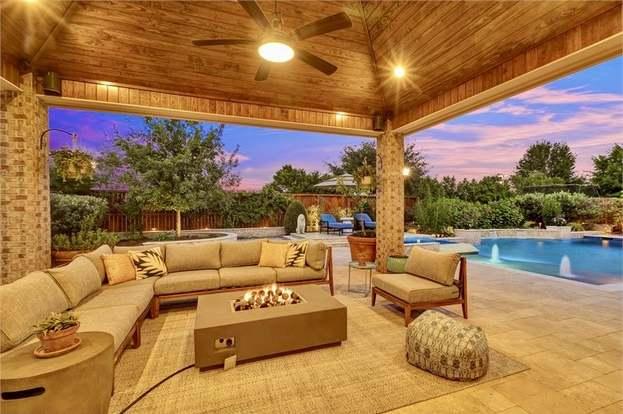
Your Backyard Cost a Lot. Buyers Still Need to See the Value.
How Do You Sell a Cypress Home With an Expensive Outdoor Living Space Without Expecting Buyers to Reimburse Every Dollar You Spent?
You added the covered patio.
Then:
Outdoor kitchen.
Built-in grill.
Fans.
Lighting.
Fireplace.
Maybe a pergola.
Maybe upgraded landscaping.
Maybe an extended slab.
Maybe an entire backyard renovation.
And when you total everything you spent, the number can be substantial.
So when it is time to sell, the thought is understandable:
“Buyers should pay more because all of this is already done.”
They may.
But there is an important difference between:
What the project cost.
And:
What the market will pay for the completed property.
Buyers are not purchasing your receipts.
They are purchasing:
Function.
Condition.
Convenience.
Design.
Lot.
Lifestyle.
And the ability to enjoy the space without having to build it themselves.
That is where your outdoor living area can become a powerful selling feature.
Start With What the Backyard Actually Provides
Do not begin with:
“We spent $85,000 out here.”
Begin with:
What can the buyer do here?
Cook.
Eat.
Watch television.
Relax in the shade.
Entertain.
Use the yard during hot afternoons.
Enjoy evenings outside.
The benefit sells the improvement.
The cost simply tells you what you invested.
A Covered Patio Can Function Like Another Living Area
When designed well, a covered patio may give buyers a practical extension of:
Kitchen.
Living room.
Dining space.
That is especially meaningful when the indoor and outdoor areas connect naturally.
Show that relationship.
Photograph the Transition From Inside to Outside
One of the strongest images may be taken from:
Kitchen.
Breakfast room.
Living area.
with the patio visible beyond.
The buyer immediately understands:
“We would actually use this.”
Do Not Photograph Every Outdoor Feature Separately
Grill.
Sink.
Fireplace.
Fan.
Countertop.
Lighting.
Twenty close-ups can make the backyard feel like an equipment catalog.
Use a few detail images.
But prioritize the complete space.
Outdoor Kitchens Need to Look Functional
Clear:
Counters.
Grill.
Sink.
Refrigerator.
Storage.
Remove:
Cleaning supplies.
Old tools.
Propane bottles where inappropriate.
Food containers.
The buyer should see a place to entertain—not a workbench.
Know What Appliances Are Included
Outdoor refrigerator?
Grill?
Ice maker?
Burner?
Television?
Clarify what conveys.
Do not assume every item visible in the listing photography automatically belongs with the home.
Test Everything Before Listing
A beautiful outdoor kitchen loses appeal quickly when:
Grill does not ignite.
Refrigerator is warm.
Sink leaks.
Lights do not work.
Fan rattles.
Premium features should function like premium features.
Do Not Advertise “Fully Equipped” Unless It Is
That phrase is vague.
Instead, identify verified features.
For example:
Built-in gas grill.
Outdoor refrigerator.
Sink.
Storage.
Covered dining area.
Much stronger.
Built-In Gas Features Need Good Documentation
If the outdoor kitchen or fireplace uses:
Natural gas.
Propane.
know the actual setup.
Do not casually tell buyers:
“Everything is gas.”
Verify.
Fire Features Can Create Strong Emotional Appeal
Outdoor fireplace.
Fire pit.
Gas fire feature.
These can help buyers picture:
Cool evenings.
Conversation.
Relaxation.
But make sure the feature:
Works.
Is clean.
Is presented safely.
Do Not Promise Year-Round Use
A covered patio may be comfortable during many seasons.
But weather varies.
Avoid absolute statements like:
“Use this space comfortably every day of the year.”
Show the physical features and let buyers determine how they would use them.
Ceiling Fans Are Small but Important
In a covered Cypress patio, working fans can materially improve comfort.
Make sure:
Blades clean.
Controls work.
No wobbling.
No loud motor.
A broken fan makes an otherwise polished patio feel neglected.
Outdoor Lighting Matters
Good lighting can make the space feel usable after sunset.
Check:
Ceiling fixtures.
Wall sconces.
Landscape lighting.
Step lighting.
Outdoor kitchen lighting.
Replace dead bulbs before photography.
Twilight Photography Can Be Excellent Here
Outdoor living often looks strongest at:
Late afternoon.
Early evening.
With:
Patio lights.
Fire feature.
Pool lights.
Landscape lighting.
But daylight images still need to show:
Condition.
Dimensions.
Yard.
Layout.
A Pergola Needs a Clear Purpose
Pergolas can provide:
Architectural interest.
Partial shade.
Defined seating.
But if the structure is:
Weathered.
Loose.
Overgrown.
buyers may see maintenance.
Clean and repair it appropriately before listing.
Do Not Call a Pergola a Covered Patio
They are different.
A pergola may provide partial shade.
A solid roof provides different protection.
Accurate descriptions matter.
Patio Covers Should Look Integrated With the House
A professionally designed extension can feel like:
Part of the original architecture.
A poorly integrated cover can look added on.
Before listing, examine:
Paint.
Roof transitions.
Posts.
Trim.
Drainage.
Lighting.
Overall condition.
Permit Questions May Come Up
Permanent outdoor improvements may have required:
Permits.
HOA approval.
Contractor work.
depending on the project and jurisdiction.
Locate available records.
Do not guess.
HOA Approval Can Be Particularly Useful
If your Cypress community required architectural approval for:
Patio cover.
Pergola.
Outdoor kitchen structure.
Fence.
Pool.
keep those records available where appropriate.
It can reduce buyer uncertainty.
Do Not Assume Existing Means Approved
The structure has been there five years.
That does not automatically prove:
Permit.
HOA approval.
Compliance.
If documentation matters, investigate.
Structural Additions Need More Scrutiny Than Furniture
A freestanding grill?
Simple.
A large roofed structure attached to the home?
Buyers may ask:
Who built it?
Was it engineered?
Was it permitted?
That is reasonable.
Keep Contractor Information
If you hired a professional company, retain:
Contract.
Invoice.
Plans where available.
Warranty.
Contact information.
This can strengthen the ownership story.
Warranty Transfer Should Be Verified
Do not say:
“The patio has a lifetime warranty.”
without checking:
What is covered.
Who owns the warranty.
Whether it transfers.
Any transfer requirements.
Outdoor Kitchens Age Too
A beautiful outdoor kitchen installed 12 years ago may still be useful.
But buyers may notice:
Appliance age.
Counter wear.
Cabinet condition.
Weathering.
Do not market it as:
“New outdoor kitchen.”
Use actual dates when relevant.
Stainless Steel Needs to Look Clean
Outdoor stainless can show:
Water spots.
Rust-like staining.
Grease.
Dust.
Deep-clean:
Grill.
Refrigerator.
Sink.
Hardware.
Premium finishes should look cared for.
Outdoor Cabinets Need Attention
Open and inspect:
Doors.
Hinges.
Interior storage.
Moisture damage.
Pest signs.
If buyers open a cabinet and find:
Mold-like staining.
Water.
Broken shelving.
the entire outdoor kitchen becomes questionable.
Countertops Should Be in Good Condition
Check:
Cracks.
Chips.
Staining.
Failed caulk.
Joint separation.
You do not necessarily need to replace them.
But obvious defects should be understood.
Electrical Outlets May Be Inspected
Outdoor:
Outlets.
Lighting.
Television connections.
Appliance circuits.
can receive inspection attention.
Do not DIY questionable exterior electrical work.
Use qualified professionals when meaningful corrections are needed.
Television Mounts Need a Plan
If the patio has a mounted television, decide:
Stays?
Goes?
Mount remains?
Wiring stays?
Clarify before listing.
Do Not Let a Missing Television Leave a Mess
If removing it:
Repair.
Hide wires appropriately.
Clean the wall.
An empty bracket with hanging cables looks unfinished.
Audio Systems Create Similar Questions
Built-in speakers?
Receiver?
Outdoor audio?
Know what conveys.
If the speakers are a feature:
Make sure they work.
Outdoor Furnishings Should Be Appropriately Scaled
You do not need to leave every chair you own.
Show:
Dining.
Conversation.
Lounging.
with enough open space for circulation.
Oversized Furniture Can Shrink the Patio
A large sectional may physically fit.
But if it leaves almost no walking area, buyers may perceive the patio as too small.
Edit.
Too Little Furniture Can Make the Patio Hard to Understand
One tiny table in a 500-square-foot covered space gives no scale.
Use enough furniture to communicate:
Capacity.
Function.
Create Distinct Zones
For a larger patio:
Dining zone.
Cooking zone.
Seating zone.
Maybe fireplace seating.
The layout should make sense immediately.
Do Not Block the Backyard With Furniture
Buyers still need to see:
Lawn.
Pool.
Fence.
Water view.
Green space.
Outdoor furniture should frame the yard.
Not hide it.
The Remaining Yard Is Still Important
An enormous patio can be wonderful.
But buyers may ask:
Is there any grass left?
Room for dogs?
Garden?
Play?
Pool?
Show the complete lot.
A Large Patio With Minimal Lawn Is Not Automatically a Negative
Some buyers may prefer:
Less mowing.
More entertaining space.
Lower-maintenance hardscape.
Market the actual configuration.
Do not apologize.
But Do Not Call It a “Huge Backyard” if Most of the Yard Is Hardscape
Specific language works better.
For example:
“Expanded covered patio creates substantial outdoor entertaining space with additional lawn beyond.”
when accurate.
Outdoor Living and Pools Often Work Together
If the property also has a pool, buyers may value:
Shade near water.
Dining.
Outdoor kitchen.
Direct pool visibility.
This can create a complete backyard package.
Show the Pool From Under the Patio
That photograph can communicate:
Shade.
Supervision sightline.
Entertainment.
Connection.
It tells a much stronger story than an isolated pool image.
Keep the Pool Immaculate
An expensive patio beside:
Cloudy water.
Leaves.
Dirty decking.
will not feel luxurious.
Outdoor features reinforce one another.
Shade Can Be a Strong Advantage
A covered area can make an outdoor space more usable during hot weather.
But describe the physical feature—not subjective temperature guarantees.
Motorized Screens Can Be a Major Feature
If the patio has:
Retractable shades.
Motorized screens.
solar shades.
check that all operate.
Know:
Brand.
Control.
Warranty.
What conveys.
Do Not Call Screens “Mosquito-Proof”
They may reduce insect exposure when closed.
They do not guarantee a pest-free environment.
Outdoor Heaters Should Be Verified
Gas heaters.
Electric heaters.
Mounted units.
If included:
Test.
Document.
Clarify what conveys.
Misting Systems Need Maintenance
If the patio has a built-in misting system:
Make sure it operates.
Check:
Nozzles.
Pump.
Controls.
Leaks.
A non-working specialty system becomes another buyer repair item.
Landscaping Is Part of the Outdoor-Living Package
The patio does not exist in isolation.
Buyers see:
Trees.
Shrubs.
Beds.
Lawn.
Privacy.
Maintenance.
A beautiful structure surrounded by neglected landscaping loses impact.
Landscape Lighting Can Add Depth
Especially around:
Trees.
Walkways.
Pool.
Patio columns.
But less can be more.
The backyard should feel polished—not overproduced.
Irrigation Should Work
A landscaped backyard needs:
Working irrigation where present.
Check:
Broken heads.
Leaks.
Dead zones.
Controllers.
Do not assume the buyer will ignore landscape maintenance because the patio is impressive.
Outdoor Drainage Matters
Large patio additions change:
Roof runoff.
Hard-surface area.
Water movement.
Buyers may notice:
Standing water.
Downspout discharge.
Drainage channels.
If meaningful concerns exist, address them appropriately.
Patio Roof Gutters Should Be Clean
A beautiful extension with:
Overflowing gutters.
Water stains.
clogged drains
can raise questions.
Basic maintenance supports the premium presentation.
Expansion Joints and Slab Condition Matter
Hardscape can show:
Cracks.
Settlement.
Staining.
Do not panic over every small concrete crack.
But significant movement or trip hazards deserve evaluation.
Do Not Hide Cracks With Rugs
Buyers will eventually move them.
Address meaningful concerns honestly.
Pavers Need Maintenance Too
If the patio uses pavers:
Check for:
Loose pieces.
Major settlement.
Weeds.
Staining.
Repair obvious issues where appropriate.
Outdoor Fireplaces Need Clean Masonry
Soot is normal around fireboxes.
But excessive:
Cracking.
Loose stone.
Damaged mortar.
may create concerns.
Have meaningful defects assessed appropriately.
Chimney or Venting Questions May Arise
If the outdoor fireplace is built into:
Covered structure.
House.
buyers may want to understand:
Installation.
Venting.
Gas.
Use professional records where available.
Do Not Describe a Decorative Fireplace as a Heat Source for the Entire Patio
Market what it is:
Fireplace.
Ambience.
Feature.
Do not promise performance beyond its design.
Outdoor Kitchens Can Create Pest Issues if Not Maintained
Food residue.
Grease.
Cabinet storage.
can attract insects or rodents.
Deep-clean before listing.
Remove all food.
Outdoor Refrigerators Should Be Empty and Fresh
No:
Old beverages.
Condiments.
Odor.
Show a clean appliance.
Ice Makers Require Extra Maintenance
If installed:
Test.
Clean.
Know whether it is connected and functioning.
A broken specialty appliance can produce a surprisingly large buyer reaction.
Sink Drainage Needs to Be Understood
Outdoor sink connected to:
House plumbing?
Other approved system?
Do not guess.
If plumbing was professionally installed, records can be useful.
Septic Properties Need Extra Care
Some Cypress-area properties on larger lots may use septic.
If your outdoor kitchen or bathroom connects to private wastewater infrastructure, buyers may ask how.
Do not speculate.
Outdoor Bathrooms Can Be Valuable
A pool bath or exterior-access bathroom can add substantial convenience.
But make sure its classification and permitting are accurate.
Do not call a small exterior half bath a:
“Guest suite.”
Detached Cabana Structures Need Accurate Language
Cabana.
Pool house.
Guest quarters.
Outdoor room.
These labels imply different functions.
Use the term that matches the actual structure.
Air-Conditioned Cabana Does Not Automatically Mean Living Area
Finished walls and AC alone do not necessarily establish:
Legal residential square footage.
Bedroom.
Guest apartment.
Use correct listing standards and professional guidance.
Buyers May Value Completed Outdoor Improvements Because They Avoid Construction
This is one of your strongest seller advantages.
A buyer can purchase:
Finished patio.
Finished kitchen.
Established landscaping.
Maybe pool.
And begin using it immediately.
They avoid:
Design.
Contractors.
Permits.
HOA process.
Construction disruption.
That convenience can influence buying decisions.
But Do Not Translate Avoided Construction Into a Guaranteed Premium
A seller may have spent:
$120,000.
The buyer may value it highly.
But market value depends on:
Current demand.
Comparable homes.
Quality.
Age.
Condition.
Home price range.
The project cost does not control resale.
Original Cost Can Still Be Useful Internally
It helps the seller understand:
Investment.
Replacement cost.
Financial history.
But it should not become:
“We spent $100,000, therefore list $100,000 higher.”
Think in Terms of Market Contribution
Ask:
How does the home compare with similar Cypress properties that lack this outdoor environment?
Do buyers pay more?
How much more?
Does the finished backyard help the home sell faster?
Does it make your property stand out?
Those are better questions.
Compare Similar Homes With and Without Outdoor Improvements
Ideally:
Same neighborhood.
Similar size.
Similar condition.
Different backyard quality.
That can provide useful market context.
Pool and Outdoor Kitchen Should Not Be Double-Counted Emotionally
Seller thinks:
Pool adds X.
Outdoor kitchen adds Y.
Patio adds Z.
Then sums everything.
Market value is not always that additive.
Buyers evaluate the backyard as a complete package.
The Whole Can Be More Important Than the Pieces
A modest:
Pool.
Patio.
Kitchen.
Landscaping.
that works beautifully together may appeal more than an expensive collection of disconnected improvements.
Design cohesion matters.
Quality Matters More Than the Number of Features
A buyer does not need:
Fireplace.
Kitchen.
Pergola.
TV.
Pool.
Spa.
Putting green.
Everything.
They need a space that feels:
Functional.
Comfortable.
Well maintained.
Overbuilt Backyards Can Narrow the Buyer Pool
If the entire yard becomes:
Concrete.
Structures.
Equipment.
some buyers may think:
Too much.
That does not mean the property is difficult to sell.
It simply appeals more strongly to buyers who value outdoor entertaining.
Highly Customized Features May Not Return Full Cost
Examples:
Elaborate pizza oven.
Commercial-style outdoor kitchen.
Huge custom fireplace.
Specialty sports feature.
They may be fantastic.
But the next buyer may not assign the same value.
Permanent Features Usually Matter More Than Decorative Items
Structure.
Shade.
Utilities.
Hardscape.
Outdoor kitchen.
Pool.
Landscape.
These tend to influence the property's overall functionality more than removable:
Furniture.
Décor.
Television.
Do Not Include Furniture Cost in Your Home-Value Argument
A $15,000 outdoor furniture set may look great.
But if it is personal property and leaving with you, it is not part of the real-property value.
If Furniture Is Negotiable, Handle It Separately
A buyer may want the complete setup.
That can be negotiated appropriately.
Do not simply assume:
Furniture raises appraised value.
Outdoor Kitchens Can Be Expensive to Recreate
This may help buyer perception.
But rather than quoting a generic construction cost, emphasize:
It is already installed.
Operational.
Integrated.
Ready for use.
Convenience is the benefit.
Builder Competition Can Make Finished Backyards More Important
A new-construction buyer may receive:
New house.
But sometimes still needs to complete:
Patio expansion.
Outdoor kitchen.
Pool.
Mature landscaping.
Depending on the specific property and builder offering.
Your resale can compete by showing what is already finished.
Verify Current Builder Competition Before Making Direct Claims
Builder incentives, included features, and lot options change frequently.
If your marketing directly compares the resale home with specific new construction, use current verified information. Your existing blog already recognizes that Cypress buyers may compare resale homes with new construction, so the complete feature package matters.
Do Not Say “New Construction Doesn’t Include Backyards”
Some builders may include substantial outdoor features.
Others may not.
Avoid broad statements.
Market your property.
Mature Landscaping Can Be Harder to Replicate Quickly
Established:
Trees.
Shrubs.
Privacy.
Shade.
can improve the finished feeling of an outdoor area.
This is one advantage an established resale may have.
Maintenance History Helps Buyers Appreciate Expensive Features
Keep records for:
Patio construction.
Roof.
Outdoor appliances.
Gas work.
Electrical.
Pool.
Landscaping.
Drainage.
A high-investment backyard should not come with:
No documentation.
Create an Outdoor Improvement Timeline
For example:
2021 — covered patio added.
2022 — outdoor kitchen completed.
2023 — landscape lighting installed.
2024 — pool equipment updated.
2025 — patio screens installed.
Use actual dates.
Separate Structures From Appliances
Permanent Improvements
Patio.
Fireplace.
Hardscape.
Outdoor kitchen structure.
Equipment
Grill.
Refrigerator.
Fans.
Heaters.
Screens.
This helps buyers understand what has different ages and maintenance needs.
Appliance Warranties Should Be Verified
If the grill has a long manufacturer warranty:
Great.
Check transferability.
Do not promise:
“Everything is still under warranty.”
unless it is.
Keep Manuals Where Possible
Outdoor appliances can have:
Special ignition.
Winterization.
Cleaning.
Maintenance.
A buyer may appreciate manuals or digital product information.
Buyers May Ask Who Built the Patio
Have the contractor information available when possible.
A professionally documented addition can feel much easier to accept.
Do Not Overwhelm the Listing Description With Technical Details
The public description should sell:
Experience.
Function.
Lifestyle.
The improvement sheet can carry:
Dates.
Brands.
Permits.
Warranties.
Technical details.
Better Listing Language Focuses on Use
Instead of:
“$150,000 backyard renovation!”
consider:
“An expansive covered patio extends the main living space outdoors with a built-in kitchen, dedicated dining and seating areas, and landscaped backyard views.”
That tells buyers what they get.
Avoid “Resort-Style” Unless the Property Actually Supports It
The phrase is overused.
If your backyard truly has:
Pool.
Spa.
Extensive landscaping.
Cabana.
Multiple entertaining zones.
it may fit.
Otherwise, precise descriptions often sound more credible.
“Entertainer’s Dream” Is Also Overused
Better:
Describe how the space functions.
Let the buyer conclude that it is ideal for entertaining.
Do Not Target Specific Household Types
Avoid:
Perfect for families.
Great for retirees.
Ideal for young couples.
Describe:
Features.
Not who should live there.
Professional Photography Is Especially Important
Outdoor living is visual.
Poor photos can make a substantial investment look:
Small.
Dark.
Disconnected.
Use:
Wide contextual images.
Selective details.
Daylight.
Twilight if appropriate.
Camera Angle Should Show Depth
A covered patio photographed only straight toward one wall tells the buyer almost nothing.
Show:
House connection.
Seating.
Kitchen.
Yard.
Drone May Help on Large Lots
If the backyard improvements occupy a significant part of the lot, aerial photography can show:
Placement.
Remaining lawn.
Pool.
Structures.
Neighbor spacing.
Do Not Use Drone Photography to Make the Yard Look Larger
Scale should remain honest.
Buyer surprise is not worth an extra showing.
Keep Personal Décor Minimal
Signs.
Team flags.
Seasonal decorations.
Novelty bar signs.
can distract.
The outdoor space should feel adaptable.
Clean the Grill Before Every Important Showing Period
A buyer may open it.
Heavy grease and old food make the entire kitchen feel poorly maintained.
Empty Ash From Fire Features
Fireplace.
Fire pit.
Keep them clean.
You are selling the possibility of use.
Not last weekend’s evidence.
Outdoor Cushions Need to Look Fresh
Faded.
Mildewed.
Stained.
cushions can make an expensive patio look tired.
Clean or replace inexpensive staging textiles if necessary.
Patio Fans and Fixtures Collect Dust
Clean:
Blades.
Light fixtures.
Beams.
Ceiling.
Cobwebs.
These are highly visible in bright photography.
Check for Insect Nests
Wasps.
Mud daubers.
Other nests.
may develop around covered structures.
Address active pest issues appropriately before showings.
Screens and Doors Should Slide Smoothly
A retractable screen that jams during a showing creates a much larger negative impression than the repair itself may deserve.
Test beforehand.
Outdoor Kitchens Need Weather Protection Maintenance
Check:
Cabinet seals.
Appliance covers where appropriate.
Caulk.
Counter joints.
The buyer may inspect these closely.
Do Not Promise “Maintenance-Free”
Concrete.
Stone.
Appliances.
Metal.
Landscaping.
Everything requires some maintenance.
Use:
“Designed for outdoor living.”
Not:
“Never needs maintenance.”
Consider the Buyer’s Future Replacement Budget
Just as with indoor systems, buyers may see:
Older grill.
Old refrigerator.
Weathered pergola.
Worn screens.
and mentally add costs.
Your records can reduce uncertainty.
Fix Small Visible Failures
A $150 broken fan or faulty light can make buyers question a $75,000 outdoor project.
Finish the small items.
Do Not Replace Every Appliance Solely Because It Is Older
Function.
Condition.
Overall presentation.
matter.
Evaluate strategically.
An Older Grill Can Still Be Fine
If:
Clean.
Functional.
Built-in.
Buyer may be comfortable replacing it eventually.
Do not assume every outdoor appliance must be new.
Pricing Should Reflect the Complete Property
The backyard is only one part.
Buyers still evaluate:
Interior.
Lot.
Roof.
HVAC.
Location.
Schools based on their own research.
Commute.
Community.
The patio cannot carry an otherwise weak value proposition alone.
A Great Backyard Can Help Buyers Accept an Interior Trade-Off
Maybe another home has:
Newer kitchen.
But yours has:
Better outdoor living.
The buyer decides which matters more.
That is where differentiation creates value.
But Do Not Use the Backyard to Justify Any Price
Market discipline still applies.
Buyers compare alternatives.
Use Active Listings, Not Just Sold Homes
Current competition tells you:
What the buyer can purchase today.
If no competing property has comparable outdoor living:
That may help your positioning.
If three do:
Your advantage may be smaller.
Days on Market Can Reveal Buyer Response
If similar heavily improved homes:
Sell quickly.
Receive strong attention.
that may indicate demand.
But every property still differs.
Do Not Assume a Backyard Improvement Always Shortens Market Time
Pricing.
Condition.
Location.
Photography.
Market.
all matter.
Outdoor living is one variable.
Buyer Feedback Can Tell You Whether the Backyard Is Working
Listen for:
“This is our favorite backyard.”
Great.
Make sure marketing emphasizes it.
Or:
“Beautiful, but there’s almost no grass.”
That tells you the trade-off buyers perceive.
Do Not Argue With Buyer Preferences
One buyer wants:
Pool and patio.
Another wants:
Large lawn.
The property cannot be perfect for both.
Market to the buyer who values what exists.
The Backyard May Be Worth Showing Twice
If a buyer schedules a second showing:
Turn on:
Lights.
Fans.
Water feature.
Fire feature if appropriate and safe.
Pool lights depending on time.
Let them experience it.
But Never Stage a Fire Feature Unattended
Safety comes first.
Open Houses Need Outdoor Preparation
Check:
Pool safety.
Grill.
Trip hazards.
Furniture stability.
Gates.
Lighting.
The backyard may attract guests to linger.
Make sure the space is ready.
Use the “Would We Actually Use This?” Test
Sit outside for thirty minutes.
Does the layout work?
Can people move easily?
Is shade adequate?
Does furniture placement make sense?
The buyer will feel these things.
Use the “What Is Permanent?” Test
List what stays:
Patio.
Kitchen structure.
Built-in appliances depending on contract.
Fireplace.
Screens.
Fans.
Clarify personal property.
Use the “What Is the Strongest Zone?” Test
Maybe:
Kitchen.
Fireplace.
Pool view.
Dining area.
Make that the visual centerpiece.
Use the “What Looks Old?” Test
Grill?
Ceiling?
Cabinets?
Concrete?
Fix the items that undermine the overall investment.
Use the “Could a Buyer Verify This Claim?” Test
Permit?
Warranty?
Installation date?
Outdoor appliance brand?
If not:
Adjust the wording.
Use the “Would We Pay for Avoiding Construction?” Test
This is where the real resale benefit may exist.
The buyer gets:
Completed space.
No contractor search.
No construction period.
No design process.
No waiting.
That convenience is worth emphasizing.
Use the “What Would Competing New Construction Require After Closing?” Test
Not as a public blanket statement.
As an internal comparison.
Would the buyer still need:
Patio.
Landscaping.
Pool.
Outdoor kitchen.
That can help explain where your resale offers immediate completeness.
Use the “Original Cost vs. Market Benefit” Test
Original project cost:
Seller information.
Market benefit:
Buyer decision.
Do not confuse them.
Create a Cypress Outdoor-Living Seller Scorecard
Before listing, evaluate:
Patio
Condition, size, and function?
Structure
Permit or HOA documentation where applicable?
Outdoor Kitchen
Appliances tested and clean?
Grill
Functional and included?
Refrigerator
Functional and included?
Sink
No leaks?
Gas
Setup understood?
Electrical
Outlets and lighting working?
Fans
Clean and operating?
Fireplace/Fire Feature
Functional and maintained?
Screens/Shades
Working?
Pergola
Condition and actual coverage accurately described?
Furniture
Appropriately scaled and inclusion status clear?
Pool
If present, clean and integrated into the photography?
Lawn
Remaining usable yard clearly shown?
Landscaping
Maintained without hiding the space?
Drainage
No obvious unresolved issues?
Warranties
Transferability checked?
Improvement Timeline
Major dates organized?
Photography
Daylight and twilight used strategically?
Pricing
Based on market contribution rather than project receipts?
Once these pieces are organized, the backyard becomes much easier for buyers to value.
Final Thoughts
A great Cypress outdoor living space can give a resale home something buyers cannot create overnight.
Shade already built.
Kitchen already installed.
Patio finished.
Landscaping established.
Gas and electrical already in place.
Maybe the pool is right outside.
The buyer can move in Friday and host people Saturday.
That convenience matters.
Your mistake as the seller would be thinking:
“We spent $100,000, so the buyer owes us $100,000 more.”
That is not how resale works.
Instead, make buyers understand what the investment created.
A usable extension of the home.
A place to cook.
A place to sit.
A place to entertain.
A shaded outdoor environment.
A finished project they do not have to design and build themselves.
Then support the story with:
Clean presentation.
Professional photography.
Working appliances.
Documentation.
Approvals where applicable.
Accurate improvement dates.
And realistic pricing based on current competition.
Outdoor living already appears in your broader Cypress content as an important lifestyle feature buyers may value, but this seller strategy comes down to something more specific: turning the money you spent into benefits buyers can actually see and use.
Because buyers rarely fall in love with an invoice.
They fall in love with standing under the patio, looking across the backyard, and thinking:
“We wouldn’t have to change a thing before enjoying this.”
That is the part of the investment that sells.
Frequently Asked Questions
Does an outdoor kitchen automatically add what it cost to my Cypress home's value?
No. Project cost and resale contribution are different. Buyers consider the quality, condition, usefulness, design, age, lot, and comparable market alternatives.
Is a covered patio worth highlighting when selling?
Yes, when it is a meaningful part of the home's outdoor functionality. Your current Cypress content already notes that covered patios and functional outdoor spaces can matter to buyers.
Should I replace older outdoor appliances before listing?
Not automatically. Test them, clean them, repair actual problems, and evaluate whether replacement materially improves the property's presentation and market position.
Do I need permits for a covered patio or outdoor kitchen?
Permit and approval requirements depend on the specific structure, work performed, jurisdiction, and community. Locate existing documentation and verify uncertain requirements rather than guessing.
Should I advertise how much I spent on the backyard?
Usually the stronger strategy is to focus on the completed features and buyer benefits. Large investment figures can be factual when documented, but they do not establish market value.
Can I call my patio an outdoor living room?
If it genuinely functions as a substantial furnished covered living area, that can be descriptive marketing language, but avoid implying that it is interior conditioned living square footage.
Does a large patio hurt resale if there is less grass?
Not necessarily. Some buyers prefer extensive entertaining space and less lawn maintenance, while others prioritize more private lawn. Show the actual configuration clearly so the right buyer can evaluate it.
Should I include twilight photography?
It can be highly effective for outdoor kitchens, fireplaces, pool areas, and landscape lighting, but pair twilight images with daylight photography that clearly shows the property's condition and layout.
How should I price a home with extensive outdoor improvements?
Compare the complete property with similar sold and active homes, particularly those with comparable pools, patios, outdoor kitchens, lot positions, and condition. Do not simply add the original project cost to the home's baseline value.
What's the biggest takeaway?
When selling a Cypress home with a major covered patio, outdoor kitchen, fireplace, pergola, or upgraded backyard, market the finished lifestyle and convenience, not the receipts. Make every feature clean and functional, document significant work, show the entire backyard honestly, and let current market evidence determine how much buyers will pay for having the work already done.