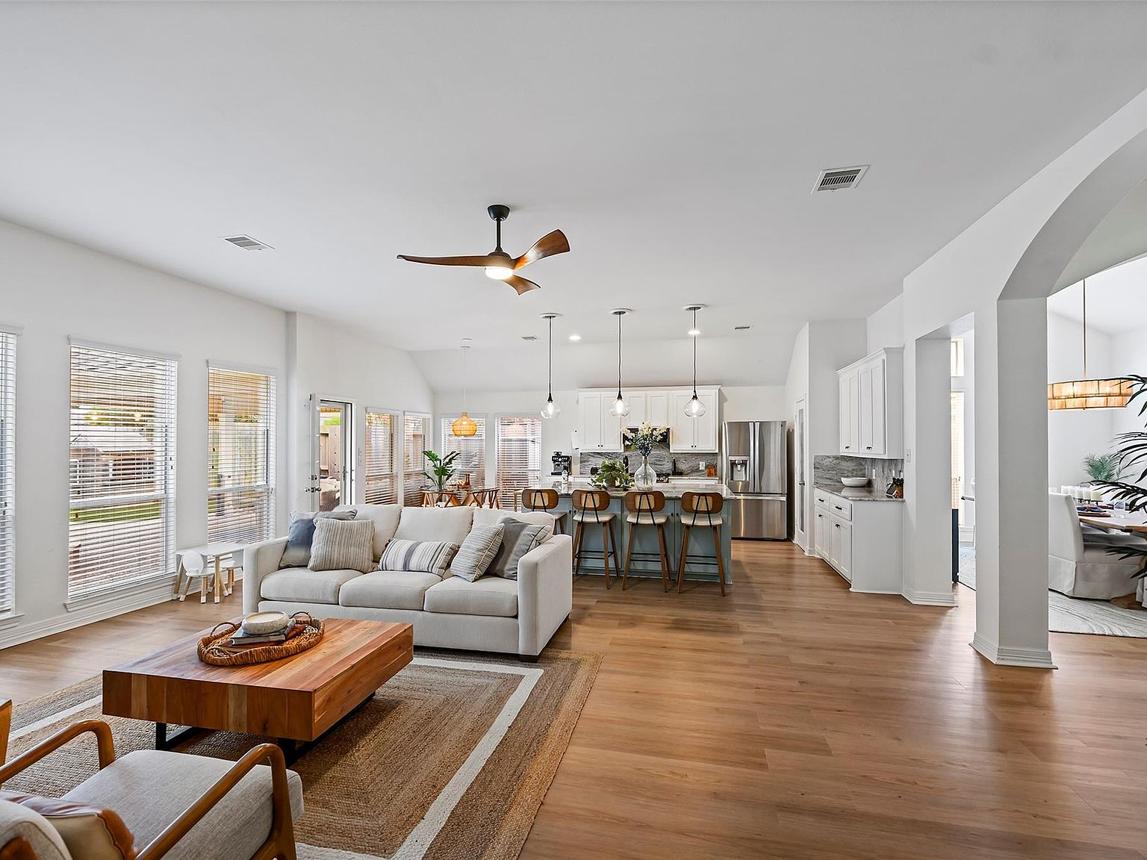
New Construction Looks Fresh. Your Established Cypress Home Has Advantages Builders Can’t Always Recreate.
How Do You Sell an Established Cypress Home When Buyers Keep Comparing It With Brand-New Construction?
The buyer likes your home.
Then they say:
“We’re also looking at new construction.”
For some sellers, those words immediately create panic.
Should we replace the countertops?
Paint everything?
Lower the price?
Offer incentives?
Renovate the bathroom?
Not necessarily.
A resale home and a brand-new home do not need to win in exactly the same categories.
New construction may offer:
Current finishes.
Unused appliances.
Builder warranties.
Design options.
Potential builder incentives.
Your established Cypress home may offer:
Mature landscaping.
Larger trees.
Completed outdoor living.
Established surroundings.
A particular lot.
Existing window treatments.
Storage improvements.
A pool.
And years of upgrades already completed.
The goal is not to convince buyers that new construction is worse.
The goal is to make sure they understand what your home gives them that they may otherwise have to create later.
Start With the Lot
Buyers can change:
Paint.
Flooring.
Counters.
Lighting.
They cannot easily change:
Lot size.
Street position.
Rear view.
Tree canopy.
Neighbor spacing.
If your property has a distinctive lot, make that one of the first things buyers understand.
Mature Landscaping Can Be a Real Advantage
A newer home may begin with:
Young trees.
Fresh sod.
Basic landscape beds.
An established Cypress property may offer:
Shade.
Larger trees.
Developed landscaping.
More visual separation.
If your landscaping is a strength:
Maintain it.
Trim appropriately.
Photograph it.
Do Not Confuse Mature With Overgrown
Large shrubs covering windows do not create:
Privacy.
They may simply make the home look neglected.
Before listing:
Trim.
Edge.
Remove dead material.
Refresh beds where appropriate.
Keep the established character without hiding the house.
Shade Can Change the Backyard Experience
A large established tree may create something difficult to purchase from a builder option sheet:
Shade today.
If the backyard benefits from mature trees, show:
Patio.
Seating.
Tree canopy.
Yard.
together.
But Tree Maintenance Matters
Buyers may also see:
Large tree = future maintenance.
If significant professional:
Trimming.
Removal.
Health evaluation.
has been completed, keep records where useful.
Do not guarantee tree health unless appropriately evaluated.
The Neighborhood Already Exists
With an established property, buyers can physically see:
Nearby homes.
Street landscaping.
Traffic pattern.
Tree growth.
Surrounding development.
That can reduce some of the imagination required when purchasing in a developing section.
Do Not Attack Developing Communities
Avoid marketing language like:
“No construction mess like the new neighborhoods.”
It sounds defensive.
Instead say what is true about your property:
“Located within an established section with mature landscaping and completed neighboring homes.”
when accurate.
Finished Outdoor Living Can Be a Major Differentiator
If you already have:
Pool.
Covered patio.
Outdoor kitchen.
Fire pit.
Landscape lighting.
Pergola.
buyers do not need to coordinate those projects after closing.
Photograph the entire package.
A Pool Is More Than Its Original Cost
Do not tell buyers:
“We spent $120,000 on this pool, so the house is worth $120,000 more.”
That is not how resale value necessarily works.
Instead show:
Condition.
Design.
Equipment.
Patio.
Remaining yard.
The buyer decides how much the completed feature contributes.
Window Treatments Are Easy to Forget
Quality:
Shutters.
Blinds.
Shades.
may represent improvements buyers would otherwise need to purchase.
If they convey with the property:
Highlight them appropriately.
Storage Improvements Matter
Established owners often add:
Garage cabinetry.
Overhead storage.
Custom closets.
Pantry systems.
Built-ins.
These practical improvements can make the home feel more complete.
Create an Improvement Timeline
This is one of the easiest ways to help buyers understand an established property.
For example:
2021 — HVAC replaced.
2022 — primary bathroom updated.
2023 — pool equipment replaced.
2024 — interior paint.
2025 — roof replacement.
2026 — landscape improvements.
Use the home's actual facts.
Separate Updates From Maintenance
This distinction helps.
Updates
Kitchen remodel.
Bathroom renovation.
Flooring.
Lighting.
Maintenance
Roof.
HVAC.
Water heater.
Exterior paint.
Pool equipment.
Both matter, but for different reasons.
System Age Can Be More Important Than Home Age
A buyer may see:
20-year-old home.
Then assume:
20-year-old everything.
That may be completely wrong.
If major systems are newer:
Make those dates easy to find.
Do Not Say “Everything Has Been Replaced”
unless it actually has.
Specific dates are stronger than broad claims.
New Construction Often Wins on Freshness
Your resale needs to feel:
Clean.
Bright.
Maintained.
That does not require rebuilding the house.
Start with:
Deep cleaning.
Paint touch-ups.
Decluttering.
Lighting.
Caulk.
Small repairs.
Paint Has an Outsized Effect
A buyer walking from a builder model into a resale will immediately notice:
Scuffed walls.
Dark personalized colors.
Patch marks.
Dirty trim.
Fresh neutral paint in strategic areas can close the visual gap.
Lighting Can Date a Home Quickly
You may not need to replace every fixture.
Focus on high-impact areas:
Entry.
Kitchen.
Dining.
Primary bathroom.
Replace:
Burned-out bulbs.
Mismatched bulb temperatures.
Broken fixtures.
Do Not Renovate Solely to Copy a Builder Model
This can become expensive quickly.
Your home does not need the exact:
Cabinet color.
Tile.
Pendant light.
Flooring.
buyers saw down the road.
It needs to feel cohesive and well maintained.
Kitchens Should Be Evaluated Strategically
If cabinets are in good condition but slightly dated, you may need:
Hardware.
Lighting.
Paint.
Styling.
not a full replacement.
Consider:
Price point.
Competition.
Expected return.
Avoid Cheap “Quick Flip” Improvements
Poorly installed:
Backsplash.
Flooring.
Paint.
Fixtures.
can hurt more than leaving quality existing materials.
Buyers compare workmanship too.
Cleanliness Is Non-Negotiable
Builder models are designed to look nearly perfect.
Your resale should not compete with:
Dirty grout.
Pet odor.
Greasy cabinets.
Dusty vents.
Stained carpet.
Deep cleaning can be one of the highest-return preparation steps.
Closets Should Show the Advantage of an Established Home
You have already lived in the property.
You know where storage works.
But overfilled closets make buyers think:
“There isn't enough space.”
Remove a meaningful portion of the contents.
The Garage Should Not Become the Moving Warehouse
If the home is decluttered by placing everything in the garage, you simply moved the objection.
Buyers still evaluate:
Parking.
Storage.
Garage condition.
Builder Incentives Require Perspective
Builders may offer:
Closing assistance.
Rate promotions.
Upgrade packages.
Those offers can change and may have specific requirements.
Do not base your strategy on an outdated advertisement.
Do Not Promise to “Beat Any Builder Incentive”
You may not know:
Financing terms.
Qualifications.
Closing conditions.
Instead, evaluate seller concessions with your real estate and financial professionals based on the actual offer.
Buyers Should Compare the Complete Purchase
A builder's base or advertised price may not necessarily reflect every feature a buyer wants.
Likewise, your asking price alone does not communicate the full value of your resale.
The comparison should consider:
Home.
Lot.
Improvements.
Outdoor spaces.
Included features.
Current incentives.
Financing.
Taxes.
Insurance.
HOA-related costs.
Do Not Claim Resale Is Automatically Cheaper
Sometimes it is.
Sometimes it is not.
Compare actual available properties.
Property Taxes Deserve Careful Treatment
Tax amounts can differ between properties for many reasons.
Do not promise what a buyer's future tax bill will be.
Buyers should verify current property-specific information and understand how their purchase may affect future obligations.
Insurance Is Property-Specific Too
Older home does not automatically mean:
Expensive insurance.
New home does not automatically mean:
Cheap insurance.
Roof age.
Construction.
Coverage.
Carrier.
Buyer.
and many other factors can matter.
Let buyers obtain their own quotes.
Move-In Readiness Can Be Powerful
A buyer may value:
No pool construction.
No window-treatment installation.
No landscaping project.
No patio build.
No immediate painting.
If your home truly offers that:
Show it.
But “Move-In Ready” Needs to Be Earned
If buyers immediately see:
Broken fence.
Worn carpet.
Peeling paint.
Leaking faucet.
the phrase loses credibility.
Finish the punch list.
Professional Photography Is Essential
Your resale is competing online with:
Builder photography.
Models.
Renderings.
Highly staged inventory homes.
Your listing needs:
Strong daylight.
Clean composition.
Exterior.
Interior.
Backyard.
Permanent features.
Do Not Over-Edit Photos
Buyers should not arrive and think:
“This looks nothing like the listing.”
Present the home at its best—not as a different house.
Video Can Highlight the Established Setting
Show:
Tree-lined approach.
Exterior.
Interior.
Backyard.
Pool.
Outdoor living.
The goal is to communicate:
This property already feels complete.
Pricing Cannot Be Emotional
Seller says:
“We put $150,000 into this house.”
That matters as property history.
It does not automatically determine market value.
The buyer compares:
Your home.
Other resale homes.
Builder inventory.
Their complete costs.
Compare Against Actual New Construction
Do not compare with:
Base model that cannot be purchased.
Old promotion.
Sold inventory.
Look at what the buyer can genuinely choose today.
Also Compare Against Resales
New construction is not your only competition.
A nearby resale may offer:
Similar lot.
Newer roof.
Pool.
Lower price.
Know the complete market.
Use the “What Can’t They Add Later?” Test
Lot.
Trees.
Location.
View.
Start there.
Use the “What Is Already Paid For?” Test
Pool.
Patio.
Blinds.
Storage.
Landscaping.
Show those improvements.
Use the “Does It Feel Fresh?” Test
Walk in as if you just toured a builder model.
What immediately feels tired?
Fix the high-impact items.
Use the “Are We Defending the Home?” Test
If your marketing sounds like:
“Older is better!”
rewrite it.
Show the advantages instead.
Cypress Established-Home Seller Scorecard
Before listing, evaluate:
Lot
Does it differentiate the property?
Trees
Established and maintained?
Landscaping
Mature rather than overgrown?
Outdoor Living
Completed and photographed?
Pool
Condition and equipment documented?
Improvements
Timeline prepared?
Major Systems
Ages and maintenance known?
Paint
Fresh enough to compete?
Lighting
Bright and cohesive?
Cleaning
Builder-model level?
Storage
Organized?
Garage
Functional and uncluttered?
Builder Competition
Current inventory and incentives reviewed?
Resale Competition
Comparable options understood?
Pricing
Based on today's choices rather than money spent?
Marketing
Does the home feel established, complete, and move-in ready?
Final Thoughts
A brand-new Cypress home has obvious appeal.
It is new.
Your established home should not pretend otherwise.
Instead, sell what time has already created.
Trees that provide shade now.
Landscaping that has grown in.
A backyard that is already finished.
A pool that already exists.
Window treatments already installed.
Storage already improved.
A street and surrounding environment buyers can already see.
Then make sure the house itself feels worthy of those advantages.
Clean it.
Declutter it.
Touch up paint.
Repair deferred maintenance.
Document system replacements.
Photograph the permanent features.
And price against what buyers can actually purchase today.
Because the question is not:
“Would you rather buy new or resale?”
It is:
“Which Cypress home gives you more of what matters to you at a price and total ownership picture that makes sense?”
Your established home can be a very strong answer.
Frequently Asked Questions
Can an older Cypress home compete with new construction?
Yes. Lot position, mature landscaping, pools, outdoor living, upgrades, maintenance, location, pricing, and move-in readiness can all differentiate an established home.
Should I renovate before competing with builders?
Not automatically. Start with condition, cleaning, paint, lighting, repairs, staging, and market analysis before committing to major renovations.
Do mature trees help sell a home?
They can enhance shade, appearance, privacy, and established character when healthy and well maintained.
Should I advertise what I spent on improvements?
An improvement list is useful, but spending does not automatically equal resale value.
How should I handle builder incentives?
Review current offers rather than relying on old advertisements. Builder incentives may change and can have financing or qualification requirements.
Should I price below new construction?
Not automatically. Compare the complete properties, including lot, improvements, condition, outdoor spaces, incentives, and current market evidence.
Does a newer roof help an established home compete?
It can reduce buyer concern about a major component. Accurately document the replacement year and available warranty information.
Should I use professional photography even if the house is older?
Yes. Strong photography is especially important when competing with professionally marketed builder inventory.
What does “move-in ready” really mean?
It generally communicates a property that feels clean, maintained, functional, and unlikely to require immediate obvious projects. Avoid using the phrase when substantial visible work remains.
What's the biggest takeaway?
When selling an established Cypress home against new construction, do not compete on age—compete on what has already been created: lot, trees, landscaping, outdoor living, improvements, maintenance, and a home that feels completely ready for its next owner.