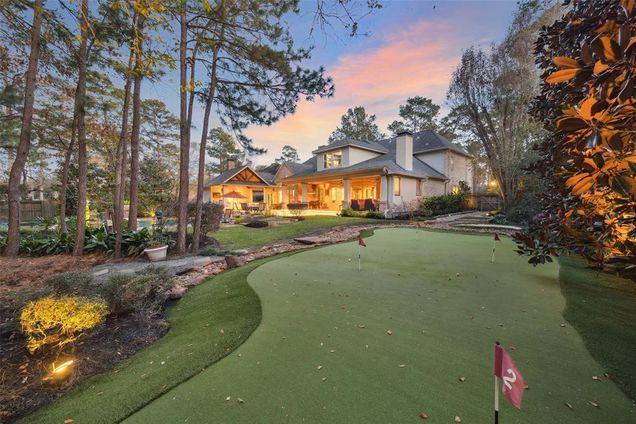
Selling a Golf Course Home? The View Is Only Part of the Story.
How Do You Sell a Golf Course Home in The Woodlands When the View Is Incredible but Buyers Still Have Questions?
The buyer walks through the house.
They like the kitchen.
They like the primary suite.
Then they reach the back windows.
Fairway.
Trees.
Open space.
Maybe a green.
Maybe water beyond the course.
Maybe a long view that makes the backyard feel twice as large.
This is the moment the seller has been waiting for.
“This is why we bought the house.”
And it may be exactly why the next buyer wants it too.
But then the questions start.
Do golf balls ever come into the yard?
How close is the cart path?
Can golfers see into the pool?
What time does play begin?
Is there landscaping between us and the course?
Can we put up a taller fence?
Does owning here include golf membership?
Can the golf course change the trees?
Could they redesign the hole?
Are golf-course homes worth more?
Suddenly, the seller realizes:
A golf-course lot is not simply:
House + beautiful view.
It is a specific relationship between:
Home.
Private yard.
Course.
Golf activity.
Landscaping.
Privacy.
And lot position.
The strongest seller strategy makes that relationship easy for buyers to understand without promising things the seller cannot control.
Start With the Exact Golf-Course Position
Do not simply market:
“Golf-course lot.”
Where does the home actually sit?
Behind:
Tee box?
Fairway?
Green?
Rough?
Water feature?
A bend in the hole?
Different positions can create completely different backyard experiences.
“Golf Course” Is a Category. The View Is Property-Specific.
Two homes may both back to the same course.
One looks down a long fairway.
Another faces:
Trees.
Cart path.
Green.
Another has:
Water.
Another has a narrower golf glimpse.
Your current Woodlands home-value content already recognizes golf-course position among the factors that can distinguish one property’s value from another.
That is why marketing should describe the actual setting rather than relying on the label alone.
Identify the Signature View
Where is the golf view strongest?
Living room?
Kitchen?
Breakfast room?
Primary bedroom?
Study?
Pool?
Patio?
Upstairs balcony?
That should shape your photography.
Do Not Save the Golf View for Photo 35
If it is one of the main reasons a buyer should choose the property, show it early.
The listing should quickly communicate:
This home has a setting that a standard interior lot cannot recreate.
But the Front Exterior May Still Be the Hero Photo
There is no rule requiring the golf-course view to be Photo 1.
If the home has:
Exceptional architecture.
Beautiful approach.
Strong curb appeal.
the front may remain the best opening image.
Then reveal the golf setting immediately afterward.
Show the View From Inside
This is critical.
The buyer will not spend every day standing at the back fence.
They will experience the golf setting while:
Cooking.
Eating breakfast.
Watching television.
Working.
Waking up.
Show that relationship.
Clean Every Window Facing the Course
A premium view through:
Water spots.
Dust.
Dirty screens.
looks less premium.
If the golf setting is part of the property's value, window cleaning becomes one of the easiest high-impact preparation items.
Open the Window Coverings
Heavy:
Curtains.
Blinds.
Shutters.
can hide the feature.
During photography and showings, let buyers understand how much of the course is visible from the interior while still managing privacy appropriately.
Furniture Should Not Block the View
A large cabinet positioned directly in front of the best golf-course window works against you.
Rearrange:
Sofa.
Dining furniture.
Office desk.
where appropriate so the view becomes part of the room.
The Golf Course Can Make a Room Feel Larger
Long sightlines beyond the property can create a more open visual experience.
This does not change the actual square footage.
But it can change how the home feels.
Use photography to show that openness without manipulating the perspective.
Do Not Use Extreme Lenses to Exaggerate the Course
If the golf view is:
Narrow.
Distant.
partially screened.
show it attractively but honestly.
Buyer surprise is not a selling strategy.
Backyard Photography Needs Context
Do not photograph only:
Green grass.
Flag.
Fairway.
The buyer is purchasing the house.
Show:
Patio.
Pool.
Lawn.
Fence or landscape boundary.
Course beyond.
The relationship matters more than a standalone course photograph.
Drone Photography Can Be Extremely Useful
Aerial imagery may help buyers understand:
Home.
Lot.
Golf hole.
Cart path.
Neighboring homes.
Trees.
Water.
This can be especially useful because two golf-course lots can feel very different even within the same neighborhood.
But Drone Photography Should Not Imply Ownership of the Course
The golf course is not part of the seller's backyard.
Avoid imagery or captions that imply:
Private acreage.
Personal fairway.
Exclusive green.
Market the view and adjacency accurately.
“Backyard Opens Onto the Golf Course” Needs Care
Depending on:
Fence.
Landscaping.
Property line.
Course boundary.
that phrase may imply direct physical access.
Better to describe:
“Backyard overlooks the golf course.”
when that is the actual situation.
Do Not Promise Golf-Course Access From the Yard
A home may back to the course.
That does not automatically mean the homeowner may:
Walk onto the course.
Drive a cart onto it.
Cross it.
Use it recreationally.
Golf-course access, club membership, and course-use rules are separate questions.
Golf Membership Is Not the Same as Owning a Golf-Course Home
This is important.
Do not imply:
“Buy the house and golf is included.”
unless there is an actual verified arrangement.
Club:
Membership.
Fees.
Eligibility.
Access.
should be verified through the appropriate current source.
Do Not Quote Club Dues From an Old Listing
Membership structures and fees can change.
If golf access matters to a buyer, they should obtain current club information directly.
Golfers in the View Can Be Positive—But Use Them Carefully
A distant golfer or cart may help buyers understand the setting.
But avoid using recognizable private individuals without appropriate rights.
The property should remain the focal point.
Some Buyers Love Seeing Golf Activity
They may enjoy:
Movement.
Green space.
The course atmosphere.
Others prioritize:
Maximum backyard privacy.
Neither response is wrong.
Your job is accurate positioning.
Privacy Needs to Be Tested From Both Directions
Sit on:
Patio.
Pool deck.
Outdoor sofa.
Then ask:
How visible are we from the course?
Now, where permitted, look toward the property from areas a golfer would normally occupy.
The experience may be different from what you assumed.
Tee Boxes Can Create Different Privacy Than Fairways
A tee box may involve golfers:
Stopping.
Waiting.
Standing in one location.
A fairway may involve more continuous movement.
A green may involve:
Players gathering.
Putting.
Waiting.
These physical differences can affect how buyers perceive privacy.
Do Not Label One Position Universally Better
One buyer may love watching:
Approach shots.
Green activity.
Another wants:
Long fairway view.
Another prefers:
Maximum distance.
Market the position.
Let the buyer choose.
Cart Paths Matter
Buyer sees beautiful golf course.
Then notices:
Cart path directly behind fence.
They may ask:
How busy is it?
How close?
Can people see into the yard?
Again:
Do not hide it.
Show the relationship accurately.
Cart Path Distance Can Change the Experience
A path:
Immediately against rear property line
can feel different from one separated by:
Rough.
Trees.
Landscape.
Water.
If the property enjoys meaningful separation:
Show it.
Do Not Promise Cart Paths Will Never Change
Course layout and operations are outside the seller's control.
Avoid:
“The path will always stay over there.”
unless there is a legally supportable basis for such a claim.
Golf-Ball Exposure Is One of the Most Predictable Buyer Questions
Eventually someone asks:
“Do golf balls come into the yard?”
Do not respond defensively.
If the seller has historical experience:
Share it accurately.
For example:
“During the seller's ownership, occasional golf balls have been found along the rear yard.”
if accurate and appropriate.
That is more credible than:
“No ball could ever reach this house.”
Never Guarantee That a Golf Ball Cannot Reach the Property
Golf shots vary.
Wind varies.
Course play varies.
A seller cannot promise future ball paths.
Some Lot Positions May Receive More Ball Exposure Than Others
But do not diagnose risk yourself.
The home's:
Position.
Angle.
Distance.
Trees.
course layout
may influence exposure.
Buyer can evaluate the physical setting.
Protective Screens Should Be Documented if Present
Some properties may have:
Pool-cage structures.
Netting.
Special glass.
Other protective elements.
If present:
Describe what actually exists.
Do not promise:
“Golf-ball proof.”
unless a product is specifically rated and the claim is supportable.
Window Condition Matters More on Golf-Course Lots
Buyer may inspect rear-facing glass for:
Impact marks.
Cracks.
Repairs.
If you have a broken pane:
Address it appropriately.
Do not assume the view will distract from it.
Pool Areas Can Create More Golf-Ball Questions
A buyer sitting beside a pool may think differently about exposure than someone inside.
Show:
Pool.
Course.
Landscaping.
Distance.
accurately.
Landscaping Can Create Visual Separation
Trees.
Shrubs.
Hedges.
may help screen:
Cart path.
Golf activity.
Neighbor sightlines.
But do not completely block the reason buyers value the lot.
Preserve the View While Creating Privacy
This is the central landscaping challenge.
Too much vegetation:
No golf view.
Too little:
Backyard may feel exposed.
Strategic landscaping should:
Frame.
Filter.
Soften.
not necessarily create a solid wall.
Do Not Remove Mature Trees Simply to Create a “Better Golf View”
Your current Woodlands content already emphasizes that mature trees and wooded views can be difficult or impossible to recreate quickly and can form part of the property's appeal.
Before removing healthy established landscaping, consider:
Shade.
Privacy.
Architecture.
Community rules.
Professional tree guidance.
The best golf-course property may combine both:
Course view.
Woodlands character.
The Woodlands Setting Still Matters
A golf-course home is not only:
Golf.
Your buyer may also be choosing:
Trees.
Village.
Lot.
Location.
Everyday surroundings.
Your current seller content stresses that Woodlands buyers often evaluate the village and surrounding lifestyle along with the house itself.
So the marketing should connect the golf setting to the broader property—not make the course the only story.
Do Not Remove All Natural Landscaping to Make the Lot Look Like the Course
Private yard should still feel:
Residential.
Comfortable.
Distinct.
You are not extending the fairway into the patio.
Turf Quality Can Affect Presentation
A manicured golf course beyond a struggling seller lawn creates an obvious contrast.
Before listing:
Mow.
Edge.
Address dead patches where practical.
Manage irrigation.
A premium backdrop makes private landscaping condition more noticeable.
Do Not Try to Match Golf-Course Turf Perfectly
That is unnecessary.
The private yard simply needs to look:
Healthy.
Maintained.
Intentional.
Fence Type Can Affect the Entire View
Wrought iron or open fencing can preserve:
Course visibility.
A solid privacy fence can increase screening but reduce:
View.
Openness.
Do not assume one is better.
Verify Fence Restrictions Before Promising Changes
Buyer asks:
“Can we replace this with an eight-foot privacy fence?”
Do not say yes based on physical possibility.
Association or other property restrictions may apply.
Landscaping Can Sometimes Solve Privacy Better Than Fence Changes
Where permitted.
Layered planting may preserve more:
Sky.
Green view.
while reducing direct sightlines.
Again:
Buyer-specific preferences.
The Course Itself Should Not Be Described With Unsupported Superlatives
Avoid:
Best hole.
Most prestigious fairway.
Quietest section.
unless these claims are supportable and relevant.
Describe what buyers can actually observe.
If You Know the Hole Number, Verify It
“Overlooking the 8th fairway”
can be useful.
But do not rely on memory.
Golf-course layout information can change and should be verified before permanent marketing.
Fairway, Green, and Tee Terminology Should Be Accurate
If you are not sure what portion is behind the house:
Do not guess.
A golf buyer may recognize the error immediately.
Water Features Can Strengthen the View
Some golf-course properties may overlook:
Course plus pond.
Course plus trees.
Course plus long fairway.
That layered setting may increase visual appeal.
Show all meaningful elements.
But Water Creates Separate Questions
If there is a pond or other water feature between:
Home.
Course.
do not make assumptions about:
Ownership.
Flooding.
Access.
Maintenance.
Treat water features separately from golf-course adjacency.
The Course May Provide a More Open Rear Setting
This can differentiate the property from an interior lot facing another backyard.
Use accurate language such as:
“The rear yard overlooks the golf course with no immediate rear residential lot.”
when accurate.
This is more defensible than:
“No rear neighbors forever.”
Avoid Permanent-View Guarantees
Golf courses can change:
Vegetation.
Maintenance.
Structures.
Course design.
Operations.
Do not promise the exact scenery will remain identical forever.
The Current View Is Enough
You do not need:
“Guaranteed forever.”
If the current view is excellent:
Show it.
Outdoor Living Should Face the Course
If the patio furniture currently faces:
Outdoor television.
Side fence.
Back of house.
consider whether rearrangement can help buyers experience the view.
Covered Patios Can Be Especially Strong
Shade + golf view can create a compelling everyday environment.
Photograph:
Seating.
Dining.
View.
together.
Outdoor Kitchens Can Add Another Layer
Buyer can imagine:
Cooking.
Watching golf.
Entertaining.
But the kitchen should remain:
Clean.
Functional.
Uncluttered.
Fire Features Can Create Strong Twilight Photography
If the home has:
Fireplace.
Fire pit.
Course view.
A twilight image may show:
Warm patio.
Darkening fairway.
Landscape lighting.
Use it as atmosphere—not as the only proof of the view.
Daylight Photos Are Still Essential
Buyers need to understand:
Course distance.
Cart path.
Fence.
Landscaping.
Rear property relationship.
Twilight can hide those things.
Pools Require Clean Sightlines
If there is a pool, show:
Pool.
Fence.
Course.
distance.
Buyer should understand how private the swimming area actually feels.
Do Not Call the Pool “Private” Simply Because It Backs to Golf
Golfers may still be visible.
Specific language is safer:
“Mature landscaping provides screening around the pool area.”
when accurate.
Balcony Homes Can Have Exceptional Course Views
If an upstairs:
Primary balcony.
Game-room balcony.
covered terrace
overlooks the course, photograph it.
A second-story view may be more expansive than ground level.
Balcony Privacy May Be Different
Higher elevation can improve:
View.
But also increase visibility.
Again:
Show the real setting.
Noise Questions Can Come Up
Buyers may ask about:
Maintenance equipment.
Golf carts.
Players.
Nearby club activity.
Do not promise:
“You never hear anything.”
Experience can vary by:
Time.
Day.
Course operations.
Early-Morning Maintenance Is a Reasonable Buyer Question
A golf course requires maintenance.
But exact operational schedules are outside the seller's control.
Do not invent:
Mowing times.
Maintenance days.
Use direct current course sources if a buyer needs specific information.
Do Not Characterize Golf-Course Living as Automatically Quiet
Open space may feel peaceful visually.
That is different from a guarantee of silence.
Golf Course Lighting Can Matter Where Present
Some buyers may ask whether portions of the course are:
Lit.
Used at night.
Again:
Verify current physical conditions.
Do not guess.
Clubhouse Proximity Can Be a Benefit or Trade-Off
A home near a clubhouse may offer:
Convenience.
Views.
Activity.
It may also have:
More vehicle movement.
Events.
Noise.
Parking.
Do not label proximity universally positive.
Marketing Should Explain the Actual Location
Your current Woodlands seller content already emphasizes helping buyers understand why a particular village and location fit a certain lifestyle rather than assuming all parts of The Woodlands feel the same.
The same principle applies here.
A golf-course home's location story should include:
Course relationship.
Village.
Access.
Setting.
Not only:
“Golf-course lot.”
Do Not Target Only Golfers
This is a major marketing mistake.
A buyer does not need to play golf to value:
Open views.
Green space.
Long sightlines.
No immediate rear residential lot.
A premium outdoor setting.
The marketing should appeal to both:
Golf enthusiast.
Buyer who simply loves the view.
Avoid “Golfer’s Dream” as the Entire Positioning
It narrows the story unnecessarily.
Better:
“Expansive golf-course views create an open rear setting from the living room, primary suite, pool, and covered patio.”
when accurate.
Now even a non-golfer understands the benefit.
The View Can Be More Valuable Than Golf Access
Some buyers may never join the club.
They may still choose the home because:
Backyard.
Architecture.
Trees.
Views.
Privacy.
That distinction broadens the audience.
Do Not Market Specific Types of People
Avoid:
Perfect for retirees.
Ideal for executives.
Great for golfing families.
Describe:
Property.
Setting.
Features.
Let buyers decide whether the home fits them.
Golf-Course Lots Can Help Older Homes Compete
A newer house may offer:
Newer finishes.
Newer systems.
But an established Woodlands home may offer:
Mature trees.
Golf-course setting.
Pool.
Finished outdoor living.
Location.
These permanent features can provide meaningful differentiation. Your existing content similarly emphasizes that older Woodlands homes can offer established characteristics newer properties may not quickly reproduce.
But the Golf Course Does Not Excuse Poor Condition
Buyers still notice:
Old roof.
Deferred maintenance.
Dirty pool.
Broken fence.
Dated systems.
Golf view is a premium feature—not a substitute for preparation.
Basic Seller Preparation Still Applies
Your existing Woodlands seller guidance emphasizes:
Curb appeal.
Decluttering.
Deep cleaning.
Minor repairs.
Neutral paint.
Natural light.
organized storage.
outdoor presentation.
professional photography.
A golf-course home needs all of that plus deliberate presentation of the rear setting.
Golf Views Increase the Importance of Rear Curb Appeal
Most sellers think only about:
Front curb appeal.
For a golf-course property, there is also:
Rear curb appeal.
The buyer may spend more time looking at:
Back elevation.
Patio.
Pool.
Fence.
Landscaping.
than the front yard.
Walk to the Back of the Property and Turn Around
Look at the house from the course-facing side.
What do buyers see?
Dirty windows?
Peeling trim?
Pool equipment?
Exposed trash cans?
Hoses?
Dead landscaping?
Clean it up.
The Back Elevation May Be Highly Visible From the Course
This makes exterior maintenance particularly important.
Check:
Paint.
Windows.
Roofline.
Gutters.
Patio ceiling.
Balcony.
Outdoor equipment.
The premium view works both ways.
Hide Utility Clutter Appropriately
Pool equipment.
Trash cans.
Hoses.
Storage.
should be organized and screened where appropriate.
But do not create permanent screening that violates community rules or blocks the course view.
Pool Equipment Noise Can Compete With the Setting
If equipment is excessively:
Loud.
Rattling.
failing.
have it serviced.
A peaceful-looking golf-course backyard with a screaming pool pump creates an obvious disconnect.
Irrigation Should Be Working
The private landscape needs to complement the setting.
Check:
Broken heads.
Leaks.
Dead areas.
Overspray.
Be Careful About Irrigation Overspray Toward the Course
The seller is responsible for maintaining their property appropriately.
If irrigation appears poorly adjusted:
Fix it.
Drainage Still Matters
A low rear yard bordering open course space may cause buyers to ask:
Does water drain toward us?
Away from us?
Does the yard hold water?
Do not diagnose course drainage or make future flood guarantees.
Provide factual property history.
Golf-Course Drainage and Property Drainage Are Separate Systems
Do not say:
“The course handles all of our drainage.”
unless you have a reliable technical basis.
The buyer should evaluate property-specific drainage.
Water After Heavy Rain Is Worth Observing
Look at:
Patio.
Lawn.
Foundation perimeter.
Rear boundary.
If there is a meaningful recurring problem:
Address it appropriately.
Do not assume golf-course adjacency explains everything.
Wildlife May Be More Visible
Open green areas can create opportunities to see:
Birds.
Other wildlife.
But do not promise:
Specific species.
Daily sightings.
Keep marketing focused on the physical setting.
Pest Questions May Come Up
Some buyers associate:
Open space.
Trees.
Water.
with insects or wildlife.
Do not guarantee:
No mosquitoes.
No snakes.
No pests.
If the property has:
Pest service.
Mosquito-control features.
document them accurately.
Exterior Lighting Can Improve the Evening Experience
Landscape lights.
Patio lighting.
Pool lighting.
may frame the golf-course backdrop beautifully.
But avoid shining excessive lighting onto the course or neighboring properties.
Security Questions May Also Come Up
A buyer may ask whether open rear space changes security.
Do not make broad safety claims.
Describe:
Fence.
Alarm.
Cameras.
Lighting.
Physical features.
Let buyers evaluate personal security independently.
Do Not Say Golf-Course Homes Are Safer Because Nobody Lives Behind Them
That is unsupported.
No rear residential lot does not equal a safety guarantee.
Golf Balls Can Affect Exterior Materials
Buyer may inspect:
Windows.
Screens.
Stucco.
Siding.
Roof.
Pool cage.
Check for existing damage before listing.
Repair Obvious Impact Damage
A cracked pane or dented screen may become:
“Golf balls hit this place constantly.”
even when the reality is more nuanced.
Fix current defects and provide historical context accurately if asked.
Do Not Conceal Repeated Known Damage
If there is a meaningful known recurring condition, handle applicable disclosure responsibilities appropriately.
Insurance Questions May Follow
Buyer asks:
Does golf-course exposure affect insurance?
That is carrier-specific.
Do not answer:
Yes.
No.
Provide the property's physical characteristics and let the buyer obtain their own quote.
Your Current Premium Does Not Predict Theirs
Different:
Carrier.
Coverage.
Deductible.
Buyer.
Underwriting.
may produce different results.
Window Upgrades Can Be Useful to Document
If rear-facing windows were replaced:
Year.
Type.
Manufacturer.
where known.
Do not call them:
Impact-resistant
unless the specifications actually support that claim.
Golf-Ball-Resistant Claims Need Product Support
Regular double-pane windows are not automatically:
Golf-ball proof.
Hurricane proof.
Impact resistant.
Use manufacturer documentation.
Pricing a Golf-Course Home Requires More Than Price Per Square Foot
Your own Woodlands home-value guidance notes that lot characteristics and golf-course location can help distinguish value, while overall condition and comparable sales remain important.
That is exactly why simple square-foot comparisons can miss the real difference.
Compare Golf-Course Position Where Possible
Look for sold properties with:
Similar course relationship.
Similar home.
Similar lot.
Similar view.
If one backs:
Tee.
and another:
Wide fairway.
understand the distinction.
Interior-Lot Comparables Still Matter
They help establish the value of the house without the golf setting.
Then market evidence may reveal whether buyers paid differently for:
Course position.
View.
Privacy.
Do Not Automatically Add a Fixed “Golf Lot Premium”
Seller says:
“Golf lots are $75,000 more.”
Maybe specific comparable sales support a premium.
Maybe not that amount.
There is no universal adjustment.
Builder Lot Premium Is Not Current Resale Value
If you originally paid:
$40,000 extra for the lot,
that is useful history.
It does not automatically mean today's buyer pays:
Exactly $40,000 more.
The resale market determines current contribution.
Your Enjoyment Was Part of the Original Value Too
You enjoyed:
Views.
Open setting.
Golf atmosphere.
for years.
Resale does not need to reimburse the original lot premium dollar for dollar.
Golf-Course Views Can Still Create Scarcity
If only a small number of current listings offer:
Comparable course setting.
that can help your home stand out.
Scarcity can strengthen:
Interest.
Positioning.
But it does not justify any price.
Current Competition Matters More Than Seller Memory
You may remember:
Neighbor's golf-course home sold high three years ago.
Today's buyer is comparing:
Today's homes.
Your current Woodlands content already stresses that one neighbor's sale does not determine another property's value; present condition, lot, features, and current competition still matter.
Compare Active Golf-Course Listings Too
What can the buyer buy right now?
Better view?
Newer interior?
Pool?
Lower price?
The listing strategy needs to answer that competition.
A Better View Can Help Offset Some Interior Differences
Maybe another property has:
More updated kitchen.
Yours has:
Far superior golf-course view.
The buyer decides which matters more.
This is why property differentiation matters.
But Do Not Expect the View to Erase Every Interior Issue
If the buyer must also replace:
Roof.
HVAC.
Flooring.
Kitchen.
Pool equipment.
the overall project load still matters.
Premium Lot + Turnkey Condition Can Be Especially Powerful
This combination can create:
Scarcity.
Fewer compromises.
That should be obvious in the marketing.
Golf-Course Sellers Should Consider the Showing Route
Do not accidentally spend:
20 minutes upstairs
before buyers discover the best feature.
If practical, let them encounter the rear view relatively early.
Then return to the interior.
Open the Back Door
Weather permitting and where appropriate.
Allow buyers to:
Step outside.
Look.
Listen.
Experience.
Give Buyers Time Outside
Do not immediately talk over the moment.
Let them evaluate:
View.
Privacy.
Course activity.
The right setting often sells itself.
Different Showing Times Can Produce Different Experiences
Morning.
Afternoon.
Weekend.
Course activity may vary.
A serious buyer may return at another time.
That is useful due diligence.
Do Not Promise Every Day Feels Like the Showing
Weather.
Course use.
Maintenance.
Season.
can change.
The home is the home.
The environment is dynamic.
Video Can Be Especially Effective
Start inside.
Move toward windows.
Open onto patio.
Reveal the course.
That transition can communicate:
Why the lot matters.
Do Not Make the Video Only About Golf
Include:
Kitchen.
Bedrooms.
Office.
Outdoor living.
Home still matters.
Twilight Video Can Be Beautiful
Course darkens.
Patio lights come on.
Pool glows.
But again:
Daylight context should still exist.
Listing Copy Should Be Specific
Weak:
“Amazing golf-course lot!”
Stronger:
“The rear living spaces, covered patio, and pool overlook a broad golf-course setting framed by mature trees, with no immediate rear residential lot.”
when accurate.
Specificity creates value.
Avoid “Unobstructed Forever”
Unless a legal right truly supports that guarantee.
Course vegetation or layout can change.
Avoid “Private Golf Course”
Unless describing the ownership or club structure accurately.
A home overlooking a course does not mean the homeowner owns a private portion of it.
Avoid “Free Golf”
Self-explanatory.
Membership and property ownership are separate.
Avoid “Golf Cart Included Access”
Unless an actual legal arrangement supports it.
Physical adjacency is not permission.
Avoid “No Golf Balls”
Unless you have developed the technology to control every golf shot ever hit—which you have not.
Historical experience is the safer framing.
Create a Golf-Course Property Information Sheet
Consider including verified details such as:
Course-facing position.
Lot size.
Survey availability.
Fence.
Significant landscaping.
Pool.
Outdoor living.
Major improvements.
Avoid:
Course-operation guarantees.
Future-view claims.
Membership promises.
Include Recent Exterior Improvements
Golf-course buyers may value:
Fence.
Windows.
Patio.
Pool.
Roof.
Landscaping.
Because the rear exterior is such a prominent part of the property.
Use the “What Exactly Do We Look At?” Test
Fairway?
Green?
Tee?
Water?
Trees?
Know your view.
Use the “Can Golfers See Us?” Test
Stand where they stand, where access is permitted.
Assess the actual privacy.
Use the “Can a Ball Reach Us?” Test Carefully
Do not attempt to predict the impossible.
Instead:
Review seller history.
Inspect current damage.
Show physical relationship.
Avoid guarantees.
Use the “Where Is the Cart Path?” Test
Can buyers see it immediately?
If yes:
Show it accurately.
If landscaping creates separation:
Show that too.
Use the “Do We Still Feel Like The Woodlands?” Test
Golf course should complement:
Trees.
Shade.
Landscape.
Community character.
Do not strip away those advantages just to maximize turf view.
Use the “What Can’t Buyers Recreate?” Test
Golf-course position.
Lot.
Trees.
View.
These are permanent advantages.
Your current Woodlands content repeatedly emphasizes the value of features buyers cannot simply reproduce through renovation, especially mature trees, established setting, and lot characteristics.
Make those features central.
Use the “What Can Buyers Change?” Test
Paint.
Cabinetry.
Flooring.
Furniture.
Keep permanent advantages in perspective when preparing the home.
Use the “Does the Price Reflect the Exact Golf Setting?” Test
Not merely:
Golf-course yes/no.
Ask:
How good is this specific lot?
Use the “Would a Non-Golfer Still Want This?” Test
If yes:
Your marketing is broad enough.
The view should sell even before the sport does.
Create a Woodlands Golf-Course Seller Scorecard
Before listing, evaluate:
Course Position
Tee, fairway, green, or other verified relationship?
Signature View
Where is it strongest?
Interior Views
Which rooms genuinely overlook the course?
Cart Path
Where is it relative to the property?
Privacy
How exposed is the patio or pool?
Golf-Ball History
What does the seller actually know?
Windows
Any impact damage or upgrades?
Fence
Condition and type?
Landscaping
Does it balance screening and view?
Mature Trees
Preserved appropriately?
Pool
Does it photograph well with the course?
Patio
Furniture positioned toward the view?
Rear Exterior
Clean and well maintained?
Drainage
Any known issues?
Club Information
No unverified membership or fee claims?
Course Access
No unsupported direct-access claims?
Photography
Interior, backyard, aerial, and twilight used strategically?
Lot Premium
Supported by market evidence rather than original builder cost?
Comparables
Similar golf-course positions considered?
Competition
How does the home compare with current golf-course and interior-lot alternatives?
Marketing
Would the property still appeal to someone who does not play golf?
Once these questions are answered, “golf-course home” becomes much more than a label.
It becomes a clearly defined property advantage.
Final Thoughts
A golf-course home in The Woodlands can offer something difficult to reproduce.
Open views.
Green space.
Long sightlines.
A different backyard experience.
Potentially no immediate rear residential lot.
And for buyers who enjoy golf, the course itself may add another layer of appeal.
But sellers should not rely on:
“It backs to golf.”
That is only the beginning.
Know whether the property overlooks:
Tee.
Fairway.
Green.
Water.
Understand the cart-path relationship.
Evaluate privacy honestly.
Prepare for golf-ball questions.
Maintain the rear exterior as carefully as the front.
Frame the view with landscaping rather than hiding it.
Show the golf setting from inside the home.
Use aerial imagery to explain the lot.
Avoid promising:
Free golf.
Automatic membership.
Permanent views.
No golf balls.
No noise.
Future fence changes.
Or direct course access.
And when you price the home, do not treat every golf-course lot as having the same premium.
Your own current Woodlands content already makes the broader point that lot characteristics, golf-course location, condition, and comparable sales all influence value, while mature trees and established settings can be meaningful features buyers cannot simply recreate later.
The strongest golf-course seller builds on that advantage without exaggerating it.
Because the right buyer may be a golfer.
They may not be.
Either way, they can stand in the living room, look through the windows, and understand immediately:
“This does not feel like a standard backyard.”
That is the difference you are selling.
Frequently Asked Questions
Do golf-course homes sell for more in The Woodlands?
They can command different buyer attention depending on the exact course position, view, privacy, lot, condition, and current market. Your existing Woodlands home-value guidance identifies golf-course location as one of several property characteristics that can influence value, but there is no universal premium.
Is a home overlooking a fairway better than one overlooking a green?
Not universally. Buyers may have different preferences regarding view, activity, privacy, cart-path position, and golf-ball exposure. Market the actual setting rather than labeling one position automatically superior.
Should I mention the hole number in the listing?
You can when it is verified and useful. Avoid relying on memory or outdated course information.
Can I tell buyers golf membership comes with the house?
Only if a current verified arrangement specifically provides that benefit. Homeownership adjacent to a golf course and club membership should be treated as separate matters.
Should I disclose that golf balls sometimes enter the yard?
Handle known property history and applicable seller-disclosure obligations accurately. Avoid making guarantees that balls cannot reach the property in the future.
Should I install a taller fence before selling?
Not automatically. A taller solid fence could reduce the golf-course view and may also be restricted by community rules. Evaluate privacy needs, existing landscaping, and applicable requirements first.
Are mature trees still valuable on a golf-course lot?
They can be. Your current Woodlands content emphasizes the appeal of mature trees, shade, privacy, and established landscaping. On a golf-course lot, those features can help frame the view and provide separation rather than competing with it.
Should I use drone photography?
It can be particularly useful for showing how the home, backyard, cart path, course, trees, and neighboring properties relate to one another, as long as the imagery represents the setting accurately.
Can I say the home has no rear neighbors?
If there is no immediate rear residential lot, describe that accurately. Avoid implying there is no activity behind the property if golfers, carts, or course maintenance are part of the environment.
What's the biggest takeaway?
When selling a golf-course home in The Woodlands, do not market only the word “golf.” Show buyers the actual view, lot position, privacy, mature landscaping, cart-path relationship, outdoor living, and everyday experience. The course should make the property feel distinctive even to someone who never picks up a golf club.