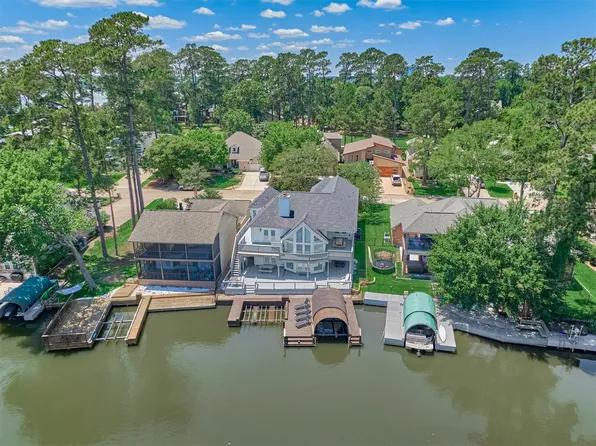
The Water Level Changed. Your Waterfront Still Needs the Right Story.
How Do You Sell a Lake Conroe Waterfront Home When the Water Level Isn’t Exactly Where Buyers Expect It to Be?
The buyer walks toward the dock.
Then stops.
They look at the waterline.
Then at the boat lift.
Then underneath the dock.
And the questions start.
Is the lake low right now?
How deep is the water here?
Does the boat still get out?
How often does the level change?
Has the dock ever been unusable?
Will the water come back up?
Could it go lower?
For a waterfront seller, these questions can feel uncomfortable because the lake is one part of the property you cannot control.
The house is yours.
The pool is yours.
The dock may be yours.
But the lake level?
That changes.
Lake Conroe’s normal conservation pool elevation is 201 feet above mean sea level, and historical SJRA information shows that conditions such as drought, evaporation, rainfall, water use, and lake-management activity can affect actual levels.
That means sellers should never build the listing around:
“The water will always be right here.”
The stronger strategy is helping buyers understand what the waterfront offers under current conditions while avoiding guarantees about the future.
Start With Current Conditions
Do not rely on:
Last summer’s photos.
Photos from when the lake was higher.
Old MLS images.
A waterfront buyer needs to see what the property looks like now.
Use current photography showing:
Dock.
Shoreline.
Waterline.
Backyard.
Overall view.
Do Not Digitally Add Water
If the waterline is temporarily farther from:
Grass.
Bulkhead.
Dock edge.
show it honestly.
Editing water into exposed shoreline creates the wrong expectation.
The buyer will discover the truth immediately during the showing.
Old Photos Can Still Have a Limited Purpose
You may have a beautiful photo showing:
Different seasonal conditions.
Fuller shoreline.
Another lake level.
That may provide historical context if clearly identified as such.
It should not replace current-condition photography.
The Dock Is Where Buyers Will Look First
Your existing Lake Conroe seller content already recognizes that serious waterfront buyers often evaluate the dock, boat lift, shoreline, and current water access closely.
So prepare the dock accordingly.
Clean:
Decking.
Roof.
Furniture.
Lift.
Storage.
Electrical area.
The water level may be outside your control.
Dock condition is not.
Never Guess Water Depth
Seller says:
“It’s probably six feet at the dock.”
Buyer owns a specific boat.
That guess can become a major problem.
If you have reliable current information:
Provide it with the date and source.
Otherwise:
Let the buyer verify current depth for their specific boating needs.
Water Depth and Lake Level Are Different Questions
A lake may be below normal pool elevation while a particular dock still has substantial usable depth.
Another property may experience more sensitivity to changing levels.
Lot-specific conditions matter.
Do not generalize from:
“The lake is down a foot.”
to:
“Every dock lost a foot of usable boating depth.”
Never Guarantee Permanent Boat Access
Avoid:
“You’ll always be able to get the boat out.”
Lake conditions change.
Boat:
Draft.
Lift location.
Dock depth.
channel conditions
also differ.
The buyer should independently confirm that the waterfront works for their vessel.
Boat Lift Position Matters
When the water changes, buyers may examine:
How the boat sits.
Lift depth.
Distance from shoreline.
Approach.
If the lift has been:
Adjusted.
Serviced.
Moved.
repaired,
keep documentation.
Do Not Move the Boat Just to Hide the Waterline
If the boat is usually stored there:
Fine.
But buyers should still be able to understand:
Dock.
Lift.
Water.
A boat can enhance the lifestyle imagery.
It should not conceal useful due-diligence information.
Aerial Photography Can Be Extremely Helpful
Drone imagery can show:
Home.
Dock.
Shoreline.
Cove or open-water setting.
Current water relationship.
This is especially useful when the shoreline looks different from ground level.
But Do Not Use Aerial Photos From Years Ago as Current Proof
Lake and shoreline conditions can vary.
Use present-day images for present-day marketing.
Low Water Can Reveal Shoreline Condition
Depending on the property and current conditions, a lower waterline may expose more of:
Bulkhead.
Shoreline.
Soil.
Riprap.
Dock supports.
Do not panic.
Use the opportunity to inspect what buyers will see.
Clean Exposed Shoreline Where Appropriate
Remove seller-owned:
Trash.
Loose debris.
Old ropes.
Discarded materials.
But do not disturb:
Protected areas.
Community property.
Areas outside your ownership.
Buyers May Notice Erosion More Easily
If current conditions reveal:
Soil loss.
Bulkhead concerns.
Shoreline movement.
do not dismiss it as:
“Just because the lake is low.”
If there is a meaningful property concern, professional evaluation may be appropriate.
Document Bulkhead or Shoreline Repairs
If work has been completed:
Year.
Contractor.
Scope.
Warranty where applicable.
A changing waterline can make shoreline infrastructure more visible, so documentation can reduce uncertainty.
Do Not Promise the Shoreline Will Look the Same Later
Lake levels can move.
Vegetation can change.
Weather changes.
Waterfront marketing should describe:
Current physical setting.
Not permanent appearance.
Buyers May Ask Why the Lake Is Lower
You do not need to become Lake Conroe’s hydrologist.
SJRA publishes current Lake Conroe conditions and identifies the conservation pool level as 201 feet mean sea level. Buyers who want current operational information can review the authoritative source rather than relying on seller speculation.
Do Not Blame One Cause Without Verification
Avoid:
“It’s all because of drought.”
or:
“They intentionally lowered the lake.”
Actual conditions can involve multiple factors.
Use current official information when specifics matter.
Historical Low Levels Are Not Future Predictions
Lake Conroe has experienced significant historical fluctuations. For example, SJRA documented an unusually low level during the 2011 drought.
That history shows levels can change.
It does not tell a buyer exactly what will happen next year.
Do Not Use Historical Extremes to Scare Buyers Either
One extraordinary historical event should not be presented as:
Normal annual condition.
Give context.
Marketing Should Still Lead With the Lifestyle
Current lower water does not mean the entire listing becomes:
Water-level analysis.
Show:
Views.
Outdoor living.
Dock.
Pool.
Kitchen-to-lake relationship.
Sunrise or sunset.
The buyer is still purchasing a waterfront home.
Keep the House Connected to the Water
Show the view from:
Kitchen.
Living room.
Primary bedroom.
Patio.
Even if the shoreline position changes slightly, the visual connection to the lake may remain a powerful permanent feature.
The View May Be Less Sensitive Than Dock Depth
A buyer who primarily values:
Open water.
Sunset.
Privacy.
may react differently from someone buying specifically for:
A large boat.
These are different buyer priorities.
Your marketing should show both:
Visual lifestyle.
Practical water access.
without promising either universally.
Do Not Assume Every Waterfront Buyer Owns a Boat
Some buyers care most about:
View.
Outdoor environment.
Birds.
Sunsets.
Privacy.
The dock may be secondary.
Broad marketing helps.
But Boating Buyers Need Better Information
For them, prepare:
Dock details.
Lift specifications.
Shoreline records.
Current access information.
Service history.
Give them facts.
Listing Copy Should Avoid Permanent Depth Claims
Weak:
“Guaranteed deep-water access.”
Better:
“Private dock and boat lift provide direct Lake Conroe access; buyers should verify current water depth and suitability for their specific vessel.”
when appropriate.
Be Careful With “Deep Water”
Use that phrase only if you have a reliable basis for it.
Even then, water levels fluctuate.
Date any relevant depth information.
Pricing Should Not Be Based on One Day’s Waterline Alone
Waterfront value involves:
Home.
Lot.
Water position.
View.
Dock.
Shoreline.
Condition.
Current competition.
A temporary or changing lake level may affect buyer perception, but do not react emotionally to one snapshot.
Compare Similar Waterfront Positions
A cove may respond differently visually from:
Open water.
Channel.
Other shoreline.
Your recent Lake Conroe content already emphasizes that waterfront type itself can create different buyer experiences.
Use genuinely comparable properties.
Buyer Feedback Can Tell You What Matters
If buyers repeatedly say:
“We are worried our boat will not work here,”
that is different from:
“We still love the view but want more information.”
One may require:
Better documentation.
The other may simply be buyer fit.
Do Not Argue With Boat Requirements
If a buyer needs a specific:
Draft.
Lift.
Clearance.
and your waterfront does not fit:
They may not be your buyer.
Do not overpromise to save the deal.
Give Buyers Time at the Dock
Let them:
Look.
Measure.
Ask questions.
The more serious they become, the more likely they are to inspect the waterfront carefully.
That is healthy due diligence.
Use the “Current vs. Permanent” Test
Current
Waterline.
Lake level.
Weather.
More Permanent
Lot.
View orientation.
Dock location.
Waterfront type.
Home-to-lake relationship.
Build value around both, but do not confuse them.
Use the “Could We Prove This?” Test
Water depth?
Boat-lift capacity?
Normal pool elevation?
Dock dimensions?
If you cannot prove the number:
Do not market it as fact.
Use the “What Will Buyers See Today?” Test
Current photos should match the showing.
No surprises.
Lake Conroe Changing-Water-Level Seller Scorecard
Before listing, evaluate:
Current Photos
Do they show today's conditions?
Dock
Clean and maintained?
Boat Lift
Specifications documented?
Water Depth
Any factual current information available?
Shoreline
Condition visible and understood?
Bulkhead
Repairs or warranties documented?
Aerial Photos
Current rather than outdated?
Boat Access
No unsupported guarantees?
Official Information
Buyers directed to SJRA when current lake conditions matter?
Marketing
Lifestyle still prominent?
Pricing
Based on complete waterfront value rather than one temporary condition?
Final Thoughts
Lake Conroe is a reservoir, not a swimming pool with a permanently fixed waterline.
Its normal conservation pool elevation is 201 feet above mean sea level, while actual levels can vary over time.
Waterfront sellers should expect buyers to notice those changes.
That is not something to hide.
And it is not something the seller needs to predict.
Instead:
Use current photography.
Keep the dock immaculate.
Document the lift.
Understand shoreline condition.
Avoid guessing at depth.
Date any water-related measurements.
Use official SJRA information when buyers want current lake conditions.
And never promise what the water will look like next summer.
Because the strongest Lake Conroe listing does not tell buyers:
“The lake will always be exactly like this.”
It tells them:
“This is what the property offers today, this is how the waterfront is configured, and here is the information you need to decide whether it works for the way you want to use the lake.”
That is a much stronger foundation for buyer confidence.
Frequently Asked Questions
What is Lake Conroe’s normal pool elevation?
SJRA identifies Lake Conroe's normal conservation pool elevation as 201 feet above mean sea level. Actual lake levels can fluctuate.
Should I advertise the water depth at my dock?
Only when you have reliable, current information. Include the date or context, and buyers with specific boat requirements should independently verify suitability.
Can I promise buyers they will always be able to use their boat?
No. Lake levels, water depth, vessel requirements, and other conditions can change. Avoid future boating-access guarantees.
Should I use older photos showing higher water?
Current-condition photos should be the primary marketing images. Historical photos may provide context only when clearly identified as historical.
Should I digitally improve the shoreline or water level in photos?
No. Marketing should accurately represent the property's current physical condition.
Does a lower lake level automatically reduce my home’s value?
Not automatically. Waterfront value depends on the complete property, including view, lot, dock, shoreline, home condition, water position, and current buyer demand.
Where can buyers check current Lake Conroe conditions?
The San Jacinto River Authority publishes current Lake Conroe conditions and lake-level information.
Should I have the shoreline inspected before selling?
If there are visible concerns involving erosion, bulkhead condition, dock supports, or other waterfront infrastructure, appropriate professional evaluation may help clarify the current condition.
Is a cove more affected by changing lake levels than open water?
Property-specific depth and shoreline conditions vary. Avoid making broad assumptions based only on whether a home sits on open water or in a cove.
What's the biggest takeaway?
When selling a Lake Conroe waterfront home during changing water conditions, market what you can verify—not what you hope the lake will do later. Use current photos, document the dock and shoreline, avoid permanent depth promises, and direct buyers to authoritative current lake information when they need it.