Selling Near Lake Conroe? Be Ready for the Flood Questions.
How Should Lake Conroe Sellers Handle Buyer Questions About Flooding Without Scaring Them—or Making Promises They Can’t Keep?
The buyer loves the property.
The lake view is exactly what they wanted.
The backyard works.
The dock is beautiful.
Then comes the question almost every waterfront or lake-area seller should be prepared to hear:
“Has this home ever flooded?”
Then:
What flood zone is it in?
Do we need flood insurance?
How high did the water get during previous storms?
Has water ever reached the garage?
What about the street?
Does the backyard drain well?
What does insurance cost?
Is there an elevation certificate?
Should we be worried about the lake level?
Those questions can make sellers uncomfortable.
Especially when the answer is:
“We’ve lived here for years and never had a problem.”
That personal experience may be useful.
But it is not the same as a guarantee about what can happen tomorrow.
The strongest Lake Conroe seller strategy is not to dismiss flood questions.
And it is not to dramatize them.
It is to provide accurate historical information, organized property records, and enough clarity for buyers to conduct their own due diligence.
Buyers Asking About Flooding Are Not Necessarily Looking for a Reason to Leave
They may simply be doing what serious buyers should do.
A waterfront or lake-area purchase involves more than:
View.
Dock.
Pool.
The buyer also wants to understand:
Property history.
Insurance.
Drainage.
Elevation.
Potential ownership risk.
Those are legitimate questions.
Treating them calmly can actually strengthen confidence.
Start With the Property’s Actual History
Before listing, know what you are prepared to disclose about:
Flooding.
Water intrusion.
Storm-related damage.
Drainage problems.
Prior repairs.
Insurance claims where applicable.
Do not rely on:
“I’m pretty sure nothing happened before we owned it.”
If documents exist, review them.
Your Ownership History Is Only Part of the Property History
You may have owned the home for five years.
The house may be twenty years old.
If you have information regarding prior events, it may matter.
Do not intentionally ignore known historical information simply because it happened before your ownership.
Applicable seller-disclosure requirements should guide what must be provided.
Follow the Required Seller Disclosures Carefully
Flood-related disclosure requirements can be technical and may change.
Work with your real estate professional and qualified legal professionals as appropriate.
The goal is not:
Say as little as possible.
The goal is:
Provide what is required accurately and completely.
Never Say “This House Will Never Flood”
Even if:
It has never flooded.
The street has never flooded during your ownership.
Water has never approached the home.
You cannot guarantee future:
Weather.
Rainfall.
Lake conditions.
Infrastructure.
Storm behavior.
Use historical facts instead.
“Never Flooded” Also Needs Context
If you are going to make a historical statement, make sure it is supportable.
There is a difference between:
“Seller is not aware of prior flooding.”
and:
“This property has absolutely never flooded.”
The second is a much broader claim.
Use language consistent with your actual knowledge and professional guidance.
A Flood Zone Is Not a Prediction of Exactly What Will Happen to One House
Buyers may look at a map and immediately assume:
Flood zone means flood.
Or:
Outside a higher-risk designation means no flood possibility.
Neither interpretation is that simple.
Flood maps are tools used to evaluate risk.
Property-specific conditions still matter.
Encourage buyers to consult authoritative sources and insurance professionals.
Do Not Become the Buyer’s Flood Expert
You may know the property well.
You are not necessarily:
Engineer.
Surveyor.
Hydrologist.
Insurance professional.
When technical questions arise, provide:
Records.
Historical experience.
Authoritative resources.
Then let qualified professionals evaluate risk.
Know Whether You Have an Elevation Certificate
Some properties may have an elevation certificate or similar records.
If one exists, locate it before listing.
Buyers or insurance professionals may find it useful.
Do not wait until the insurance quote is holding up the transaction.
Do Not Guess at the Home’s Elevation
Seller says:
“We’re definitely ten feet above the lake.”
Based on what?
Eyeballing the slope is not reliable.
Use professional records where available.
The Survey May Provide Helpful Context
An existing survey may help buyers understand:
Property boundaries.
Improvements.
Easements.
Shoreline relationship.
Depending on the document, it may contain other relevant information.
But a standard survey is not automatically the same as an elevation certificate or flood study.
Keep the distinction clear.
Flood Maps Can Change Over Time
This is why sellers should not rely on a map saved years ago.
Buyers should review current authoritative information for the property.
If your marketing mentions a flood-zone designation, verify that it is current before publishing it.
Do Not Use “Not in a Flood Zone” Casually
This phrase is often too broad.
Different flood-risk designations exist, and flood risk is not limited only to properties in the most recognized higher-risk areas.
Better to direct buyers to the current official mapping and property-specific research.
Waterfront Does Not Automatically Mean the Home Has Flooded
A Lake Conroe property can be directly on the water and have no known history of water entering the structure.
Another property farther from the shoreline may have experienced drainage issues.
The relationship is property-specific.
That is why assumptions are dangerous.
Non-Waterfront Does Not Mean No Flood Questions
A buyer may investigate:
Creek proximity.
Drainage.
Street flooding.
Neighborhood detention.
Low spots.
Past heavy-rain events.
Even homes away from the shoreline can receive flood-related due diligence.
Street Flooding and House Flooding Are Different
Maybe during an extreme rain event:
Street held water.
But water never entered the home.
That distinction matters.
If you have factual information, describe the event accurately.
Do not turn:
“Water reached the curb.”
into:
“The neighborhood flooded.”
or vice versa.
Precision matters.
Garage Water and Living-Space Water Are Different Too
Buyer asks:
“Has the property flooded?”
Maybe water once entered:
Detached garage.
Patio.
Yard.
Storage building.
That is different from water entering the living area—but it may still be relevant.
Use accurate property-specific disclosure.
Drainage Problems Are Not Always Flood Events
The backyard may hold water for several hours after:
Heavy rain.
Irrigation.
Poor drainage.
That does not necessarily mean the home has flooded.
But it can still matter to buyers.
Don't confuse:
Drainage.
Flooding.
Water intrusion.
Use accurate terminology.
Buyers Will Walk the Yard Looking for Clues
They may notice:
Low areas.
French drains.
Catch basins.
Swales.
Retaining walls.
Raised equipment.
Soil erosion.
They may ask why those features exist.
Know the story.
French Drains Can Be Positive—If You Know Why They Were Installed
Maybe the seller installed drainage to:
Improve backyard runoff.
Protect landscaping.
Resolve standing water.
That's useful information.
If documentation exists, keep it.
Do not automatically hide drainage improvements as though they imply something terrible.
Completed Drainage Work Can Show Responsible Ownership
Buyer sees:
Professional drainage system.
Seller provides:
Installation date.
Contractor.
Scope.
Now the feature can communicate:
A condition was identified and addressed.
That is stronger than uncertainty.
But Don’t Call the Drainage “Guaranteed”
No drainage system can guarantee what happens during every possible weather event.
Describe:
What was installed.
Why.
How it has performed historically during your ownership.
Avoid absolute future claims.
Gutters and Downspouts Matter
Simple drainage around the house starts with:
Roof water.
Gutters.
Downspouts.
Extensions.
Discharge points.
Before listing, address obvious problems such as:
Clogged gutters.
Disconnected downspouts.
Water dumping at the foundation.
These maintenance issues can make buyers unnecessarily nervous.
Clean Gutters Before Photography and Inspection
Especially on mature-tree Lake Conroe-area properties.
Leaves can quickly clog systems.
Clean drainage is both:
Maintenance.
Presentation.
Lot Grading Can Become an Inspection Topic
Buyers or inspectors may note areas where the ground appears to slope toward the structure.
Do not immediately argue:
“It has always been like that.”
If a significant concern arises, an appropriate professional can evaluate it.
Landscaping Can Accidentally Affect Drainage
Years of:
Mulch.
Beds.
Soil additions.
Hardscape.
may alter water flow.
Before listing, make sure landscaping is not visibly:
Blocking drainage paths.
Holding water against the structure.
Creating obvious runoff issues.
Pools Add Another Water-Management Question
A waterfront home with a pool has:
Lake.
Rainfall.
Pool overflow.
Deck drainage.
Backwash or equipment considerations.
Buyers may want to understand how the backyard handles heavy rain.
Keep drains:
Clear.
Visible.
Functional.
Pool Overflow During Heavy Rain Does Not Necessarily Mean Property Flooding
Again, terminology matters.
If the pool occasionally fills high during storms, that is different from structural flooding.
But if the pool repeatedly overflows toward the house, investigate the drainage pattern.
Bulkheads and Shoreline Structures May Affect Buyer Confidence
If waterfront, buyers may inspect:
Bulkhead.
Seawall.
Riprap.
Shoreline stabilization.
These structures can influence how the property manages the relationship between land and water.
Documentation matters.
Shoreline Erosion Should Not Be Ignored
Buyer sees:
Missing soil.
Exposed roots.
Settlement.
Gap near bulkhead.
That can create concern quickly.
If significant erosion exists, have it evaluated before listing where appropriate.
Erosion Repair Should Be Documented
If completed:
When?
By whom?
What was repaired?
Any warranty?
Keep information organized.
Waterfront buyers often appreciate knowing how the shoreline has been maintained.
Lake Levels and Flood Risk Are Related Topics—but Not Identical
Buyers may ask:
“How high does Lake Conroe get?”
The answer may involve:
Lake management.
Weather.
Rainfall.
Operational decisions.
Historical conditions.
Do not casually predict future lake levels.
Use current authoritative information when the question is important.
Historical Storm Events Can Dominate Buyer Thinking
A relocating buyer may have heard about:
Harvey.
Other Texas flooding.
Major storms.
They may not understand exactly which areas or properties were affected.
Do not dismiss their concern.
Provide property-specific facts.
Avoid Saying “Harvey Didn’t Affect This Area” Unless You Can Support It
Large storms can affect different streets and properties differently.
Better:
“According to the seller’s disclosure and seller’s knowledge, the property did/did not experience X during that event.”
Use exact facts rather than broad regional claims.
Prior Water Damage Needs Documentation
If the property had:
Flooding.
Roof leak.
Plumbing leak.
Storm intrusion.
and repairs were completed, organize available:
Remediation records.
Contractor invoices.
Repair scope.
Insurance information where appropriate.
Inspection reports where available.
The buyer needs to distinguish:
Past event.
Current condition.
Flood Damage and Plumbing Damage Are Different
A buyer sees a repair and asks:
“Was this from flooding?”
If it was actually:
Burst pipe.
Water heater.
Roof leak.
say so accurately.
Do not allow vague language to create a larger concern.
Mold Questions May Follow Water-History Questions
If past water intrusion led to professional remediation or testing, documentation may become important.
Do not make casual health or environmental assurances.
When specialized environmental questions arise, buyers may need qualified professionals.
Never Say “There Is No Mold” Without Appropriate Basis
You may not see any.
That is not the same as a professional determination.
Stick to:
Known history.
Repairs.
Testing where applicable.
Disclosure.
Insurance Is Often the Next Buyer Question
After flooding:
“What does insurance cost?”
The seller may know their current premium.
But that does not tell the buyer what they will pay.
Insurance depends on:
Carrier.
Coverage.
Deductible.
Property characteristics.
Claims.
Buyer-specific underwriting factors.
Current market conditions.
Your Existing Policy Is Not a Quote for the Buyer
If appropriate, you can provide historical information.
But make clear:
Buyer should obtain their own quote.
Do not promise:
Same carrier.
Same premium.
Same coverage.
Flood Insurance and Homeowners Insurance Are Different
Buyers sometimes assume one automatically covers everything.
Do not advise them on policy coverage beyond your expertise.
Encourage them to speak with qualified insurance professionals about:
Homeowners coverage.
Flood coverage.
Waterfront structures.
Contents.
Other risks.
Flood Insurance May Matter Even When a Lender Does Not Require It
A lender's requirement and a buyer's personal risk decision are not necessarily the same.
Do not tell a buyer:
“You don’t need flood insurance.”
That is their decision with:
Lender.
Insurance professional.
Risk adviser.
Lender Requirements Can Affect the Transaction
Depending on:
Property location.
Current flood designation.
Loan.
the lender may require certain insurance.
If this becomes relevant, buyers should investigate early.
A last-minute insurance requirement can affect:
Budget.
Closing.
Financing.
Encourage Early Insurance Quotes
This can actually help sellers.
The earlier a serious buyer understands:
Coverage availability.
Premium.
Deductibles.
the less likely a surprise will arise late in the transaction.
Provide accurate property details promptly.
Roof Age Still Matters to Waterfront Insurance
A lake location may get attention.
But insurers may also evaluate:
Roof.
Construction.
Age.
Other physical characteristics.
Make sure buyers have accurate:
Roof year.
Replacement documents.
Major improvement information.
Waterfront Structures May Need Separate Consideration
Dock.
Boat lift.
Bulkhead.
Detached structures.
The buyer should ask how their intended insurance policy treats them.
Do not assume every waterfront improvement is automatically included.
A Seller’s Dock Policy Experience May Not Transfer
Your insurance may cover something.
The buyer’s may not cover it the same way.
This is another reason to provide feature information without making coverage promises.
Prior Insurance Claims May Matter
If applicable disclosure or buyer due diligence raises claims history, handle it accurately.
Do not withhold known material information.
The buyer's insurance professional may also obtain separate underwriting information.
Seller Claims History Is Not Necessarily Buyer Pricing
Even when a prior claim exists, a buyer's premium depends on many factors.
Do not speculate:
“That claim will make insurance expensive.”
or:
“It won't matter.”
Let the insurer decide.
Waterfront Buyers May Pay More Attention to Deductibles
A low annual premium with a very high deductible tells a different story from another policy structure.
This is why seller premium alone is incomplete information.
Do not market:
“Insurance is cheap.”
Property Improvements Can Help Buyers Obtain Better Information
Have accurate dates for:
Roof.
Windows.
HVAC.
Electrical improvements.
Plumbing.
Shoreline.
Dock.
These details can help insurance professionals evaluate the property.
Storm Shutters or Protective Features Should Be Described Accurately
If present:
Permanent shutters.
Impact-rated windows.
Other protective systems.
Know what they actually are.
Do not call regular windows:
“Hurricane windows.”
without verified specifications.
Generators Can Be Valuable After Severe Weather
A whole-home or partial generator may appeal to lake-area buyers.
If present, document:
Installation year.
Fuel.
Capacity.
Service.
Transferable warranty if verified.
But do not market it as:
“Never lose power.”
Outage and system conditions vary.
Raised Mechanical Equipment Can Be Worth Documenting
Some properties may have:
HVAC equipment.
Pool equipment.
Electrical components.
positioned differently because of the lot or past improvements.
Explain factual design where appropriate.
Do not claim it eliminates all water risk.
Sellers Should Photograph the Property Honestly
Do not intentionally crop out:
Drainage channels.
Retaining walls.
Shoreline structures.
because you think they will raise questions.
They are part of the property.
Professional photography should be attractive and accurate.
But Don’t Lead With Flood Infrastructure Either
The listing should still sell:
Home.
Water.
Lifestyle.
The goal is balanced information.
Not making flood risk the headline unless the property circumstances genuinely require it.
Avoid Storm Photos in Normal Marketing
Unless a historical image serves a legitimate disclosure or documentation purpose, dramatic high-water or storm images are generally not the lifestyle story you're trying to tell.
Keep such records available where relevant.
Use normal current-condition photography for marketing.
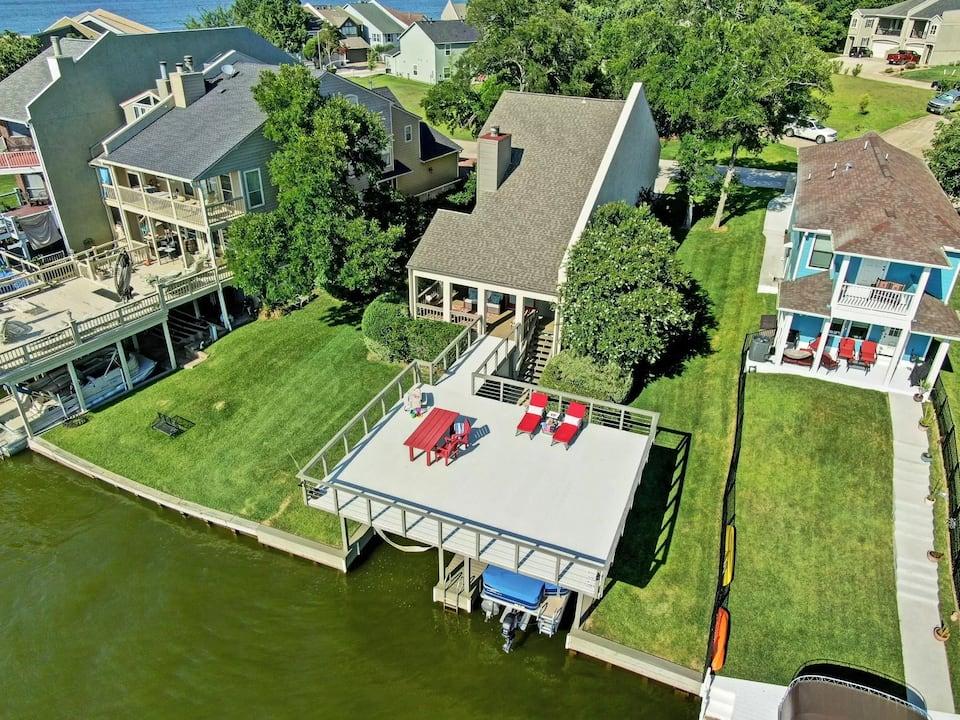
Drone Photography Can Reveal Elevation Relationships
Aerial images can sometimes help buyers understand:
Home.
Water.
Shoreline.
Lot slope.
Street.
But they are not substitutes for:
Survey.
Elevation certificate.
Flood map.
Do not use drone perspective to make technical elevation claims.
A Property Sitting Visually Higher Does Not Equal “No Flood Risk”
This is an easy assumption.
The home appears elevated above the shoreline.
Still:
Do not guarantee.
Use records.
Raised Homes Need Clear Documentation
If the home has:
Raised foundation.
Elevated first floor.
Other flood-related design,
buyers may ask why.
Provide:
Construction information.
Elevation records where available.
Do not guess about design intent.
The Garage May Sit Lower Than the Living Area
This can be important.
The property may have:
Garage at one elevation.
Living space higher.
Buyers need to understand which part of the structure any historical water event affected.
Precise information reduces confusion.
Storage Areas Below Elevated Living Space Need Explanation
If applicable, buyers may need to understand:
What the space is designed for.
What finishes exist.
What insurance may treat differently.
Use professional guidance.
Do not market lower-level space incorrectly.
Finished Space Should Be Represented Accurately
Do not call areas:
Bedroom.
Living area.
Finished square footage.
unless they appropriately qualify under applicable standards and listing rules.
This matters especially when elevation and flood considerations affect construction.
Flood Risk Can Influence Pricing Perception
Two Lake Conroe homes may have:
Similar size.
Similar waterfront.
Similar condition.
But buyers may perceive risk differently based on:
Elevation.
History.
Insurance.
Drainage.
That can affect willingness to pay.
Historical Flooding Does Not Automatically Make a Property Unsellable
A property may have experienced a prior event and been:
Professionally remediated.
Repaired.
Improved.
Many buyers will evaluate:
What happened.
How severe.
What was done.
What current conditions show.
Transparency is key.
But Pricing Cannot Ignore Buyer Risk Perception
Seller may say:
“Everything was repaired, so it shouldn’t matter.”
Some buyers may still factor the history into their decision.
That is market reality.
Your pricing strategy should consider:
Comparable sales.
Current competition.
Property history.
Buyer feedback.
Compare Properties With Similar Risk Characteristics When Possible
If your property is waterfront, compare:
Waterfront.
Similar elevation context.
Similar history where known.
Similar shoreline.
A non-waterfront sale may not capture all of the buyer considerations.
Do Not Assume a Flooded Comparable Is Automatically Worth Less
Maybe it was:
Fully renovated afterward.
Better waterfront.
Larger.
Different market timing.
Real estate comparisons need context.
One characteristic rarely determines the entire price.
A Non-Flooded History Can Be Useful—But Market It Carefully
If you have accurate support that the seller is not aware of water entering the structure during significant historical events, that may be useful information.
But avoid broad claims about:
Future risk.
Whole neighborhood.
All storms.
Stick to your documented property history.
Buyers May Ask Neighbors
Expect it.
They may drive the street and ask:
Did this street flood?
How high did the water get?
That is normal due diligence.
Your marketing should be accurate enough that neighborhood conversations do not reveal something fundamentally inconsistent with your disclosures.
Social Media Flood Maps Are Not Always Reliable
Buyers may arrive with:
Screenshots.
Facebook posts.
Crowdsourced maps.
Rather than arguing online data, direct them toward:
Authoritative current flood resources.
Professional insurance guidance.
Property-specific records.
Seller Should Not Fight the Internet
Buyer says:
“I saw online that this area flooded.”
Do not become defensive.
Ask:
What exactly are they concerned about?
Then respond with:
Property-specific factual information.
A Calm Answer Builds More Trust
Strong:
“Here is what we know about this property, and here are the records available.”
Weak:
“That website is wrong. This place is perfectly safe.”
The first acknowledges due diligence.
The second makes an unsupported guarantee.
Buyers May Ask About Dam Releases or Lake Management
Lake Conroe buyers sometimes have broader questions about how water levels are managed.
These issues can involve current policies and operational decisions.
Do not rely on old information.
Direct buyers to the relevant current authority when specifics matter.
Community Drainage Improvements Can Be Relevant
Maybe the neighborhood has completed:
Drainage improvements.
Ditch work.
Stormwater upgrades.
Detention work.
If verified and relevant, buyers may appreciate knowing what changed.
But do not claim:
“The problem is permanently fixed.”
Future performance cannot be guaranteed.
Municipal or County Projects Should Be Described From Official Information
Seller heard:
“They’re putting in a massive drainage project next year.”
Do not market rumors.
If an infrastructure project materially affects the property, verify it through an authoritative source.
Flood-Related Improvements Should Be Documented Like Renovations
Create a timeline if applicable.
For example:
2019 — French drainage installed.
2021 — gutters and downspouts replaced.
2022 — bulkhead repair.
2024 — grading improvements.
Use actual property records.
This can turn random improvements into a coherent ownership story.
Buyers May Ask Why the Seller Made Those Improvements
Answer truthfully.
Perhaps:
Routine upgrade.
Standing-water issue.
Post-storm improvement.
Landscape project.
The reason matters.
Do not create a story that sounds better.
Disclosure Is Not Marketing Failure
Some sellers worry:
“If we disclose that, nobody will buy it.”
Known material information should be handled according to applicable requirements regardless of marketing concerns.
The right buyer needs accurate information.
A transaction built on incomplete disclosure is not a stronger transaction.
Inspection May Reveal Water-Related Evidence
Inspectors may notice:
Staining.
Wood deterioration.
Moisture.
Foundation observations.
Drainage.
Attic issues.
If something is unexplained, buyer anxiety rises.
Investigate known concerns before listing where practical.
Old Water Stains Should Not Simply Be Painted Over
If the cause was:
Roof leak.
Plumbing.
Flood.
HVAC.
determine whether the source was resolved.
Then repair cosmetically.
Painting over unexplained damage without addressing the source can create larger concerns later.
Documentation Makes Past Problems Easier to Understand
Example:
Water stain.
Buyer asks.
Seller provides:
Plumbing invoice.
Repair date.
Drywall repair.
Now:
Known issue.
Solved issue.
Without documentation:
Mystery.
Mystery often feels expensive.
Moisture Testing May Be Appropriate in Certain Cases
If there is reason to suspect ongoing moisture, use qualified professionals.
Do not rely solely on:
Touch.
Smell.
Visual inspection.
The seller does not need to perform unnecessary testing without cause, but known concerns deserve appropriate attention.
Foundation Concerns Can Overlap With Drainage Questions
Buyer sees:
Crack.
Sloped yard.
Then assumes:
Flooding caused foundation problems.
That may not be true.
Do not diagnose.
Appropriate structural or engineering professionals can evaluate significant concerns.
Drainage Maintenance Can Help Foundation Performance
Texas properties may require attention to:
Moisture.
Drainage.
Irrigation.
But avoid giving buyers engineering conclusions.
Provide actual improvements and professional reports where available.
Insurance Affordability Can Influence Offers
Buyer loves the property.
Then receives:
Higher-than-expected quote.
They may:
Renegotiate.
Choose another property.
Change coverage.
This can happen even when the house has never flooded.
That is why early insurance due diligence is helpful.
Seller Should Not Automatically Reduce Price Because of One Insurance Quote
Quotes can vary.
Ask whether:
Multiple buyers are raising the same issue.
Comparable properties face similar costs.
The asking price already reflects waterfront characteristics.
One quote is data.
Not necessarily the whole market.
Repeated Insurance Objections Become Market Information
If several qualified buyers say:
“We love it, but carrying costs are too high,”
pay attention.
The pricing conversation may need to include:
Insurance.
Taxes.
HOA.
Waterfront maintenance.
Total ownership cost.
Waterfront Premium Has to Feel Worth the Ownership Costs
A buyer may compare:
Waterfront at $900,000.
Non-waterfront at $775,000.
The waterfront option may also carry:
Dock.
Shoreline.
Insurance.
Pool.
Higher maintenance.
Your marketing should make the lifestyle premium clear enough that the complete package still makes sense.
Do Not Hide Ownership Complexity
The right waterfront buyer understands:
Waterfront requires more due diligence.
Your job is not making it sound identical to owning an interior suburban lot.
It is making the ownership details understandable.
Full-Time Buyers May Evaluate Risk Differently
Their home is:
Primary residence.
Everyday life.
Possessions.
They may focus heavily on:
Insurance.
Access during storms.
Drainage.
Infrastructure.
Second-home buyers may focus differently.
Both still need facts.
Second-Home Buyers May Ask About Monitoring
If away frequently, they may care about:
Leak sensors.
Security.
Smart thermostats.
Water shutoff.
Generator.
Remote pool monitoring.
These existing features can be worth mentioning accurately.
Smart Water Shutoff Can Be a Useful Feature
If installed and functioning, provide:
Brand.
Installation date.
Transfer information.
Do not promise that it prevents every water-loss event.
Leak Sensors Can Add Ownership Confidence
Again:
Feature.
Not guarantee.
If the home includes a professionally integrated monitoring system, include it in the improvement sheet.
Generator Features Should Be Ready to Demonstrate
If a generator is included:
Service it.
Know maintenance history.
Ensure documentation is available.
A non-functioning generator becomes a buyer question instead of an advantage.
Use the “What Do We Know?” Test
Separate:
Known facts.
Seller experience.
Unknown future conditions.
This prevents overstatements.
Use the “Would We Be Comfortable Saying This in Writing?” Test
Seller says verbally:
“This house can’t flood.”
Would you put that guarantee in writing?
Probably not.
That is your sign to use more accurate language.
Use the “What Would an Insurance Agent Need?” Test
Have ready:
Roof year.
Square footage.
Construction information.
Pool.
Dock.
Flood information.
Major improvements.
This can help buyers obtain quotes faster.
Use the “What Will the Inspector See?” Test
Walk:
Foundation perimeter.
Yard.
Drainage.
Bulkhead.
Garage.
Attic.
Look for obvious unexplained:
Stains.
Standing water.
Erosion.
Damage.
Address known issues appropriately.
Use the “Next Major Storm” Test
Not to predict what will happen.
Ask instead:
What property systems would a buyer want to understand?
Drainage.
Generator.
Shoreline.
Roof.
Insurance.
Prepare documentation for those.
Use the “Could This Become a Contract Surprise?” Test
Unknown flood history?
Missing elevation certificate?
Unexpected insurance issue?
Undisclosed prior water event?
Solve information gaps early.
Use the “History vs. Guarantee” Test
Good:
“Seller is not aware of water entering the home during seller’s ownership.”
when accurate and appropriate.
Bad:
“This house does not flood.”
History is information.
Guarantee is prediction.
Create a Lake Conroe Flood-Readiness Seller Checklist
Before listing, organize:
Seller Disclosure
Flood and water-related questions reviewed carefully?
Property History
Known prior events understood?
Flood Information
Current authoritative mapping available for buyer research?
Elevation Certificate
Existing document located if available?
Survey
Current or existing survey organized?
Drainage
Known systems and improvements documented?
Gutters and Downspouts
Working and clean?
Yard
Standing-water or erosion issues investigated?
Shoreline
Bulkhead or seawall history documented?
Prior Repairs
Water-related work organized?
Insurance
Current information available only as historical context?
Roof
Age and documentation known?
Generator
If present, service and specifications organized?
Dock
Insurance and storm-related questions directed to appropriate professionals?
Photography
Current conditions represented accurately?
Marketing Language
No unsupported flood or insurance guarantees?
Pricing
Does the complete ownership picture remain competitive?
Once these pieces are organized, the flood conversation becomes much less intimidating.
Final Thoughts
Lake Conroe sellers should expect flood and insurance questions.
Especially when the home offers:
Direct water.
Dock.
Shoreline.
Low-lying outdoor space.
Or simply proximity to the lake.
Those questions do not automatically mean a buyer is afraid of the property.
They often mean the buyer is seriously considering it.
The mistake is responding with:
“Don’t worry about it.”
Or:
“This house will never flood.”
A stronger answer is:
“Here is what we know about the property, here is its documented history, and here is the information you can use to complete your own due diligence.”
Know the seller-disclosure history.
Locate the survey.
Find an elevation certificate if one exists.
Document drainage and shoreline improvements.
Gather repair records.
Provide insurance information only as historical context.
Encourage buyers to obtain their own current property-specific quotes.
And never turn past performance into a promise about future weather.
Because a Lake Conroe buyer does not need a seller who can predict the next storm.
They need a seller who has taken care of the property, understands its history, and can provide clear information so they can make an informed decision.
That is what builds confidence.
Frequently Asked Questions
Should I tell buyers my Lake Conroe home has never flooded?
Only make historical statements you can support and that accurately reflect your knowledge. Avoid turning past experience into a guarantee that flooding cannot occur in the future.
Does being outside a higher-risk flood-zone designation mean a property cannot flood?
No. Buyers should review current authoritative flood information and conduct property-specific due diligence rather than assuming any designation creates zero risk.
Should I provide an elevation certificate?
If an existing elevation certificate is available, it may be useful to buyers and insurance professionals. Keep it organized with other property records.
Can I tell buyers they do not need flood insurance?
No. Insurance needs and lender requirements depend on the property, buyer, financing, risk tolerance, and current insurance rules. Buyers should consult their lender and insurance professional.
Should I give buyers my current insurance premium?
It can provide historical context where appropriate, but clearly explain that another owner's premium, coverage, deductible, and carrier may differ.
What if my property flooded in the past but was fully repaired?
Follow all applicable disclosure requirements and provide accurate repair or remediation documentation where available. Prior flooding does not automatically prevent a sale, but buyers need enough information to evaluate the history.
Are drainage problems the same as flooding?
Not necessarily. Standing water, grading, drainage, water intrusion, and flooding are different conditions. Describe the actual property history accurately.
Should I fix drainage before listing?
Known drainage problems should be evaluated strategically. Smaller maintenance issues may be straightforward, while significant concerns may warrant professional assessment before the home is marketed.
Does waterfront automatically mean flood insurance will be expensive?
No. Insurance is property- and buyer-specific. Waterfront location may be one factor, but carriers evaluate many characteristics. Buyers should obtain current quotes.
What's the biggest takeaway?
When selling near Lake Conroe, do not minimize flood questions and do not make future guarantees. Give buyers accurate property history, organized drainage and shoreline records, current documentation where available, and enough information to complete their own flood and insurance due diligence with confidence.