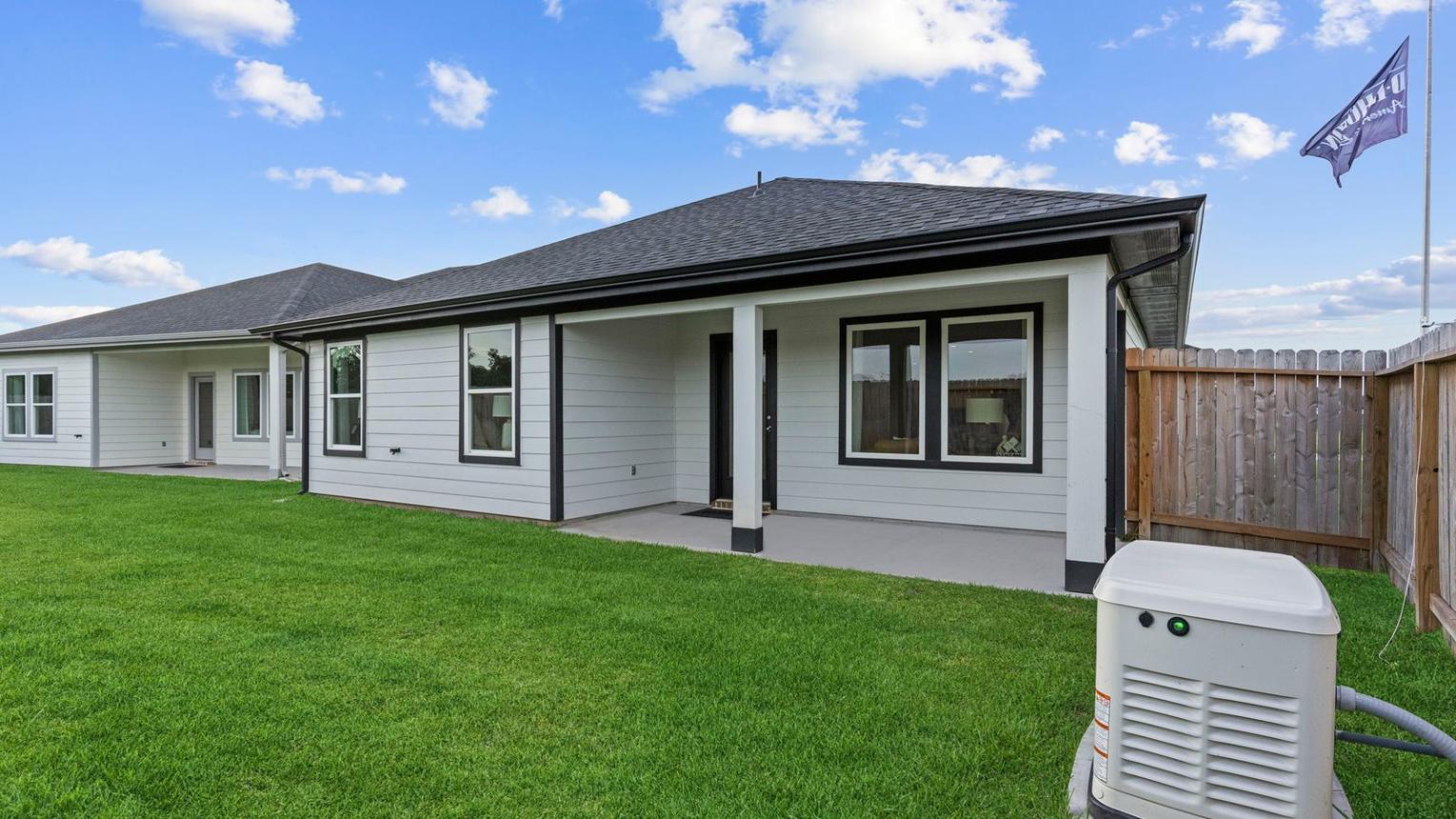
Your Generator Can Be a Major Selling Feature—If Buyers Understand What It Actually Powers
Your Lake Conroe Home Has a Generator—but Does “Whole-Home” Really Mean Everything?
The buyer sees the generator outside.
Their first reaction:
“Perfect.”
Then comes the question:
“So this powers the entire house during an outage?”
The seller answers:
“Yes. Everything.”
But does it?
Maybe.
Maybe not.
The system may power:
Most circuits.
Essential circuits.
Two HVAC systems but not three.
Kitchen appliances.
Well equipment.
Pool equipment.
Certain combinations depending on electrical load.
A standby generator can be a meaningful feature when selling a Lake Conroe home.
But sellers should market what the system is actually configured to do—not what they assume it does.
Start With the Generator Make and Model
Before listing, find:
Manufacturer.
Model number.
Rated capacity.
Installation date.
Installer.
Keep the documentation together.
Do not rely on:
“It's the big one.”
Know the Rated Output
Generator capacity may be expressed in:
Kilowatts.
Other equipment specifications.
Use the manufacturer's documented rating.
Do not estimate.
Capacity Does Not Automatically Equal Actual Coverage
Two homes can have the same generator model but different electrical configurations.
What the system can support depends on factors including:
Electrical loads.
Transfer equipment.
Load-management systems.
HVAC.
Other installed equipment.
Do not assume the model number alone proves:
“Everything can run at once.”
Be Careful With the Phrase “Whole-Home Generator”
That phrase is commonly used.
But buyers may interpret it as:
“Every electrical device in the house can operate simultaneously exactly as it does on utility power.”
That may not be accurate.
If possible, explain the installed configuration factually.
Find the Electrical Documentation
Look for:
Installation invoice.
Permit records where applicable.
Transfer-switch information.
Load-management documentation.
Electrical diagrams if provided.
Installer information.
Service records.
This helps buyers understand what they are purchasing.
The Transfer Switch Is an Important Part of the System
A standby generator typically involves equipment that manages the transition from utility power to generator power.
Buyers may ask:
“Do I have to come outside and turn it on?”
Know how your specific system operates.
Automatic Does Not Mean Instant
Do not promise:
“You'll never even know the power went out.”
There may be a transition period.
Equipment operation depends on the installed system.
Describe your actual historical experience carefully rather than guaranteeing future performance.
Test the Generator Before Listing
If it has not been professionally serviced recently:
Consider appropriate maintenance.
A generator that:
Fails to start.
Displays warning codes.
Has a dead battery.
Leaks.
immediately changes buyer perception.
Keep Service Records
Document:
Oil changes.
Battery replacement.
Scheduled maintenance.
Repairs.
Professional inspections.
A generator with a clear maintenance history feels very different from:
“It came with the house. We've never touched it.”
Know the Fuel Source
Common configurations may involve:
Natural gas.
Propane.
Do not assume.
Know exactly how your system is fueled.
Propane Systems Create Additional Questions
If the generator uses propane, buyers may ask about:
Tank size.
Tank ownership.
Tank location.
Fuel supplier.
What else uses the tank.
Know the actual property setup.
Do Not Promise Runtime
Seller says:
“It can run for two weeks.”
That depends on:
Fuel supply.
Load.
Equipment condition.
Usage.
Other factors.
Avoid guaranteed runtime claims.
Natural Gas Does Not Mean Unlimited Guaranteed Power
Even if the generator is connected to natural gas:
Do not promise that fuel service can never be interrupted.
You are selling equipment—not guaranteeing utility infrastructure.
Propane Tank Ownership Matters
A tank may be:
Owned.
Leased.
Provider-owned.
Do not assume it automatically transfers as seller-owned property.
Find the documentation.
Know What Else Uses the Fuel
Propane or natural gas may also serve:
Cooktop.
Fireplace.
Water heater.
Pool heater.
Outdoor kitchen.
Buyers need to understand the complete system.
Generator Location Matters
Buyers may notice:
Distance from living spaces.
Landscaping.
Noise.
Visibility.
Do not hide the generator behind temporary decorative materials that could interfere with required clearances or service access.
Clean Around the Unit
Remove:
Leaves.
Weeds.
Stored items.
Garden tools.
Debris.
The generator should look:
Accessible.
Maintained.
Professionally installed.
Do Not Paint the Generator to Match the House
Unless specifically permitted by the manufacturer and appropriate for the equipment, cosmetic alteration can be a bad idea.
Clean it.
Do not disguise it.
Noise Will Be a Buyer Question
Buyer:
“How loud is it?”
Do not invent a decibel number.
If manufacturer specifications are available:
Provide them.
Otherwise:
Describe your experience without guarantees.
Weekly Exercise Cycles May Surprise Buyers
Some standby generators automatically perform periodic test or exercise cycles.
If yours does:
Know the schedule.
This is useful information for the buyer.
Make Sure the Exercise Cycle Works
A system that is supposed to test itself but consistently reports:
Fault.
Low battery.
Maintenance warning.
should be evaluated before listing.
Battery Age Is Easy to Overlook
A relatively inexpensive generator battery can cause a very expensive-looking system to fail during a showing or inspection.
Check maintenance history.
Generator Warranties Need Verification
Do not simply advertise:
“10-year warranty.”
Find out:
What is covered.
When coverage began.
Whether it transfers.
Whether registration is required.
Whether service requirements apply.
Transferability Matters
If the warranty transfers:
Great.
Document the process.
If it does not:
Do not imply otherwise.
Do Not Promise It Will Power the Pool
Lake Conroe properties may have substantial outdoor electrical loads.
Pool pumps.
Spa.
Heater.
Boat lift.
Outdoor kitchen.
Dock equipment.
The generator may or may not support these.
Verify.
Waterfront Homes Can Have Additional Equipment
Some properties may include:
Boat lifts.
Well systems.
Septic equipment.
Irrigation.
Gates.
Security systems.
Elevators.
Multiple HVAC systems.
Do not assume every system is on generator power.
Labeling Can Help
If certain circuits or equipment are intentionally excluded:
Clear documentation may help buyers understand the configuration.
Load Management Can Be a Feature
Some systems manage large electrical loads automatically.
If installed:
Document the equipment.
Do not attempt to explain technical operation beyond what you know.
Let Qualified Professionals Handle Technical Questions
Buyer asks:
“Can I add another AC unit and still run everything?”
That is not a seller question.
A qualified generator/electrical professional can evaluate:
Existing capacity.
Proposed load.
System configuration.
Generator Age Still Matters
A generator can be functional and older.
Buyers may ask:
How long will it last?
Do not predict remaining lifespan.
Provide:
Installation date.
Maintenance history.
Current operation.
Replacement Cost Should Not Be Used as Guaranteed Value
Seller:
“This generator costs $20,000, so the house is worth $20,000 more.”
Not automatically.
Buyer value depends on:
System.
Property.
Market.
Demand.
Condition.
Other features.
But It Can Improve Marketability
A documented, maintained standby generator may make your home more attractive to buyers who value:
Backup power capability.
Convenience.
Existing installation.
Not having to manage a future installation project.
Photograph It—but Not Too Much
One useful exterior image may be enough.
Do not make:
Generator.
Generator label.
Generator side view.
Generator close-up.
four of the first ten listing photos.
The home remains the primary product.
Mention It Clearly in Marketing
When accurate:
“Standby generator installed in 2022; maintenance records available.”
is stronger than:
“NEVER LOSE POWER AGAIN!”
The second statement is impossible to guarantee.
Never Promise Continuous Power
Mechanical equipment can fail.
Fuel can be interrupted.
Maintenance may be required.
Future outages may involve circumstances outside the property's control.
Market the installed system.
Do not guarantee outcomes.
Outage History Can Be Shared Carefully
You can describe your personal experience:
“During previous outages, the generator operated automatically.”
if true.
Do not turn past performance into a future guarantee.
Insurance Discounts Should Not Be Promised
A buyer may ask whether the generator reduces insurance premiums.
Tell them to ask their own insurer.
Carrier rules differ.
HOA Documentation May Be Useful
If association approval was required and obtained:
Keep the records.
Do not promise future buyers can relocate or modify the system without approval.
Pre-Listing Generator Service Can Reduce Surprises
Consider professional service when:
Maintenance is overdue.
Battery age is unknown.
Warning light is present.
Generator has not run under load recently.
Records are incomplete.
Do Not DIY Technical Repairs for the Sale
Generators involve:
Electricity.
Fuel.
Mechanical systems.
Use appropriate qualified professionals for technical work.
Use the “What Does It Actually Power?” Test
Know.
Do not assume.
Use the “Can We Prove the Capacity?” Test
Find the manufacturer information.
Use the “What Happens Automatically?” Test
Understand the installed configuration.
Use the “Are We Guaranteeing an Outage Outcome?” Test
If yes:
Rewrite the claim.
Lake Conroe Generator Seller Scorecard
Before listing, evaluate:
Manufacturer
Known?
Model
Known?
Capacity
Documented?
Installation Date
Known?
Installer
Known?
Fuel Source
Verified?
Propane Tank
Ownership known if applicable?
Transfer Switch
Documented?
Load Management
Understood?
HVAC Coverage
Verified?
Pool Equipment
Coverage known?
Waterfront Equipment
Coverage known?
Battery
Maintained?
Exercise Cycle
Working?
Service
Current?
Warranty
Terms located?
Transferability
Verified?
Marketing
No unsupported promises?
Final Thoughts
A standby generator can be a strong feature when selling a Lake Conroe home.
Especially when buyers see that:
It is already installed.
Professionally maintained.
Integrated into the home's electrical system.
Ready to provide backup power according to its design.
But the best marketing is not:
“You'll never lose power.”
It is not:
“Everything runs forever.”
And it is not:
“This saves you $20,000 because that's what installation costs.”
Instead:
Document the generator.
Know its capacity.
Know the fuel source.
Understand the transfer system.
Organize maintenance records.
Verify warranties.
Determine what major equipment is actually connected.
Then describe what exists.
Because a buyer considering a Lake Conroe home may see an existing generator and think:
“That's one major project we don't have to handle after moving in.”
That is already a compelling benefit.
You do not need to turn it into a guarantee.
Frequently Asked Questions
Does a standby generator increase the value of a Lake Conroe home?
It may improve buyer appeal and contribute to marketability or value, but the original installation cost does not automatically equal an identical increase in resale value.
Can I call my generator a whole-home generator?
Use terminology consistent with the actual equipment and configuration. Avoid implying every electrical load can necessarily operate simultaneously unless that has been appropriately verified.
Should I service the generator before selling?
If regular maintenance is due or its condition is uncertain, professional service can help reduce surprises during buyer inspections.
Can I tell buyers how long the generator will run during an outage?
Avoid guaranteed runtime claims. Runtime can depend on fuel supply, electrical load, equipment condition, and other factors.
Does a natural-gas generator run indefinitely?
Do not promise unlimited operation. Generator performance and fuel availability can be affected by circumstances outside the seller's control.
Does my generator automatically power the pool and boat lift?
Not necessarily. Determine which circuits and major loads are connected to or managed by the generator system.
Should I provide maintenance records?
Yes. Installation, service, battery replacement, repair, and warranty documentation can help buyers understand the system.
Will the generator warranty transfer to the buyer?
It depends on the manufacturer's or provider's terms. Verify transfer requirements before marketing warranty coverage.
Should I include the generator in listing photos?
Yes, when it is a meaningful property feature, but it should complement rather than dominate the home's photography.
What's the biggest takeaway?
When selling a Lake Conroe home with a standby generator, market the equipment—not a guaranteed outcome. Document its capacity, fuel source, maintenance, configuration, and warranty so buyers understand exactly what backup-power system they are purchasing.