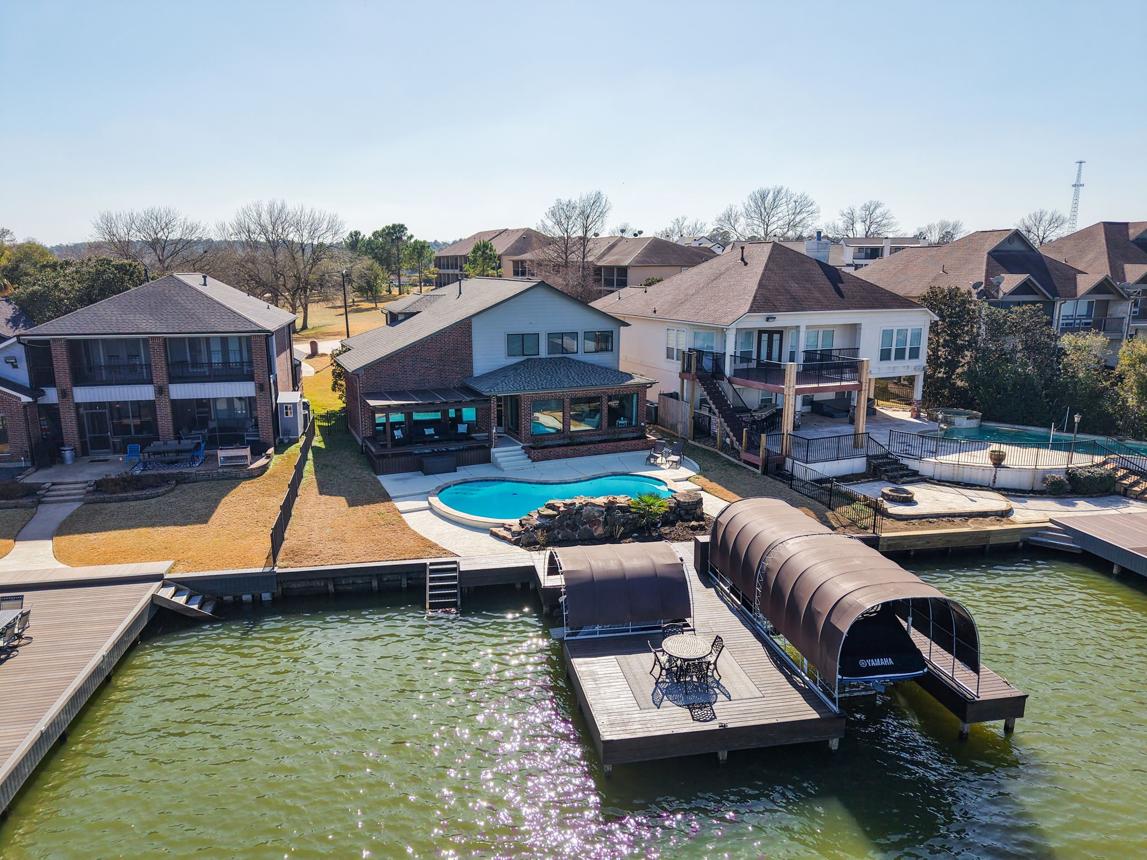
Buyers Love the Lake View—Then They Start Looking at the Dock and Bulkhead
Your Lake Conroe Home Has a Dock and Boat Lift—but Are Buyers Seeing an Amenity or a Future Expense?
The buyer walks through the house.
Beautiful kitchen.
Great primary suite.
Large windows.
Then they step outside.
Lake Conroe.
This is the moment the seller has been waiting for.
But instead of simply admiring the view, the buyer walks toward the water.
They look at the dock.
Then the boat lift.
Then the bulkhead.
And start asking:
“How old is all of this?”
That question matters.
On a waterfront property, the house is only part of what the buyer is purchasing.
They may also be evaluating:
Dock.
Bulkhead.
Boat lift.
Electrical service.
Water access.
Shoreline condition.
Outdoor improvements.
An older waterfront feature is not automatically a problem.
An unknown waterfront feature can be.
Start With a Waterfront Improvement Timeline
Before listing, identify when major improvements were:
Built.
Repaired.
Replaced.
Modified.
Look for records related to:
Dock.
Bulkhead.
Boat lift.
Decking.
Electrical.
Roof over dock.
Shoreline work.
Outdoor lighting.
Do not wait for the buyer to ask.
Find the Original Documentation
Search:
Invoices.
Contracts.
Permits or approvals where applicable.
HOA or architectural records where applicable.
Engineering information.
Equipment warranties.
Service records.
Photos from construction.
Previous seller documents.
Even partial records can help establish history.
Do Not Guess the Age
Avoid:
“The dock is probably 10 years old.”
if you do not know.
A better answer is:
“We do not know the original construction date, but the decking was replaced in 2022.”
when accurate.
The Bulkhead May Get More Attention Than the Kitchen
Sellers sometimes underestimate this.
A buyer may love:
Quartz counters.
New flooring.
Fresh paint.
But if they believe the shoreline requires major work:
That can dominate the decision.
Walk the Bulkhead Before Listing
Look for visible:
Movement.
Separation.
Deterioration.
Washout.
Erosion.
Drainage issues.
Do not diagnose structural condition yourself.
If something concerns you:
Have an appropriate professional evaluate it.
Do Not Say “The Bulkhead Is Fine” Based Only on Appearance
A seller is not necessarily qualified to determine:
Structural integrity.
Remaining useful life.
Engineering performance.
Describe known maintenance and professional findings instead.
Previous Repairs Should Be Documented
If sections were:
Reinforced.
Replaced.
Repaired.
find the paperwork.
A buyer may want to understand whether work involved:
One area.
Entire shoreline.
Cosmetic maintenance.
More substantial repair.
Shoreline Maintenance Matters
Clean up:
Debris.
Overgrown vegetation.
Loose materials.
Unnecessary equipment.
Buyers should be able to see the waterfront clearly.
Do Not Hide Problem Areas With Landscaping
Plants can enhance the shoreline.
They should not be used to intentionally conceal known deterioration.
Dock Condition Starts With the Walking Surface
Before showings, inspect visible condition of:
Deck boards.
Fasteners.
Railings.
Steps.
Transition from land to dock.
Loose or damaged walking surfaces create immediate concern.
Safety Comes Before Staging
Do not simply place furniture over:
Weak boards.
Holes.
Damaged decking.
Address known hazards appropriately.
Dock Roofs Need Attention Too
If the dock is covered, buyers may look at:
Roof condition.
Framing.
Drainage.
Visible deterioration.
Do not focus exclusively on the house roof while ignoring the structure over the water.
Boat Lifts Should Be Tested
If the property is marketed with a functioning boat lift:
Know whether it operates.
Test:
Controls.
Motor.
Cables.
Cradle or bunks where applicable.
Do not wait until the buyer pushes the button.
Know What the Lift Was Designed to Accommodate
If documentation exists:
Keep it.
Do not promise:
“It will lift any boat you buy.”
Boat:
Weight.
Hull.
Dimensions.
Lift configuration.
all matter.
Do Not Guess the Lift Capacity
If the equipment label or documentation gives a rated capacity:
Use that information accurately.
Otherwise:
Do not invent a number.
Jet Ski Lifts Need Separate Information
If present, identify:
Quantity.
Operation.
Known capacity.
Maintenance history.
These can add appeal to buyers who want immediate lake access.
Electrical Systems Around Water Deserve Respect
Waterfront electrical equipment may serve:
Lift.
Lighting.
Outlets.
Dock accessories.
Do not perform DIY electrical repairs solely to prepare for sale.
Known concerns should be evaluated by an appropriate professional.
Make Sure Buyers Can See the Electrical Setup
Remove:
Storage.
Cords.
Old equipment.
Clutter.
A clean installation feels easier to understand.
Dock Lighting Can Transform Photography
Working lighting can make:
Twilight photos.
Evening showings.
Outdoor lifestyle imagery.
much stronger.
Test everything before photography.
Do Not Let Decorative Lighting Hide Condition
Include clear daylight images too.
Buyers need to see the actual dock.
Water Depth Will Be a Buyer Question
Especially from buyers who own boats.
Seller may say:
“It's deep water.”
But what does that mean?
Water levels can change.
Boat requirements differ.
Avoid guaranteeing a specific navigable depth unless you have reliable, current information.
Lake Levels Can Change
Lake conditions may vary due to:
Weather.
Operations.
Seasonal conditions.
Other factors.
Today's waterline is not a permanent guarantee.
Boat Access Needs Property-Specific Evaluation
A buyer with a:
Pontoon.
Wake boat.
Fishing boat.
Larger vessel.
may have different requirements.
Let them evaluate whether the property works for their specific boat.
Do Not Promise Navigability
Statements such as:
“You'll always be able to get your boat out.”
are too absolute.
Describe current access and known conditions.
Waterfront Orientation Matters
Buyers may care about:
Sunrise.
Sunset.
Afternoon sun.
Prevailing view.
Wind exposure.
You can describe your experience.
Avoid guaranteeing exact conditions throughout the year.
Photography Should Begin From the Water Side Too
Traditional listings often show:
Front exterior.
Then interior.
For a strong Lake Conroe waterfront property, consider showing:
Rear elevation.
Dock.
Shoreline.
Lake view.
The reason buyers are paying a waterfront premium should be obvious.
Drone Photography Can Be Especially Valuable
Aerial images may help buyers understand:
Lot.
Shoreline.
Dock.
Cove.
Open-water relationship.
Neighboring properties.
Community setting.
But do not use drone angles that exaggerate the amount of waterfront belonging to the property.
Know the Approximate Waterfront Measurement
If marketing shoreline footage:
Use reliable information.
Do not estimate by walking the yard.
Survey or other appropriate documentation may be helpful.
Waterfront Rights and Improvements Need Accurate Language
Do not assume the buyer can automatically:
Expand the dock.
Build another lift.
Add a boathouse.
Alter the bulkhead.
Dredge.
Change shoreline structures.
Rules and approvals may apply.
Existing Improvements Do Not Guarantee Future Approval
Your dock exists.
That does not necessarily mean a buyer can enlarge it later.
Avoid promises.
HOA Rules May Matter
Depending on the property and community, waterfront improvements may be subject to association requirements.
Organize available:
Approvals.
Architectural documents.
Improvement records.
Other Authorities May Be Relevant
Waterfront work can involve requirements beyond the HOA.
When buyers ask whether they can modify the shoreline or dock:
Direct them toward the appropriate current rules and authorities rather than guessing.
Flood Questions Will Come Up
A waterfront buyer may ask:
“Has the house ever flooded?”
Answer known property history accurately and complete applicable disclosures.
Do not say:
“Water could never reach the house.”
Waterfront Does Not Automatically Mean the House Has Flooded
Likewise, a history without flooding does not guarantee:
No future flooding.
Keep the distinction clear.
Insurance Needs Buyer-Specific Research
Buyers should investigate:
Homeowners coverage.
Flood insurance where relevant.
Coverage for docks or waterfront structures.
Do not assume your policy structure or premium will transfer to them.
Maintenance Costs Should Be Historical, Not Promised
Buyer:
“How much does the dock cost to maintain?”
You can share your historical experience.
Do not promise their future costs.
Pre-Listing Waterfront Inspection Can Be Worth Considering
Especially when:
Dock is older.
Bulkhead age is uncertain.
Seller sees deterioration.
Lift has not been used recently.
Records are incomplete.
Understanding condition before buyers arrive can prevent surprises.
Do Not Repair Everything Automatically
A seller discovers:
Old decking.
Older lift.
Aging bulkhead.
Panic:
“Replace everything.”
Not necessarily.
First understand:
Condition.
Cost.
Buyer expectations.
Price point.
Comparable waterfront properties.
Potential return.
Some Repairs Improve Marketability More Than Value
Replacing a few damaged dock boards may not add thousands to the home's value.
But it can prevent the buyer from thinking:
“This entire dock is falling apart.”
Presentation matters.
Large Waterfront Projects Need More Analysis
Major bulkhead or dock replacement can be expensive.
Before undertaking a large project solely for resale:
Understand the condition professionally.
Obtain realistic estimates.
Evaluate likely market impact.
Consider timing.
Pricing Should Reflect the Complete Waterfront Package
Two similar houses may have very different waterfront value because one offers:
Updated bulkhead.
Modern dock.
Working lift.
Open-water view.
Better access.
The other may need significant work.
Do not price only from:
Interior square footage.
Original Improvement Cost Is Not Today's Value
You may have spent:
$60,000 on the dock.
$30,000 on the lift and accessories.
That does not mean buyers automatically add $90,000 to the home price.
Market evidence matters.
Use the “Can the Buyer Use It Today?” Test
Dock?
Lift?
Lighting?
Access?
Know.
Use the “Can We Document It?” Test
Age?
Repairs?
Capacity?
Approval?
Find records.
Use the “Are We Promising the Future?” Test
Water depth?
Lake level?
Shoreline?
Approval?
Avoid guarantees.
Lake Conroe Waterfront Seller Scorecard
Before listing, evaluate:
Bulkhead
Condition understood?
Bulkhead Records
Available?
Dock
Walking surface maintained?
Dock Roof
Condition reviewed?
Boat Lift
Operational?
Lift Capacity
Documented where available?
Jet Ski Lifts
Operational?
Electrical
Known concerns evaluated?
Lighting
Working?
Shoreline
Clean?
Water Access
Accurately described?
Waterfront Measurement
Verified if marketed?
Survey
Available?
HOA Records
Organized where applicable?
Flood History
Known information ready?
Insurance
No unsupported promises?
Photography
Waterfront emphasized accurately?
Pricing
Complete waterfront condition considered?
Final Thoughts
When selling a Lake Conroe waterfront home, buyers are not purchasing only:
Bedrooms.
Bathrooms.
Kitchen.
Square footage.
They are purchasing the relationship between the home and the lake.
That means the:
Dock.
Bulkhead.
Boat lift.
Shoreline.
Water access.
can matter almost as much as the house itself.
Do not wait for inspection day to learn what condition those features are in.
Before listing:
Find the records.
Walk the shoreline.
Test the lift.
Check the dock.
Clean the equipment.
Review available approvals.
Understand what you know—and what you do not.
Then market the waterfront honestly.
You do not need to promise:
“This bulkhead will last another 30 years.”
You do not need to promise:
“The water will always be this deep.”
You do not need to promise:
“You can build any dock you want.”
Instead, give buyers something far more valuable:
Clear information about the waterfront they are purchasing today.
Because the moment a buyer steps into the backyard and sees Lake Conroe, you already have their attention.
Your preparation determines whether their next thought is:
“Imagine living here.”
or:
“I wonder how much all of this is going to cost us.”
Frequently Asked Questions
Should I replace an older dock before selling my Lake Conroe home?
Not automatically. Evaluate its current condition, safety, repair cost, property price point, comparable waterfront homes, and likely buyer response before undertaking major replacement.
Does an older bulkhead reduce waterfront home value?
It can affect buyer perception and value if significant work is anticipated, but the impact depends on actual condition, documentation, shoreline characteristics, and market evidence.
Should I get the bulkhead inspected before listing?
Professional evaluation may be useful when the bulkhead is older, its history is unknown, or visible conditions raise questions.
Should the boat lift work before I list the home?
If the lift is marketed as a functioning property feature, buyers will reasonably expect it to operate as represented. Test it and address known issues appropriately.
Can I advertise the boat lift's capacity?
Use documented manufacturer or equipment information when available rather than estimating.
Can I guarantee water depth at my dock?
Avoid guaranteeing future depth or navigability. Water levels and boat requirements can vary.
Can the buyer automatically expand my dock after closing?
Do not assume so. Waterfront improvements may be subject to current HOA, governmental, lake, or other applicable requirements and approvals.
Should I use drone photography for a Lake Conroe waterfront listing?
Often yes. Aerial photography can help buyers understand the relationship between the home, shoreline, dock, water, and surrounding area.
Should I provide repair and service records for waterfront improvements?
Yes. Available records for the dock, bulkhead, boat lift, electrical systems, and other major improvements can reduce buyer uncertainty.
What's the biggest takeaway?
When selling a Lake Conroe waterfront home with an older dock, bulkhead, or boat lift, do not sell only the lake view—prepare the infrastructure that makes the waterfront usable. Accurate documentation, proper maintenance, strong photography, and realistic pricing help buyers see the waterfront as an amenity rather than an unknown future expense.