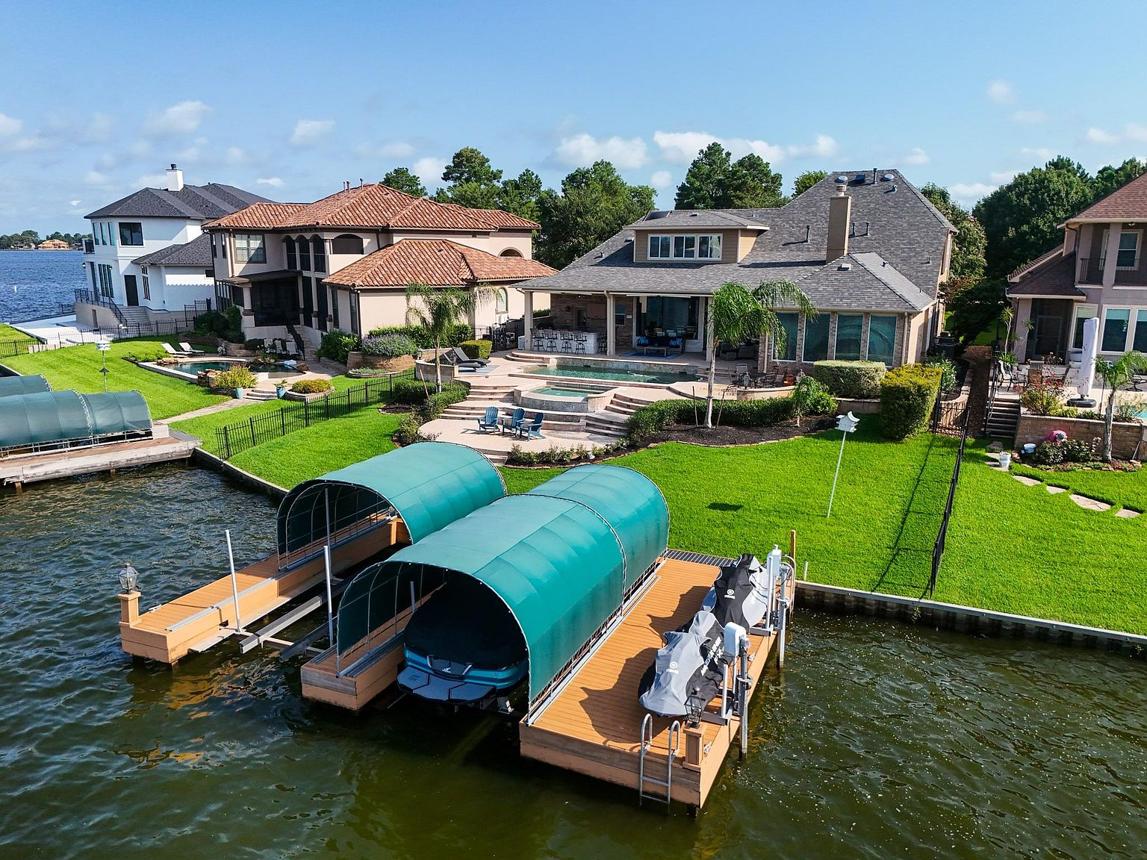
Your Dock Can Be a Major Selling Feature—But Buyers Will Want Details
How Do You Sell a Lake Conroe Home When the Dock Is One of the Biggest Reasons Buyers Want It?
The buyer walks through the house.
Beautiful kitchen.
Great living room.
Lake views.
They like everything.
Then they open the back door.
And suddenly, the house is no longer the main attraction.
They see:
The water.
The dock.
The boat slip.
Maybe a lift.
Maybe a covered seating area.
And that is the moment the property becomes more than a home.
It becomes:
“We could walk outside, get in the boat, and be on Lake Conroe whenever we want.”
That lifestyle can be incredibly compelling.
But serious buyers rarely stop with the view.
They begin asking practical questions.
How old is the dock?
Who built it?
Has it been repaired?
How much weight does the lift support?
How deep is the water?
Who maintains the shoreline?
Are permits available?
Does the dock belong entirely to the property?
Can we modify it?
What happens when lake levels change?
Those questions are not a sign that the buyer has lost interest.
They usually mean the opposite.
They are starting to imagine actually owning the property.
Your job as the seller is to make that ownership picture as clear as possible.
Start With What You Actually Know
Before listing, make an inventory.
Do you know:
Dock installation year?
Builder?
Major repairs?
Roof replacement date?
Lift manufacturer?
Lift capacity?
Electrical upgrades?
Shoreline work?
Permit history?
If the answer to some of these is:
“I think…”
start verifying.
Waterfront buyers appreciate facts.
Do Not Guess About Boat-Lift Capacity
This one matters.
You may remember:
“The installer said it handles a pretty big boat.”
That is not enough.
If possible, identify:
Manufacturer.
Model.
Rated capacity.
Any modifications.
Service records.
A buyer may own a specific vessel and needs to know whether the equipment is suitable.
The Boat May Fit the Slip but Not the Lift
These are separate questions.
A buyer may need to evaluate:
Slip width.
Slip length.
Lift capacity.
Water depth.
Overhead clearance.
Boat-beam width.
Do not casually say:
“Your boat will fit.”
Let the buyer verify their specific vessel.
Dock Dimensions Can Be Useful
If accurate measurements are available, buyers may appreciate them.
Potentially:
Overall dock size.
Slip width.
Slip length.
Covered area.
Platform dimensions.
But measure correctly.
Do not estimate from memory if the dimensions are being marketed.
Water Depth Is One of the Most Common Questions
Boating buyers care about it.
But water depth can change.
Lake levels can fluctuate.
Weather matters.
Seasonal conditions may matter.
That means sellers should avoid absolute claims such as:
“Always deep water.”
unless supported by reliable information appropriate to that statement.
Historical Depth Is Not a Guarantee
You may say:
“We’ve never had a problem getting our boat out.”
That can be useful personal experience.
But it does not guarantee:
Future lake level.
Different boat draft.
Different seasonal conditions.
Specific buyer suitability.
Let buyers investigate their own needs.
The Location of the Dock Matters
Open water?
Cove?
Channel?
Protected area?
Different waterfront settings can appeal to different buyers.
Some prioritize:
Wide views.
Others:
Calmer-feeling water.
Explain the actual setting without pretending one is universally better.
Open-Water Dock Marketing Can Be Very Emotional
A broad lake view can create immediate impact.
If that is your property, use photography that shows:
Dock.
Water.
Home.
Sky.
The buyer should understand the scale of the setting.
Cove Properties Can Offer a Different Kind of Appeal
A cove may feel:
More protected.
Quieter.
Less exposed.
The dock may still provide excellent boating access.
Do not market cove waterfront as a lesser version of open water.
Market the actual experience.
The Dock Should Look Like Part of the Property
Many listings photograph:
House.
Pool.
Water.
Then one random dock photo.
Instead, connect the story.
Show:
Patio.
Path.
Dock.
Boat lift.
Water.
Buyers need to understand how naturally the dock fits daily life.
Photograph the Walk to the Dock
If the property has:
Short path.
Landscaped walkway.
Steps.
Gentle grade.
that relationship matters.
A buyer may care how easy it is to:
Carry coolers.
Move gear.
Walk with children.
Return after boating.
The lifestyle starts before reaching the water.
Clear the Path Before Showings
Trim:
Overgrown plants.
Low branches.
Debris.
Loose obstacles.
Make sure buyers can move safely.
A premium dock should not require navigating:
Garden tools.
Hoses.
Storage bins.
The Dock Itself Should Be Clean
Before photography:
Sweep.
Remove cobwebs.
Organize ropes.
Clear old equipment.
Remove unnecessary storage.
Check lighting.
The buyer should see:
Recreation.
Not maintenance.
Remove Personal Boat Clutter
Life jackets.
Fishing gear.
Fuel containers.
Coolers.
Towels.
These may be normal.
Too much can make the dock feel cramped.
Keep just enough to communicate use.
A Few Chairs Can Help Show Lifestyle
If there is a seating area, tasteful furniture can show:
Morning coffee.
Fishing.
Sunset.
Relaxation.
But do not turn the dock into a nautical-theme display.
The lake should remain the focal point.
Covered Docks Can Have Extra Value
Roof coverage may provide:
Boat protection.
Shade.
Comfort.
But buyers may want to know:
Roof age.
Materials.
Condition.
Any storm damage.
If the covering was replaced or repaired, document it.
Dock Roof Condition Matters More Than Sellers Think
A worn dock roof can make buyers imagine:
Leaks.
Structural work.
Future expense.
Even when the house itself is beautiful.
Do not allow a neglected dock roof to undermine the waterfront story.
Structural Condition Requires Professional Judgment
Seller sees:
Some weathering.
Buyer sees:
Possible structural problem.
Do not diagnose:
Pilings.
Beams.
Fasteners.
Deck framing.
If there are significant concerns, use an appropriate marine contractor or other qualified professional.
Wood Decking Should Feel Safe
Loose boards.
Protruding screws.
Rot.
Splinters.
Uneven areas.
These can create:
Safety concern.
Maintenance concern.
Buyer negotiation.
Address obvious defects before listing where appropriate.
Composite Decking Can Be a Selling Feature
If the dock uses:
Composite.
Other low-maintenance materials.
describe it accurately.
Do not call it:
“Maintenance-free.”
No exterior product is literally free from all maintenance.
Electrical Systems Deserve Serious Attention
Dock electricity can involve:
Lighting.
Lift motors.
Outlets.
Boat charging.
Other equipment.
Water and electricity require extra care.
If there are:
Loose outlets.
Exposed wiring.
Non-functioning lights.
questionable electrical work,
use a qualified professional.
Never DIY Questionable Dock Electrical Just Before Listing
This is not the place for:
Temporary extension cords.
Quick wire repairs.
Improvised outlets.
Safety matters.
Professional documentation can also strengthen buyer confidence.
GFCI and Electrical Protection May Be Inspection Topics
A buyer's inspector or electrical specialist may evaluate waterfront electrical systems.
Sellers should not assume:
“It’s worked for years, so it’s fine.”
Existing operation and current safety evaluation are different questions.
Boat-Lift Maintenance Records Can Help
If the lift has been:
Serviced.
Motor replaced.
Cable replaced.
Gearbox repaired.
Control updated.
Keep records.
A buyer may feel much more confident knowing the equipment has been maintained.
Cables Can Become a Visible Concern
Rust.
Fraying.
Wear.
If visible, buyers may ask whether replacement is needed.
Do not dismiss it.
Have the appropriate professional evaluate the lift when needed.
Remote Controls and Switches Should Work
If the lift has:
Remote.
Wall switch.
Keyed control.
make sure they function before showings and inspection.
A non-working remote may be a small problem.
But it can make the entire lift feel questionable.
Know Whether the Lift Conveys
This sounds obvious.
But sellers may plan to:
Remove certain equipment.
Take accessories.
Keep a particular motorized item.
Clarify what conveys before listing and reflect it accurately in the transaction documents.
Dock Furniture Can Create the Same Issue
Built-in seating?
Storage?
Mounted equipment?
Television?
Fishing-cleaning station?
Understand which items are fixtures or personal property under the applicable contract.
If something is important to you, discuss it before the listing launches.
Water and Power at the Dock Can Be Useful
If the dock has:
Fresh-water connection.
Sink.
Lighting.
Electrical outlets.
describe those features accurately.
Do not claim functionality if systems are not currently operating.
A Fishing-Cleaning Station Can Appeal to Some Buyers
If professionally installed and functional, it can add practical lake-lifestyle value.
Show:
Counter.
Sink.
Storage.
Again, keep it clean.
No bait containers or old fish-cleaning equipment during photography.
Storage at the Dock Can Be Valuable
Waterfront owners accumulate:
Life jackets.
Ropes.
Fishing gear.
Boat supplies.
Cleaning equipment.
If the dock has secure storage, show it.
But declutter first.
Buyers May Ask Who Owns the Dock
The answer may seem obvious.
But waterfront configurations can involve:
Property boundaries.
Licenses.
Permits.
Association rights.
Lake-authority requirements.
Do not simply assume the dock is legally part of the property in every sense.
Have relevant documentation available.
The Shoreline and Dock Can Be Regulated Separately
A buyer may own the lot.
But waterfront improvements can still be subject to:
Lake authority.
HOA.
Deed restrictions.
Permitting.
Other regulations.
Future modifications should not be promised.
Never Say “You Can Expand the Dock” Without Verification
Buyer says:
“We’d want another slip.”
Seller says:
“Plenty of room.”
That is not approval.
Expansion may depend on:
Permits.
Shoreline rules.
Neighboring dock spacing.
Association approval.
Design.
Water access.
Direct buyers to the proper authorities.
Same for Adding a Second Lift
Physical space does not guarantee permission.
Avoid selling future possibilities as certainty.
Existing Permits Can Be Helpful
If you have:
Dock permit.
Lift approval.
HOA approval.
Plans.
Engineering documentation.
keep copies.
A buyer may appreciate knowing the improvement was properly documented.
Missing Permit Records Need Investigation
If you do not have paperwork, do not panic.
But find out whether:
Records exist.
Permit was required.
Approval can be verified.
The best time to discover this is before contract.
Shoreline Improvements Deserve Their Own File
Bulkhead.
Seawall.
Riprap.
Natural stabilization.
Retaining structures.
If significant work occurred, organize:
Invoices.
Contractor details.
Dates.
Warranty.
Engineering where applicable.
The shoreline can be as important as the dock itself.
Bulkhead Age Can Affect Buyer Perception
Buyers may worry about:
Replacement.
Movement.
Failure.
Cost.
If yours has been repaired or replaced, document it clearly.
Do Not Call the Bulkhead “Excellent” Without Professional Support
Use facts:
“Bulkhead repaired in 2023; contractor documentation available.”
That is much stronger.
Drainage Toward the Lake Can Matter
Waterfront lots may have:
Slope.
Drains.
Retaining walls.
Landscape grades.
After rain, observe:
Runoff.
Pooling.
Erosion.
If known issues exist, address them appropriately.
Erosion Can Become a Serious Buyer Question
Especially near:
Shoreline.
Bulkhead ends.
Drain outlets.
Do not simply add soil and hope the buyer will not notice.
Use appropriate professional evaluation when needed.
Lake-Level Fluctuation Should Be Discussed Carefully
Lake levels can change.
Waterfront sellers should avoid:
Guarantees.
Predictions.
Claims about permanent future depth.
Use current and historical factual information where available.
Photographs Should Reflect Current Conditions
If the current water level is different from photos taken years earlier, be careful using old images.
Do not create a false impression.
If seasonal or historical photos are used for context, make sure marketing does not misrepresent current conditions.
Do Not Digitally Add Water
Obvious but worth stating.
Enhancement should not alter:
Actual shoreline.
Water level.
Dock condition.
Neighboring structures.
Real estate photography must remain truthful.
The Dock Can Be a Strong Hero Image
If boating is central to the property, the opening image might show:
Home from water.
Dock in foreground.
Outdoor living behind.
This immediately communicates:
Private waterfront lifestyle.
But Show the House Too
A buyer does not want to discover:
Great dock.
Weak house.
The property should feel cohesive.
Balance the gallery.
Video Can Be Particularly Powerful for Dock Homes
A short property video can show:
Kitchen view.
Patio.
Walk to dock.
Lift.
Open water.
That sequence makes the lifestyle easy to understand.
Drone Video Can Show Boating Context
Where legally and professionally captured, aerial footage can show:
Cove.
Open-water relationship.
Dock.
Shoreline.
Broader setting.
But do not imply navigability beyond what is verified.
Buyers May Ask How Quickly They Can Reach Open Water
If the property is in a cove or channel, they may want to understand boating access.
You can describe the general geographic relationship.
Do not promise exact travel times unless accurately measured and still appropriate.
Marina Proximity Can Still Matter Even With a Private Dock
Buyers may care about:
Fuel.
Service.
Restaurants.
Marine repair.
Boat ramp.
If nearby facilities are relevant, provide accurate current information.
Do not imply private affiliation unless it exists.
The Dock Can Affect Insurance Questions
Buyers should ask their insurance professional about:
Home coverage.
Dock.
Boat lift.
Storm-related risk.
Other waterfront structures.
Do not promise:
“The dock is automatically covered.”
Policy structures differ.
Your Existing Insurance Does Not Predict the Buyer’s
If you have dock coverage, the buyer may still receive:
Different carrier.
Different premium.
Different limits.
Different exclusions.
Provide property details.
Let insurance professionals handle the quote.
Storm History Can Be Relevant
If the dock or shoreline experienced:
Storm damage.
Repair.
Rebuild.
Document it.
A completed repair can be easier for buyers to understand than an unexplained new section.
Do Not Hide Prior Damage
If disclosure is required, comply.
Transparency plus documentation is stronger than discovery during inspection.
Dock Inspection Can Be Separate From Home Inspection
A general home inspector may not fully evaluate:
Marine structure.
Boat lift.
Underwater components.
Bulkhead.
The buyer may hire specialized professionals.
Prepare for that.
A Pre-Listing Dock Evaluation May Make Sense
Especially if:
Dock is older.
Lift history unclear.
Visible wear.
Bulkhead concerns.
Electrical questions.
This can help sellers understand potential negotiation issues before listing.
It May Not Be Necessary for Every Property
A recently built, well-documented dock may require less pre-listing investigation.
Use property-specific judgment.
Repairs Can Become Expensive Quickly
This is why guessing is dangerous.
Buyer says:
“Dock needs $25,000 of work.”
Do not immediately:
Agree.
Refuse.
Get professional information.
The real scope may be:
Smaller.
Larger.
Different.
Marine Contractors Can Provide Better Cost Context
For significant dock or shoreline concerns, use professionals familiar with:
Waterfront structures.
Lake-specific conditions.
Permitting.
Materials.
This can improve negotiation quality.
Do Not Use a General Handyman for Structural Dock Issues
Simple cleaning?
Fine.
Structural work?
Electrical?
Lift?
Shoreline?
Use the correct expertise.
Repair Documentation Can Support Buyer Confidence
If meaningful work is completed before closing, retain:
Invoice.
Scope.
Warranty.
Permit documentation where applicable.
Photos.
This can make reinspection smoother.
Pricing Should Reflect the Complete Waterfront Package
Your dock may be:
New.
Large.
Covered.
Multiple slips.
Another waterfront comparable may have:
Tiny dock.
No lift.
That can create a meaningful difference.
But the contribution should be grounded in market evidence.
Dock Cost Does Not Equal Dock Value
You spent:
$75,000.
$150,000.
More.
That does not automatically add the same amount to resale value.
The dock was also something you used and enjoyed.
Market value depends on what current buyers pay for the complete waterfront package.
Compare Dock-to-Dock Where Possible
When reviewing waterfront comparables, note:
Dock size.
Lift.
Number of slips.
Condition.
Shoreline.
Water setting.
A waterfront comparable without a usable dock may not be equivalent to yours.
The Best Dock Cannot Fix a Weak Waterfront Position Entirely
A beautiful dock on:
Very shallow water.
Limited access.
Poor view.
may be valued differently from one on stronger boating water.
The dock and waterfront setting must be considered together.
The House Still Drives Value Too
Two identical docks.
One property:
Renovated home.
Another:
Needs major updates.
The sale prices may differ substantially.
Do not price as if the dock is the entire property.
Full-Time and Second-Home Buyers May Value the Dock Differently
A second-home buyer may prioritize:
Boat convenience.
Low-maintenance dock.
Easy weekend use.
A full-time buyer may care equally about:
Home office.
Storage.
Garage.
Commute.
The property needs a balanced story.
Storage Near the Dock Can Be a Major Advantage
If the home provides:
Garage storage.
Dock storage.
Outdoor storage.
that can make boating much easier.
Show the complete system:
Boat lives here.
Gear goes here.
Cars still fit.
That practical convenience matters.
Trailer Storage Should Not Be Promised
If the buyer wants to keep a trailer at home, check:
HOA.
Deed restrictions.
Physical fit.
Do not assume because the driveway is large.
Community Boat Ramps Can Still Add Flexibility
Even with a dock, buyers may use a ramp for:
Launching.
Removing boat.
Maintenance.
Trailer access.
If the community provides one, verify current rules and access.
Sell the “Walk Out and Go” Experience
This is the emotional heart of the listing.
No driving to marina.
No launching every weekend.
No packing the car.
For the right buyer, stepping outside and getting directly onto the water is incredibly valuable.
Show that simplicity.
But Do Not Overpromise Convenience
Boat ownership still requires:
Maintenance.
Fuel.
Weather awareness.
Dock care.
The home makes lake access easier.
It does not eliminate boating responsibilities.
Dock Lighting Can Make Evening Showings Memorable
If installed and functioning, turn on:
Path lighting.
Dock lights.
Under-roof lighting.
This can create a beautiful evening experience.
But do not leave unsafe or excessive lighting running unnecessarily.
Keep Bugs and Cobwebs Under Control
Waterfront lighting can attract insects.
Before showings:
Sweep.
Clean fixtures.
Remove webs.
Small maintenance details can change perception.
Dock Railings Should Feel Secure
If present:
Check them.
Loose railings create immediate safety concern.
Repair appropriately.
Ladders Should Be Secure
Swim ladder?
Boat ladder?
Check:
Attachment.
Condition.
Corrosion.
Do not let a broken ladder make the dock feel neglected.
Dock Boxes Should Be Organized
If they convey or are used during showings:
Clean them.
Remove private items.
Do not leave:
Chemicals.
Fuel.
Sharp tools.
loose where buyers may open storage.
Personal Watercraft Features Need Documentation Too
Jet-ski lifts.
Floating docks.
Drive-on platforms.
If they are part of the property sale, identify:
Ownership.
Condition.
Manufacturer where available.
If they are leaving, clarify.
What Conveys Should Be Decided Before Photography
If you plan to take:
Jet-ski platform.
Dock furniture.
Special lift accessories.
Do not market them as features of the property unintentionally.
Discuss exclusions early.
Buyer Offers May Specifically Reference Dock Equipment
The contract may include or exclude particular items.
Review carefully.
Do not assume all waterfront equipment is automatically treated the same way.
Appraisal Can Be More Complex With Unique Waterfront Improvements
A heavily improved dock may be hard to compare.
This does not mean it has no value.
It means the appraisal may need:
Comparable analysis.
Market support.
Property documentation.
Offer terms should consider that.
Appraiser Should Receive Facts, Not Pressure
Provide:
Dock features.
Installation dates.
Major repairs.
Waterfront facts.
But avoid:
“The dock alone is worth $100,000.”
Let the valuation professional determine market contribution.
Unique Dock Features Can Narrow the Comparable Pool
Maybe yours has:
Two lifts.
Large covered entertainment area.
Extensive lighting.
Fishing station.
This may be rare.
That can strengthen marketing.
But rarity alone does not guarantee a specific premium.
Use the “Boat Owner Arrives Friday Night” Test
Imagine the buyer arrives after work.
Can they:
Park.
Unload.
Walk directly to dock.
Get boat on water.
Store gear.
Return easily.
If yes, make that functionality clear.
Use the “No Boat Yet” Test
Would a buyer who plans to buy a boat later still understand:
Lift.
Slip.
Water access.
Maintenance?
Provide enough information that the property does not feel intimidating.
Use the “Could Another Boat Fit?” Test Carefully
Do not answer based on visual guesswork.
Provide dimensions and rated capacity where known.
Let the buyer verify.
Use the “What Breaks First?” Test
Not pessimistic.
Practical.
Which dock components are:
Older?
Recently replaced?
Approaching maintenance?
Understanding that helps you decide what documentation buyers need.
Use the “Could This Delay Closing?” Test
Potential issues include:
Unknown ownership.
Permit questions.
Lift financing.
Unresolved repairs.
Dock inspection.
Insurance.
Deal with known questions early.
Use the “Can Buyers Understand This in Five Minutes?” Test
Prepare a concise dock information sheet.
If the waterfront setup requires a twenty-minute verbal explanation, simplify the documentation.
Create a Lake Conroe Dock Seller Checklist
Before listing, verify:
Dock Ownership
What belongs with the property?
Installation
Approximate or verified year?
Builder
Known?
Dimensions
Available?
Slip
Width and length?
Boat Lift
Manufacturer, model, and rated capacity?
Lift Service
Maintenance history?
Electrical
Functional and professionally maintained?
Water
Current access and known depth information stated carefully?
Dock Roof
Age and condition?
Decking
Any obvious repair needs?
Shoreline
Bulkhead, seawall, or other structures documented?
Permits
Available where applicable?
HOA or Lake Rules
Relevant restrictions understood?
Insurance
Are buyers being directed to obtain their own property-specific information?
Repairs
Any significant known concerns evaluated?
Photography
Does the listing clearly show home, dock, and water relationship?
Pricing
Have comparable waterfront properties been evaluated for dock differences?
Once these items are organized, the dock becomes much easier to sell confidently.
Final Thoughts
For many Lake Conroe buyers, the dock is not simply another feature.
It is the gateway to the lifestyle they are buying.
Walk outside.
Lower the boat.
Head onto the water.
Come home.
Tie up.
Sit by the lake.
That convenience can be one of the strongest emotional reasons a buyer chooses your property.
But the stronger the interest becomes, the more practical the buyer's questions become.
How old is it?
What does the lift handle?
How deep is the water?
Who built it?
What was repaired?
What conveys?
What rules apply?
Those questions should not scare the seller.
They should be expected.
The best waterfront listings do not simply photograph the dock beautifully.
They make the dock understandable.
Clean it.
Maintain it.
Organize the paperwork.
Verify the lift specifications.
Document shoreline work.
Be careful with water-depth and future-modification claims.
Clarify what conveys.
And price the property based on the complete waterfront experience, not simply what the dock originally cost.
Because when the buyer understands both the lifestyle and the ownership details, the dock stops feeling like another system they have to worry about.
It starts feeling like the reason they came to Lake Conroe in the first place.
Frequently Asked Questions
Does having a private dock increase the value of a Lake Conroe home?
It can contribute meaningful value, but the amount depends on the waterfront setting, dock condition, lift, water access, shoreline, home condition, and current buyer demand. Original construction cost does not automatically equal resale value.
Should I provide boat-lift capacity to buyers?
Yes, when verified. Use manufacturer or service documentation rather than guessing, and buyers should independently confirm compatibility with their specific boat.
Can I advertise my property as deep-water waterfront?
Use that description only when you have reliable support and understand that lake levels can change. Buyers with specific boating needs should verify current depth and suitability.
Should I have my dock inspected before listing?
It can be useful when the dock is older, structural condition is uncertain, electrical issues exist, or the seller wants to reduce surprises. It is not necessary for every property.
What paperwork should I keep for the dock?
Useful records may include construction or permit documents, lift information, electrical work, repairs, shoreline or bulkhead work, warranties, and major service records.
Can buyers expand the dock after closing?
Potentially, but future modifications may depend on lake authority rules, HOA restrictions, permits, design standards, shoreline conditions, and other requirements. Sellers should not promise approval.
Does dock electrical work matter during inspection?
Yes. Waterfront electrical systems can receive significant safety attention. Use qualified professionals for repairs or evaluation.
Should my dock be one of the first listing photos?
If it is a major property differentiator, yes. Buyers should quickly understand the relationship between the home, dock, shoreline, and lake.
Does the dock automatically convey with the home?
The treatment of fixtures, equipment, and personal property depends on the specific item and contract. Clarify exclusions and included waterfront equipment with your real estate professional before listing.
What's the biggest takeaway?
When selling a Lake Conroe home with a dock, sell the boating lifestyle—but prepare the technical details before the buyer asks. Accurate information about the dock, lift, shoreline, water access, repairs, ownership, and rules can turn buyer curiosity into confidence.