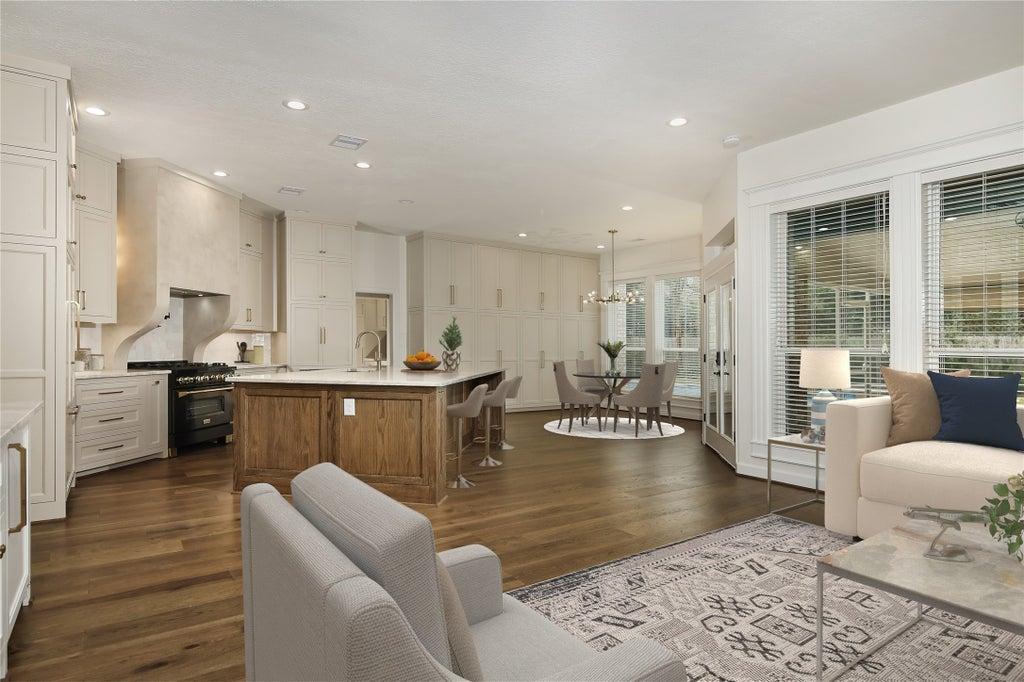
Your Remodel Looks Great. Now Make the Value Easy to Understand.
How Do You Sell a Remodeled Woodlands Home Without Assuming Buyers Will Pay Back Every Dollar You Spent?
You renovated the kitchen.
Then the primary bath.
Then the floors.
Then the lighting.
Maybe the roof.
Windows.
Pool.
Outdoor kitchen.
At some point, the house you bought years ago became almost completely different.
Now you are preparing to sell.
And it is natural to think:
“We spent a lot on this house. Buyers should recognize that.”
They probably will recognize the difference.
But there is a second part sellers need to understand:
The amount you spent and the amount a buyer will pay are not automatically the same number.
Buyers evaluate:
Style.
Condition.
Quality.
Function.
Age of improvements.
Location.
Lot.
Competition.
And whether the renovation saves them from having to do the work themselves.
Your goal is not to hand the buyer a stack of invoices and ask for reimbursement.
Your goal is to make the remodeling feel like a meaningful advantage over the other homes they can buy today.
Start With a Complete Renovation Timeline
Before marketing the home, create a simple chronological record.
For example:
2021 — roof replaced.
2022 — kitchen renovation.
2023 — primary bathroom remodeled.
2024 — flooring replaced.
2025 — pool resurfaced.
2026 — interior paint and lighting.
Use your actual information.
This tells a much stronger story than:
“Extensively updated.”
“Recently Remodeled” Is Too Vague
Recently can mean:
Six months.
Three years.
Eight years.
Give buyers dates.
If the kitchen was completed in 2019, say:
“Kitchen renovated in 2019.”
Let buyers decide how current it feels.
Separate Cosmetic Work From Major Systems
A beautiful renovation can distract from the things buyers may care about even more.
Organize improvements into categories.
Interior
Kitchen.
Bathrooms.
Flooring.
Lighting.
Paint.
Major Systems
Roof.
HVAC.
Water heaters.
Windows.
Electrical.
Plumbing.
Exterior
Paint.
Doors.
Driveway.
Landscaping.
Outdoor Living
Pool.
Patio.
Outdoor kitchen.
Drainage.
This helps buyers understand the complete ownership picture.
A New Kitchen Is Great. A New Roof May Be More Reassuring.
Buyers often respond emotionally to:
Quartz.
Cabinetry.
Lighting.
Large island.
But they may respond financially to:
Roof.
HVAC.
Windows.
Pool equipment.
A remodeled home is strongest when the cosmetic improvements and major systems support one another.
Don’t Let Cosmetic Renovations Hide Old Systems
Buyer walks into a gorgeous kitchen.
Then asks:
How old is the HVAC?
Seller:
“Original.”
Roof?
“We think about 18 years.”
Water heaters?
“Not sure.”
Now the buyer may think:
“The house is beautiful, but we’re still inheriting several major expenses.”
Know your systems.
Remodel Documentation Can Reduce Buyer Uncertainty
Gather available:
Contracts.
Invoices.
Receipts.
Warranties.
Permit records where applicable.
Architectural plans where useful.
Contractor information.
You do not necessarily need to distribute every page immediately.
But serious buyers may appreciate knowing the work was documented.
Permits Can Become a Buyer Question
Especially when the renovation involved:
Structural walls.
Electrical.
Plumbing.
Additions.
Roof.
Pool.
Major exterior structures.
Buyers may ask whether permits were required and obtained.
Do not guess.
Research the property records and keep applicable documentation available.
Never Say “No Permit Was Needed” Unless You Know
That can create unnecessary liability.
If you are uncertain, check with the relevant authority or appropriate professional.
Different work may have different requirements.
Unpermitted Work Can Create a Bigger Problem Than Dated Finishes
A buyer may accept:
Older bathroom.
They may become much more concerned about:
Unknown electrical.
Structural alteration.
Added living area with unclear approval.
Do not ignore permit questions simply because the work looks beautiful.
Additions Need Especially Clear Documentation
If the home gained:
Game room.
Sunroom.
Guest suite.
Office.
Expanded kitchen.
buyers may want to know:
When it was added.
Who did the work.
Whether permits were obtained where required.
How HVAC was handled.
How the addition affects reported square footage.
The extra space needs to be easy to understand.
Do Not Automatically Include Every Enclosed Space in Square Footage
An enclosed patio.
Converted garage.
Finished attic.
may not necessarily qualify the same way as original conditioned living area under applicable listing and appraisal standards.
Use accurate measurements and professional guidance.
Garage Conversions Can Be Polarizing
You gained:
Extra living space.
But lost:
Garage capacity.
One buyer loves the bonus room.
Another says:
“We need the garage.”
Do not assume the added room automatically increases value.
The trade-off matters.
Open-Concept Renovations Should Be Documented
If walls were removed, buyers may ask:
Was it structural?
Were beams installed?
Was engineering involved?
If you have:
Plans.
Engineer documentation.
Permit records.
keep them.
This can turn a potential concern into a strong renovation story.
Don’t Say “We Know It Was Done Right”
Unless you have the professional background and documentation to support that claim.
Better:
“The renovation was completed by ABC Contractor in 2022; supporting documentation is available.”
Facts are stronger.
Contractor Reputation Can Help—But Don’t Overstate It
If the remodeling was completed by a well-established professional, buyers may appreciate that.
Still:
Do not imply the contractor guarantees the entire home indefinitely.
Share:
Name.
Year.
Scope.
Warranty information where applicable.
DIY Work Needs Honest Presentation
Maybe you are skilled.
Maybe:
Built-ins.
Paint.
Tile.
Flooring.
were completed personally.
That does not automatically make the work poor.
But do not misrepresent DIY work as professionally contracted.
If buyers ask, answer truthfully.
Electrical and Plumbing DIY Can Get More Scrutiny
For major electrical, gas, plumbing, structural, or mechanical work, buyers may want professional evidence.
If significant DIY modifications exist, consider whether appropriate inspection or professional review before listing would reduce uncertainty.
Quality Matters More Than Trendiness
A remodel can be very current but poorly executed.
Buyers notice:
Uneven tile.
Sloppy caulk.
Cabinet doors misaligned.
Poor flooring transitions.
Loose fixtures.
Visible patchwork.
If you renovated recently, complete the punch list before listing.
Finish the Remodel Before You Market It
Seller says:
“The backsplash just needs two pieces.”
“The cabinet trim is almost done.”
“Contractor is coming back for that.”
Buyer sees:
Unfinished project.
Complete:
Touch-ups.
Hardware.
Trim.
Caulk.
Paint.
Before photography.
A Half-Finished Renovation Can Be Worse Than an Older Finished Room
A dated bathroom may be functional.
A partially renovated bathroom tells buyers:
More contractor coordination.
More unknown cost.
Finish what you started where practical.
Consistency Matters Across the Home
Kitchen:
Ultra-modern.
Living room:
Traditional.
Primary bath:
Farmhouse.
Lighting:
Industrial.
The individual choices may all be expensive.
But the house can feel disconnected.
Buyers often respond better to a renovation that feels cohesive.
You Don’t Need Every Room to Match Exactly
Cohesive does not mean identical.
It means:
Colors.
Materials.
Hardware.
Flooring.
Architectural style.
work together naturally.
If one room feels wildly different, consider whether small finishing changes could improve the transition.
Flooring Is One of the Biggest Cohesion Signals
A home with:
Wood.
Different wood.
Tile.
Different tile.
Carpet.
Luxury vinyl.
all within a few connected areas can feel pieced together.
If renovation resulted in awkward transitions, buyers may notice.
Continuous Flooring Can Make a Remodel Feel Larger
Especially across:
Kitchen.
Living.
Dining.
Hallways.
But replacing flooring solely before selling can be expensive.
Evaluate whether the current condition genuinely hurts marketability before making another major investment.
Buyers May Not Love Your Design Choices as Much as You Do
This is the uncomfortable truth.
You chose:
Bold tile.
Custom cabinets.
Special lighting.
Dramatic wallpaper.
because you loved it.
The buyer may prefer something else.
That does not make the renovation bad.
It simply means personal taste does not always translate into full resale value.
Highly Personalized Improvements Can Narrow Appeal
Examples:
Very dark cabinetry throughout.
Unusual stone.
Bright-colored tile.
Highly specialized rooms.
Buyers may think:
Beautiful work.
Not our style.
That can influence what they are willing to pay.
Neutral Does Not Mean Boring
Before selling, you may be able to soften personalized areas with:
Paint.
Simple hardware.
Décor removal.
Lighting adjustments.
You do not need to undo an entire high-quality renovation.
Keep Quality Features That Give the Home Character
The Woodlands has many established homes with architectural personality.
Do not erase:
Millwork.
Built-ins.
Quality wood.
Custom details.
simply because they are not identical to new construction.
A strong remodel can preserve character while updating function.
Renovation Should Respect the Home’s Architecture
A buyer may appreciate a remodeled traditional home more when the changes feel appropriate to:
Ceiling height.
Window style.
Room proportions.
Exterior.
Overly aggressive trend-chasing can sometimes feel disconnected from the property.
Kitchen Renovations Usually Get the Most Attention
Buyers evaluate:
Cabinet condition.
Storage.
Island.
Countertops.
Appliances.
Lighting.
Pantry.
Layout.
The kitchen should be spotless.
Clear the Counters
Even a beautiful kitchen can feel smaller with:
Appliances.
Paperwork.
Décor.
Coffee equipment.
Mail.
Keep only a few intentional items.
Let the renovation show.
Cabinet Interiors May Get Opened
Serious buyers may inspect:
Storage.
Soft-close features.
Pullouts.
Pantry.
Keep cabinets reasonably organized.
They are evaluating both:
Appearance.
Function.
Appliance Age Should Be Known
If appliances are part of the renovated kitchen, buyers may ask:
Year.
Brand.
Warranty.
Which convey.
A 2020 remodel does not mean all appliances are from 2020.
Know the specifics.
Built-In Appliances Can Affect Perceived Quality
Double ovens.
Built-in refrigerator.
Wine refrigerator.
Gas cooktop.
These can support an upscale kitchen.
But if one is non-functioning, it can quickly undermine the impression.
Test everything before listing.
Primary-Bath Renovations Need to Photograph Well
Show:
Shower.
Tub where present.
Vanities.
Storage.
Lighting.
Do not focus only on:
Tile close-ups.
Buyers need to understand the room.
Shower Glass Should Be Extremely Clean
Water spots can make an expensive renovation look older.
Professionally clean:
Glass.
Grout.
Fixtures.
Caulk.
The details matter.
New Caulk Can Transform Perception
Discolored or cracked caulk can make buyers question:
Water intrusion.
Maintenance.
Even when nothing serious exists.
Refresh where needed.
Heated Floors and Specialty Bath Features Should Be Verified
If the primary bath has:
Heated floors.
Steam shower.
Body sprays.
Smart mirrors.
Make sure they work.
Know:
How they operate.
Basic system information.
A broken luxury feature feels worse than not having it.
Lighting Upgrades Can Add a Lot of Visual Value
Well-selected fixtures can modernize an established home quickly.
But make sure:
Bulbs match reasonably.
Fixtures work.
Dimmers function.
No flickering.
The house should feel finished.
Smart-Home Features Need Transfer Planning
Remodels increasingly include:
Smart switches.
Thermostats.
Security.
Lighting.
Speakers.
Automated shades.
Before closing, know:
Which equipment conveys.
Which accounts need transfer.
Which subscriptions are separate.
Integrated Audio Can Be a Selling Feature
Built-in speakers or whole-home audio may appeal to buyers.
But outdated systems can create:
Confusion.
Wiring questions.
Technology that no longer works.
Demonstrate functionality.
Don’t Market Old Smart Technology as Cutting-Edge
A system installed ten years ago may still work.
Just describe it accurately.
Avoid:
“Latest smart-home technology.”
unless it actually is.
Window Replacement Can Be a Strong Renovation Story
If you replaced:
All windows.
Certain elevations.
Individual units.
provide the scope and year.
Do not say:
“New windows throughout”
if half remain original.
Doors Can Matter Too
Exterior doors.
Interior doors.
Hardware.
These smaller renovation choices can make a home feel consistently updated.
Make sure:
Doors close properly.
Hardware works.
Paint is touched up.
Roof, HVAC, and Remodel Timing Should Be Shown Together
Imagine this improvement story:
Kitchen — 2021.
Primary bath — 2022.
Roof — 2023.
HVAC — 2024.
Pool — 2025.
That communicates ongoing investment in both:
Beauty.
Function.
This is stronger than a renovation story focused only on finishes.
Outdoor Renovations Can Add Major Lifestyle Appeal
Covered patio.
Outdoor kitchen.
Pool.
Fireplace.
Landscape.
These can help a remodeled Woodlands home compete with newer construction.
But buyers still want:
Approvals.
Permits where applicable.
Equipment history.
Condition.
A Beautiful Outdoor Kitchen Still Needs Working Appliances
Before listing:
Test grill.
Refrigerator.
Sink.
Lighting.
Burners.
If a major component does not work, repair or disclose appropriately.
Pool Renovation Needs Specific Dates
“Pool remodeled” could mean:
Resurfaced.
New tile.
New coping.
New equipment.
Complete rebuild.
Tell buyers what actually happened.
Landscaping Renovation Is Different From Structural Renovation
If you spent substantially on:
Landscape design.
Irrigation.
Hardscape.
lighting.
buyers may appreciate the finished setting.
Still:
Do not assume the original cost adds directly to resale value.
The Lot Still Matters
An extensively remodeled home on:
Standard lot.
Golf course.
Greenbelt.
Cul-de-sac.
Busy road.
can still have different value.
Renovation does not erase permanent location characteristics.
A Remodel Cannot Move the House
This is important for pricing.
You may have the best interior in the neighborhood.
But if the property backs to:
Busy road.
Commercial area.
Less-preferred lot.
buyers still evaluate that.
Your upgrades can improve the overall package.
They cannot change the address.
Don’t Price From Renovation Cost Alone
Seller thinks:
Purchased for $700,000.
Spent $250,000.
Therefore worth at least $950,000.
That math does not determine market value.
Some renovation spending may:
Increase value.
Improve marketability.
Reduce selling time.
Provide years of personal enjoyment.
But the market still decides.
Renovation Cost Includes Personal Consumption
You did not just invest money.
You also used:
Kitchen.
Pool.
Patio.
Bathroom.
for years.
Resale is not necessarily reimbursement.
This perspective can help sellers price more rationally.
Compare Renovated Homes With Renovated Homes
When possible, look for:
Similar location.
Similar size.
Similar lot.
Similar renovation level.
A largely original home may not provide the best direct price comparison.
But Original Homes Still Matter
They show:
What buyers pay before renovation.
This can help estimate how the market responds to updated condition.
The comparison is not exact.
It provides context.
Look at the Spread Between Original and Renovated Sales
Suppose similar homes show:
Original condition around $750,000.
Renovated condition around $850,000.
That may provide market evidence for an update premium.
It does not automatically mean your $200,000 renovation adds exactly $100,000.
Each property differs.
Current Competition Can Matter Even More
Your home may be beautifully remodeled.
But if three other homes at the same price are:
Newer.
Larger.
Better lot.
buyers will compare all of them.
Remodel quality needs to fit the price.
New Construction Is Still Competition
Even in The Woodlands area, buyers may compare:
Established remodeled home.
Newer home outside the core area.
Your advantages may include:
Location.
Trees.
Lot.
Character.
Completed renovation.
The marketing should show why your package is worth choosing.
“Best of Both Worlds” Needs Substance
This phrase is overused.
If you want to communicate:
Established setting plus modern updates,
show the actual facts:
Mature tree canopy.
Renovated kitchen.
Updated systems.
Greenbelt lot.
Pool.
Make the claim tangible.
Turnkey Is Stronger When It’s True
A remodeled home can appeal to buyers who do not want:
Contractors.
Design decisions.
Construction delays.
Dust.
Permits.
If the home is truly ready, that convenience is valuable.
Do Not Call It Turnkey When Projects Are Still Obvious
If the buyer immediately needs:
Roof.
HVAC.
Pool repair.
Exterior paint.
unfinished renovation,
the property may not feel turnkey despite a beautiful kitchen.
Use accurate language.
Buyers May Pay for Avoided Hassle
This is a real part of renovated-home appeal.
A buyer may choose your home because:
Kitchen already done.
Baths done.
Pool done.
Roof done.
They can move in and live.
That convenience can influence willingness to pay.
But Avoided Hassle Has Limits
A buyer still compares:
Final price.
Another home may be cheaper enough that they are willing to renovate.
The price difference must feel reasonable.
Appraisal Can Become Important on Highly Renovated Homes
If your home is priced substantially above nearby recent sales because of extensive upgrades, a financed buyer may encounter appraisal scrutiny.
The appraiser may need to evaluate:
Condition.
Quality.
Comparable sales.
Market support.
Provide factual renovation information.
Do Not Hand the Appraiser an “Added Value” Spreadsheet
You can provide:
Improvement dates.
Scope.
Property features.
Documentation.
But avoid:
Kitchen cost $80,000 = add $80,000.
Pool cost $120,000 = add $120,000.
Appraisal analysis determines contribution.
Custom Renovations May Be Harder to Compare
A highly customized property may offer features few nearby homes have.
Examples:
Wine room.
Home theater.
Extensive smart system.
Specialty millwork.
These can help differentiation.
But their dollar contribution may be harder to measure.
Specialty Rooms Can Narrow the Buyer Pool
A dedicated:
Wine cellar.
Gym.
Theater.
may excite certain buyers.
Another buyer may see:
Room they need to convert.
That's why functionality and flexibility matter.
Keep Conversion Possibilities Simple
You can mention:
Flexible use.
But do not promise structural conversion ease.
For example:
“The current theater provides flexible bonus space.”
is safer than:
“Easily converts to a fifth bedroom.”
unless verified.
Seller Photos Should Show Craftsmanship
For a genuinely high-quality remodel, photography should capture:
Cabinet details.
Built-ins.
Flooring.
Lighting.
But not at the expense of:
Room size.
Flow.
Natural light.
The buyer still needs to understand the home.
Detail Photos Should Be Limited
Five close-ups of:
Faucets.
Cabinet hardware.
Tile.
can become repetitive.
Use a few details.
Then return to the complete spaces.
Video Can Show Renovation Flow
A walk-through can communicate:
How the updated kitchen connects to living.
How patio connects to pool.
How old and new portions integrate.
This can be particularly useful in extensively renovated established homes.
Before-and-After Photos Can Be Useful in Certain Marketing
If you have rights to the images and the presentation is appropriate, limited before-and-after material may help illustrate the scope of work.
But the current property should remain the primary focus.
Do Not Use Contractor Photos You Do Not Have Rights to Use
Confirm permission before publishing professional renovation images.
Copyright still applies.
Your own current listing photography may be safer.
Old Listing Photos Can Also Have Usage Restrictions
Do not assume previous MLS photography is yours to reuse freely.
Check rights.
Buyer Inspections Still Matter on Remodeled Homes
A renovation does not eliminate:
Inspection.
Buyers may scrutinize:
Electrical.
Plumbing.
Roof.
HVAC.
Structural work.
because the home has undergone significant changes.
A Beautiful Remodel Can Raise Expectations
If buyers are paying a premium for “fully renovated,” they may be less tolerant of:
Loose outlets.
Leaking fixtures.
Poor workmanship.
Unfinished details.
Complete a careful pre-listing walk-through.
Consider a Pre-Listing Inspection for Heavily Modified Homes
This may be especially useful when:
Many systems were changed.
Large addition completed.
Electrical/plumbing modified.
Older portions remain.
It can help identify items before buyer inspection.
But it is not necessary for every property.
One Bad Repair Can Undermine Trust in the Entire Remodel
Buyer sees:
Poor tile work.
Then wonders:
What else was done poorly?
That is why small finishing issues matter so much in a premium remodeled listing.
Punch-List the Property Like a New Build
Walk every room.
Check:
Doors.
Cabinets.
Drawers.
Faucets.
Outlets.
Lights.
Paint.
Trim.
Caulk.
Hardware.
The house should feel complete.
Keep Spare Materials if Available
Extra:
Tile.
Flooring.
Paint.
Roof shingles.
can be useful to the buyer.
Organize them.
Do not leave random scraps throughout the garage.
Label Paint Colors
A simple list of:
Brand.
Color.
Finish.
can make future touch-ups easier.
This is a small but thoughtful transition detail.
Appliance Manuals and Warranty Information Can Help
Create a folder or digital file.
Include where available:
Appliances.
Pool equipment.
Generator.
HVAC.
Smart systems.
Buyer confidence often comes from organization.
Renovation Warranties Need Transfer Verification
Some warranties transfer.
Some do not.
Some require:
Registration.
Fee.
Deadline.
Do not advertise a warranty as transferable without confirming.
Remodel Financing or Liens Need to Be Resolved
If you used:
Home-improvement financing.
PACE-type arrangement where applicable.
Contractor financing.
Other secured debt,
make sure you understand whether anything affects:
Title.
Payoff.
Closing.
Do not assume only the mortgage matters.
Solar Can Intersect With Remodeling Too
If roof and solar were part of the upgrades, organize:
Roof date.
Solar installation.
Ownership.
Financing.
Warranty.
This can become part of the complete renovation package.
Insurance Questions May Come Up Around Major Renovations
Buyers may need accurate information about:
Roof.
Electrical.
Plumbing.
Additions.
Pool.
Construction changes.
Provide facts.
Their insurance professional determines implications.
Taxes May Also Change Independently of Renovation Cost
Do not tell buyers:
“The renovation won’t affect taxes.”
or predict their future assessment.
Tax authorities and ownership circumstances determine future treatment.
Staging Should Not Hide the Renovation
An updated home can sometimes become over-decorated.
Too many:
Accessories.
Rugs.
Furniture.
Art.
can hide:
Cabinetry.
Flooring.
Windows.
Architecture.
Let the improvements breathe.
Remove Décor That Competes With Expensive Finishes
If you invested in:
Statement backsplash.
Custom fireplace.
Beautiful island.
make those the visual focus.
Not:
Oversized centerpiece.
Stacks of décor.
Busy wall art.
Cleanliness Needs to Match the Price Point
Premium asking price plus:
Dusty fixtures.
Dirty grout.
Fingerprints.
Water spots.
makes buyers question attention to detail.
Deep cleaning is essential.
Window Cleaning Can Showcase Both Remodel and Woodlands Setting
New interior plus mature tree view is a strong combination.
Clean glass helps connect:
Updated home.
Established environment.
Remodel Marketing Should Still Lead With Buyer Benefits
Instead of:
“$300,000 renovation!”
say what the buyer gets.
Open kitchen.
Improved storage.
Updated primary bath.
New roof.
Outdoor living.
Move-in-ready condition.
The benefit matters more than your expense.
“Over $300,000 Invested” Can Sound Like a Pricing Argument
Buyer may think:
“Why are you telling me what you spent?”
Use investment figures sparingly and only when accurate and strategically useful.
A detailed improvement list usually works better.
A Buyer Does Not Need to Love Every Finish
They need to feel:
Quality.
Cohesion.
Function.
If one design choice is not their favorite, the entire renovation can still be compelling.
Neutral Staging Helps Buyers See Beyond Taste
Simplify furnishings and décor.
Let the architecture and upgrades show.
The less visual noise, the easier it is for buyers to imagine their own style.
Pricing Should Answer One Question
How much more should a buyer pay for this home compared with the alternatives because the work is already done?
That is the heart of renovated-home pricing.
Not:
How much did the seller spend?
Use the “Original Condition” Test
Find similar original or lightly updated homes.
What are buyers paying?
That establishes part of the baseline.
Use the “Renovated Competition” Test
Now find remodeled alternatives.
How does yours compare on:
Quality.
Lot.
Location.
Systems.
Pool.
Garage.
This tests the premium.
Use the “Would We Renovate Instead?” Test
If the buyer can purchase an original home for $150,000 less, ask:
Would a typical buyer rather:
Save money and renovate?
Or pay more and avoid the project?
Your price needs to keep the turnkey choice attractive.
Use the “Would We Choose New Construction Instead?” Test
At the same budget, what newer homes exist?
Then compare:
Trees.
Lot.
Location.
Maturity.
Renovation.
That reveals your strongest positioning.
Use the “What Is Actually New?” Test
Make a list.
Not:
“Basically everything.”
Exactly:
Kitchen — 2022.
Bath — 2023.
Roof — 2024.
HVAC — 2025.
Specificity sells.
Use the “What Is Still Original?” Test
Be equally honest.
Maybe:
Windows.
One HVAC.
Secondary baths.
Pool equipment.
This helps anticipate buyer questions and price accurately.
Use the “What Will an Inspector Notice?” Test
The finishes look great.
Now check behind them:
Plumbing.
Electrical.
Attic.
Drainage.
Roof.
Significant renovation should withstand reasonable due diligence.
Use the “Could We Prove It?” Test
For every major claim:
New roof.
Permitted addition.
Updated plumbing.
Whole-house windows.
Can you document it?
If not, adjust the language.
Use the “What Would We Pay for Convenience?” Test
Put yourself in the buyer’s shoes.
How much more would you pay to avoid:
Designing.
Hiring contractors.
Living through construction.
That helps frame the premium rationally.
Create a Woodlands Renovation-Readiness Seller Scorecard
Before listing, evaluate:
Timeline
Are major renovations listed by year?
Scope
Does the buyer understand what was actually changed?
Permits
Available where required or applicable?
Contractors
Major contractor information available?
Warranties
Transferability verified?
Additions
Documentation and square footage handled accurately?
Electrical
Major changes professionally documented?
Plumbing
Major updates documented?
Roof
Year known?
HVAC
Each system age known?
Windows
Full or partial replacement clearly stated?
Kitchen
Complete, clean, functional?
Bathrooms
Finished and polished?
Flooring
Cohesive and in good condition?
Outdoor Living
Pool, patio, kitchen, and landscaping documented?
Smart Systems
Accounts and transfer requirements understood?
Financing/Liens
Any improvement-related obligations resolved?
Inspection
Any obvious workmanship or system issues addressed?
Pricing
Is the premium based on market evidence rather than renovation cost?
Now the remodel becomes easy for buyers to understand.
Final Thoughts
A beautifully remodeled Woodlands home can offer an incredibly strong combination:
Established trees.
Established location.
Mature lot.
And a home that already feels current inside.
That can be difficult for newer construction to duplicate.
But sellers should not assume:
“We spent a lot, therefore buyers will pay a lot.”
The market does not reimburse renovation receipts.
Buyers pay for:
Condition.
Quality.
Function.
Location.
Lot.
Convenience.
And the confidence that the work they are paying a premium for was completed thoughtfully.
So document the remodel.
Use real dates.
Separate cosmetic upgrades from major systems.
Locate permits and approvals where applicable.
Finish the punch list.
Verify warranties.
Make sure appliances and specialty features work.
Show the craftsmanship professionally.
And price the property against what buyers can actually purchase today.
Because the strongest remodeled Woodlands listing does not say:
“Look how much money we spent.”
It says:
“The work is already done, the property has been cared for, and you can move in without inheriting somebody else’s renovation project.”
That is the value buyers can understand.
Frequently Asked Questions
Does remodeling automatically increase my Woodlands home's value by what I spent?
No. Renovation cost and market value are different. Buyers and appraisers consider the complete property, including location, lot, quality, condition, functionality, and comparable market evidence.
Should I give buyers receipts for my renovations?
Major invoices, warranties, contractor information, and permit records can be helpful. A concise improvement summary is often easier to review initially, with supporting records available when appropriate.
Do permits matter when selling a remodeled home?
They can, especially for structural, electrical, plumbing, additions, pools, and other work requiring permits. Verify applicable requirements rather than guessing.
Should I remodel an outdated room right before selling?
Not automatically. Compare the cost, timing, likely buyer response, current competition, and whether smaller improvements could improve presentation without a full renovation.
Can a remodeled home still have inspection issues?
Yes. New finishes do not eliminate concerns involving major systems, electrical work, plumbing, structural components, roof, drainage, or workmanship. Buyers may still conduct full due diligence.
Should I advertise how much I spent on the remodel?
You can provide accurate figures where useful, but the stronger marketing usually focuses on what was completed and how it benefits the buyer rather than implying every dollar spent added the same amount to value.
Does an addition automatically increase square footage?
Not necessarily for listing or appraisal purposes. The space may need to meet applicable standards, and measurements should be handled accurately.
Can a high-end custom renovation narrow the buyer pool?
Yes. Highly personalized finishes or specialty rooms may strongly appeal to some buyers while others prefer different styles. Quality, flexibility, and pricing remain important.
Should I compare my remodeled home only with other remodeled homes?
Renovated comparables are especially useful, but original-condition homes can also provide context for the market's response to updates. A good analysis considers both.
What's the biggest takeaway?
When selling a remodeled home in The Woodlands, do not rely on renovation cost to justify the price. Give buyers a clear timeline, document significant work, finish remaining details, verify permits and warranties where applicable, and show why the completed renovation makes your home more convenient and compelling than the alternatives they can buy today.