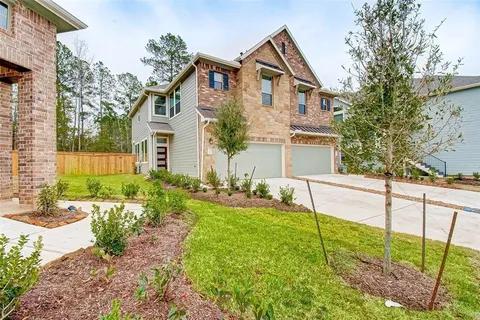
Buyers Say They Want One Story. Here’s How Your Two-Story Home Can Still Win.
How Do You Sell a Two-Story Woodforest Home When Buyers Keep Saying They Want One Story?
The buyer walks in.
They like the kitchen.
They like the backyard.
They like the neighborhood.
Then they look toward the staircase.
“We were really hoping for a one-story.”
For a seller, that can sound like the end of the conversation.
It does not have to be.
A buyer may begin their search believing they want one story because they associate it with:
Convenience.
Fewer stairs.
Simpler daily living.
But a well-designed two-story home can offer advantages a one-story property at the same price may not.
More separation.
More flexible living space.
Larger game rooms.
Additional bedrooms.
Private guest areas.
Better-defined work-from-home spaces.
The seller's job is not to convince someone who absolutely cannot use stairs that they should buy a two-story house.
It is to make sure everyone else understands what the second floor gives them in return.
Start With the First-Floor Experience
The strongest two-story homes often work because daily life does not require constant trips upstairs.
If the first floor includes:
Primary bedroom.
Kitchen.
Living room.
Study.
Laundry.
Guest suite.
highlight that.
A buyer may realize:
“Most of what we use every day is downstairs anyway.”
That changes the conversation.
If the Primary Suite Is Downstairs, Say It Early
Do not bury one of the home's biggest functional advantages.
A downstairs primary suite can give buyers:
Daily convenience.
Separation from secondary bedrooms.
More privacy.
Make it obvious in:
Listing copy.
Floor plan.
Photography.
Do Not Call the Home “Mostly One Story”
It is still a two-story house.
Use accurate language.
Better:
“Primary suite and main living spaces are located on the first floor, with additional bedrooms and flexible living space upstairs.”
That explains the benefit without disguising the property.
The Upstairs Needs a Clear Purpose
An empty second floor can feel like:
More space to clean.
More AC to run.
More stairs.
Your marketing needs to answer:
Why would I want this space?
Maybe the answer is:
Game room.
Media room.
Guest suite.
Home office.
Secondary bedrooms.
Storage.
Show the purpose.
Game Rooms Need Furniture
A large empty upstairs room can be difficult to understand.
Stage it with:
Sofa.
Television area.
Game table.
Simple seating.
Buyers should immediately see how the room functions.
Do Not Turn the Game Room Into a Storage Area
Sellers often begin packing and move everything upstairs.
Now one of the home's strongest features looks like:
A warehouse.
Use off-site storage if necessary.
The second floor needs to sell square footage—not moving boxes.
Secondary Bedrooms Should Feel Useful
Clean them.
Simplify furniture.
Open blinds.
Show:
Bed.
Nightstand.
Desk where appropriate.
Closet.
A buyer should understand the rooms are comfortable living spaces rather than leftover square footage.
An Upstairs Guest Suite Can Be a Strong Feature
If one bedroom has:
Private bath.
Larger dimensions.
Separate sitting area.
that can create useful separation for guests.
Describe what exists.
Avoid assigning the space to a particular type of person or household.
Work-From-Home Space Can Help
Woodforest already attracts buyer interest around home-office functionality, and your site has dedicated buyer content on remote-work considerations.
If your upstairs includes:
Quiet office.
Loft workspace.
Flex room.
Show how it functions.
But do not try to make every spare bedroom into an office.
One Room Should Have One Clear Story
A room staged with:
Desk.
Treadmill.
Bed.
Toy storage.
makes buyers think:
“Nobody knows what this room is.”
Choose the most logical function.
Separation Can Be the Real Advantage
A one-story home may place:
Bedrooms.
Living areas.
Office.
closer together.
A two-story layout may provide more separation between:
Entertaining.
Sleeping.
Working.
Relaxing.
That can be valuable.
Sell the layout—not merely the number of floors.
Floor Plans Are Especially Helpful
A buyer looking online may see:
3,800 square feet.
Two stories.
But not understand where the space actually sits.
A floor plan can quickly show:
Primary downstairs.
Guest room downstairs.
Bedrooms upstairs.
Game room.
Media room.
Storage.
That makes the property easier to evaluate.
Stair Presentation Matters
If buyers already have stairs on their mind, do not let the staircase look:
Dark.
Worn.
Narrow.
Neglected.
Clean:
Treads.
Railings.
Walls.
Lighting.
Replace worn carpet where appropriate.
A polished staircase makes the transition upstairs feel intentional.
Keep Stairways Bright
Turn on:
Stair lighting.
Landing lights.
Open nearby blinds.
Dark stairs can make the upper level feel more separate or difficult to access.
Do Not Overdecorate the Staircase
Too many:
Photos.
Wall decorations.
Furniture near landings.
can visually narrow the space.
Keep it simple.
Upstairs Temperature Matters
Nothing reinforces buyer hesitation like walking upstairs and feeling:
Hot.
Humid.
Stuffy.
Make sure HVAC is functioning appropriately before listing.
If the upstairs consistently struggles to remain comfortable, investigate the issue rather than trying to hide it during showings.
Know Your HVAC Setup
Two-story homes may have:
One system.
Multiple systems.
Zoned controls.
If there are multiple HVAC units, know:
Age.
Which areas they serve.
Service history.
Buyers may ask.
Do Not Promise Lower or Higher Utility Costs
Energy use depends on:
Home size.
HVAC condition.
Thermostat settings.
Occupancy.
Weather.
Rates.
Historical bills can provide context if useful, but they should not be presented as the buyer's guaranteed future costs.
Storage Can Be a Major Two-Story Advantage
Look at:
Upstairs closets.
Linen storage.
Walk-in attic.
Game-room storage.
Buyers may care deeply about where everything goes.
Clean and organize these spaces.
Walk-In Attic Access Can Be Valuable
If the home provides useful attic access without a pull-down ladder, show it.
But do not claim:
Finished storage.
Climate-controlled storage.
unless accurate.
An Upstairs Media Room Needs to Feel Intentional
If present:
Clean.
Darken appropriately for one or two photos.
Then provide enough lighting that buyers can still understand:
Size.
Seating.
Layout.
Do not let the room look like a black box.
Photography Should Show Why the Home Needs Two Floors
The photo gallery should not become:
Kitchen.
Living room.
Primary.
Then fifteen nearly identical bedroom photos.
Show the unique upstairs value.
Game room.
Balcony.
Media.
Office.
Storage.
Secondary suite.
Do Not Hide the Second Floor
If the buyer discovers online that the listing is two stories anyway, minimizing the upstairs does not help.
Own the layout.
Make it look useful.
Two Stories Can Sometimes Preserve More Yard
A home that places more living area vertically may leave a different relationship between:
House footprint.
Lot.
Pool.
Lawn.
This varies property by property, so do not make a blanket claim.
If your home genuinely combines substantial square footage with a strong backyard, show that advantage.
Aerial Photography Can Help
Drone imagery can show:
Home footprint.
Pool.
Patio.
Remaining yard.
Neighbor spacing.
This can make the overall property easier to compare with sprawling one-story alternatives.
Pricing Still Matters
You cannot simply say:
“Our house has more square footage, so it is worth more.”
Buyers evaluate:
Usability.
Condition.
Lot.
Floor plan.
Competition.
Your existing Woodforest luxury-selling guidance similarly stresses that pricing should look beyond price per square foot and consider lot position, condition, buyer demand, and competing listings.
Compare Against Both One-Story and Two-Story Competition
If buyers in your price range can choose either, you need to know:
What does your extra floor provide?
More bedrooms?
More square footage?
Bigger backyard?
Lower price?
Better updates?
That becomes your positioning.
Do Not Try to Win Every Buyer
Some buyers genuinely require:
One level.
No stairs.
Your property is not for them.
Trying to overcome an absolute requirement wastes time.
Instead, make sure buyers who are merely considering one story understand the trade-offs.
Use Showing Feedback Carefully
One buyer:
“Too many stairs.”
That is preference.
Six buyers:
“The upstairs feels hot and disconnected.”
That is actionable feedback.
Look for patterns.
Use the “What Does Upstairs Give Them?” Test
Can you answer immediately?
If not, your presentation needs work.
Use the “Could Daily Life Happen Downstairs?” Test
If yes, emphasize:
Primary.
Living.
Kitchen.
Office.
Laundry.
Guest space.
Use the “Does Upstairs Feel Worth the Stairs?” Test
Game room.
Bedrooms.
Media.
Storage.
Make the trip upstairs pay off.
Use the “Are We Comparing the Right Homes?” Test
Do not price only against larger one-story homes or only against two-story homes.
Look at the actual choices buyers have today.
Woodforest Two-Story Seller Scorecard
Before listing, verify:
Primary Suite
Downstairs or upstairs clearly marketed?
First-Floor Living
How much daily functionality exists downstairs?
Staircase
Clean, bright, and well maintained?
Game Room
Purpose obvious?
Secondary Bedrooms
Clean and appropriately staged?
Guest Suite
Any private bath or separation worth highlighting?
Office
Dedicated or flexible workspace?
Media Room
Presented clearly?
Storage
Closets and attic organized?
HVAC
Upstairs comfortable and systems documented?
Backyard
Does the vertical floor plan preserve useful outdoor space?
Floor Plan
Available and easy to understand?
Photography
Does upstairs look valuable rather than repetitive?
Competition
Compared with both one-story and two-story alternatives?
Pricing
Based on the complete property rather than square footage alone?
Final Thoughts
A two-story Woodforest home does not need to apologize for having stairs.
It needs to justify them.
The second floor should give buyers something meaningful:
Privacy.
Bedrooms.
Game room.
Office.
Media space.
Guest space.
Storage.
Meanwhile, the first floor should make everyday living feel as convenient as the actual layout allows.
Do not try to convince buyers with a true one-story requirement.
Instead, focus on the buyers who walked in thinking:
“We would prefer one story…”
but may walk out thinking:
“…unless a two-story gives us all of this.”
Clean and brighten the staircase.
Keep the upstairs comfortable.
Give every flexible room a clear purpose.
Use a floor plan.
Show the backyard.
Document HVAC.
And price the home against the alternatives buyers are actually considering.
Because the second floor should never feel like:
Extra space buyers have to maintain.
It should feel like:
Space they would miss if the next house didn’t have it.
Frequently Asked Questions
Is a two-story Woodforest home harder to sell than a one-story?
Not automatically. Buyer preferences differ. The home's layout, first-floor functionality, condition, price, upstairs use, lot, and current competition all influence demand.
Should I emphasize a downstairs primary bedroom?
Yes. If the primary suite is on the first floor, it can be an important functional feature and should be easy for buyers to identify.
Should I stage an upstairs game room?
Usually, staging can help buyers understand its scale and purpose, especially if an empty room otherwise feels like unused square footage.
Should I hide the fact that the home is two stories in marketing?
No. Accurate marketing attracts better-matched buyers. Instead, show what the second floor provides.
Should I provide a floor plan?
It can be particularly helpful for two-story homes because buyers can quickly understand which bedrooms and living spaces are on each level.
Does a larger two-story home automatically sell for more because it has more square footage?
No. Buyers also consider layout, condition, usable space, lot, features, and competing homes. Your current Woodforest seller guidance likewise cautions against relying on price per square foot alone.
What if buyers repeatedly complain that the upstairs is hot?
Treat repeated feedback seriously. Have the HVAC or airflow evaluated rather than assuming buyers are simply being picky.
Should every upstairs bedroom be fully staged?
Not necessarily. Focus on making each room easy to understand while avoiding unnecessary furniture that makes spaces feel smaller.
Can a two-story home compete with one-story new construction?
Yes, depending on price, lot, condition, features, outdoor living, square footage, and buyer priorities. Compare the complete ownership package rather than floor count alone.
What's the biggest takeaway?
When selling a two-story Woodforest home, make the second floor earn its place in the buyer's decision. Show clear functionality upstairs while emphasizing how much everyday living can happen on the first floor, then price the home against the real one-story and two-story alternatives buyers can choose today.