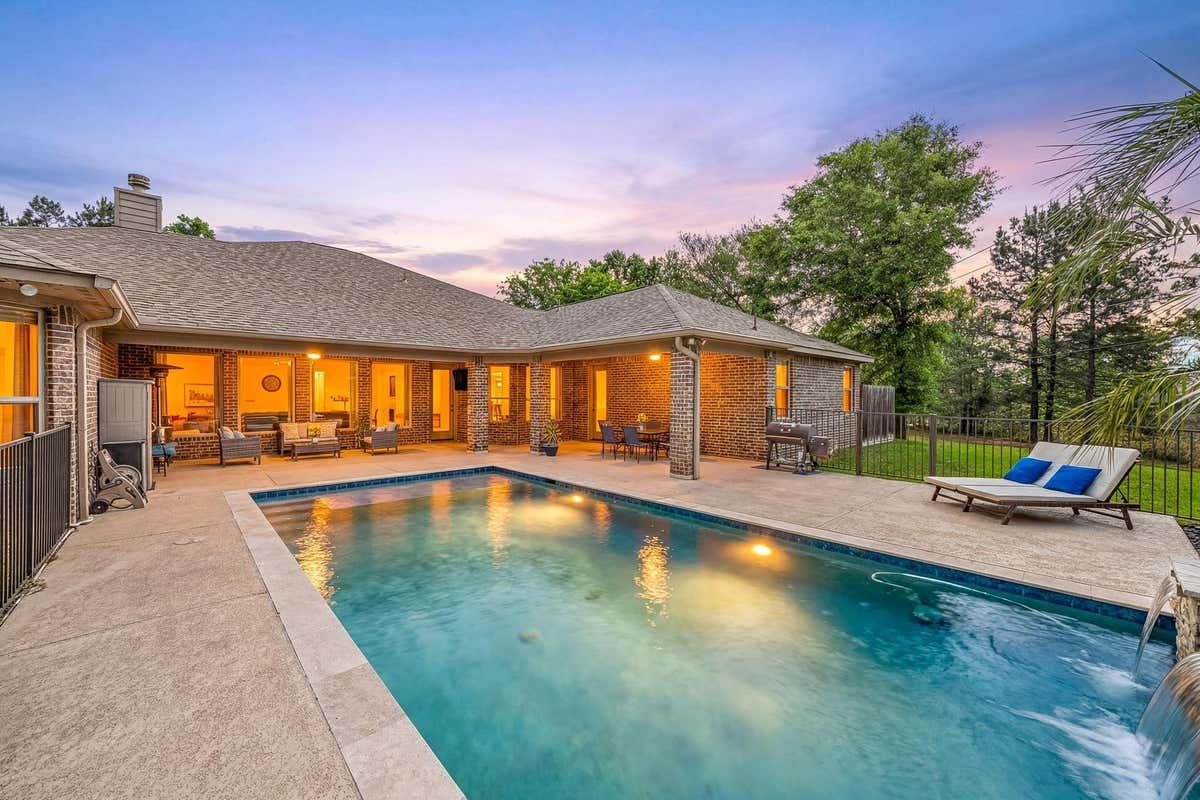
Your Woodforest Home Has a Pool. How Much Is That Actually Worth to a Buyer?
Your Woodforest Home Has a Pool—but How Much Is That Pool Actually Worth When You Sell?
You remember the invoice.
Excavation.
Gunite.
Decking.
Equipment.
Heater.
Spa.
Landscaping.
Maybe an outdoor kitchen.
Maybe additional fencing.
By the time everything was finished, you spent:
$70,000.
$90,000.
$120,000.
Maybe more.
So when you prepare to sell your Woodforest home, the calculation seems obvious:
“We just add what the pool cost to the value of the house.”
That is where sellers can get into trouble.
A pool can absolutely make a Woodforest home:
More desirable.
More memorable.
More competitive.
Potentially more valuable.
But construction cost and resale value are not the same thing.
The market determines what buyers are willing to pay for the complete property.
Your job is to make sure buyers see the pool as a finished lifestyle advantage—not an expensive maintenance obligation.
Start With the Right Comparable Sales
If your home has a pool, ideally you want to know:
What have similar Woodforest homes with pools sold for?
Look for similarities in:
Size.
Age.
Condition.
Lot.
Location.
Garage.
Outdoor living.
Pool quality.
A pool home compared only with non-pool homes can leave an important part of the value question unanswered.
But Do Not Ignore Non-Pool Comparables
They still matter.
They can help show:
What the underlying house may be worth.
How much buyers are paying for similar homes without pools.
How much competition exists.
The goal is not to use only the comparables that produce the highest number.
It is to understand the complete market.
Not Every Pool Is Equal
A basic pool may not compete the same way as a backyard with:
Pool.
Spa.
Covered patio.
Outdoor kitchen.
Water features.
Professional landscaping.
Likewise, an older pool needing significant work may not receive the same buyer response as one in excellent condition.
Condition Can Matter More Than Age Alone
A well-maintained older pool may present beautifully.
A newer pool with:
Cracked decking.
Broken heater.
Cloudy water.
Equipment problems.
can become a buyer concern.
Prepare the actual condition—not just the installation date.
Start With the Water
Before photography or showings:
Water should be clear.
Surface clean.
Skimmers emptied.
Tile clean.
No leaves.
No floating chemical containers.
The buyer should want to step outside.
Remove Most Pool Toys
One tasteful float?
Maybe.
Seven floats.
Basketball hoop.
Noodles.
Children's toys.
Cleaning equipment.
Now buyers cannot see the pool itself.
Simplify.
Pool Equipment Needs to Look Maintained
Buyers may inspect:
Pump.
Filter.
Heater.
Automation.
Salt system if applicable.
Clean the equipment area.
Remove:
Leaves.
Storage.
Old chemical containers.
Broken parts.
Know the Equipment Ages
Prepare information for:
Pump.
Heater.
Filter.
Automation.
Major replacements.
Do not guess.
Service Records Can Build Confidence
If you have:
Pool service invoices.
Equipment receipts.
Repair documentation.
Resurfacing records.
organize them.
A buyer does not need every weekly cleaning invoice, but major maintenance history can be useful.
Resurfacing History Matters
If the pool has been resurfaced:
Know when.
Know what was completed.
Keep the invoice if available.
Do not advertise:
“Recently resurfaced”
when the work occurred many years ago.
Use the actual year.
Decking Deserves Attention
Look for:
Cracks.
Stains.
Loose material.
Trip hazards.
Faded finish.
Not every cosmetic imperfection requires replacement.
But obvious maintenance should not be ignored.
Pool Fencing Should Be Evaluated
If fencing exists:
Make sure gates and visible components function appropriately.
Do not make broad safety or code-compliance claims unless properly verified.
Describe what is physically installed.
Do Not Promise a Pool Is “Child-Safe”
Avoid safety guarantees.
Features may include:
Fence.
Gate.
Alarm.
Cover.
But buyers should evaluate whether the property meets their needs and applicable requirements.
The Remaining Yard Matters
One buyer sees:
Pool.
Another sees:
“There’s no grass.”
If your lot still has usable lawn:
Show it.
This can help distinguish the property from pool homes where nearly the entire backyard is hardscape.
If There Is Little Grass, Do Not Hide It
The right buyer may prefer:
Low-lawn maintenance.
Larger patio.
More entertainment space.
Market the actual configuration.
Covered Outdoor Living Can Strengthen the Pool
A pool sitting alone in the yard tells one story.
A pool connected to:
Covered patio.
Outdoor kitchen.
Dining area.
Fireplace.
tells a larger lifestyle story.
Photograph the relationship.
Show the View From Inside
Buyers should see what the backyard looks like from:
Living room.
Kitchen.
Breakfast area.
Primary bedroom where relevant.
The pool can contribute to the home's everyday visual appeal—not just swimming.
Clean the Windows
A pool view through dirty patio doors loses impact immediately.
Clean:
Glass.
Tracks.
Screens.
Frames.
Twilight Photography Can Be Worthwhile
A pool home may photograph beautifully with:
Pool lighting.
Patio lighting.
Landscape lighting.
Spa running.
But twilight images should supplement accurate daylight photography.
Test the Pool Lights First
Do not discover during the photography session that:
Half the lights do not work.
Spa Features Need to Function
If advertised:
Heater.
Jets.
Blower.
Spillover.
Controls.
should be understood and functioning appropriately.
Do Not Call Every Pool a “Resort-Style Pool”
That phrase is overused.
Describe the actual features.
For example:
“Pool with attached spa, tanning ledge, covered patio, and landscaped backyard.”
Specific beats exaggerated.
Pools Can Help Against New Construction
A buyer comparing your resale with a new home may realize:
Your pool is already built.
The backyard is already finished.
Landscaping is established.
There is no construction period after closing.
That can be a legitimate competitive advantage.
Do Not Quote Hypothetical New Pool Costs as Fact
Avoid:
“This would cost $150,000 to build today.”
unless you have a current professional estimate and a reason to provide it.
Construction costs vary substantially by:
Design.
Site.
Materials.
Equipment.
Contractor.
Some Buyers Will Not Want a Pool
You cannot convert everyone.
A buyer may worry about:
Maintenance.
Safety.
Insurance.
Utility costs.
That does not mean your pool has no value.
It means the buyer pool is segmented.
Do Not Argue With Pool Objections
Buyer says:
“We don't want the maintenance.”
Seller says:
“It barely costs anything!”
That can create another problem.
Historical costs do not guarantee future expenses.
Let buyers decide whether pool ownership fits them.
Historical Maintenance Costs Can Be Shared Carefully
If useful, you can provide historical:
Pool-service expenses.
Electric usage.
Equipment maintenance.
But clearly treat them as:
Past owner experience.
Not future guarantees.
Insurance Questions Should Go to the Buyer’s Insurer
Do not tell buyers:
“The pool won't affect your insurance.”
Coverage and premiums depend on:
Carrier.
Property.
Features.
Buyer.
Policy.
Encourage property-specific quotes.
Pool Orientation Can Affect Buyer Experience
Buyers may notice:
Afternoon sun.
Shade.
Privacy.
Relationship to neighboring homes.
Do not promise:
“The pool stays shaded all afternoon.”
unless you are describing your own historical experience carefully rather than guaranteeing future conditions.
Landscaping Can Improve Privacy
Maintain:
Trees.
Shrubs.
Screening.
But avoid allowing landscaping to become:
Overgrown.
Dark.
Crowded.
The pool should feel private without feeling enclosed.
Pricing Needs to Consider Buyer Alternatives
Suppose your home is:
$650,000 with pool.
Competing home:
$610,000 without pool.
The buyer may ask:
“Is this pool worth $40,000 to us?”
But the homes may also differ in:
Condition.
Lot.
Updates.
Garage.
Size.
Location.
You need to understand the entire price difference.
Do Not Assign the Entire Difference to the Pool
That is another common mistake.
Two homes are rarely identical except for one feature.
Appraisal and Buyer Value Are Not Identical Questions
A buyer may personally love the pool.
An appraiser evaluates market evidence under applicable appraisal methodology.
The contract still needs to work within the buyer's financing structure.
Be Careful With Overpricing
A beautiful pool can make sellers emotionally optimistic.
If comparable evidence does not support the asking price, buyers may simply choose:
Another pool home.
A lower-priced non-pool home.
New construction.
The pool should strengthen the property—not justify any price.
Use the “Would Buyers Pay for This?” Test
Not:
What did we spend?
What does the market value?
Use the “Does It Look Like an Asset?” Test
Clear water?
Working equipment?
Clean decking?
If not:
Fix presentation.
Use the “Can Buyers Understand the Whole Backyard?” Test
Use wide photography and aerials where useful.
Use the “Are We Making a Guarantee?” Test
Maintenance cost?
Insurance?
Safety?
Future value?
Avoid promises.
Woodforest Pool Seller Scorecard
Before listing, evaluate:
Water
Clear and clean?
Surface
Condition understood?
Equipment
Working?
Heater
Tested?
Spa
Functional?
Lights
Working?
Decking
Maintained?
Fencing
Visible components working appropriately?
Landscaping
Clean and intentional?
Privacy
Strong?
Remaining Yard
Clearly shown?
Patio
Staged?
Service Records
Organized?
Equipment Ages
Known?
Photography
Pool and home shown together?
Comparables
Pool and non-pool sales reviewed?
Pricing
Based on market evidence rather than construction cost?
Final Thoughts
A pool can be one of the strongest features of a Woodforest home.
But sellers should avoid making one assumption:
“We spent $100,000, therefore the buyer owes us $100,000 more.”
That is not how resale markets work.
Instead:
Study comparable pool sales.
Study non-pool competition.
Prepare the equipment.
Clean the water.
Repair obvious maintenance.
Show the remaining yard.
Connect the pool visually to the patio and home.
Organize service records.
And market the property as a complete outdoor-living experience.
Then let current buyer demand determine what premium the pool supports.
Because buyers are not purchasing your construction invoice.
They are purchasing:
A home.
A lot.
A location.
A backyard.
And the ability to walk outside on the first day they own it and say:
“The pool is already here. The backyard is finished. All we have to do is enjoy it.”
That is the value story worth telling.
Frequently Asked Questions
Does a pool increase the value of a Woodforest home?
It can, but the amount depends on pool condition, home price, lot, outdoor living, current buyer demand, comparable sales, and overall property quality.
Will I recover the full cost of building my pool?
Not necessarily. Construction cost and resale value are different.
Should I repair pool equipment before selling?
Known equipment problems can create buyer objections. Evaluate repairs before listing and make sure advertised features function as represented.
Should I provide pool service records?
Major service, equipment replacement, resurfacing, and repair records can help buyers understand the pool's history.
Does a pool make my home harder to sell?
Some buyers specifically want pools, while others avoid them. The effect depends on the buyer pool and current market.
Should I advertise what it would cost to build the pool today?
Avoid unsupported replacement-cost claims. Focus on the fact that the pool and related improvements already exist and are available for immediate use.
Should I include pool photos first in the listing?
If the backyard is one of the property's strongest features, it should appear prominently, but buyers still need a balanced presentation of the home itself.
Is twilight photography worth it for a pool home?
It can be very effective when pool, patio, and landscape lighting are attractive and functional. Include daylight images as well.
Should I lower the price if buyers say they do not want a pool?
One buyer's preference is not enough to determine price. Watch patterns in feedback and compare the property with both pool and non-pool alternatives.
What's the biggest takeaway?
When selling a Woodforest pool home, price the complete property—not the pool invoice. Make the pool look like a maintained, ready-to-enjoy lifestyle advantage and use actual market evidence to determine how much value buyers place on it.