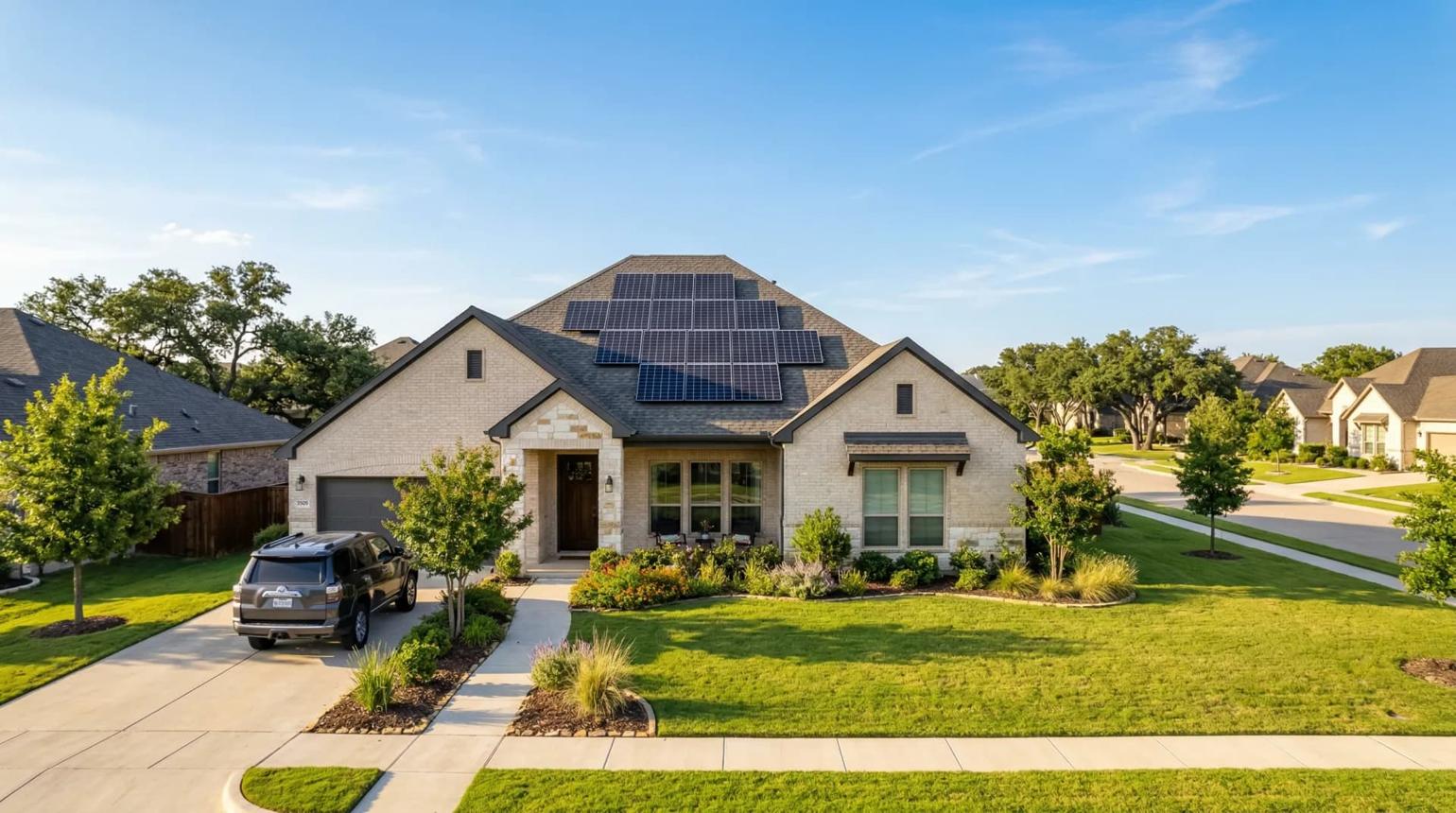
Your Solar Panels May Be an Asset—or a Question Buyers Need Answered Before They Offer
How Do You Sell a Woodforest Home With Solar Panels Without Confusing the Buyer?
The buyer likes the house.
Then they look up.
Solar panels.
For one buyer:
“Great. Lower electric bills.”
For another:
“Wait. Are those paid off?”
And suddenly the conversation becomes:
Who owns them?
Is there a loan?
Is there a lease?
Does the buyer have to assume anything?
How old are the panels?
What happens when the roof needs replacement?
Is there a warranty?
How much electricity do they actually produce?
Selling a Woodforest home with solar panels requires more preparation than simply adding:
“Solar!”
to the listing description.
The panels themselves are only part of the story.
Buyers need to understand the financial arrangement, equipment, roof relationship, production history, warranties, and transfer process.
Start by Determining Who Actually Owns the System
Before listing, identify whether the solar system is:
Owned outright.
Financed.
Leased.
Subject to a power purchase or other agreement.
Do not guess.
Find the original paperwork.
Owned Solar Is Usually Easier to Explain
If the system has been fully paid:
Collect documentation showing that status.
Buyers may still ask about:
Warranty.
Equipment.
Installation.
Production.
Roof.
But there may be fewer financing questions.
Financed Solar Requires More Preparation
If you still owe money:
Find the current balance.
Then determine what the agreement says about:
Sale of the property.
Payoff.
Transfer.
Buyer qualification.
Lien or security interests where applicable.
Do not wait until you have an offer to investigate this.
Do Not Assume the Buyer Can “Just Take Over the Loan”
Transfer requirements depend on the actual agreement.
The buyer may need to:
Qualify.
Sign documents.
Accept specific terms.
Or the balance may need to be handled another way.
Read the contract and contact the appropriate provider when necessary.
Leased Systems Can Create Different Questions
A lease may include:
Monthly payment.
Remaining term.
Transfer procedure.
Escalation provisions.
Maintenance responsibilities.
Buyers need the actual agreement.
Do not summarize a long-term contract from memory.
Do Not Hide the Solar Payment
If there is an ongoing obligation connected with the system, buyers need appropriate information during the transaction.
A surprise solar payment can damage trust quickly.
Find the Original Installation Documents
Collect:
Installation date.
Installer.
Panel manufacturer.
Inverter information.
System size.
Warranty documents.
Permits where available.
Approval records where applicable.
The more organized you are, the easier the buyer's due diligence becomes.
Know the Approximate Age
Solar equipment does not become:
“New”
because the house was recently painted.
State the actual installation year.
Know What Equipment Is Included
The system may contain:
Panels.
Inverter.
Microinverters.
Monitoring equipment.
Battery storage.
Disconnect equipment.
Do not assume every solar home has a battery.
Solar Panels Do Not Automatically Mean Backup Power
This is a common misconception.
A buyer may ask:
“If the grid goes down, does the house still have electricity?”
Do not automatically say yes.
Whether a system provides backup capability depends on its design and equipment.
If the home has battery storage or another backup configuration:
Document it.
Battery Systems Need Their Own Documentation
If present, collect:
Manufacturer.
Installation date.
Capacity information.
Warranty.
Monitoring information.
Do not describe a battery system as whole-home backup unless the configuration actually supports that claim.
Utility Bills Can Provide Useful Context
Buyers often want to know:
“What is the electric bill?”
You can provide historical bills if available.
But do not promise:
“Your bill will only be $50.”
The buyer may use:
More AC.
More appliances.
An electric vehicle.
Different thermostat settings.
Historical usage is context—not a guarantee.
Production Data May Be Even More Helpful
If the solar monitoring system provides historical production:
Organize it.
Buyers can see what the system has actually generated over time.
Again:
Past production does not guarantee future production.
Do Not Advertise “No Electric Bill”
Even if you occasionally received a very small bill.
Electric costs may include:
Base charges.
Usage.
Utility pricing.
Credits.
Other components.
Use actual historical documentation instead of absolute claims.
Roof Age Is a Major Question
The buyer may immediately ask:
“How old is the roof under the panels?”
Know:
Roof installation year.
Solar installation year.
Any roof repairs.
Any panel removal/reinstallation history.
Roof and Solar Timelines Matter Together
Example:
Roof installed 2019.
Solar installed 2022.
That tells a different story from:
Roof installed 2004.
Solar installed 2022.
Use your actual dates.
Do Not Ignore an Aging Roof
If the roof may need significant work soon, the presence of solar panels can make the buyer wonder about:
Removal.
Storage.
Reinstallation.
Cost.
Warranty implications.
Do not guess at those costs.
Let appropriate contractors evaluate them.
Keep Roof Documentation
Invoices.
Warranty.
Inspection.
Repair records.
Insurance-related work where applicable.
This can be especially helpful when panels limit direct roof visibility.
Ask Whether the Solar Installer Is Still Operating
If the original company is no longer available:
Determine who handles:
Warranty.
Monitoring.
Service.
Do not assume the original installer must exist for every manufacturer warranty to remain valid.
Check the actual documentation.
Warranties Need Specificity
There may be separate warranties for:
Panels.
Inverter.
Battery.
Installation/workmanship.
Roof penetrations.
Do not simply advertise:
“25-year solar warranty.”
without knowing what that warranty covers and whether it transfers.
Verify Transferability
Some warranties may:
Transfer automatically.
Require registration.
Require a fee.
Have limitations.
Check before marketing.
Monitoring Access Needs a Transfer Plan
If you use an app to monitor production:
Find out how account ownership transfers.
The buyer should not depend permanently on your login.
Do Not Give Buyers Your Password
Account transfer should follow the provider's process.
Protect your personal information.
HOA Documentation May Matter
If the installation required association documentation or approval:
Keep what you have.
The buyer may want evidence related to the exterior installation.
Do Not Promise Future HOA Approval
A buyer may want:
More panels.
Battery installation.
Equipment changes.
Your existing installation does not guarantee approval for future modifications.
Clean Panels Are Not a DIY Requirement
Do not climb onto the roof simply because the house is being listed.
If maintenance is needed:
Use appropriate professional guidance.
Seller safety matters more than a photograph.
Solar Panels Should Not Dominate the Listing Gallery
The home is still the product.
Show:
Exterior.
Kitchen.
Living spaces.
Bedrooms.
Backyard.
Community lifestyle.
Then include solar information appropriately.
Aerial Photography Can Help
Drone photography may show:
Panel layout.
Roof placement.
Home orientation.
But it can also make roof wear more visible.
That is fine.
Accurate representation is more important than hiding the equipment.
Do Not Digitally Remove Panels
Even if you think they make the roof less attractive.
They are part of the property.
Show current reality.
Appraisal Questions May Come Up
Sellers sometimes assume:
“The system cost $40,000, so the house is worth $40,000 more.”
Not necessarily.
Installation cost and market contribution are not automatically equal.
Appraisers and buyers consider:
Ownership structure.
Market evidence.
System characteristics.
Property.
Financing.
Other factors.
Financed Panels Are Not the Same as Owned Panels
This distinction can matter greatly to buyer perception.
Do not market both situations identically.
Solar Can Still Be a Competitive Advantage
A buyer comparing two similar Woodforest homes may value:
Existing solar equipment.
Historical production.
Potential energy-cost benefits.
Especially when the system is:
Owned.
Maintained.
Documented.
Easy to understand.
But Not Every Buyer Wants Solar
Some may worry about:
Roof work.
Appearance.
Financing.
Maintenance.
Future equipment replacement.
Do not argue.
Answer with documentation.
Pricing Should Reflect the Complete Property
Solar is one feature among:
Home condition.
Lot.
Location.
Pool.
Garage.
Updates.
Roof.
Outdoor living.
Current competition.
Do not let the original solar invoice determine the list price.
Pre-Listing Preparation Can Prevent Contract Problems
Before listing, know:
Ownership.
Balance.
Transfer process.
Roof age.
Equipment age.
Warranty status.
Monitoring transfer.
Production history.
That preparation can prevent a buyer from discovering an unexpected issue during:
Financing.
Title review.
Inspection.
Closing.
Use the “Who Owns It?” Test
This should be answerable immediately.
Use the “What Does the Buyer Have to Sign?” Test
If there is a financing or lease arrangement:
Know the process.
Use the “What Happens With the Roof?” Test
Roof age and panel installation should be understood together.
Use the “Can We Prove the Savings?” Test
You can show historical bills.
Do not guarantee future bills.
Woodforest Solar Seller Scorecard
Before listing, evaluate:
Ownership
Owned, financed, or leased?
Balance
Current payoff known if applicable?
Transfer
Requirements understood?
Installation Date
Documented?
Equipment
Manufacturer and system information available?
Battery
Present or not?
Backup Power
Actual capability verified?
Roof
Age and history documented?
Warranties
Current and transferable?
Monitoring
Account-transfer process known?
Production
Historical data available?
Utility Bills
Historical records organized?
Installer
Service contact known?
HOA
Available installation documentation organized?
Photography
Panels represented accurately?
Pricing
Based on market evidence rather than installation cost?
Final Thoughts
Solar panels can absolutely be an appealing feature when selling a Woodforest home.
But buyers need clarity.
They do not want to discover after falling in love with the house that:
There is a large remaining loan.
The lease has years remaining.
The warranty does not transfer.
The roof is nearing replacement.
The system does not provide backup power.
Or nobody knows how the monitoring account transfers.
Solve those questions before the home reaches the market.
Find the contract.
Verify ownership.
Get the payoff information when applicable.
Organize utility and production history.
Document the roof.
Locate warranties.
Understand monitoring transfer.
Then market what you can actually prove.
Because the strongest solar selling point is not:
“These panels will save you thousands.”
It is:
“Here is exactly what is installed, here is how it has performed historically, here is the ownership and warranty documentation, and here is what transfers with the property.”
That turns solar from a question mark into a feature buyers can evaluate confidently.
Frequently Asked Questions
Do solar panels increase the value of a Woodforest home?
They may contribute to buyer appeal and market value, particularly when owned and well documented, but the original installation cost does not automatically equal the property's increase in resale value.
What if I still owe money on my solar panels?
Review the financing agreement and determine the payoff or transfer requirements before listing. Do not assume the buyer can automatically take over the obligation.
Should I pay off the solar loan before selling?
That depends on the contract, remaining balance, sale strategy, and financial circumstances. Review the actual agreement and transaction options with appropriate professionals.
Can I tell buyers how much they will save on electricity?
You can provide historical utility and production information, but avoid guaranteeing the buyer's future bills or savings because their usage and utility costs may differ.
Do solar panels provide electricity during an outage?
Not necessarily. Backup capability depends on the system design and whether appropriate battery or other equipment is installed.
Should I provide my solar monitoring history?
Historical production information can help buyers evaluate the system. Follow the provider's proper process for transferring monitoring access rather than sharing your personal login.
What if my roof is older than the solar system?
Buyers may want to understand the potential process of removing and reinstalling panels during future roof work. Provide roof and solar documentation and avoid guessing at future costs.
Do solar warranties transfer to the buyer?
It depends on the specific warranty. Verify transfer requirements for the panels, inverter, battery, workmanship, and other applicable coverage.
Should listing photos show the solar panels?
Yes, when visible. The photography should represent the property accurately rather than digitally removing permanent installed equipment.
What's the biggest takeaway?
When selling a Woodforest home with solar panels, prepare the paperwork before you prepare the marketing. Ownership, financing, roof history, warranties, production records, and transfer requirements can matter just as much to buyers as the panels themselves.