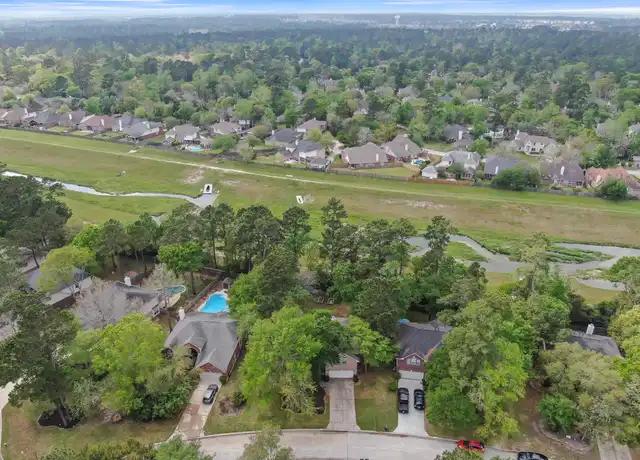
Your Backyard Opens to The Woodlands Lifestyle. Make Sure Buyers See the Benefit.
How Do You Sell a Woodlands Home That Backs to a Trail, Park, or Green Space Without Creating Privacy Concerns?
The buyer opens the back door.
They see trees.
No house immediately behind them.
Maybe a pathway disappears through the woods.
Maybe a park or shared green space sits nearby.
The seller thinks:
“This is one of the best things about the property.”
And it very well may be.
Then the buyer asks:
Do people walk behind the house?
Can they see into the backyard?
How busy is the trail?
Is it noisy?
Does the community own the land?
Could it ever be developed?
Can we put in a taller fence?
Can we add landscaping?
Is there direct trail access from the property?
Suddenly, what sounded like a straightforward premium-lot feature becomes more nuanced.
That is normal.
Homes near the trail and green-space network can offer something difficult to recreate:
A stronger connection to the surrounding natural environment.
But sellers need to market that relationship accurately.
The goal is not simply to say:
“Backs to greenbelt!”
The goal is to help buyers understand exactly what the setting gives them—and what it does not.
Start With the Exact Lot Relationship
Before writing the listing description, determine what is actually behind the property.
Is it:
Community green space?
A pathway?
Park land?
Drainage reserve?
Utility corridor?
Undeveloped land?
Another type of reserve?
These terms are not interchangeable.
Use the correct description.
A Wooded Backdrop Is Not Automatically a Greenbelt
This is one of the easiest mistakes.
You see:
Trees.
No house.
Therefore:
Greenbelt.
Maybe.
But perhaps the parcel is:
Undeveloped.
Owned by another party.
Reserved for another purpose.
If the land status is important to your marketing, verify it.
Never Promise That Undeveloped Land Will Stay Undeveloped
Buyer says:
“So nobody can ever build behind us?”
Do not answer yes based on appearance.
Future use depends on:
Ownership.
Restrictions.
Planning.
Other legal factors.
If the property genuinely backs to permanently designated open space, use reliable documentation to support the description.
Otherwise, market what exists today without making promises about tomorrow.
“No Rear Neighbor” Needs Careful Wording
If there is no residential lot immediately behind the property, that can be meaningful.
But perhaps there is:
Trail traffic.
Common space.
Road beyond the trees.
Another property farther back.
Better:
“No immediate rear residential lot.”
when accurate.
That communicates the physical setting without promising complete isolation.
Privacy Is About Experience, Not Just Lot Position
Two homes can both back to a trail.
One feels extremely private because of:
Distance.
Trees.
Shrubs.
Elevation.
Fence placement.
Another feels exposed because:
Trail sits immediately behind fence.
Little landscaping.
Home sits higher or lower.
Lot configuration creates direct sightlines.
Do not assume the label tells the complete story.
Sit on the Patio Before You Decide How Private the Yard Is
This is one of the simplest seller exercises.
Sit where buyers will sit.
At:
Patio table.
Pool.
Outdoor sofa.
What can you see?
Who can see you?
The answer may be very different from standing at the back fence.
Privacy Landscaping Can Make a Major Difference
Strategically maintained:
Shrubs.
Trees.
Layered planting.
can help create visual separation between:
Private yard.
Shared space.
The best landscaping provides screening without making the backyard feel closed in.
Don't Block the Green-Space View Completely
This is the balance.
Seller gets nervous about trail privacy.
Plants a wall of shrubs.
Now buyers can no longer see the feature that justified the lot premium.
Use landscaping to:
Frame.
Filter.
Soften.
Not necessarily erase the view.
Overgrown Landscaping Can Make a Premium Lot Feel Small
If vegetation comes too far into the yard, buyers may think:
Limited usable space.
Heavy maintenance.
Pest concern.
Unknown property boundary.
Trim enough that the backyard remains understandable.
Show the Fence Line Clearly
Buyers want to understand:
Where does private property end?
Where does shared space begin?
Photography should help—not confuse.
Avoid angles that make common land look like part of the backyard.
Do Not Stage Community Green Space as Private Yard
This matters.
If there is grass or woods beyond the fence, do not create imagery implying:
It belongs to the seller.
The lifestyle benefit can still be significant.
Accuracy builds trust.
Trail Access Is Different From Backing to a Trail
A property can sit beside or behind a pathway without having a legal private gate or direct access.
Do not write:
“Step directly onto the trail from your backyard”
unless that is genuinely how approved access works.
Verify Private Gates Before Making Them a Feature
Some homes may have:
Gate in rear fence.
Path connection.
But the existence of a gate does not automatically establish that:
It is approved.
It may remain.
It creates legal access rights.
If direct access is important to the listing, verify the applicable rules.
Nearby Trail Access Can Still Be Strong
You do not need a private backyard gate.
A home located conveniently near an official pathway entrance may still offer excellent access.
Market:
Proximity.
Convenience.
Connection.
Not something the property does not have.
Buyers May Value Trail Access More Than Extra Yard
One buyer wants:
Huge private lawn.
Another wants:
Smaller yard plus immediate recreational access.
That is why a trail-adjacent lot should not be marketed defensively.
It provides a different use of space.
The Community Can Become the Extended Backyard
This can be an effective lifestyle concept when accurate.
The homeowner maintains:
Their private yard.
But enjoys nearby access to:
Paths.
Parks.
Wooded surroundings.
Open spaces.
That can appeal to buyers who want outdoor recreation without maintaining a very large private lot.
Don't Call Community Space “Your Backyard”
It sounds attractive.
But it blurs ownership.
Better:
“The backyard opens toward a wooded community setting.”
or similar factual language.
A Smaller Yard Can Make More Sense Beside Green Space
If your actual private yard is modest but the home sits beside expansive shared natural space, buyers may feel less confined.
Still:
Show the real yard.
Do not rely on the woods to make it appear larger.
Usable Yard Still Matters
Buyer may need:
Dog area.
Pool.
Play lawn.
Garden.
Outdoor dining.
Show how much private usable space remains before the shared area begins.
Pools and Green Space Can Be a Strong Combination
Pool.
Trees.
No immediate rear residential lot.
That can create a compelling environment.
Photography should show:
Pool.
Patio.
Fence.
Backdrop.
The buyer should understand all four at once.
Pool Privacy Needs Special Attention
A buyer in swimwear may care more about privacy than a buyer sitting on a patio.
Check:
Trail sightlines.
Second-story neighboring windows.
Fence.
Landscape screening.
If the pool area is genuinely well screened, show it.
Do Not Call a Pool “Completely Private” Unless It Truly Is
Privacy is subjective.
Specific facts are safer.
For example:
“Mature landscaping provides substantial screening along the rear fence.”
Covered Patios Can Strengthen the Setting
A covered outdoor area facing:
Trees.
Green space.
Trail corridor.
may provide a peaceful everyday experience.
Show the view from:
Dining table.
Outdoor sofa.
Kitchen doorway.
That demonstrates how the lot is actually enjoyed.
Photograph From Inside the Home Too
If the green setting is visible from:
Family room.
Kitchen.
Breakfast area.
Primary bedroom.
those views deserve photography.
The lot premium becomes stronger when it affects daily interior experience.
The View From the Kitchen May Be More Important Than the View From the Fence
Buyers live inside too.
Looking at trees while:
Cooking.
Eating breakfast.
Working.
can have significant emotional appeal.
Do not limit lot marketing to exterior images.
Noise Questions Are Normal
Buyer asks:
“Can you hear people on the trail?”
Perhaps.
The answer may vary by:
Time.
Day.
Location on trail.
Vegetation.
Season.
Do not say:
“You never hear anyone.”
unless carefully describing your own experience—and even then avoid universal claims.
Trail Activity Can Be Positive for Some Buyers
Some buyers enjoy:
Seeing walkers.
Runners.
Cyclists.
Community activity.
Others want:
Maximum quiet.
Neither preference is wrong.
Your property will fit one buyer better than another.
Do Not Try to Convince a Privacy-Obsessed Buyer to Love a Busy Trail
If their requirement is:
“Nobody anywhere behind us.”
and the trail is actively used, your property may simply not be the right fit.
Accurate marketing helps eliminate mismatched buyers earlier.
Qualified Showings Are Better Than More Showings
A listing that hides the trail may get:
More appointments.
Then:
More immediate rejection.
A listing that clearly shows the setting may attract fewer but better-matched buyers.
Quality matters.
Show the Trail Relationship Honestly in Aerial Photography
Drone imagery can be particularly useful.
It may show:
Home.
Yard.
Trail.
Trees.
Neighboring homes.
Park.
This can answer questions before the showing.
But Do Not Use an Aerial Angle That Makes the Trail Look Farther Away
If the pathway is directly behind the property, show enough context that buyers understand it.
Professional photography can be flattering without being misleading.
Trail Distance Can Change the Experience
Ten feet beyond fence?
Fifty feet?
Separated by:
Trees.
Drainage corridor.
Open green space.
These differences affect privacy and noise.
If accurate measurements or map information are available and useful, they may help.
Avoid guessing.
Elevation Can Affect Sightlines
If the trail sits:
Below the backyard.
Above the backyard.
same level.
privacy can feel very different.
A buyer may not understand this from aerial images.
Ground-level photography helps.
Fence Type Can Matter
Wood privacy fence?
Wrought iron?
Combination?
Open-style fencing may preserve:
Views.
But reduce visual privacy.
Solid fencing may increase:
Screening.
But reduce openness.
Market the actual configuration.
Don't Promise a Different Fence Can Be Installed
Buyer says:
“We'll just put up an eight-foot solid fence.”
Maybe.
Maybe not.
Association guidelines and other restrictions may regulate:
Height.
Material.
Design.
Location.
Direct the buyer to current rules.
Trail Lots May Have Easements or Reserves Nearby
A buyer may see additional space and imagine:
Expanding fence.
Building structure.
Planting.
That may not be allowed.
The survey and community documentation can help clarify property boundaries and restrictions.
Keep the Survey Available
Where available and relevant, the survey can help serious buyers understand:
Lot lines.
Easements.
Improvements.
Relationship to nearby space.
Do not rely on visual assumptions.
Do Not Encourage Buyers to Use Common Land as Their Own
Statements like:
“Nobody cares if you put your chairs back there.”
are risky.
Common property remains common property.
Buyers should follow applicable rules.
Parks Create Similar Questions
If the home backs to or sits near a park, buyers may love:
Recreation.
Open view.
Convenience.
They may also ask about:
Activity.
Parking.
Noise.
Events.
Lighting.
Again:
Tell the truth.
Park Proximity Is Not Automatically Good or Bad
Across the street from a park can mean:
Easy access.
Open view.
It can also mean:
More visitors.
Cars.
Activity.
The right buyer decides whether the trade-off works.
Playgrounds Can Create Specific Noise Patterns
A nearby playground may be active:
After school.
Weekends.
Other times.
Do not promise silence.
But do not frame normal community recreation as a flaw either.
Sports Facilities Can Be More Active
If near:
Tennis.
Pickleball.
Basketball.
Sports fields.
buyers may ask about:
Lighting.
Noise.
Hours.
Use current community information where available.
Do not guess operating hours.
Community Amenities Can Strengthen the Story
If the shared area connects buyers conveniently to:
Parks.
Paths.
Recreation.
that can be a real lifestyle advantage.
But distinguish:
Nearby community amenities.
from:
Private property features.
Buyers May Worry About Security
A trail behind the home sometimes creates:
“Can people come right up to the fence?”
This is a legitimate question.
Do not respond with unsupported crime or safety claims.
Instead describe:
Fence.
Gate.
Landscaping.
Physical separation.
Security equipment installed at the property.
Avoid Saying Trail-Adjacent Homes Are “Safe”
Safety is not something a seller should guarantee.
Buyers can conduct their own research regarding:
Crime.
Security.
Personal comfort.
Market the physical features.
Existing Cameras Can Be Mentioned Factually
If the property has:
Exterior cameras.
Doorbell camera.
Alarm system.
describe:
What exists.
What conveys.
Subscription requirements.
Do not imply the equipment eliminates security risks.
Motion Lighting Can Be a Practical Feature
If present:
Rear lighting.
Pathway lighting inside the property.
Motion fixtures.
may improve:
Convenience.
Visibility.
Again, no safety guarantees.
Dogs Can Influence Buyer Thinking
Buyer may ask whether:
People or dogs on trail can interact with their dog through fence.
This depends on:
Fence design.
Distance.
Landscaping.
If your fence provides solid separation, show that.
Do not make behavioral predictions.
Fence Condition Should Be Excellent
Trail-adjacent property means buyers may pay more attention to the rear boundary.
Check:
Loose boards.
Gates.
Leaning sections.
Rot.
Missing panels.
A neglected fence makes buyers more nervous about the location.
Rear Gates Should Work Properly
If approved and existing:
Latch.
Hinges.
Lock.
should function.
A broken gate can make a minor concern feel bigger.
Green-Space Lots Can Collect More Natural Debris
Leaves.
Branches.
Pine needles.
This is part of a wooded setting.
Before showings:
Sweep.
Clean patio.
Clear drains.
Check pool.
The property should feel maintained.
Wildlife May Be More Visible
Buyers may see:
Birds.
Squirrels.
Deer or other wildlife depending on location.
Do not promise particular wildlife experiences.
And do not make broad pest claims.
Keep marketing focused on the natural environment.
Pest Control Records Can Be Helpful
Especially on wooded lots.
If you have:
Regular pest service.
Termite treatment.
Other maintenance.
records may provide reassurance.
Again:
Past maintenance does not guarantee no future pests.
Termite Questions Can Arise With Wooded Settings
The presence of trees does not automatically mean a home has termites.
If a buyer is concerned, inspection is the appropriate path.
Seller should provide any known treatment history accurately.
Drainage Corridors May Look Like Extra Green Space
This is important.
A reserve behind the property may primarily serve drainage.
It may still be attractive.
But do not simply market it as a recreational greenbelt without verifying its purpose.
Drainage Can Affect the Lot Experience
A green-space property may contain:
Swales.
Ditches.
Drainage structures.
After heavy rain, buyers may notice water.
Know:
What belongs to the lot.
What belongs to the community.
What the drainage feature is intended to do where verified.
Don't Promise Community Drainage Will Prevent Flooding
No stormwater system guarantees zero risk.
Provide accurate property history and direct technical questions appropriately.
Mosquito Concerns May Come Up
Wooded and water-adjacent areas can make buyers ask.
If the property has:
Professional mosquito service.
Misting system.
screens.
fans.
you can describe the actual features.
Avoid:
“No mosquitoes.”
Screened Outdoor Areas Can Be Valuable
If the property has:
Screened porch.
Enclosed patio.
that may improve outdoor usability.
Show it.
Do not imply screening provides complete pest elimination.
Trail Lots Can Be Fantastic for Active Buyers
A buyer who enjoys:
Walking.
Running.
Cycling.
may love easy access.
But avoid defining the demographic who should buy.
Market the feature:
Convenient access to nearby pathways.
Let buyers decide how they would use it.
Do Not Use “Perfect for Runners” as the Whole Story
The trail is also useful for:
Walking.
Outdoor enjoyment.
Getting around the community.
It can appeal broadly.
Green Space Can Improve the View From a Home Office
This is a strong modern use.
A study facing:
Trees.
Trail corridor.
Open area.
may feel very different from one looking directly at another wall.
If your office has that view, photograph it.
Primary Bedroom Views Matter Too
Waking up to:
Trees.
Natural light.
Open backdrop.
can support the premium-lot story.
Show it accurately.
Second-Story Views May Be Stronger Than Ground-Level Views
If upstairs rooms overlook:
Canopy.
Greenbelt.
park.
that can be beautiful.
But also check whether:
Trail users can see into upstairs rooms.
The buyer will decide how much that matters.
Window Treatments Can Balance View and Privacy
If the home has:
Shutters.
Shades.
Blinds.
that provide flexible privacy while preserving views, show the functionality.
Do not keep every window covered during photography.
Your Listing Description Should Be Specific
Weak:
“Amazing greenbelt lot!”
Stronger:
“The backyard faces a wooded community reserve with no immediate rear residential lot, creating a more open backdrop from the patio and main living areas.”
when accurate.
Specific features help buyers understand value.
Avoid “Permanent Privacy”
Even if the setting is currently heavily wooded.
Vegetation can change.
Trees can be removed.
Rules can change.
The buyer's perception can change.
Use factual current conditions.
Trail Access Should Appear Early When It Is a Major Differentiator
If it genuinely contributes to lifestyle, do not bury it in the final sentence.
But balance it with:
Home.
Interior.
Lot.
The property should not become only:
“The trail house.”
The Home Still Has to Compete on Condition
A premium green-space lot will not permanently rescue:
Dated condition.
Deferred maintenance.
Weak photos.
Overpricing.
Buyers still evaluate the complete home.
Location Premium Cannot Erase Every Interior Difference
A buyer may love the trail.
But if another home offers:
Better updates.
More space.
Lower price.
they may choose it.
The lot needs to be part of a compelling overall value proposition.
Pricing Requires Better Comparables
If your home backs to:
Green space.
Trail.
Park.
a standard interior-lot comparable may not tell the whole story.
Look for properties with similar:
Rear setting.
Privacy.
Lot position.
Outdoor experience.
But Do Not Automatically Add a Fixed Greenbelt Premium
Seller says:
“Greenbelt lots are worth $50,000 more.”
Maybe in some specific comparisons.
But there is no universal number.
Market evidence matters.
Compare Similar Homes With Different Lot Positions
When possible:
Same neighborhood.
Similar size.
Similar condition.
One backs to homes.
One backs to green space.
That comparison may provide insight into buyer behavior.
One pair is not enough.
Look for patterns.
Active Listings Matter Too
If buyers can choose:
Three standard lots.
One trail-adjacent lot.
your home may stand out.
Scarcity can strengthen marketing.
But only if the buyer values the feature.
Trail Position Can Narrow the Buyer Pool Too
Some buyers specifically avoid:
Shared-space adjacency.
Activity behind home.
Reduced privacy.
That is normal.
A differentiating feature can:
Increase appeal to some.
Reduce appeal to others.
Your goal is not universal appeal.
Do Not Overprice Because “Someone Will Want It”
That buyer still has:
Budget.
Alternatives.
Negotiating leverage.
A rare feature needs a defensible overall price.
Buyer Feedback Can Tell You Whether the Setting Is Working
Listen carefully.
“We love the green space, but the house feels overpriced.”
Different from:
“We cannot live with people behind the fence.”
The first may be:
Pricing.
The second:
Buyer fit.
Do not respond to both the same way.
Repeated Privacy Concerns May Suggest Presentation Improvements
If buyers consistently say the yard feels exposed, consider:
Landscaping.
Furniture placement.
Fence maintenance.
Window treatments.
Can you improve perception legitimately?
If yes, do it.
But Do Not Try to Hide an Active Trail
There is a limit to presentation.
If the trail is close and visible:
It is part of the property.
Price and buyer fit need to handle the rest.
Repeated Positive Feedback Can Support Positioning
If buyers consistently say:
“We love not having a house behind us,”
make sure that benefit is prominent in:
Photography.
Copy.
Video.
Your market is telling you what matters.
Video Can Show the Setting Better Than Still Photos
A slow walk:
Living room.
Patio.
Yard.
Green space.
can communicate depth and relationship naturally.
Avoid editing that makes distances deceptive.
Ambient Sound Can Be Useful in Video—Or Revealing
If filming outdoor video:
Use realistic sound.
Do not artificially create a “silent forest” effect if normal trail activity is audible.
Authenticity matters.
Twilight Can Be Beautiful but Needs Daylight Context
Trees.
Landscape lighting.
Patio.
Pool.
can create a dramatic evening atmosphere.
But buyers also need daylight photos showing:
Trail.
Boundary.
Privacy.
Yard.
Use both where useful.
Leaf-On and Leaf-Off Conditions Can Change Privacy
Depending on vegetation, seasonal foliage may alter sightlines.
This matters more in some settings than others.
Do not promise year-round screening based solely on summer photography if the landscaping is deciduous.
Evergreen Screening Can Offer More Consistent Privacy
If the rear landscaping includes mature evergreen screening, that may be a useful factual feature.
Again, avoid:
“Complete year-round privacy.”
unless truly supportable.
Maintenance Responsibility Needs Clarity
Buyer asks:
Who maintains the trees or space behind the fence?
Do not guess.
If it is:
Association.
Community.
Another owner.
public entity.
verify where appropriate.
The buyer needs to know what they are and are not responsible for.
Do Not Trim Vegetation Outside Your Property Without Authorization
Seller wants to improve the view.
Cuts shrubs beyond property boundary.
That can create:
Property.
HOA.
Environmental.
neighbor issues.
Know the boundary first.
Common-Area Landscaping Can Change
Just because community vegetation looks one way today does not mean it will always remain identical.
Avoid future landscaping guarantees.
Parks or Trails May Be Improved or Modified Over Time
Community improvements can occur.
Do not promise:
Trail will never change.
Lighting will never be added.
Amenities will remain identical.
Use current conditions.
Location Information Should Be Current
If marketing:
Nearby pathway.
Park.
Amenity.
make sure it currently exists and is accessible as described.
Use community sources for details when necessary.
Buyer May Ask About Trail Hours
If there are official rules or operating expectations, direct them to current community information.
Do not invent:
Opening times.
Closing times.
Usage rules.
The Seller Should Prepare a Lot Information Sheet
Especially when the rear setting is a major feature.
Include verified details such as:
Lot size.
Survey availability.
Known rear-land designation.
Fence information.
Relevant HOA records.
Major landscaping work.
Do not turn it into a legal interpretation.
Keep it factual.
Privacy Improvements Should Be Documented
If you installed:
Landscape screening.
Fence.
Rear lighting.
Patio enclosure.
provide dates and approvals where applicable.
This shows buyers the outdoor environment has been intentionally maintained.
Use the “What Exactly Is Behind Us?” Test
If you cannot answer in one factual sentence, investigate before listing.
The lot description should not be vague.
Use the “Can They See Us?” Test
Walk the trail or shared area where permitted.
Look toward your home.
What is actually visible?
This can help you understand buyer privacy concerns.
Use the “Can We See Them?” Test
Now sit in the backyard.
How much trail activity is visible?
This may differ significantly.
Use the “What Happens at 6 P.M.?” Test
If possible, experience the area:
Morning.
Afternoon.
Evening.
Trail use and noise may differ.
This helps you avoid surprise feedback.
Use the “Would We Pay More for This?” Test
Compare your lot against:
Similar home backing to another house.
Would you personally pay the premium you're asking?
Why?
Those reasons need to be visible to buyers.
Use the “What Is the Trade-Off?” Test
Every premium feature has potential trade-offs.
Green space:
Open backdrop.
Possible trail activity.
Park:
Convenience.
Possible noise.
Trail:
Access.
Possible privacy concern.
Honest positioning is stronger.
Use the “Can a Buyer Understand This Online?” Test
Before listing goes live, look at:
Map.
Photos.
Description.
Drone.
Can a buyer understand:
House.
Yard.
Fence.
Trail.
Green space.
without arriving surprised?
If yes, the marketing is doing its job.
Create a Woodlands Trail-and-Green-Space Seller Scorecard
Before listing, evaluate:
Rear Land
What exactly is behind the property?
Verification
Can greenbelt, reserve, trail, or park claims be supported?
Boundary
Is the private property line understood?
Trail
How close is it?
Access
Is any direct access approved and accurate?
Privacy
What can trail users actually see?
Landscaping
Does it screen without hiding the view?
Fence
Condition and design appropriate?
Yard
Enough private usable space clearly shown?
Pool
If present, how private does it feel?
Interior Views
Are trees visible from major rooms?
Noise
What is the actual experience at different times?
Security Features
What physical systems are present without making safety claims?
Drainage
Any reserve or water-management features understood?
Survey
Available for serious buyer review?
HOA Rules
Any restrictions on fencing, gates, or landscaping?
Photography
Does it show the relationship accurately?
Pricing
Does market evidence support the lot position?
Now you can market the feature confidently without overselling it.
Final Thoughts
A Woodlands home backing to a trail, park, or green space can offer something many buyers actively seek:
Trees.
Openness.
Outdoor connection.
Less direct rear residential exposure.
Convenient access to the surrounding community.
But a buyer may also ask:
Who uses the trail?
Can they see us?
Who owns the land?
Can anything be built there?
Can we change the fence?
Can we add screening?
Those questions do not weaken the property.
They simply mean the buyer wants to understand what living there will actually feel like.
So give them clarity.
Verify what is behind the property.
Do not call every wooded parcel a greenbelt.
Show the property boundary accurately.
Photograph the backyard and shared space honestly.
Maintain landscaping strategically.
Document fence and privacy improvements.
Be factual about trail activity and access.
Avoid guarantees about future development, privacy, safety, or community use.
And price the lot based on how today's market values the complete setting—not simply because the seller believes backing to trees must automatically command a certain premium.
Because when the property is positioned correctly, the buyer does not have to choose between:
Privacy
and
connection to The Woodlands outdoors.
They can understand exactly what this particular lot offers and decide whether that balance is the reason this home stands out from everything else they have seen.
Frequently Asked Questions
Is backing to a trail or green space a good selling feature in The Woodlands?
It can be. Some buyers value a more open rear setting, mature trees, pathway access, and reduced direct rear residential exposure. Others may prioritize greater separation from shared community activity.
Can I advertise my home as backing to a greenbelt if there are trees behind it?
Only if the land designation has been verified. A wooded or undeveloped parcel is not automatically a protected greenbelt or permanent open space.
Should I hide the trail in listing photos because buyers may worry about privacy?
No. Buyers can often identify the trail through maps or in person. Accurate photography helps attract buyers who are comfortable with the actual setting.
Can I say there will never be development behind my house?
Only if a reliable legal or planning basis supports that statement, and even then use professional guidance. Sellers should not make future-development guarantees based on appearance alone.
Can I install a taller privacy fence before selling?
Possibly, but fence height, design, and materials may be governed by HOA or other restrictions. Verify requirements before making changes.
Does backing to a trail reduce privacy?
It depends on the specific property. Distance, elevation, fencing, vegetation, and trail position all affect sightlines. Buyers should evaluate the actual setting.
Does a green-space or trail lot automatically add a certain amount to home value?
No. Any premium depends on market demand, the quality of the setting, privacy, property condition, comparable sales, and current competition.
Should I include drone photos?
They can be especially helpful for explaining the relationship between the home, yard, trail, park, and surrounding green space, provided the images accurately represent distances and boundaries.
Can I market direct backyard trail access?
Only when the access is actually permitted and accurately represented. A gate in the fence or proximity to a trail does not automatically establish legal private access.
What's the biggest takeaway?
When selling a Woodlands home beside a trail, park, or green space, make the setting easy to understand rather than simply calling it a premium lot. Verify the land behind the property, show the boundary and privacy accurately, explain the lifestyle advantage, and let buyers see exactly why that particular relationship to The Woodlands outdoors may be worth choosing.