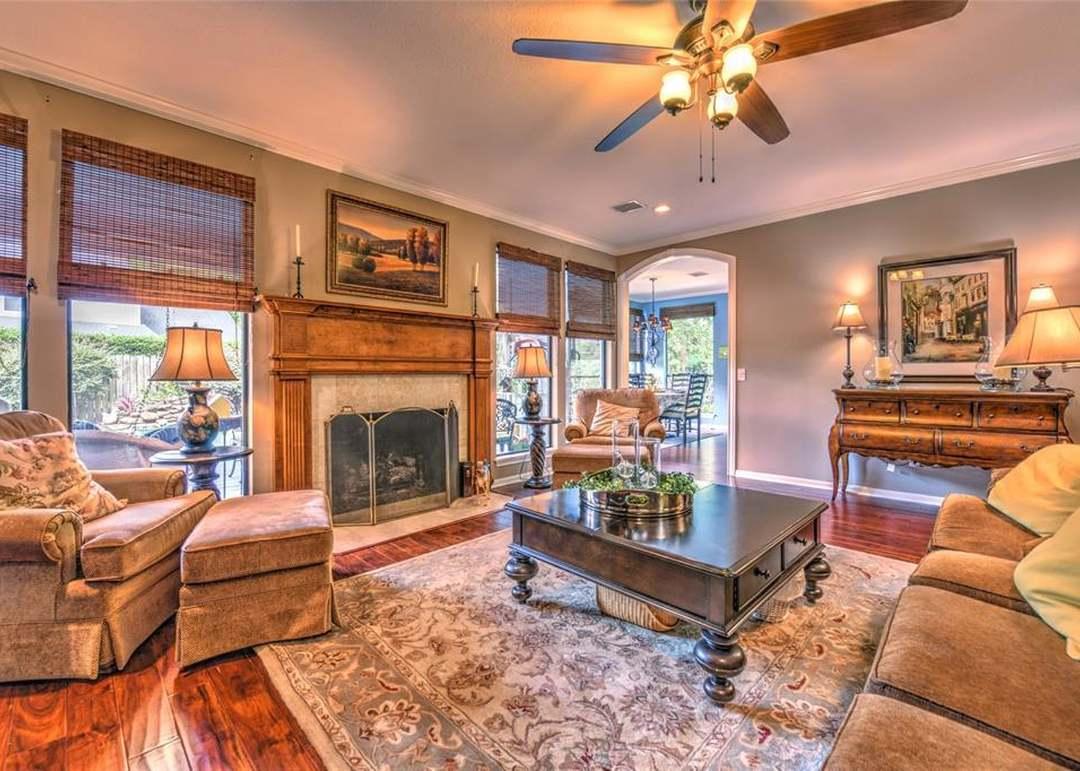
Buyers Love the Location—but Keep Asking Where Everything Will Go.
Buyers Love Your Woodlands Home—but Keep Asking Where They’re Supposed to Put Everything
The buyers love the street.
They love the trees.
They love the location.
They may even prefer the established character of the home.
Then they open the garage.
Two cars barely fit because the rest of the space contains:
Bicycles.
Holiday decorations.
Tools.
Lawn equipment.
Storage bins.
Extra refrigerator.
Then they open the closets.
Packed.
Then the pantry.
Packed.
And suddenly they start comparing your established Woodlands home with a newer property offering:
Three-car garage.
Large mudroom.
Oversized pantry.
Walk-in closets.
Extra storage.
This is a very different seller problem from having a bad floor plan.
Your home may have plenty of usable space.
The buyer simply cannot see it.
Before spending money adding cabinetry or remodeling closets, start by making every existing storage area demonstrate what it can actually hold.
First, Stop Using the Garage as Your Moving Container
This is one of the most common seller mistakes.
You declutter:
Kitchen.
Bedrooms.
Living room.
Office.
And move everything into the garage.
The house looks wonderful.
But the buyer opens the garage and thinks:
“There isn't enough storage here.”
You have accidentally proved their concern.
If the garage is an important part of the home, buyers need to see:
Floor.
Parking.
Walls.
Storage.
Remove More Than You Think
Before listing, consider removing:
Seasonal decorations.
Unused furniture.
Archived boxes.
Excess sporting equipment.
Duplicate household items.
Things you already plan to move.
Off-site storage may be worth considering during the listing period.
The goal is not to pretend you own nothing.
It is to show the home's capacity.
Cars Should Actually Fit in the Garage
If marketed as a two-car garage, buyers should be able to understand how two vehicles fit.
You do not necessarily need to keep two cars parked inside.
But avoid filling one entire bay with belongings.
A buyer comparing your home with newer construction will immediately notice the difference.
Organize What Remains
Use:
Shelving.
Wall hooks.
Cabinets.
Overhead racks where properly installed.
Defined equipment zones.
Organization can make an ordinary garage feel substantially more functional.
Do Not Install Expensive Garage Systems Automatically
A seller might see beautiful garage cabinetry online and think:
“We need $10,000 of storage before listing.”
Maybe not.
First ask:
Will buyers pay enough more for it?
Could basic decluttering and organization solve most of the problem?
Spend strategically.
Clean the Garage Floor
Remove:
Oil residue.
Loose leaves.
Dust.
Random tools.
A clean garage feels larger.
It also communicates:
Maintenance.
Lighting Helps
Dark garages appear:
Smaller.
Older.
Less usable.
Replace dead bulbs and make sure installed fixtures work.
If your garage has good natural or artificial light:
Use it.
Garage Doors Need to Operate Smoothly
The buyer may test:
Door opener.
Remote.
Keypad.
Make sure the basics work.
A smaller garage with a broken door feels much worse than a smaller garage that is immaculate and functional.
Now Look at the Closets
Closets tell buyers whether the home can handle their belongings.
If your closet is packed from:
Floor to ceiling.
the buyer will not think:
“They own a lot.”
They may think:
“This closet is too small.”
Remove 30 to 50 Percent Where Needed
You want:
Visible floor.
Open hanging space.
Some empty shelving.
The closet should feel like it has room left.
Matching Hangers Can Help Presentation
You do not need luxury closet staging.
But visually consistent organization can make a closet feel:
Cleaner.
Calmer.
Larger.
Do Not Stuff Everything Into One “Hidden” Closet
Buyers open closets.
Inspectors may need access.
You are not hiding clutter from anyone.
Distribute properly—or remove it from the property.
Primary Closets Deserve Extra Attention
If the primary closet is not enormous, organization becomes even more important.
Show:
Double hanging where present.
Shelving.
Shoe space.
Built-ins.
Actual usable floor.
Built-In Closet Systems Can Be Worth Highlighting
If the property already has:
Custom shelving.
Drawers.
Adjustable storage.
shoe racks.
mention them accurately.
But clarify what is permanently installed versus movable furniture.
Secondary Closets Matter Too
Especially when a buyer is comparing newer homes.
Each bedroom closet should look:
Usable.
Organized.
Not filled with household overflow.
Linen Closets Should Contain Linens
Not:
Vacuum cleaner.
Paper towels.
Random boxes.
Cleaning products.
Suitcases.
Everything.
Simple organization helps buyers understand the intended function.
Pantry Space Can Become a Major Buyer Comparison
Newer homes often market large walk-in pantries prominently.
An established Woodlands home may have something more modest.
Do not apologize.
Make it function beautifully.
Remove Bulk Purchasing Overflow
Twelve cases of beverages and six months of paper products can make a perfectly adequate pantry appear tiny.
Store only a realistic amount during marketing.
Use Shelves Efficiently
Group:
Canned goods.
Dry goods.
Small appliances.
Baking items.
Avoid visual chaos.
You are demonstrating organization—not creating a grocery advertisement.
Kitchen Cabinets Count as Storage Too
Buyers open them.
Do not overfill:
Pots.
Appliances.
Food containers.
A clear cabinet shows capacity.
Remove Rarely Used Appliances From Counters
Air fryer.
Mixer.
Coffee equipment.
Toaster.
Blender.
If every counter contains an appliance, buyers may think:
“There isn't enough cabinet storage.”
Keep only what helps stage the kitchen.
Laundry Rooms Can Carry More Storage Than Buyers Notice
If your laundry includes:
Cabinets.
Shelves.
Utility closet.
show them.
Do not cover every surface with:
Detergent.
Baskets.
Cleaning supplies.
Mudrooms Do Not Need to Be Huge
Some established homes may have:
Small drop zone.
Built-in bench.
Entry cabinet.
Hall closet.
If present, demonstrate the function.
A thoughtful smaller space can still be useful.
Create a Drop Zone if the Layout Supports It
A simple:
Bench.
Hooks.
Small console.
may help buyers understand how the entry functions.
But do not obstruct circulation.
Built-Ins Can Help Established Homes Compete
Bookcases.
Window-seat storage.
Entertainment cabinetry.
Office storage.
These can be practical advantages that newer blank-slate interiors may not yet include.
Photograph meaningful built-ins.
But Too Many Built-Ins Can Make Rooms Feel Smaller
If shelving is overloaded with:
Books.
Photos.
Collections.
Decorations.
edit aggressively.
The buyer needs to see:
Architecture.
Not your inventory.
Attic Storage Can Be an Important Feature
If the home has accessible, appropriate storage areas:
Keep access clear.
Buyers may appreciate understanding where seasonal items can go.
Do not market unfinished or unsuitable areas as:
Living space.
Climate-controlled storage.
unless accurate.
Walk-In Attic Access Can Be Particularly Useful
If present.
Show it cleanly.
A buyer may value practical access more than a slightly larger closet elsewhere.
Do Not Overstate Weight or Storage Capacity
If you do not know what a shelf, attic floor, or overhead garage rack is designed to hold:
Do not guess.
Storage Under the Stairs Can Be Useful
A small under-stair closet can become:
Vacuum storage.
Seasonal items.
Household supplies.
Show it organized.
Office Storage Matters
Many buyers evaluate how rooms function beyond bedrooms.
An office with:
Built-ins.
Closet.
Cabinetry.
can be easier to live with.
Do not let filing cabinets and paperwork make the office appear cramped.
Lifestyle Clutter Can Hurt More in Established Homes
Bicycles.
Golf equipment.
Camping gear.
Holiday decorations.
Pool equipment.
Sports gear.
All of it needs a home.
If those items are scattered throughout the property, buyers may conclude the house cannot contain everyday life.
Outdoor Storage Can Help
Does the home have:
Storage shed.
Pool-equipment enclosure.
Garage cabinets.
Utility area.
If permitted and well maintained, show these features accurately.
Do Not Add a Shed Just Before Listing Without Checking Requirements
Exterior additions may be subject to:
Community standards.
Approvals.
Other applicable requirements.
Do not create a compliance issue trying to solve a storage issue.
Smaller Storage Can Be Offset by Better Location
This is where seller positioning matters.
A buyer may be comparing:
Newer home with enormous closets.
versus
Established Woodlands home with:
Better lot.
Mature trees.
More convenient location for their needs.
Pool.
Golf-course view.
Established surroundings.
Your home does not need to win every category.
It needs to make the complete trade-off compelling.
Do Not Attack Newer Homes
Avoid:
“New homes waste space on huge closets.”
Buyers may genuinely value them.
Instead, demonstrate why your existing space works.
The Woodlands Setting Is Part of the Value
Your current Woodlands content reminds buyers that choosing a home involves evaluating the lot, privacy, trees, location, and future enjoyment—not simply the house itself.
That is especially relevant when an established property has a permanent location advantage but fewer modern storage features.
Pricing Still Needs to Recognize Functionality
A premium location does not mean buyers ignore:
Garage limitations.
Closet size.
Pantry size.
If direct competition offers significantly more storage, understand whether your other advantages justify the price.
Do Not Add a Fixed Discount for “Small Closets”
There is no universal adjustment.
Study actual:
Buyer feedback.
Comparable sales.
Current listings.
Home condition.
Location.
Floor Plans Can Help
Buyers may discover storage they missed during a quick showing.
A floor plan can help them understand:
Closets.
Utility areas.
Garage.
Room relationships.
It also prevents useful spaces from being overlooked.
Photography Should Show Storage Selectively
You do not need a photograph of every closet.
But meaningful features such as:
Primary closet.
Large pantry.
Built-in storage.
Organized garage.
may deserve inclusion.
Use the “Can Buyers See the Floor?” Test
Closet?
Garage?
Pantry?
If not:
Remove more.
Use the “Where Would We Put This?” Test
Think like the buyer.
Vacuum?
Holiday décor?
Bikes?
Luggage?
Food?
Show logical solutions.
Use the “Are We Creating Space or Buying Space?” Test
Decluttering costs little.
Construction costs much more.
Start with organization.
The Woodlands Storage Seller Scorecard
Before listing, evaluate:
Garage
Can buyers clearly see parking capacity?
Primary Closet
Organized and partially empty?
Secondary Closets
Functional?
Pantry
Clear and uncluttered?
Kitchen Cabinets
Not overfilled?
Laundry
Storage visible?
Entry
Useful drop zone?
Built-Ins
Shown without clutter?
Attic
Accessible where appropriate?
Outdoor Storage
Maintained and properly represented?
Lighting
Storage areas bright?
Floor Plan
Does it help reveal useful spaces?
Competition
How much more storage do newer alternatives offer?
Pricing
Does the complete value proposition still make sense?
Final Thoughts
An established home in The Woodlands may not have:
The biggest pantry.
The largest mudroom.
Four walk-in closets.
A three-car garage.
That does not automatically make it less desirable.
The home may offer things much harder to add later:
A particular location.
Established trees.
A premium lot.
Pool.
Golf-course setting.
Shorter access to places the buyer uses.
Mature neighborhood character.
Your job is to make sure storage does not become an unnecessary objection simply because the house is packed with your belongings.
Declutter the garage.
Empty part of every closet.
Organize the pantry.
Clear the kitchen counters.
Show useful built-ins.
Keep attic access visible.
And help buyers understand how the existing spaces actually function.
Then price the property based on the complete package—not on the assumption that buyers will ignore differences from newer construction.
Because the goal is not to convince buyers:
“You don’t need storage.”
They do.
The goal is to help them walk through your home and think:
“There’s actually more room here than we expected—and the things we can’t change later are exactly what we want.”
That is a much stronger selling position.
Frequently Asked Questions
Can limited storage make a Woodlands home harder to sell?
It can affect some buyers, particularly when newer competing homes offer larger garages, closets, or pantries. Strong organization, pricing, location, lot features, and overall condition can influence the complete decision.
Should I rent a storage unit before listing?
It can be worthwhile when removing excess belongings materially improves the presentation of garages, closets, and living spaces.
How empty should closets be?
There is no exact rule, but buyers should be able to see the floor, shelving, and some unused hanging space. Overfilled closets make storage appear smaller.
Should I install a custom closet before selling?
Not automatically. First evaluate organization, current competition, cost, price range, and whether the improvement is likely to affect buyer response enough to justify the expense.
Should I photograph the garage?
If it is organized or has useful storage upgrades, a garage photo may help. Avoid showing a garage packed with moving boxes.
Can built-in storage increase buyer appeal?
It can. Well-designed cabinetry, shelving, closet systems, and other practical storage may improve functionality, although installation cost does not automatically equal resale value.
Should I add a storage shed?
Not solely for resale without first evaluating need, cost, placement, community requirements, and how it affects the yard.
Does attic space count as living square footage?
Unfinished attic or storage space generally should not simply be represented as living area. Property measurements and classifications should be handled accurately.
Can a better location outweigh smaller closets?
For some buyers, absolutely. Buyers weigh location, lot, trees, condition, price, storage, and other characteristics differently. Your Woodlands content already emphasizes evaluating the complete homesite and location rather than one feature alone.
What's the biggest takeaway?
When selling an established Woodlands home with less storage than newer competition, do not apologize for the home's age or try to hide the limitation with clutter. Make every existing storage area work efficiently, highlight the permanent advantages buyers cannot add later, and price the home so the complete trade-off makes sense.