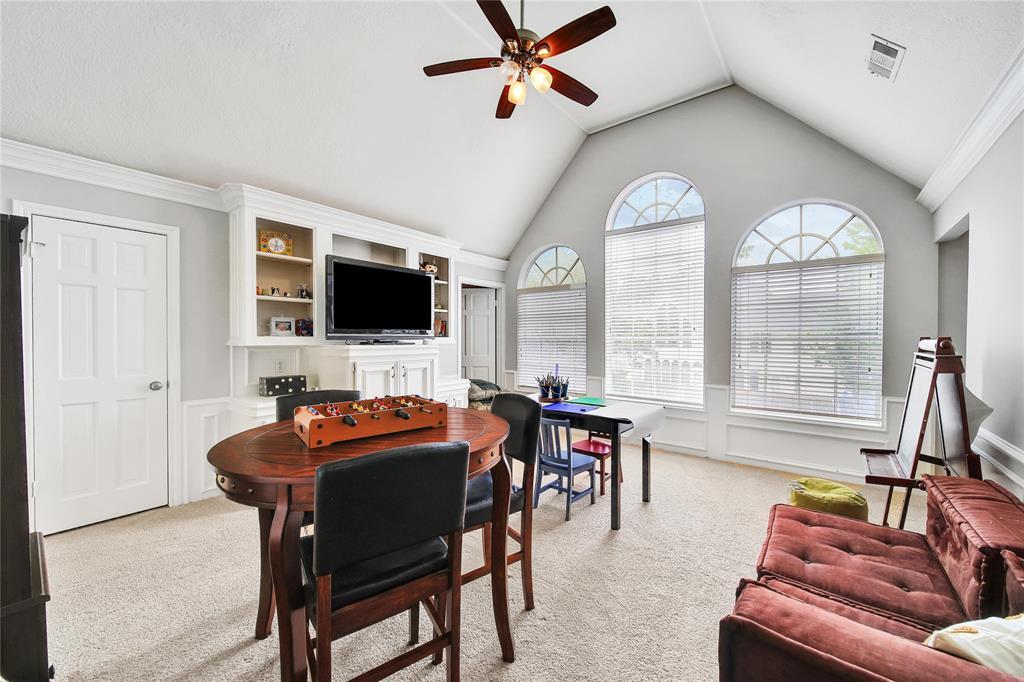
Your Cypress Home Has a Huge Bonus Room—So Why Are Buyers Asking What They Would Do With It?
Your Cypress Home Has a Game Room—But Right Now It Looks Like a Furniture Graveyard
The seller says:
“Upstairs has this amazing huge game room.”
Buyer walks upstairs.
They see:
Old sofa.
Unused treadmill.
Kids' toys.
Extra dining chairs.
TV on a folding table.
Storage boxes.
Maybe a pool table buried under laundry.
The buyer looks around and asks:
“What is this room supposed to be?”
That is not the reaction you want.
Larger Cypress homes often include spaces beyond the traditional:
Living room.
Kitchen.
Bedrooms.
Dining.
Those extra spaces can include:
Game rooms.
Media rooms.
Lofts.
Bonus rooms.
Upstairs living areas.
Theater rooms.
For the right buyer, they can be a major advantage.
But there is a problem.
The more flexible a room becomes, the easier it is for buyers to have no idea what to do with it.
Your job is to give the room a clear story.
First Decide: Media Room or Game Room?
These are not necessarily the same thing.
A media room may emphasize:
Screen.
Projector.
Darkness.
Sound.
Theater seating.
A game room may emphasize:
Open space.
Natural light.
TV.
Games.
Conversation.
Flexibility.
Stage according to what the room actually does best.
Do Not Try to Make One Room Everything
Media room.
Gym.
Playroom.
Office.
Guest room.
Storage.
All in 300 square feet.
Technically possible.
Visually terrible.
Choose a primary purpose.
Media Rooms Can Be Dark on Purpose
This is one room where:
Few windows.
Dark walls.
Controlled lighting
may actually support the intended use.
Do not automatically paint a true media room bright white.
But Dark Should Still Feel Clean
There is a difference between:
Theater atmosphere.
and:
Cave.
Use working:
Sconces.
Recessed lighting.
Step lighting if installed.
Accent lighting.
Replace Burned-Out Bulbs
A dark media room with two dead lights looks:
Poorly maintained.
Not cinematic.
Test the Screen or Projector
If you plan to market:
Projector.
Screen.
Built-in theater equipment,
know whether it works.
Clarify What Conveys
Does the sale include:
Projector?
Screen?
Receiver?
Speakers?
Theater seating?
TV?
Streaming devices?
Do not let buyers assume every piece of equipment stays.
Mounted Does Not Always Mean Included
Transaction terms matter.
Handle inclusions clearly.
Built-In Speakers Can Be a Strong Feature
If installed:
Know:
Where they are.
Whether they work.
What equipment operates them.
Do Not Say “Surround Sound” Just Because Speakers Are Visible
Verify the actual system.
Remote Controls Need Organization
A drawer containing:
Nine mystery remotes
does not help.
Label or organize relevant equipment where appropriate.
Smart Systems May Need Resetting
If media equipment connects to:
Seller accounts.
Wi-Fi.
Streaming services.
Smart-home platforms,
plan for proper transfer or reset.
Never Leave Streaming Accounts Logged In
Before closing:
Remove personal accounts.
During showings:
Avoid displaying personal profiles or information.
Game Rooms Need More Light
If the room has windows:
Open blinds.
Clean glass.
Let buyers understand:
Size.
Ceiling height.
Views.
Large Furniture Can Shrink a Large Room
Oversized sectional.
Pool table.
Foosball.
Arcade cabinets.
Bookshelves.
Toy storage.
all together can make a generous room feel cramped.
Pick One Anchor Piece
Maybe:
Pool table.
Sectional.
Game table.
TV area.
Then reduce everything around it.
Pool Tables Can Be Great—If They Fit
A pool table needs room around it.
If cues constantly hit:
Walls.
Furniture.
Railings,
buyers may question the layout.
Do Not Claim the Pool Table Conveys Unless It Does
Clarify.
A Game Room Should Show Walking Space
Buyers need to see:
Traffic flow.
Stair access.
Bedroom access.
Bathroom access.
Do not block pathways.
Upstairs Railings Should Stay Visible
Do not place furniture where it creates:
Unsafe-looking conditions.
Crowded landings.
Blocked railings.
Toy Rooms Need Aggressive Editing
A room containing hundreds of toys looks:
Small.
Chaotic.
Storage-starved.
Pack most of them before listing.
Keep Enough to Tell the Story
A small:
Toy shelf.
Table.
Reading corner.
can show family use without overwhelming the room.
Teen Spaces Need Neutralization Too
Posters.
Collections.
Gaming setups.
LED strips everywhere.
may work for your family.
But buyers need to imagine:
Their family.
Gaming Setups Can Still Look Great
Keep:
Desk.
Monitor.
Chair.
Console.
Cable management.
Remove:
Food containers.
Boxes.
Loose wires.
Excess equipment.
Cord Management Matters
Media rooms naturally have electronics.
Do not leave:
Extension cords across floors.
Tangled cables.
Loose speaker wires.
Create a clean, safe presentation.
Do Not Hide Wiring Problems
If permanent AV wiring needs repair:
Address it appropriately.
Bonus Rooms Need a Purpose
Maybe the home has a room that is not quite:
Bedroom.
Media room.
Office.
Game room.
That is okay.
Stage it as one strong use.
Fitness Can Work Well
A bonus room might become:
Home gym.
If so:
Use minimal equipment.
Keep walking space.
Clean mirrors.
Remove towels and personal items.
But Avoid Heavy Equipment on Questionable Flooring
Do not create damage immediately before selling.
Craft Rooms Can Also Work
If the room has:
Built-in cabinets.
Counters.
Storage.
Natural light.
a restrained craft-room presentation can demonstrate functionality.
Avoid Showing the Craft Explosion
Pack supplies.
Show the cabinetry.
Upstairs Living Can Appeal to Multigenerational Households
A game room near secondary bedrooms may offer:
Separate TV space.
Homework area.
Teen hangout.
Guest retreat.
Your marketing can communicate flexibility without making unsupported claims about separate living quarters.
Do Not Call It an Apartment Unless It Actually Is One
A sofa and mini-fridge do not create:
Apartment.
Guest suite.
Independent living unit.
Use accurate terminology.
Nearby Bathrooms Add Functionality
If the game or media room is near:
Full bath.
Half bath.
Bedrooms.
show the relationship with a floor plan.
Floor Plans Are Extremely Useful Here
A buyer may not understand from photos:
Where the room sits.
Whether it is open to stairs.
Whether it has doors.
Whether it connects to the media room.
A floor plan solves this.
Two Separate Bonus Spaces Can Be a Major Advantage
Some homes have:
Game room + media room.
This lets buyers imagine:
Kids in one.
Movie in another.
Office + game room.
Gym + theater.
Highlight that distinction.
Do Not Furnish Both Rooms Identically
Give each one a purpose.
Media Room Doors Matter
Double doors or solid doors may improve:
Light control.
Noise separation.
Privacy.
Show them.
Do Not Promise Soundproofing
Closed doors do not equal:
Soundproof.
Use:
“Enclosed media room.”
when accurate.
Built-In Wet Bars Can Add Appeal
If the bonus area includes:
Sink.
Cabinetry.
Beverage refrigerator.
Counter,
clean and stage it.
Clarify Appliances
A beverage refrigerator may be:
Built-in.
Freestanding.
Included.
Excluded.
Handle it clearly.
Do Not Call a Counter With a Mini-Fridge a Full Kitchen
Accuracy matters.
Popcorn Machines Are Optional
A theater-themed popcorn machine can be fun.
But do not turn the room into:
A movie theater gift shop.
Keep décor restrained.
Wall Colors Should Support the Space
Media room:
Darker may work.
Game room:
Lighter may photograph better.
Bonus room:
Neutral often increases flexibility.
Do Not Repaint Automatically
Evaluate:
Condition.
Room size.
Lighting.
Current color.
A well-designed dark theater may be an asset.
Ceiling Features Can Be Worth Showing
Maybe the room has:
Tray ceiling.
Coffered ceiling.
Fiber-optic lighting.
Acoustic panels.
Recessed lighting.
Show them if they are genuine features.
Acoustic Treatments Need Accurate Description
Decorative wall panels are not automatically:
Professional acoustic treatment.
Know what is installed.
Windowless Rooms Need Careful Marketing
A windowless media room may be perfect for movies.
But do not casually market it as:
Bedroom.
Use the actual intended space classification.
Storage Closets Can Be Valuable
Game rooms often accumulate:
Games.
Toys.
AV equipment.
Seasonal items.
If there is dedicated storage:
Declutter it and show it.
Buyers Will Open Closets
A closet packed floor-to-ceiling tells them:
“The house doesn't have enough storage.”
Attic Access Should Remain Accessible
Do not block it with:
Pool table.
Sofa.
Storage.
Inspectors may need access.
Temperature Differences Can Hurt the Showing
Upstairs spaces may feel warmer.
Before showings:
Make sure HVAC is operating appropriately.
Do Not Freeze the Downstairs to Cool the Game Room
If there is a persistent comfort issue:
Consider professional evaluation.
Zoned HVAC Can Be a Feature
If the upstairs has a separate:
Thermostat.
HVAC system.
Zone.
describe the actual configuration.
Do Not Assume Two Thermostats Mean Two Systems
Verify.
Media Equipment Generates Heat
A closed theater with:
Projector.
Receiver.
Gaming systems.
people
can warm quickly.
Ventilation and HVAC comfort matter.
Natural Light Versus Theater Light Should Be Intentional
Game room:
Bright.
Media room:
Controlled.
The buyer should immediately understand why each space looks the way it does.
Photography Needs Wide Angles Without Distortion
You want buyers to see:
Room size.
Layout.
Furniture relationship.
But avoid extreme photography that makes a modest room look enormous.
Include Multiple Angles When the Room Is Important
One photo may not explain:
Media wall.
Seating.
Doors.
Storage.
Use enough images to tell the story.
Do Not Lead With the Bonus Room
Unless it is extraordinary.
The listing should still establish:
Exterior.
Kitchen.
Living.
Primary suite.
Then use the bonus room as an additional advantage.
Video Can Be Particularly Effective
Walking from:
Game room → media room
or:
Bedrooms → upstairs living
can help buyers understand how the spaces connect.
Pricing Needs Restraint
Seller:
“We spent $40,000 turning this into a theater.”
That does not automatically mean:
Add $40,000 to the home price.
Specialized Improvements Have Specialized Buyers
One buyer may love:
Theater seating.
Projector.
Dark walls.
Another may think:
“We're converting this to a playroom.”
Flexible marketing matters.
Avoid Over-Personalizing the Space
A permanently themed:
Sports room.
Movie franchise room.
Casino room.
may narrow buyer imagination.
Keep the Architecture, Reduce the Theme
Let buyers see:
Room.
Not your collection.
Bonus Space Can Help Compete Against Similar Homes
Two Cypress homes may have:
Same bedrooms.
Same bathrooms.
Similar square footage.
But one has:
Dedicated game room.
Media room.
Upstairs living.
That functionality may matter.
Square Footage Alone Does Not Explain Function
Show how the house lives.
Use the “What Is This Room?” Test
Buyer should know within five seconds.
Use the “Can They Walk Through It?” Test
Remove furniture.
Use the “What Actually Conveys?” Test
AV equipment?
Furniture?
Clarify.
Use the “Could They Use It Differently?” Test
Do not over-theme.
Cypress Bonus-Room Seller Scorecard
Before listing, evaluate:
Primary Purpose
Clear?
Game Room
Decluttered?
Media Room
Properly staged?
Lighting
Working?
Windows
Clean?
Projector
Working if marketed?
Screen
Condition good?
Speakers
Working if marketed?
AV Wiring
Organized?
Streaming Accounts
Private?
Furniture
Appropriate scale?
Pool Table
Adequate clearance?
Toys
Reduced?
Gaming Setup
Organized?
Storage
Decluttered?
Doors
Working?
HVAC
Comfortable?
Thermostats
Configuration known?
Wet Bar
Clean?
Appliances
Inclusions clarified?
Attic Access
Clear?
Floor Plan
Bonus area identifiable?
Photography
Multiple useful angles?
Video
Worth considering?
Pricing
Specialized upgrades not valued dollar-for-dollar?
Final Thoughts
A game room, media room, or bonus room can be one of the reasons a buyer chooses your Cypress home.
But only if they understand what the space gives them.
Before listing:
Remove storage.
Reduce furniture.
Pack excess toys.
Organize electronics.
Hide cords safely.
Test lighting.
Test AV equipment you plan to market.
Clean windows.
Clear pathways.
Make attic access available.
Clarify what equipment conveys.
Use a floor plan.
Photograph the room from enough angles to explain it.
Then give each space a clear identity.
Do not show buyers:
The room where everything that didn't fit downstairs ended up.
Show them:
Movie nights.
Game nights.
Kids having their own living area.
A home gym.
Teen space.
A quiet upstairs retreat.
A flexible room that can change as their family changes.
That is the real advantage.
Because buyers are not paying extra simply because a listing says:
“Large game room.”
They are paying attention when they walk upstairs and immediately think:
“We would actually use this.”
That is the reaction your staging and marketing should create.
Frequently Asked Questions
Does a game room add value to a Cypress home?
It can improve buyer appeal and may contribute to value, but the impact depends on the home's size, floor plan, price range, room quality, and competing properties.
Should I leave my pool table when selling?
You can use it for staging if it fits the room well, but clarify whether it is included in the sale or treated separately.
Should I repaint a dark media room?
Not automatically. Dark finishes can be appropriate in a true media room. Consider condition, lighting, room size, and overall design before repainting.
Does theater equipment automatically stay with the home?
Do not assume so. Projectors, screens, speakers, receivers, seating, TVs, and other equipment should be addressed appropriately in the transaction.
Can I call a windowless media room a bedroom?
Avoid reclassifying a room simply because a bed could fit. Market the space accurately based on its actual configuration and applicable requirements.
Should I stage a bonus room as a gym?
It can work when the room naturally supports that use. Keep equipment minimal so buyers can still see the room's size and flexibility.
Is a floor plan important for a game room or media room?
Yes. It can help buyers understand how bonus spaces relate to bedrooms, stairs, bathrooms, and other living areas.
Should I include the media room in listing photography?
Yes, particularly when it has built-in AV features, theater seating, attractive lighting, or represents a meaningful advantage over competing homes.
Can I advertise a room as soundproof?
Only when that claim is properly supported. An enclosed room or acoustic features do not automatically mean the room is soundproof.
What's the biggest takeaway?
When selling a Cypress home with a game room, media room, or bonus space, give the room a clear purpose without making it so specialized that buyers cannot imagine their own use for it. Declutter, organize technology, show the layout accurately, and make the space feel like an advantage rather than leftover square footage.