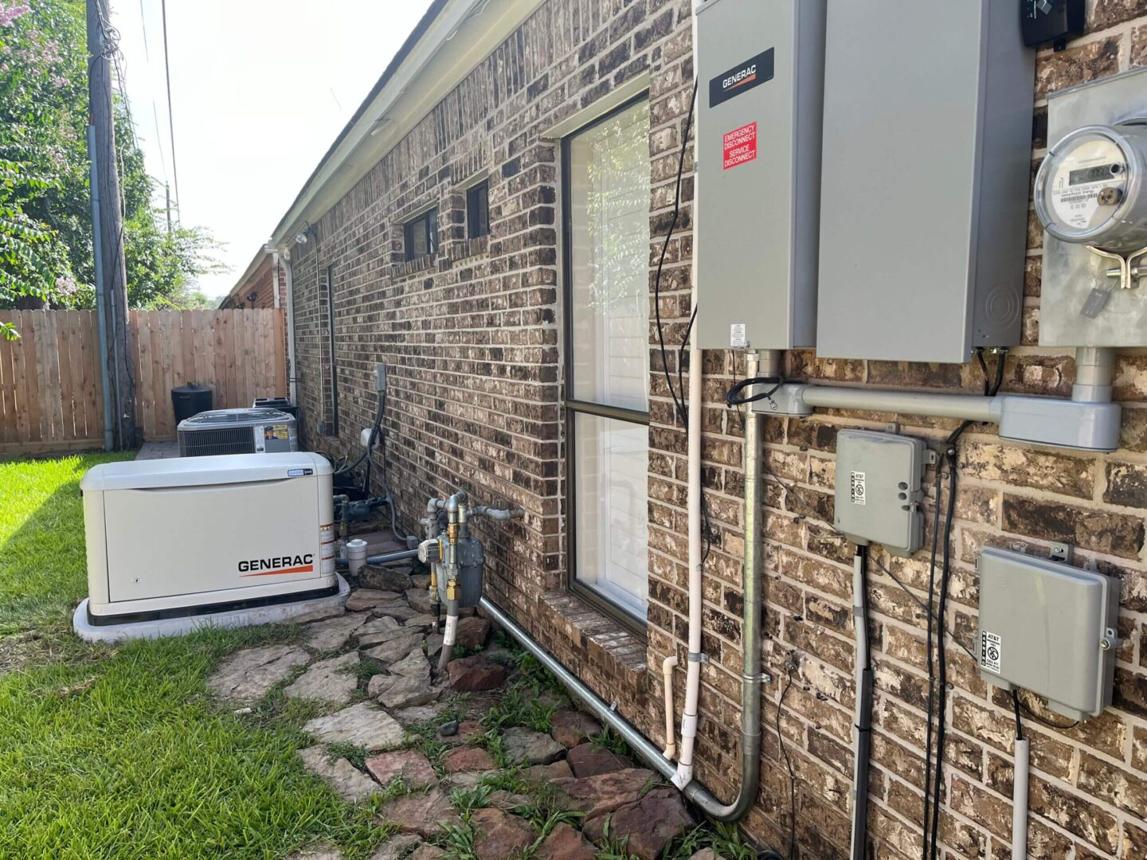
Your Cypress Home Has a Generator—But What Will It Actually Power?
Your Cypress Home Has a Generator—But Does “Whole House” Really Mean Everything?
The power goes out.
A few seconds later:
The generator starts.
Lights return.
Air conditioning comes back.
Refrigerator stays cold.
For the homeowner, the experience feels simple.
So when it is time to sell:
“Whole-house generator.”
That becomes one of the first features mentioned.
But then the buyer asks:
“Will it run both AC units?”
“Does it power the pool?”
“Is the generator natural gas or propane?”
“How old is it?”
“When was it serviced?”
“Does it automatically turn on?”
Suddenly, the seller realizes:
They use the generator.
But they may not actually know much about it.
A standby generator can be a meaningful selling feature in Cypress.
The key is marketing what the system actually does, not what you assume it can do.
Start With the Generator Documentation
Before listing, gather:
Installation invoice.
Manufacturer information.
Model number.
Rated capacity.
Warranty.
Service records.
Transfer-switch documentation.
Permit or approval records where applicable.
Fuel information.
Do this before buyers start asking questions.
Know the Manufacturer and Model
Do not simply say:
“It's a Generac-type system.”
if it is not.
Identify the actual equipment.
Know the Rated Capacity
Generator capacity is usually documented.
Do not estimate based on:
Physical size.
What the installer told you years ago.
How many things seemed to work during the last outage.
Use documentation.
“Whole House” Can Be Misunderstood
This phrase may suggest to a buyer:
Every circuit.
Every appliance.
Every HVAC system.
Pool equipment.
EV charger.
Outdoor kitchen.
Everything simultaneously.
That may not reflect the actual installation.
Describe the System More Precisely
Better:
“Standby generator with automatic transfer equipment; specifications and service records available.”
Then provide documentation.
Know What Happens During an Outage
Does the system:
Start automatically?
Require manual action?
Power selected circuits?
Use load-management equipment?
Ask your service provider if you are unsure.
Automatic Transfer Switches Matter
If the generator has an automatic transfer switch:
Document it.
Do not assume every standby generator operates identically.
Test the Generator Before Listing
Many standby systems perform scheduled exercise cycles.
But that does not mean you should ignore:
Warning lights.
Error codes.
Unusual noises.
Failure to start.
If there is a known problem:
Have it serviced.
Do Not Wait for the Buyer Inspection
A generator that fails to start during inspection creates:
Doubt.
Negotiation.
Delay.
Potential repair requests.
Keep Service Records
Buyers may want to know:
Last service date.
Oil change.
Battery replacement.
Repairs.
Major component replacement.
Routine maintenance history.
Organize those records.
Battery Age Is Easy to Forget
A standby generator may depend on a starting battery.
If it has been replaced:
Keep the invoice.
If service is due:
Address it according to manufacturer or service recommendations.
Know the Fuel Source
Is it:
Natural gas?
Propane?
Another approved fuel configuration?
Do not guess.
Natural Gas Does Not Mean Unlimited Guaranteed Operation
Avoid telling buyers:
“It will run forever as long as there's gas.”
Utility availability and equipment operation should not be guaranteed.
Propane Systems Need Tank Information
If applicable, know:
Tank location.
Ownership.
Capacity.
Whether the tank is owned or leased.
Provider information.
Do not assume a leased propane tank automatically transfers under identical terms.
Fuel Arrangements Should Be Verified
If any third-party agreement exists:
Find it before listing.
Generator Placement May Raise Buyer Questions
Buyer may ask about:
Distance from windows.
Property line.
Equipment clearance.
Noise.
Do not personally certify installation compliance unless you have appropriate documentation.
Keep the Area Around the Generator Clear
Remove:
Leaves.
Branches.
Boxes.
Lawn equipment.
Vegetation blocking airflow or access.
Follow manufacturer recommendations for required clearance.
Do Not Hide the Generator With Dense Landscaping
Screening may look attractive.
But buyers and service technicians need to:
See.
Access.
Maintain.
the equipment.
Generator Noise Is a Legitimate Buyer Question
Standby generators make noise.
Do not promise:
“You can't hear it inside.”
Different buyers have different sensitivity.
If appropriate:
Allow them to hear a normal test cycle.
Neighbor Relationships Can Matter
Do not make unsupported claims about:
Noise restrictions.
HOA approval.
Neighbor acceptance.
Use actual documentation when available.
Know the Installation Date
This helps buyers understand:
Age.
Warranty.
Maintenance history.
Do not use:
“Basically new.”
for a system installed several years ago.
Use the actual year.
Warranty Information Can Add Confidence
Find:
Manufacturer warranty.
Installer warranty.
Extended coverage if purchased.
Service agreement.
But verify whether coverage transfers.
Do Not Advertise “10-Year Warranty” Without Checking
The original warranty term may not equal:
Remaining warranty.
Transferable warranty.
Buyer coverage.
Read the terms.
HVAC Is Usually the Big Buyer Question
Buyer:
“Will it run the air conditioning?”
You need a better answer than:
“It always has.”
Know the actual configuration.
Multiple HVAC Systems Add Complexity
A larger Cypress home may have:
Two condensers.
Three systems.
Zoned equipment.
Load-management controls.
Do not guarantee simultaneous operation without support.
Pools Add Another Load
If the property has:
Pool pump.
Heater.
Spa.
Water features.
buyers may ask whether those systems receive generator power.
Do not assume.
EV Chargers Add Yet Another Question
A buyer may ask:
“Can I charge my EV during an outage?”
The answer depends on:
Generator capacity.
Electrical configuration.
Load management.
Charger.
Other active loads.
Let qualified professionals address compatibility.
Solar Plus Generator Needs Clear Documentation
If the home also has solar panels:
Do not tell buyers:
“Solar and generator work together automatically.”
unless the actual system configuration supports that statement.
Battery Storage Makes It Even More Important
Solar.
Battery.
Generator.
Utility service.
can create a sophisticated backup system.
But it also creates more room for inaccurate marketing.
Provide documentation.
Do Not Demonstrate the Generator by Improperly Manipulating Electrical Equipment
If a buyer wants to see operation:
Use appropriate testing procedures or qualified service professionals.
Safety comes first.
Generator Monitoring Apps Can Be a Feature
Some systems offer:
Remote monitoring.
Maintenance alerts.
Status notifications.
If the property has that capability:
Know whether the buyer will need:
New account.
Subscription.
Transfer.
Setup.
Smart Features Do Not Automatically Transfer
Seller's app login should not simply be handed over.
Determine proper ownership-transfer procedures.
Generator Maintenance Agreements Need Review
If you have a service contract:
Does it:
Transfer?
Expire at closing?
Require buyer enrollment?
Do not promise continuation without verification.
Repairs Should Be Documented
If the generator has had:
Starter replacement.
Controller replacement.
Fuel-system work.
Battery replacement.
Other repair,
keep the record.
A repaired system is easier to explain when documentation exists.
Do Not Hide Past Repairs
Equipment requiring maintenance is normal.
The important question is:
What happened?
What was repaired?
Is it currently functioning?
Buyers May Ask About Outage History
You can describe your historical experience:
“During our ownership, the generator operated during several outages.”
Avoid:
“You'll never lose power here.”
The generator itself can fail.
Fuel can be interrupted.
Other electrical problems can occur.
Do Not Guarantee Continuous Power
Backup equipment reduces outage impact.
It does not create an absolute guarantee.
Insurance Questions Should Go to the Buyer’s Carrier
A buyer may ask:
“Will the generator lower my insurance?”
Do not promise discounts.
Carrier treatment varies.
Appraisers May Not Give Dollar-for-Dollar Credit
Seller paid:
$15,000.
$20,000.
$25,000.
That does not automatically mean:
Add the exact cost to the home's price.
Market Value and Installation Cost Are Different
A generator may contribute through:
Buyer appeal.
Competitive advantage.
Convenience.
Perceived preparedness.
Reduced buyer hesitation.
The market determines the value.
Compare Against Homes Without Generators
If similar competing Cypress homes do not have backup power:
Your generator may help differentiate the property.
That does not mean you can ignore:
Price.
Condition.
Location.
Other upgrades.
Photography Should Include the Generator—but Not Lead With It
Your first images should usually sell:
Exterior.
Kitchen.
Living room.
Primary suite.
Backyard.
The generator supports the property story.
It is not usually the hero image.
A Clean Installation Photo Can Be Useful
Show:
Generator.
Pad.
Surrounding clearance.
General condition.
Avoid:
Serial numbers.
Account information.
Personal labels.
Marketing Language Should Be Specific
Instead of:
“NEVER LOSE POWER AGAIN!”
use:
“Standby generator with automatic transfer equipment; installation and service documentation available.”
when accurate.
Use the “What Does It Actually Power?” Test
Know.
Or say that buyers should verify.
Use the “When Was It Last Serviced?” Test
Have the record.
Use the “What Transfers?” Test
Warranty?
Monitoring?
Service plan?
Verify.
Use the “Are We Guaranteeing an Outage Outcome?” Test
If yes:
Stop.
Cypress Generator Seller Scorecard
Before listing, evaluate:
Manufacturer
Known?
Model
Known?
Capacity
Documented?
Installation Date
Known?
Fuel Source
Verified?
Transfer Switch
Documented?
Load Management
Known?
HVAC
Backup configuration understood?
Pool
Backup configuration understood?
EV Charging
No unsupported claims?
Solar
Integration understood if applicable?
Battery
Integration understood if applicable?
Service
Current?
Battery
Condition reviewed?
Warning Lights
None ignored?
Warranty
Available?
Warranty Transfer
Verified?
Monitoring App
Transfer process understood?
Service Agreement
Transferability checked?
Photography
Equipment represented accurately?
Pricing
No dollar-for-dollar assumption?
Final Thoughts
A standby generator can be one of those features buyers do not fully appreciate until they have experienced a long power outage.
Then suddenly:
It matters.
A lot.
That makes it a strong potential selling feature for a Cypress home.
But the feature becomes less impressive when the seller cannot answer:
How old is it?
What size is it?
When was it serviced?
What fuel does it use?
What does it actually power?
Does the warranty transfer?
Before listing:
Find the documents.
Identify the model.
Verify capacity.
Service the equipment when appropriate.
Test normal operation.
Understand the fuel arrangement.
Locate warranty information.
Clarify monitoring and service agreements.
Know the basic backup configuration.
Then market it accurately.
Do not say:
“Whole house means everything.”
Do not promise:
“You'll never lose power.”
Do not guarantee:
“It runs both AC units, pool, EV charger and everything else at once.”
unless that exact configuration is properly supported.
Instead, give buyers what they really want:
Confidence that the system exists, has been maintained, and can be understood before they purchase the property.
Because the generator itself is valuable.
But for a buyer considering a major home purchase, documented information can make that value much easier to trust.
Frequently Asked Questions
Does a standby generator add value to a Cypress home?
It can improve buyer appeal and may contribute to market value, but the amount depends on the system, condition, age, comparable sales, buyer demand, and the overall property.
Can I advertise my generator as “whole house”?
Use precise language. Buyers may interpret “whole house” to mean every electrical load can operate simultaneously. Describe the actual system and provide specifications where possible.
Should I service the generator before listing?
If routine service is due or there are known operational concerns, addressing them before listing can reduce buyer uncertainty and inspection surprises.
Can I tell buyers exactly what the generator will power?
Only when the configuration is reliably known. Otherwise provide the system specifications and allow qualified professionals to confirm specific load capabilities.
Will a generator run the air conditioner during an outage?
Some installations are designed to support HVAC equipment, but capability depends on generator size, electrical configuration, load management, and other active loads.
Does a generator work with solar panels?
It can in certain properly designed systems, but integration varies. Do not assume solar, battery storage, and generator equipment automatically work together.
Do generator warranties transfer?
Some may, while others may have registration requirements, fees, or restrictions. Verify the specific warranty terms.
Should I provide generator service records to buyers?
Yes. Available installation and maintenance documentation can help buyers understand the equipment's age, condition, and service history.
Will my generator reduce the buyer's homeowners insurance?
Possibly in some circumstances, but sellers should not promise an insurance discount. Buyers should obtain property-specific information from their carrier.
What's the biggest takeaway?
When selling a Cypress home with a standby generator, sell the documented system—not the promise of never losing power. Verify the equipment, capacity, fuel source, service history, warranty, and actual backup configuration so buyers understand exactly what they are purchasing.