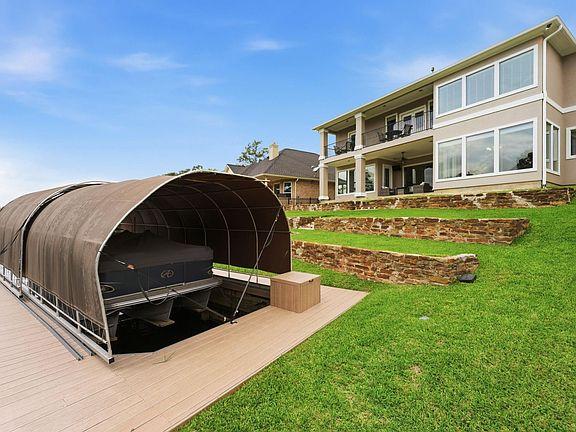
Your Lake Conroe Home Has a Boat Lift—But Will It Work for the Buyer's Boat?
That Boat Lift Looks Great in the Photos—Until the Buyer Asks How Much Weight It Can Hold
The buyer walks onto the dock.
They love it.
Covered slip.
Boat lift.
Maybe:
Storage.
Lighting.
Seating.
Jet ski lift.
Then comes the question:
“What's the lift capacity?”
Seller:
“It held our boat.”
Buyer:
“How much did your boat weigh?”
Seller:
“I'm not sure.”
Now the buyer owns a:
Wake boat.
Pontoon.
Center-console.
Maybe something much heavier than what the seller used.
Suddenly one of the property's strongest features becomes:
An unanswered question.
For a Lake Conroe waterfront seller, a dock and boat lift should not simply look impressive.
Buyers need to understand:
What exactly are they getting?
Start With the Lift
Before listing, identify:
Manufacturer.
Model.
Approximate installation date.
Rated capacity.
Motor information.
Configuration.
Service history.
Use documentation whenever possible.
Never Guess Lift Capacity
Do not say:
“It's probably a 10,000-pound lift.”
That number matters.
The buyer may rely on it when evaluating whether their boat works with the property.
Boat Weight Is More Complicated Than It Looks
A manufacturer's published dry weight may not include:
Fuel.
Batteries.
Gear.
Water.
Accessories.
Tower.
Other equipment.
The buyer should verify their actual needs.
Capacity Does Not Equal Compatibility
Even if the lift can support the weight:
The boat still needs to fit.
Consider:
Beam.
Hull design.
Bunk configuration.
Length.
Motor configuration.
Tower height.
Do Not Promise “It Fits Any Boat”
It probably does not.
Water Depth Still Matters
A powerful lift does not help if the buyer's boat cannot comfortably reach it under the conditions they need.
Buyer should verify:
Current depth.
Draft.
Access.
Dock Configuration Matters
Some docks have:
Single slip.
Double slip.
Boat lift + jet ski lifts.
Covered seating.
Upper deck.
Storage.
Fishing area.
Describe what actually exists.
Jet Ski Lifts Need Documentation Too
If present:
Test them.
Know whether they operate.
Do not assume they are automatically included if they are removable personal equipment.
Test the Lift Before Listing
Operate it.
Listen for:
Grinding.
Straining.
Unusual vibration.
Intermittent operation.
Do Not Wait for the Buyer to Discover It
A nonworking lift during a showing immediately changes the conversation.
Service Problems Should Be Professionally Evaluated
Boat lifts involve:
Heavy equipment.
Electric motors.
Cables.
Water.
Do not attempt unsafe repairs for the sake of getting the property listed quickly.
Inspect Visible Cables
Look for obvious:
Fraying.
Corrosion.
Damage.
But leave technical condition assessment to an appropriate professional.
Pulleys and Hardware Matter
Buyers may notice:
Rust.
Loose hardware.
Damaged components.
A freshly cleaned dock does not hide mechanical neglect.
Keep Service Records
Gather documentation for:
Motor replacement.
Cable replacement.
Bunk work.
Electrical repairs.
Lift installation.
Routine service.
Dock Boards Matter More Than Sellers Think
Walk every section.
Look for:
Loose boards.
Rot.
Splintering.
Raised fasteners.
Soft spots.
Buyers Will Walk on the Dock
The dock is not decoration.
It needs to feel:
Stable.
Safe.
Maintained.
Railings Should Feel Secure
If present:
Check:
Loose sections.
Damaged posts.
Missing components.
Ladders Should Be Secure
Especially:
Swim ladders.
Dock ladders.
Water-access steps.
Dock Roofs Need Attention
A covered dock may have:
Metal roof.
Shingles.
Other roofing material.
Check visible:
Damage.
Rust.
Missing panels.
Leaks.
Do Not Ignore Storm Damage
Waterfront structures are exposed.
If repairs were made after a storm:
Keep documentation.
Electrical Systems Are a Major Issue Around Water
A dock may contain:
Lift wiring.
Lights.
Outlets.
Fans.
TV.
Refrigerator.
Other equipment.
Water and electricity require appropriate professional installation and maintenance.
Do Not DIY Questionable Dock Wiring
If something looks:
Damaged.
Exposed.
Improvised.
Have it professionally evaluated.
Test Dock Lighting
A beautiful dock with:
Half the lights burned out
looks neglected.
Landscape and Dock Lighting Can Help Photography
Especially:
Twilight.
But everything should function properly.
Outlets Should Not Become Extension-Cord Central
Remove unnecessary:
Extension cords.
Power strips.
Temporary wiring.
Dock Storage Should Be Decluttered
Storage closets often become packed with:
Life jackets.
Fishing equipment.
Cleaning products.
Boat supplies.
Tools.
Show the storage.
Not the clutter.
Secure Hazardous Materials
Remove or appropriately store:
Fuel.
Chemicals.
Sharp tools.
Other unsafe items.
Fishing Features Can Be Attractive
Maybe the dock has:
Rod storage.
Fish-cleaning station.
Lighting.
Sink.
Describe actual features.
Do Not Guarantee Fishing Results
Avoid:
“You'll catch bass every morning.”
The dock provides access.
The fish make their own decisions.
Seating Areas Sell the Lifestyle
A dock is not only:
Boat storage.
Stage it so buyers imagine:
Coffee.
Sunset.
Fishing.
Conversation.
But Do Not Over-Furnish
Keep walkways open.
Upper Decks Need Special Attention
If your dock has a second level:
Inspect:
Railings.
Stairs.
Decking.
Lighting.
The View From the Dock Should Be Photographed
Turn the camera toward:
Open water.
Cove.
Sunset.
House.
Buyers should see both directions.
Photograph the House From the Water
This can be one of the strongest images in a Lake Conroe listing.
It shows:
House.
Yard.
Bulkhead.
Dock.
Complete waterfront experience.
Drone Photography Can Explain Dock Placement
Especially if the property sits:
In a cove.
On open water.
Along a canal.
Near a point.
Avoid Misleading Aerial Angles
The buyer should understand the actual:
Distance.
Water relationship.
Neighboring docks.
Permits and Approvals May Matter
Waterfront improvements may be subject to:
Applicable requirements.
Community restrictions.
Lake-related rules.
Other approvals.
Gather available documentation.
Do Not Promise Everything Is “Grandfathered”
That is a specific claim.
Use documentation.
Know Who Owns the Dock Improvements
Do not assume every structure near the shoreline is treated identically.
Surveys and other records may help clarify the property configuration.
Dock Size Should Be Verified Before Advertising
If you list:
Dimensions.
Measure accurately or use reliable plans.
Lift Capacity Should Come From Documentation
Not memory.
Improvement Dates Matter
If you replaced:
Dock roof.
Decking.
Lift motor.
Cables.
Lighting.
Record the year.
Create a Waterfront Improvement Timeline
For example:
2021 — lift motor replaced.
2022 — dock lighting updated.
2024 — decking repaired.
2025 — boat lift serviced.
Use your actual history.
Buyer Inspections May Include the Dock
Expect close examination.
A general home inspector may recommend additional evaluation by:
Marine contractor.
Electrician.
Boat-lift professional.
Other specialist.
Consider Pre-Listing Evaluation
Especially if:
Dock is older.
Lift has not been serviced recently.
Electrical work is questionable.
Visible deterioration exists.
Do Not Overreact to Inspection Findings
Get appropriate information and estimates.
Insurance Questions Will Come Up
Buyer may ask:
“Is the dock covered?”
Coverage depends on:
Carrier.
Policy.
Structure.
Location.
Terms.
Do not promise their future coverage.
Your Insurance Experience Is Only Context
Their policy may differ.
Maintenance Costs Vary
Buyer:
“How much does a dock cost every year?”
There is no universal number.
Costs depend on:
Age.
Materials.
Equipment.
Weather.
Repairs.
Usage.
Provide Your History Without Guaranteeing Their Future
That is more useful.
A Dock Can Differentiate Two Waterfront Homes
Imagine:
Home A:
Beautiful waterfront.
No dock.
Home B:
Comparable home with:
Covered dock.
Working lift.
Lighting.
Seating.
Storage.
For a boating buyer:
That distinction can matter substantially.
But Dock Cost Does Not Equal Added Value
Seller spent:
$70,000.
That does not automatically mean:
Home is worth $70,000 more.
Market response determines value.
Condition Influences the Premium
A maintained dock can be:
Asset.
A deteriorated dock may look like:
Future expense.
Market the Complete Boating Experience
Instead of:
“Boat dock!”
show:
House → backyard → dock → lift → water.
Video Can Be Powerful
A short property video moving from:
Kitchen.
Patio.
Backyard.
Dock.
Lake.
can communicate waterfront living better than isolated photos.
Do Not Fake Boat Lifestyle
If you do not own a boat:
You do not need to borrow one just for photography.
An empty, clean lift can show the feature clearly.
If a Boat Is Present, Keep It Clean
A neglected boat can distract from:
The property.
Clarify Whether the Boat Is Included
Usually it is not automatically part of the real estate.
Do not let marketing imply otherwise.
Use the “Can the Buyer Understand the Lift?” Test
Capacity?
Configuration?
Records?
Use the “Would You Walk Barefoot Here?” Test
Decking clean and maintained?
Use the “Does Everything Work?” Test
Lift.
Lights.
Fans.
Water.
Use the “Can Buyers See the Lifestyle?” Test
Photograph more than equipment.
Lake Conroe Dock Seller Scorecard
Before listing, evaluate:
Lift Manufacturer
Known?
Lift Model
Known?
Capacity
Documented?
Installation Date
Known?
Motor
Working?
Cables
Condition reviewed?
Pulleys
Condition reviewed?
Bunks
Condition reviewed?
Service Records
Available?
Jet Ski Lifts
Working?
Deck Boards
Secure?
Railings
Secure?
Ladder
Secure?
Dock Roof
Maintained?
Electrical
Professionally maintained?
Lighting
Working?
Outlets
Working?
Storage
Decluttered?
Fishing Features
Clean?
Seating
Staged?
Upper Deck
Maintained?
Permits
Available where applicable?
Improvement Timeline
Created?
Photography
House and dock shown together?
Drone
Considered?
Video
Considered?
Pricing
Dock quality reflected appropriately?
Final Thoughts
A Lake Conroe buyer who owns a boat may spend more time looking at your dock than your kitchen backsplash.
That is not an exaggeration.
They may already be thinking about:
Boat weight.
Lift capacity.
Water depth.
Dock access.
Electrical power.
Storage.
Fishing.
Sunsets.
For that buyer:
The dock is part of the house.
Treat it that way.
Before listing:
Find the lift documentation.
Verify the capacity.
Test the motor.
Review visible cables and hardware.
Repair damaged decking.
Secure railings.
Test lighting.
Address questionable electrical work professionally.
Declutter storage.
Organize service records.
Gather available approvals.
Photograph the dock from the house.
Photograph the house from the dock.
Use aerial photography when useful.
Then describe the equipment accurately.
Do not say:
“Fits any boat.”
Do not guess:
“Probably a 12,000-pound lift.”
Do not promise:
“Dock will never need work.”
Instead:
Give the buyer information.
Because when a waterfront buyer walks down the yard, steps onto a clean, maintained dock, looks at the lift and realizes:
“Our boat could be right here.”
the property stops being simply:
A house on Lake Conroe.
It becomes:
Their lake house.
And that emotional shift can be one of the most powerful moments in the entire showing.
Frequently Asked Questions
Should I service my boat lift before selling my Lake Conroe home?
If the lift has not been serviced recently or shows signs of unusual operation, professional evaluation can help identify concerns before buyer inspections.
How do I know my boat lift's capacity?
Use manufacturer documentation, installation records, model information, or an appropriate professional. Avoid estimating capacity from the boat previously stored on it.
Can I tell buyers their boat will fit?
Avoid guaranteeing compatibility. Buyers should verify their boat's weight, dimensions, hull configuration, draft, and the lift and water conditions.
Should I repair old dock boards before listing?
Obvious loose, damaged, soft, or hazardous decking deserves attention. The dock should feel maintained and safe during showings.
Should dock electrical systems be inspected?
If there are visible concerns, older installations, exposed wiring, or other questions, professional evaluation is particularly important because the electrical equipment is located near water.
Does a boat dock automatically increase home value by what it cost to build?
No. Construction cost and market value are different. Dock quality, condition, lift, location, waterfront type, buyer demand, and comparable sales influence value.
Should I provide dock and lift records?
Yes, when available. Installation documents, service records, improvement dates, lift specifications, and repair invoices can help buyers understand the waterfront improvements.
Should the dock appear prominently in listing photos?
Absolutely. For a true waterfront property, show the relationship between the home, backyard, dock, and water rather than treating the dock as an afterthought.
Should I use video when marketing a waterfront home?
It can be especially effective because video can show the physical transition from the home's interior to the patio, backyard, dock, and lake.
What's the biggest takeaway?
When selling a Lake Conroe home with a boat dock and lift, sell more than the appearance of the dock—sell confidence in how it functions. Verify the lift specifications, address maintenance and electrical concerns, organize records, and show buyers exactly how the waterfront setup fits into everyday lake living.