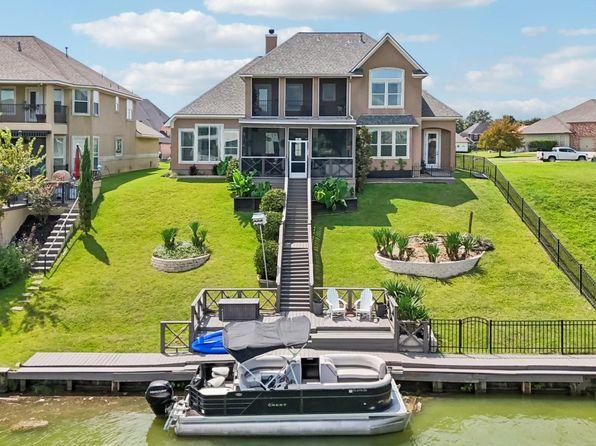
Buyers Love the Lake—Then They Ask the Question Every Waterfront Seller Should Expect
Buyers Love Your Lake Conroe Home—Then They Ask, “Has It Ever Flooded?”
The showing is going beautifully.
The buyers love:
The water.
The backyard.
The view.
The outdoor living.
Then comes the question almost every lake-area seller should be prepared to answer:
“Has the house ever flooded?”
That question can instantly change the tone of the showing.
Then come more:
Is it in a flood zone?
Is flood insurance required?
How much is the insurance?
How high did the water get during major storms?
Has the garage ever taken water?
Do you have an elevation certificate?
Does the backyard flood?
Is that drainage system there because of flooding?
Sellers sometimes want to provide immediate reassurance:
“We've never had any problems, so you're completely safe.”
That may describe your experience.
It does not guarantee the buyer's future.
The strongest strategy is to separate known property history from future flood predictions and give buyers reliable information they can independently evaluate.
Start With the Property's Actual Flood History
Before listing, be clear about what you know.
Has water ever entered:
Living space?
Garage?
Guest house?
Detached structure?
Enclosed patio?
Storage area?
Has the property experienced:
Yard flooding?
Shoreline overflow?
Street flooding?
Drainage problems?
Do not use the word “flooding” casually—but do not minimize known history either.
Seller Disclosure Matters
Known flooding, water penetration, previous damage, or related repairs may need to be addressed through applicable seller disclosures.
If you are uncertain how a particular event should be disclosed:
Seek appropriate professional guidance.
Do not decide:
“It happened before we remodeled, so it no longer matters.”
Flood Zone and Flood History Are Not the Same Thing
This distinction is critical.
A mapped flood designation does not automatically mean:
The structure has previously flooded.
Likewise, a seller's statement:
“It has never flooded during our ownership”
does not establish:
No future flood risk.
Keep those concepts separate.
Flood Maps Can Change
Do not rely on:
What the map showed when you bought the property.
What your neighbor says.
An old listing.
Buyers should review current authoritative flood-hazard information for the specific property.
Do Not Advertise “Not in a Flood Zone”
That language can be misleading because flood-risk mapping contains different designations, and no property can be represented as having zero flood risk simply from one map classification.
Use precise current information when needed.
“Never Flooded” Also Needs Context
If the property has not experienced known flooding during your ownership:
That can be relevant historical information.
But avoid turning it into:
“This property can never flood.”
Past performance does not guarantee future conditions.
Find Your Elevation Certificate if One Exists
Some properties may have an elevation certificate or other elevation-related documentation.
If you have one:
Locate it before listing.
Buyers or insurance professionals may find it useful.
Do Not Assume Every Property Has an Elevation Certificate
If you cannot find one:
Do not tell buyers one exists.
The need for elevation information can depend on the property and transaction.
Keep Old Surveys and Relevant Site Documentation
These may help buyers understand:
Lot boundaries.
Structures.
Shoreline.
Drainage features.
Other property characteristics.
But an old survey does not automatically answer current flood-risk questions.
Flood Insurance Should Be Buyer-Specific
Buyer asks:
“How much is flood insurance?”
You may be able to provide your historical premium.
But do not promise:
“You'll pay exactly what we pay.”
Insurance pricing can depend on:
Property.
Coverage.
Policy structure.
Insurer.
Flood-risk information.
Buyer circumstances.
Other factors.
Your Existing Policy May Not Simply Transfer
Do not assume the buyer inherits:
Same premium.
Same coverage.
Same insurer treatment.
Encourage them to obtain their own property-specific quote early.
Historical Premiums Can Still Be Helpful
If you choose to share them:
Clearly label them as historical.
For example:
“Seller's current annual flood-insurance premium is approximately $X as of 2026.”
when accurate.
That is much stronger than:
“Flood insurance is cheap here.”
Mortgage Requirements Are Not a Seller Guarantee
Buyer asks:
“Will my lender require flood insurance?”
That depends on the lender, loan, property, and current flood information.
Do not answer for the lender.
Cash Buyers Should Still Evaluate Flood Risk
Flood questions are not only financing questions.
A buyer may choose insurance regardless of whether a lender requires it.
Let them make that decision with appropriate professionals.
Waterfront Does Not Automatically Mean the House Is High Risk
Nor does waterfront automatically mean:
Flood insurance is mandatory.
Every Lake Conroe property is different.
Evaluate the specific address and structure.
The House and Yard Can Have Different Experiences
A seller might say:
“We've had water in the yard, but never in the home.”
That distinction matters.
Document and describe what you actually know.
Yard Water Is Still Worth Understanding
Does water collect:
Near shoreline?
At rear fence?
Beside patio?
Near foundation?
In a drainage swale?
After extreme storms?
Understanding how the lot behaves helps you answer buyer questions more accurately.
Drainage Features Should Be Explained
Your property may have:
French drains.
Catch basins.
Swales.
Gutters.
Downspout extensions.
Retaining features.
Sump equipment where applicable.
Do not hide these.
Know why they exist.
Drainage Improvements Do Not Automatically Mean the Home Flooded
A buyer may see a French drain and think:
“Something bad happened here.”
If you have records showing why drainage work was installed:
Keep them.
Do Not Say Drainage Makes the Property “Flood Proof”
No improvement can guarantee performance in every weather event.
Describe the system.
Do not guarantee the future.
Waterfront Sellers Should Know the Shoreline History
Has the property experienced:
Erosion?
Bulkhead repairs?
Shoreline work?
Significant water-level events?
Keep records where available.
This information may help buyers understand the property's relationship to the lake.
Bulkhead Condition and Flood Risk Are Different Issues
A repaired bulkhead does not automatically mean:
House flooding.
Likewise, strong shoreline improvements do not guarantee:
No future flood-related event.
Avoid combining unrelated conclusions.
Garage Elevation Can Matter to Buyers
Some buyers may notice:
Garage sits lower than living area.
Driveway slopes downward.
Detached structure sits closer to lake.
They may ask whether those areas have taken water.
Answer known history accurately.
Do Not Hide Water Marks
If an area has known historical staining or damage:
Understand and repair appropriately.
Simply painting over unexplained evidence can make buyers more suspicious later.
Photos From Major Storms Can Be Useful—But Use Carefully
Some sellers have personal photos showing:
Lake level.
Street conditions.
Backyard conditions.
during previous storms.
Those may provide historical context.
They should not be used to prove:
“This house is safe in every storm.”
One event cannot establish every future outcome.
Buyers May Research Historical Storms
Expect it.
Trying to downplay well-known regional weather events is unnecessary.
Focus on:
What happened at this specific property.
Neighbors Are Not Reliable Property Evidence
Buyer asks:
“Did this neighborhood flood?”
Seller says:
“The house three doors down did.”
That may not tell the buyer what happened at your property.
Stay property-specific.
Be Careful With “High and Dry”
This phrase is common in real-estate marketing.
But it can sound like a guarantee.
More precise language is stronger.
If applicable:
“Seller reports no known water intrusion into the residence during their ownership.”
subject to appropriate disclosure and accuracy.
Elevation Can Be a Marketing Advantage When Verified
If the home has:
Elevated construction.
A raised lot.
Documented finished-floor elevation.
those facts may be relevant.
Use actual documentation.
Do Not Estimate Elevation From Appearance
Seller:
“We're probably ten feet above the lake.”
That is not reliable.
Use survey, elevation certificate, or other appropriate data.
Landscaping Should Not Hide Drainage
Trim enough vegetation so buyers can see:
Foundation area.
Swales.
Drains.
Yard slope.
A heavily landscaped lake home should still be understandable.
Gutters and Downspouts Need to Work
Heavy rainfall is exactly when these systems matter.
Before listing:
Clean gutters.
Check visible connections.
Repair obvious problems.
Retaining Walls Can Trigger Questions
If the property has:
Retaining wall.
Terraced yard.
Shoreline wall.
buyers may ask whether it relates to:
Erosion.
Drainage.
Elevation.
Do not diagnose structural performance yourself.
Pre-Listing Drainage or Flood-Risk Research Can Help
If you are unsure what current records show:
Research the property before going live.
You want to understand the same information your buyer will likely find.
Pre-Listing Inspection May Help With Water-Intrusion Concerns
Especially if:
There is known prior water entry.
Visible staining.
Drainage concerns.
Seller lacks documentation.
Knowing the condition early can reduce surprises.
Do Not Promise What an Inspector Will Find
A seller inspection does not guarantee the buyer's inspector reaches the same conclusion.
Repair Documentation Is Valuable
If previous water-related work involved:
Drywall.
Flooring.
Remediation.
Drainage.
Roof.
Bulkhead.
Foundation.
keep available records.
Be Specific About What Was Repaired
Not:
“Everything was fixed.”
Better:
“Rear-yard drainage system installed in 2022; contractor invoice available.”
Flood Questions Can Affect Pricing
Two similar Lake Conroe homes may perform differently if buyers perceive:
Different elevation.
Different history.
Different insurance costs.
Different waterfront exposure.
Do not ignore those factors.
Do Not Apply an Arbitrary “Flood Discount”
There is no universal percentage.
Use:
Actual property history.
Current market data.
Insurance considerations.
Buyer feedback.
Comparable sales.
Waterfront Premium and Flood Concerns Can Exist Together
A buyer may simultaneously think:
“This lakefront setting is worth more.”
and:
“We need to understand the flood risk.”
Both can be true.
Strong Documentation Protects the Lifestyle Story
You want the buyer focused on:
Dock.
View.
Outdoor living.
Water access.
Sunsets.
But unanswered flood questions can overwhelm all of that.
Prepare the information before the showing.
Use the “History or Prediction?” Test
Past event?
Fact.
Future flood?
Prediction.
Do not confuse them.
Use the “Current or Old Map?” Test
Use current information.
Use the “Seller Premium or Buyer Premium?” Test
Insurance costs may differ.
Do not promise.
Use the “Do We Have Documentation?” Test
Elevation?
Repairs?
Drainage?
Find it.
Lake Conroe Flood-Question Seller Scorecard
Before listing, evaluate:
Flood History
Known?
Water Intrusion
Known?
Garage History
Known?
Yard Water
Understood?
Current Flood Information
Reviewed?
Elevation Certificate
Available?
Survey
Available?
Flood Insurance
Current historical premium available?
Buyer Insurance
No promises made?
Drainage
Systems understood?
Gutters
Clean?
Downspouts
Working?
French Drains
Documented?
Retaining Features
Condition reviewed?
Shoreline
History understood?
Bulkhead
Records organized separately?
Prior Repairs
Documentation available?
Disclosure
Completed accurately?
Marketing
No absolute flood guarantees?
Pricing
Property-specific risk perception considered?
Final Thoughts
Lake Conroe buyers often fall in love with the exact thing that makes them ask harder questions:
The water.
They want the view.
The dock.
The boat.
The sunset.
But they also want to understand:
Flood history.
Insurance.
Elevation.
Drainage.
Water intrusion.
That is reasonable.
Sellers do not need to become flood engineers or insurance experts.
They need to become organized.
Before listing:
Find the current flood-related property information.
Locate the elevation certificate if one exists.
Gather your insurance history if you plan to share it.
Document previous drainage or water-related work.
Know whether water has ever entered the house or other structures during your ownership.
Keep surveys and repair records available.
Then answer questions carefully.
Not:
“This property cannot flood.”
Not:
“You won't need flood insurance.”
Not:
“Your insurance will cost what ours costs.”
Instead:
“Here is what we know about this specific property, and here is the documentation available for you to evaluate.”
That is the right balance.
Because buyers do not necessarily expect a waterfront seller to predict the next major storm.
They expect the seller to tell the truth about the property they are buying.
And when the home's history is clear, buyers can return their attention to the reason they came in the first place:
Living on or near Lake Conroe.
Frequently Asked Questions
Does a Lake Conroe waterfront home automatically require flood insurance?
Not automatically in every circumstance. Requirements can depend on the property's current flood designation, lender, loan, and other factors. Buyers should obtain property-specific guidance.
Can I tell buyers that my home has never flooded?
You may communicate known historical information accurately, subject to applicable disclosure requirements, but avoid turning past history into a guarantee that future flooding cannot occur.
Is being outside a mapped high-risk flood area a guarantee that a property cannot flood?
No. Flood maps describe risk categories but do not guarantee that flooding cannot occur outside a particular mapped area.
Should I provide my flood-insurance premium to buyers?
You may provide your historical premium for context, but the buyer's future premium may differ based on coverage, insurer, property data, and other factors.
What is an elevation certificate?
It is a document that can contain elevation information about a structure and may be relevant to flood-risk or insurance evaluation in certain situations. Not every property will necessarily have one available.
Should I disclose water that entered only the garage?
Known property history should be handled accurately according to applicable disclosure requirements. Do not assume garage water intrusion is automatically irrelevant.
Does having a French drain mean the home had flooding problems?
Not necessarily. Drainage systems may be installed for many reasons, including managing yard runoff or standing water. Documentation can help explain why the improvement was made.
Can I advertise my Lake Conroe home as “high and dry”?
Use caution with absolute or promotional language that may imply a guarantee about future flood performance. Property-specific facts are stronger.
Should buyers obtain their own flood-insurance quote before making an offer?
It can be useful for buyers to understand property-specific insurance costs early, particularly when those costs may affect affordability.
What's the biggest takeaway?
When selling a Lake Conroe home where flood questions are likely, separate known history from future predictions. Document prior events and improvements, provide current property information, avoid insurance or flood guarantees, and give buyers the facts they need to evaluate risk for themselves.