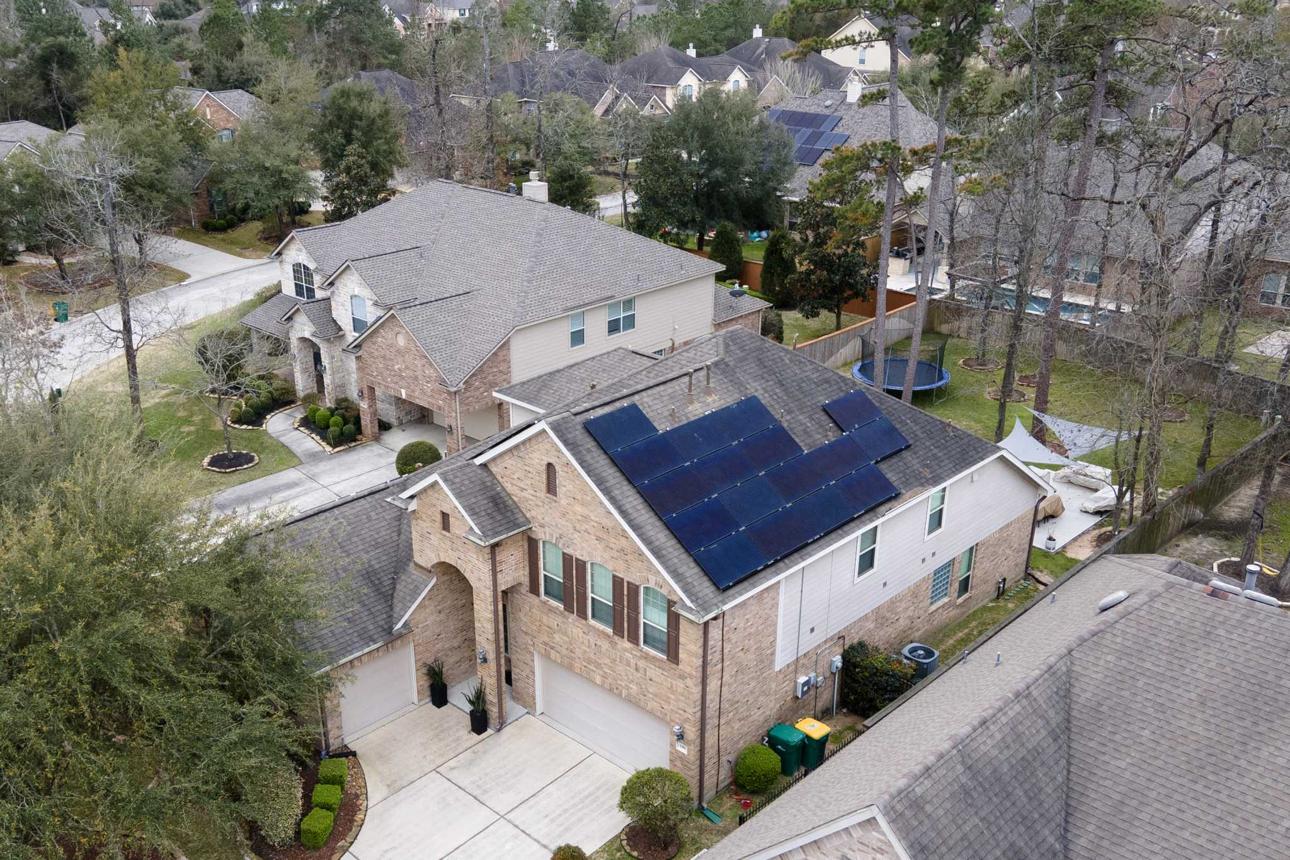
Your Spring Home Has Solar Panels—But Does the Buyer Get the Panels or the Payment?
Your Spring Home Has Solar Panels—Before You List, Find Out Who Actually Owns Them
The seller says:
“The house has solar.”
Great.
Buyer asks:
“Are the panels paid off?”
Silence.
Then:
“We make a monthly payment.”
Buyer:
“How much is left?”
Seller:
“I'm not sure.”
Then come the harder questions:
Does the loan transfer?
Does it have to be paid at closing?
Is there a lien?
What is the interest rate?
How much electricity does the system produce?
Does the warranty transfer?
How old is the roof underneath it?
What happens if the roof needs replacement?
Solar panels can be an attractive feature.
But when selling a Spring home, the most important solar question is not:
“How much did the system cost?”
It is:
“What exactly is the buyer taking over?”
Start With Ownership
Before listing, determine whether the solar system is:
Owned outright.
Financed.
Leased.
Subject to a power-purchase arrangement or another agreement.
Do not guess.
Find the contract.
“Solar Included” Does Not Explain Enough
A buyer needs to understand:
Who owns the equipment?
Is money still owed?
Are there continuing payments?
Does an agreement need to transfer?
That information can affect the transaction.
Owned-Outright Solar Is Usually Easier to Explain
If the system is fully paid:
Find documentation confirming that.
Also gather:
Installation agreement.
Equipment information.
Warranty.
Service history.
Production information where available.
Do Not Say “Paid Off” Without Verifying
Maybe the installation financing was paid.
But confirm whether there are:
Other obligations.
Agreements.
Relevant filings.
Do not rely solely on memory.
Financed Solar Requires Early Attention
If you still make payments:
Find the current loan information.
Know:
Approximate balance.
Monthly payment.
Lender or finance company.
Payoff process.
Transfer provisions if any.
Do Not Wait Until You Have an Offer
A solar financing surprise during:
Title.
Buyer financing.
Closing preparation
can create unnecessary complications.
Understand the arrangement before going live.
Loan Transfer Should Never Be Assumed
Seller says:
“The buyer can just take over the payments.”
Maybe.
Maybe not.
Transferability depends on the actual agreement and potentially buyer qualification.
Verify directly.
A Buyer May Not Want Another Payment
Even if transfer is allowed:
The buyer may prefer:
Seller payoff.
Different transaction structure.
Another property.
Solar financing can become part of negotiation.
Do Not Hide the Payment
A low electric bill sounds impressive.
But if the homeowner also pays:
$200 solar payment
every month,
buyers need the complete picture.
Show Energy Costs Honestly
Instead of:
“Our electric bill is only $40!”
provide context.
For example:
Historical electric bills.
Solar payment where applicable.
System production.
Relevant utility credits.
That creates a more useful comparison.
Utility Bills Alone Can Be Misleading
Electricity use depends on:
Thermostat settings.
Number of occupants.
Pool.
EV charging.
Work-from-home habits.
Home size.
Weather.
Buyer usage will differ.
Never Guarantee a Buyer's Future Electric Bill
Avoid:
“You'll never pay more than $50 per month.”
You cannot know that.
Solar Production Records Can Be Helpful
If your system has an app or monitoring portal:
You may have historical information showing:
Production.
Monthly output.
Annual output.
System status.
This can help buyers understand the equipment.
Production Is Not the Same as Savings
The system may produce:
X kilowatt-hours.
Actual financial savings depend on:
Utility rates.
Consumption.
Plan structure.
Credits.
Other factors.
Do not treat production as guaranteed dollar savings.
Know the System Size
If documentation identifies:
System capacity.
Number of panels.
Inverter.
Battery storage.
keep it available.
Do not estimate:
“It's probably a 15-kilowatt system.”
Battery Storage Is a Separate Feature
Some solar homes also have:
Home battery.
Backup system.
Energy-storage equipment.
If yours does:
Document it separately.
Solar Does Not Automatically Mean Backup Power
This is a major misconception.
Buyer:
“So if the grid goes down, the house still has electricity?”
Not necessarily.
System design matters.
Do not promise outage operation unless the equipment is configured for it.
Batteries Do Not Automatically Power Everything
Even with battery storage:
Backup configuration may cover:
Certain circuits.
Certain loads.
Specific duration.
Do not say:
“The whole house runs indefinitely.”
Roof Age Becomes More Important
Buyer sees solar panels and immediately asks:
“How old is the roof underneath them?”
Know the answer.
Find the Roof Records
Document:
Roof installation date.
Repairs.
Solar installation date.
Any roof work completed during solar installation.
An Older Roof Under Newer Solar Can Create Concern
Buyer may wonder:
If the roof needs replacement soon:
Who removes the panels?
Who reinstalls them?
How much will that cost?
Do not dismiss the concern.
Do Not Promise Free Panel Removal
Unless your contract specifically provides it.
Find out whether:
Installer.
Warranty.
Service agreement.
covers removal and reinstallation.
Roof Penetrations May Be Inspected
Buyers may pay attention to:
Mounting points.
Flashing.
Leaks.
Roof condition.
If there has been a known roof leak near the system:
Address it appropriately.
Keep Installation Records
Professional installation documentation may include:
Permits.
Equipment specifications.
Electrical information.
Inspection records.
Warranties.
These can increase buyer confidence.
Do Not Personally Certify Code Compliance
Unless qualified and appropriately supported.
Provide documentation instead.
Inverters Matter
Solar panels receive most of the attention.
But the system may also include:
String inverter.
Microinverters.
Other conversion equipment.
Know what was installed.
Inverter Warranty May Differ From Panel Warranty
Do not say:
“Everything has a 25-year warranty.”
Different components can have different coverage periods.
Warranty Transfer Needs Verification
Some warranties:
Transfer automatically.
Require registration.
Have conditions.
Have fees.
Verify.
Installer Warranty and Manufacturer Warranty Are Different
The panel manufacturer may cover:
Equipment.
Installer may cover:
Workmanship.
Those are not necessarily the same warranty.
Installer Status Can Matter
If the original installer is:
Still operating.
No longer operating.
Acquired.
Changed names.
buyers may ask how warranty service works.
Know what you can verify.
Monitoring Apps Need Transfer Planning
Do not simply give the buyer:
Your username.
Your password.
Determine the proper ownership-transfer process.
Remove Personal Information Before Transfer
Monitoring accounts may contain:
Email.
Phone.
Billing information.
Other personal data.
Handle account transition properly.
Solar Panels Need to Look Maintained
Photography may reveal:
Debris.
Tree shading.
Visible damage.
Uneven installation.
The system should appear:
Intentional.
Professional.
Maintained.
Do Not Climb Onto the Roof to Clean Them Yourself
If cleaning or inspection is needed:
Use an appropriate professional.
Tree Growth Can Affect Solar
A system installed years ago may now receive more shade because trees grew.
Do not promise original production levels still apply.
Current monitoring data is more useful.
Mature Spring Trees Create a Balance
Trees can provide:
Shade.
Privacy.
Curb appeal.
But they may also affect panel exposure.
Do not remove valuable mature trees automatically just to make the solar array more visible.
Photography Should Show Solar Without Making the House Look Industrial
The hero photo should still sell:
The home.
Architecture.
Landscaping.
Solar is a supporting feature.
Drone Photography Can Help
An aerial image may clearly show:
Panel placement.
Roof orientation.
Overall property.
But avoid making solar the only thing buyers see.
Do Not Digitally Add Panels
Marketing photos should accurately represent:
Actual equipment.
Actual placement.
Appraisal Expectations Need Restraint
Seller paid:
$40,000 for solar.
That does not automatically mean:
Add $40,000 to the home's price.
Installation cost and market contribution are different.
Financed Solar Can Complicate Value Perception
A buyer may think:
“Why am I paying a premium for the house AND taking over a solar payment?”
That is why pricing and financing strategy need to work together.
Paid-Off Solar May Be Easier to Position
Potential advantages may include:
Existing equipment.
No associated solar loan payment for the buyer.
Historical production.
Potential energy-cost benefits.
But avoid guaranteeing savings.
Compare Solar Homes Carefully
Ideally, comparable sales would help answer:
How did buyers respond?
But solar systems vary by:
Age.
Size.
Ownership.
Financing.
Battery.
Roof.
Condition.
Do not assume all solar homes are equivalent.
Buyer Financing Can Be Affected
Outstanding solar obligations may interact with:
Mortgage qualification.
Title.
Closing.
Loan underwriting.
Sellers should resolve the structure early with the appropriate professionals.
Do Not Give the Buyer Financing Advice
Provide:
Documents.
Balances.
Agreement terms.
Let their:
Lender.
Title company.
Real-estate professionals.
Legal or financial advisors where appropriate
evaluate the impact.
A Pre-Listing Payoff Quote Can Be Useful
If financed:
Consider obtaining current payoff information.
Know whether there are:
Fees.
Processing times.
Specific instructions.
Payoff Amount and Remaining Payments Are Not Always the Same
Do not calculate:
Monthly payment × remaining months
and assume that equals the payoff.
Get an actual quote.
Solar Liens or Filings Need Professional Review
Do not personally decide whether a filing affects:
Title.
Closing.
Mortgage.
Let the appropriate transaction professionals review it.
Do Not Remove Solar Just Because Selling Feels Complicated
Seller learns:
Loan balance exists.
Immediately:
“Let's take the panels off.”
That may create:
Roof work.
Contract issues.
Removal costs.
Equipment questions.
Evaluate options first.
Create a Solar Information Packet
Before listing, gather:
Ownership status.
Installation date.
System size.
Panel information.
Inverter information.
Battery information if applicable.
Financing agreement if applicable.
Current payoff information.
Warranty documents.
Roof age.
Service records.
Production history.
Monitoring transfer instructions.
This Can Prevent Buyer Confusion
Instead of answering solar questions from memory:
You have the information ready.
Market the System Accurately
Good:
“Owned rooftop solar system installed in 2022; system documentation and historical production information available.”
when accurate.
Less useful:
“FREE ELECTRICITY FOREVER!”
Avoid “No Electric Bill”
Even highly productive systems may still involve:
Utility connection charges.
Usage above production.
Rate changes.
Other costs.
Do not promise zero.
Avoid “Energy Independent”
Unless the system genuinely supports that claim under the circumstances being described.
Use the “Who Owns It?” Test
Know first.
Use the “What Does the Buyer Have to Pay?” Test
Be clear.
Use the “Roof Underneath It” Test
Know the roof age.
Use the “Power Outage” Test
Do not assume backup.
Spring Solar Seller Scorecard
Before listing, evaluate:
Ownership
Verified?
Loan
Any balance?
Lease
Any agreement?
Transfer
Requirements known?
Payoff
Current quote available?
Monthly Payment
Known?
Installation Date
Documented?
System Size
Documented?
Panels
Manufacturer known?
Inverter
Known?
Battery
Present?
Backup Capability
Accurately understood?
Roof
Age documented?
Roof Repairs
Known?
Panel Removal
Contract terms reviewed?
Production
History available?
Utility Bills
Available?
Warranty
Documents available?
Warranty Transfer
Verified?
Monitoring
Transfer process known?
Service Records
Organized?
Photography
Solar shown accurately?
Pricing
Original installation cost not treated as automatic value?
Marketing
No savings guarantees?
Final Thoughts
Solar panels can absolutely become part of the selling story for a Spring home.
But the panels themselves are only half the story.
The other half is:
The paperwork.
Before listing, you should be able to answer:
Who owns them?
Is there a balance?
What is the payoff?
Can the agreement transfer?
How old is the system?
How large is it?
Does it have battery storage?
Does it provide backup power?
How old is the roof?
What warranties remain?
How does monitoring transfer?
What has the system historically produced?
If you cannot answer those questions:
Start there.
Do not market solar by saying:
“Basically no electric bill.”
Do not promise:
“The buyer just takes over the loan.”
Do not assume:
“The panels automatically power the house during outages.”
And do not add the original installation price directly to your asking price.
Instead:
Document the system.
Understand the agreement.
Know the roof.
Organize the records.
Price appropriately.
Then let the buyer evaluate the feature with complete information.
Because solar becomes much easier to appreciate when the buyer is thinking:
“This system is already installed and we understand exactly how it works.”
rather than:
“Wait—are we buying the house or somebody else's solar contract?”
For a Spring seller, that difference can begin long before the first showing.
It begins with finding the paperwork.
Frequently Asked Questions
Can I sell my Spring home if I still owe money on the solar panels?
Potentially, yes. The specific options depend on the financing agreement, payoff requirements, transfer provisions, buyer financing, and transaction structure. Review the documents early.
Can the buyer simply assume my solar loan?
Do not assume so. Some agreements may have transfer procedures or qualification requirements, while others may need to be resolved differently.
Does solar automatically increase my home's value by what I paid for it?
No. Installation cost does not automatically equal market value. Ownership structure, system age, production, condition, roof, financing, and buyer demand can all affect market response.
Should I pay off the solar loan before listing?
That depends on the agreement, payoff amount, market strategy, and transaction circumstances. Obtain the actual payoff information before deciding.
Will solar panels work during a power outage?
Not necessarily. Grid-connected solar systems may not provide backup electricity unless they have appropriate equipment and configuration, such as compatible battery or backup systems.
Should I provide buyers with my electric bills?
Historical utility bills can provide context, but they should not be presented as a guarantee of the buyer's future costs.
Does the solar warranty transfer to the buyer?
It depends on the manufacturer, installer, equipment, and warranty terms. Verify transfer requirements before advertising warranty coverage.
What if my roof is older than the solar panels?
Expect buyers to ask about future roof replacement and potential panel removal and reinstallation. Gather roof and solar documentation so they can evaluate the situation.
Should I include solar production reports?
They can be useful when available because they provide property-specific historical information. Avoid converting historical production into guaranteed future savings.
What's the biggest takeaway?
When selling a Spring home with solar panels, figure out the financial and ownership structure before you market the energy savings. Verify who owns the system, determine any payoff or transfer requirements, organize production and warranty records, document the roof, and give buyers a clear explanation of exactly what comes with the home.