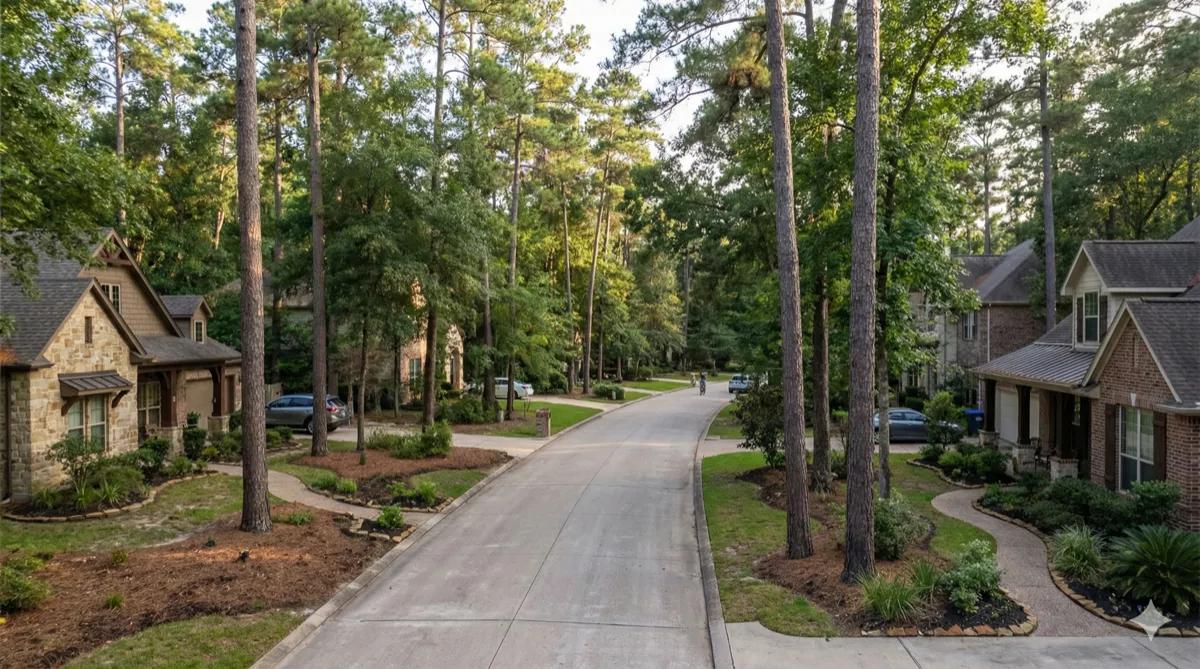
Buyers Love the Trees in The Woodlands—Until They Start Looking at the Ones Next to the House
Buyers Came to The Woodlands for the Trees—So Don't Cut Down the Feature They're Paying For
The seller looks at the backyard.
There are:
Tall pines.
Mature hardwoods.
Shade.
Privacy.
Exactly the wooded environment that made them choose The Woodlands years ago.
Then the home goes on the market.
A buyer looks up and asks:
“Is that tree too close to the house?”
Another notices branches over the roof.
Someone else sees roots near the driveway.
Suddenly, the seller's reaction is:
“Should we just remove the trees?”
Usually, that is the wrong first question.
Mature trees can be one of the most difficult features of an established Woodlands property to recreate.
A kitchen can be remodeled.
Flooring can be replaced.
Paint can change in a weekend.
A mature tree canopy can take decades to develop.
The goal before selling is not to remove the wooded character.
It is to make that character look healthy, intentional, and maintained.
Start With a Tree Walk
Walk the entire property.
Look at trees near:
House.
Roof.
Driveway.
Fence.
Pool.
Patio.
Walkways.
Utility areas.
Neighboring property.
You are not diagnosing tree health.
You are identifying areas that may deserve professional attention.
Dead Trees Deserve Immediate Attention
A clearly dead tree near:
House.
Driveway.
Outdoor living area.
Neighboring structure
can become an obvious buyer concern.
Have questionable trees evaluated by an appropriate tree professional.
Dead Branches Can Be Just as Noticeable
Large dead limbs hanging over:
Roof.
Pool.
Patio.
Driveway
can make an otherwise beautiful lot feel poorly maintained.
Do Not Diagnose a Tree Yourself
Seller:
“That tree is perfectly healthy.”
Unless you are qualified to make that assessment:
Do not guarantee it.
Likewise, do not assume a tree is dying simply because:
It has sparse leaves.
Bark looks different.
One branch is dead.
Get appropriate expertise when needed.
Consider an Arborist for Significant Concerns
If the property has:
Large mature trees close to structures.
Visible decline.
Storm damage.
Major leaning.
Large dead limbs.
Root concerns.
a qualified arborist may provide useful information.
Keep Tree-Service Records
If significant work has been completed:
Keep:
Invoices.
Reports.
Treatment records.
Removal records.
Major pruning documentation.
These can help demonstrate ongoing property maintenance.
Branches Touching the Roof Need Attention
Buyers may see branches resting against shingles and immediately think:
Roof damage.
Pests.
Debris.
Moisture.
Have appropriate trimming performed where needed.
Do Not Strip the Canopy
There is a difference between:
Maintenance.
and:
Removing everything above the roofline.
Aggressive pruning can damage the appearance—and potentially the health—of mature trees.
Avoid “Topping” Trees Just to Prepare for Sale
Improper cutting can leave:
Large wounds.
Unnatural shapes.
Weak future growth.
A professional approach is usually better.
Roof Debris Should Be Removed
Wooded properties naturally collect:
Leaves.
Pine needles.
Small branches.
Before listing:
Clean visible roof debris where it can be done safely and appropriately.
Gutters Matter on Wooded Lots
Buyers understand that trees mean leaves.
Overflowing gutters tell them:
“The seller hasn't been keeping up.”
Clean:
Gutters.
Downspouts.
Visible roof valleys.
Do Not Risk DIY Roof Work
If the roof is steep or difficult to access:
Hire an appropriate professional.
Listing preparation is not worth an injury.
Roots Near the Foundation Can Trigger Questions
A buyer sees a large trunk close to the home and asks:
“Are those roots affecting the foundation?”
Do not answer:
“Absolutely not.”
unless you have reliable support.
Tree roots and foundation conditions require property-specific evaluation.
Do Not Automatically Remove a Tree Because It Is Close to the House
Proximity alone does not establish:
Damage.
Risk.
Future failure.
Understand the actual condition first.
Driveway Movement May Get Blamed on Trees
A cracked or raised driveway near a mature tree often creates immediate speculation.
Seller:
“The roots did that.”
Buyer:
“Will they damage the house next?”
Unless the cause has been established:
Do not diagnose it.
Major Root Cutting Can Create Other Problems
Do not cut significant roots simply to:
Flatten landscaping.
Repair a sidewalk.
Make a bed look cleaner.
without understanding how that may affect the tree.
Pool Areas Need Special Attention
Trees around a pool can create:
Shade.
Privacy.
Beautiful reflections.
They can also create:
Leaves.
Roots.
Debris.
Buyer questions.
Clean the pool thoroughly before photography and showings.
Do Not Apologize for Leaves
A wooded property will have leaves.
The goal is:
Maintained.
Not:
Sterile.
Trees Can Make a Backyard Feel Smaller
Dense lower branches and overgrown shrubs can visually close in the yard.
Selective trimming may reveal:
Lawn.
Fence.
Pool.
Patio.
Depth.
Raise Sightlines Carefully
Removing appropriate lower growth can help buyers see through the yard while preserving the canopy.
This is especially helpful for photography.
The House Should Not Disappear From the Street
A wooded front yard can be beautiful.
But if buyers cannot see:
Front door.
Architecture.
Windows.
Walkway,
the property may feel overgrown.
Trim Landscaping Around the Architecture
Reveal:
Entry.
Roofline.
Windows.
House number for visitors where appropriate.
Walkway.
Do not eliminate all greenery.
Natural Privacy Is a Major Selling Feature
Mature vegetation may create separation from:
Neighboring homes.
Roads.
Trails.
Other properties.
Show that advantage.
But Avoid “Complete Privacy”
Trees are not walls.
Leaves fall.
Vegetation changes.
Neighbors trim.
Use accurate language such as:
“Mature landscaping provides additional backyard screening.”
when true.
Seasonal Photography Can Change the Story
A heavily wooded property may look very different across seasons.
Use current, representative photography.
Do not rely on an old image showing vegetation that no longer exists.
Shade Can Be a Strong Outdoor-Living Advantage
A shaded:
Patio.
Deck.
Pool area.
Backyard
may feel particularly inviting.
Photograph outdoor spaces when lighting best demonstrates that feature.
But Too Much Shade Can Make Interior Photos Dark
Trees outside windows can reduce natural light.
Before photography:
Clean windows.
Open blinds.
Use appropriate professional lighting.
Do not remove healthy trees simply because one room photographs dark.
Window Views Should Include the Trees
One of the strongest images may be:
Living room → wooded backyard.
Primary bedroom → mature trees.
Breakfast room → shaded patio.
Show buyers how the landscape affects daily life.
Outdoor Lighting Can Transform Wooded Lots
If the property has:
Landscape lighting.
Tree uplighting.
Path lights.
Patio lighting,
make sure it works.
Twilight photography may be particularly effective.
Do Not Overdo Landscape Lighting
The home should feel:
Elegant.
Warm.
Natural.
Not like an event venue.
Storm Questions May Come Up
Buyer:
“Have you ever had a tree fall?”
If you know of prior:
Tree damage.
Roof repairs.
Fence repairs.
Storm-related removals,
answer and disclose as appropriate.
Previous Tree Removal Is Not Automatically Negative
Sometimes removal demonstrates responsible maintenance.
Keep records if substantial work was completed.
Stumps Should Be Addressed
A large stump in the middle of the yard can make buyers think:
Incomplete project.
Depending on location and condition:
Consider appropriate removal or landscaping.
Do Not Hide Stumps Under Mulch
Buyers will find them.
Fresh Mulch Can Improve Presentation
Use mulch to define:
Tree beds.
Walkways.
Landscaping.
But avoid piling mulch high against tree trunks.
Keep Landscaping Away From the Foundation Where Appropriate
Dense vegetation can make it difficult for buyers and inspectors to see:
Exterior walls.
Drainage.
Foundation areas.
Maintain reasonable visibility.
Tree Canopy Can Affect Grass
Some wooded yards naturally have:
Thinner turf.
Shade-tolerant landscaping.
Ground cover.
Do not spend heavily trying to force full-sun grass into deep shade immediately before listing.
Lean Into the Wooded Character
A well-designed shade garden may look more intentional than:
Patchy lawn.
Native-Looking Landscaping Can Fit the Setting
The goal is not to make a Woodlands property look like:
A treeless new-construction lot.
Work with the character of the property.
Outdoor Furniture Should Use the Shade
Place:
Seating.
Dining.
Bench.
where buyers can understand how the wooded setting improves outdoor living.
Photography Should Show Scale
A close-up of a tree tells buyers nothing.
Show:
Tree + house.
Tree + backyard.
Canopy + pool.
Trees + outdoor living.
Context creates value.
Drone Photography Can Be Powerful
For a wooded lot, aerial photography may show:
Canopy.
Lot position.
Green space.
Neighborhood setting.
But dense trees can also hide the house.
Use aerial images as supporting photography.
Do Not Digitally Remove Trees
If the buyer will see a large tree in person:
It should not disappear from marketing photography.
Buyers May Ask About Tree Removal Restrictions
Do not assume a buyer can remove any tree they want after closing.
Depending on the property and applicable rules, removal or exterior changes may be subject to requirements or approvals.
Buyers should verify their plans.
Do Not Promise Future Removal Approval
Buyer:
“We'd probably take down these six trees.”
Seller:
“That won't be a problem.”
Do not make that promise.
Tree Maintenance Costs Should Not Be Guessed
Buyer asks:
“How much does it cost every year?”
Your historical expenses can provide context.
But future costs depend on:
Tree condition.
Storms.
Services.
Buyer choices.
Mature Trees May Help Differentiate Resale From Newer Homes
This can be a major advantage.
A buyer comparing:
Established Woodlands home with mature canopy.
versus:
Newer property with limited mature landscaping
may value the established setting significantly.
But Trees Do Not Excuse Deferred Maintenance
Beautiful lot plus:
Dead branches.
Dirty gutters.
Overgrown beds.
Damaged fence.
does not communicate:
“Natural.”
It communicates:
“Work.”
Pricing a Wooded Lot Requires Market Evidence
Do not simply say:
“These trees add $100,000.”
Maybe the lot commands a premium.
Maybe it improves marketability more than price.
Compare:
Similar homes.
Similar lots.
Privacy.
Condition.
Location.
Use the “Healthy or Unknown?” Test
If uncertain:
Get professional evaluation.
Use the “Maintained or Overgrown?” Test
Preserve the canopy.
Improve the presentation.
Use the “Feature or Buyer Concern?” Test
Branches on roof?
Dead limbs?
Address them.
Use the “Can Buyers See Why the Trees Matter?” Test
Photography should show the experience.
The Woodlands Mature-Tree Seller Scorecard
Before listing, evaluate:
Dead Trees
Any obvious concerns?
Dead Limbs
Addressed?
Roof Contact
Branches trimmed appropriately?
Roof Debris
Removed?
Gutters
Clean?
Downspouts
Clear?
Arborist
Needed?
Tree Records
Available?
Storm Damage
Known history organized?
Roots
No unsupported claims?
Driveway
Tree-related assumptions avoided?
Pool
Clean?
Backyard
Sightlines opened?
Front Exterior
House visible?
Windows
Views showcased?
Privacy
Accurately described?
Stumps
Addressed?
Mulch
Maintained appropriately?
Outdoor Lighting
Working?
Photography
Trees shown in context?
Drone
Useful?
Pricing
Lot characteristics considered?
Final Thoughts
The trees are not something you need to apologize for when selling in The Woodlands.
For many buyers:
They are part of the reason to live there.
They create:
Shade.
Privacy.
Character.
Views.
A sense of establishment that newer neighborhoods may take decades to develop.
But mature landscaping works best as a selling feature when buyers feel:
Someone has taken care of it.
Before listing:
Walk the property.
Identify dead or questionable trees.
Address large dead limbs.
Trim branches touching the roof appropriately.
Clean gutters.
Remove roof debris.
Open sightlines.
Maintain the beds.
Clean the pool.
Find tree-service records.
Consider professional evaluation when significant concerns exist.
Then photograph the home in a way that makes the canopy part of the architecture.
Do not panic and remove healthy mature trees because:
“Buyers might worry about them.”
And do not ignore obvious maintenance because:
“This is The Woodlands—there are supposed to be trees.”
There is a middle ground.
Preserve what makes the property special.
Maintain what needs attention.
Document what has been done.
Then let buyers experience something that cannot be recreated with a quick renovation:
A home that already sits beneath a mature Woodlands canopy.
Because countertops can be changed.
Paint can be changed.
Fixtures can be changed.
But when a buyer stands in the backyard, looks up through decades of mature trees and says:
“This feels like The Woodlands.”
that may be one of the strongest selling moments your property has.
Frequently Asked Questions
Should I remove trees close to my Woodlands home before selling?
Not automatically. Proximity alone does not establish that a tree is unsafe or damaging the property. Significant concerns should be evaluated by an appropriate professional.
Should I trim branches hanging over the roof?
Branches contacting the roof or significant dead limbs may deserve professional attention. Avoid excessive pruning simply to create a completely open roofline.
Can tree roots damage a foundation?
Tree and foundation interactions are property-specific. Sellers should avoid diagnosing the cause of foundation or concrete conditions without appropriate professional evaluation.
Should I hire an arborist before listing?
It may be worthwhile when there are large mature trees near structures, visible decline, storm damage, major leaning, dead limbs, or other significant concerns.
Do mature trees increase home value?
They can contribute to buyer appeal and potentially market value, but there is no universal dollar amount. Lot characteristics, privacy, tree condition, home condition, and comparable sales all matter.
Should I remove trees to make the backyard look larger?
Usually not solely for appearance. Selective professional pruning and landscaping may improve sightlines while preserving the mature canopy.
Should I provide tree-service records to buyers?
Available records for significant pruning, treatment, storm work, or removal can help demonstrate ongoing property maintenance.
Can I tell buyers they can remove trees after closing?
Avoid promising that. Applicable community requirements, property restrictions, approvals, or other considerations may affect future tree removal.
Is drone photography useful for a wooded property?
Yes, when it helps demonstrate the canopy, lot position, surrounding green space, and neighborhood setting. It should supplement—not replace—ground-level photography.
What's the biggest takeaway?
When selling a Woodlands home with mature trees, do not destroy the wooded character trying to eliminate every buyer concern. Address genuine maintenance issues, obtain professional guidance for questionable trees, open important sightlines, and showcase the mature canopy as the difficult-to-recreate feature it is.