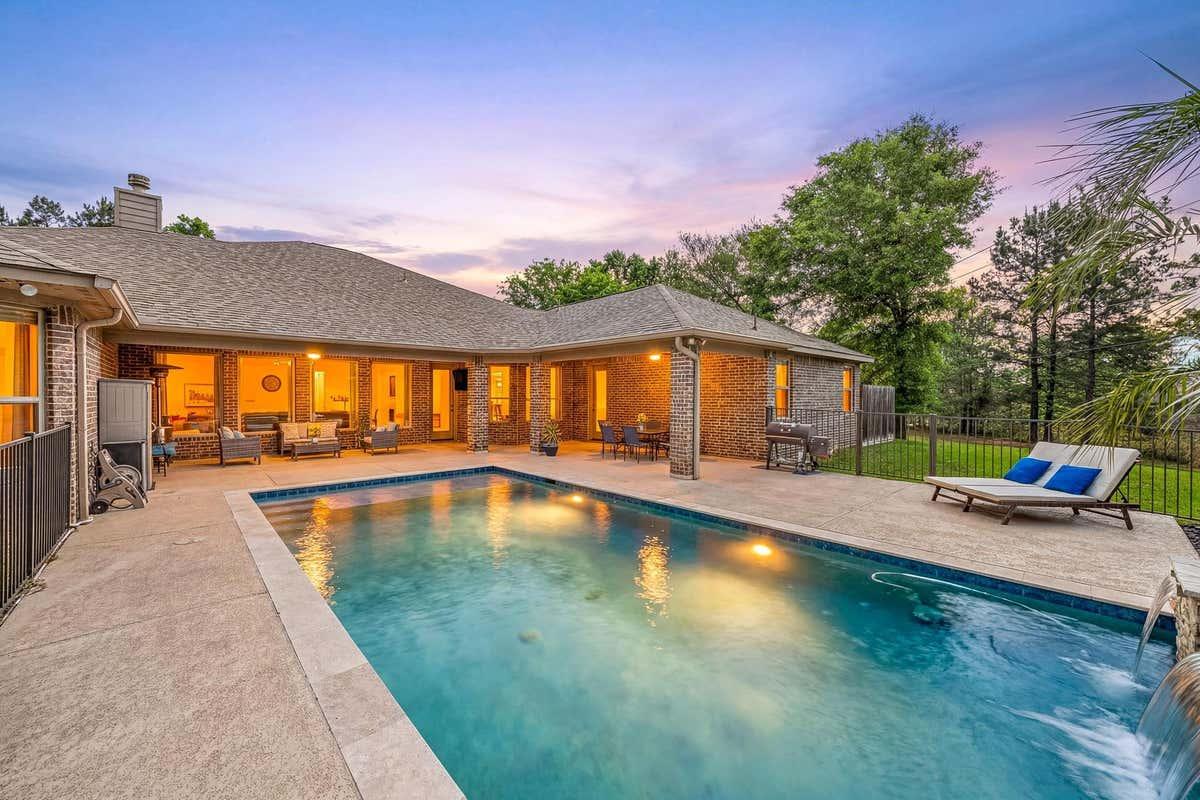
Your Woodforest Pool Should Make Buyers Want the Backyard—Not Wonder How Much Work It Needs
Your Woodforest Home Has a Pool—Make Sure Buyers See Summer Weekends, Not Saturday Maintenance
The buyers open the back door.
This should be the moment.
Pool.
Covered patio.
Landscaping.
Maybe an outdoor kitchen.
Maybe trees behind the yard.
Instead, the first thing they notice is:
A little algae along the wall.
Leaves in the water.
A cleaner hose stretched across the pool.
Stained decking.
Then they hear:
A noisy pump.
Now the buyer is no longer imagining:
“This would be amazing in the summer.”
They are calculating:
“How much is this going to cost us?”
A pool can be one of the most visually compelling features of a Woodforest home.
But sellers should understand something important:
You are not really selling the pool.
You are selling what life with the pool feels like.
And that begins with condition.
Start With the Water
This sounds obvious.
Yet many pool listings go live with water that looks:
Cloudy.
Greenish.
Dull.
Full of debris.
The water should be:
Clear.
Clean.
Properly maintained.
Do Not Rely on Photo Editing to Fix Pool Water
If the water is green in real life:
Fix the pool.
Do not simply turn it bright blue in listing photos.
The buyer will eventually see the actual condition.
Schedule Pool Service Before Photography
Do not schedule:
Pool service Wednesday.
Photography Tuesday.
Reverse that.
Have the pool cleaned and balanced before the photographer arrives.
Remove Cleaning Equipment for Photos
Where practical, temporarily remove:
Vacuum hoses.
Skimmers.
Floating chemical dispensers.
Maintenance tools.
The pool should look:
Ready to use.
Not:
Currently being serviced.
But Put Required Equipment Back
Photography staging should never interfere with proper pool operation or safety.
Check the Pool Equipment
Know what you have.
Pump.
Filter.
Heater if present.
Automation.
Chlorination system.
Cleaner.
Water features.
Lighting.
Spa equipment.
You do not need to become a pool technician.
But you should know the basics.
Test Everything You Plan to Market
If the listing says:
“Heated pool and spa.”
Make sure the equipment operates appropriately.
If it says:
“Waterfalls.”
Turn them on before photography.
If it says:
“Color-changing pool lights.”
Test them.
A Noisy Pump May Create Buyer Concern
You may have stopped noticing it.
Buyer hears:
Grinding.
Rattling.
High-pitched noise.
Now they wonder whether replacement is coming.
Have unusual equipment noise evaluated.
Know the Age of Major Equipment When Possible
Buyers may ask:
How old is the pump?
Filter?
Heater?
Automation?
Do not guess.
Use:
Invoices.
Installation records.
Model information where appropriate.
Keep Pool Service Records
If you use professional maintenance:
Organize recent records where useful.
Also keep documentation for:
Pump replacement.
Heater repair.
Filter replacement.
Resurfacing.
Tile work.
Leak repair.
Automation upgrades.
Resurfacing Is a Major Improvement
If the pool has been:
Replastered.
Resurfaced.
Retiled.
Document:
Year.
Contractor.
Scope.
Do not say:
“Brand-new pool.”
when only the surface was replaced.
Pool Age and Pool Finish Age Are Different
A 15-year-old pool resurfaced two years ago is still:
A 15-year-old pool with a newer finish.
Be accurate.
Inspect the Waterline Tile
Look for:
Missing tile.
Cracks.
Heavy mineral buildup.
Discoloration.
Loose pieces.
These small visual defects can make buyers assume the entire pool is poorly maintained.
Clean the Waterline
A visible ring around the pool photographs badly.
Address appropriate cleaning before listing.
Decking Can Change the Entire Backyard
Buyer sees:
Cracked concrete.
Loose pavers.
Uneven decking.
Stains.
The pool may be beautiful, but the surrounding surface creates concern.
Evaluate Trip Hazards
Pay particular attention to:
Raised sections.
Loose coping.
Uneven pavers.
Damaged steps.
Pool areas involve wet surfaces.
Obvious hazards deserve attention.
Coping Should Be Reviewed
Loose or damaged coping can stand out during:
Showings.
Inspections.
Photography.
Repair significant visible defects where appropriate.
Do Not Hide Cracks With Furniture
Moving a lounge chair over a defect does not resolve it.
Pool Drainage Matters
After rain:
Where does the water go?
Does it collect:
Against the house?
On the patio?
Around pool equipment?
Near doors?
Understand the backyard drainage.
Gutters Can Affect the Pool Area
Downspouts discharging directly onto:
Decking.
Patio.
Pool area.
may contribute to staining or drainage concerns.
Landscaping Should Frame the Pool
Not invade it.
Trim plants that:
Drop excessive debris.
Block walkways.
Hide equipment.
Overtake seating areas.
But Do Not Remove All Landscaping
A bare pool deck can feel:
Hot.
Exposed.
Unfinished.
Established Woodforest landscaping may help create the exact backyard atmosphere buyers want.
Shade Can Be Valuable
Trees.
Covered patio.
Pergola.
Umbrellas.
may make the outdoor area more usable.
Show them.
Pool Equipment Should Not Be the Backyard Focal Point
Where existing landscaping or appropriate screening helps:
Keep equipment visually secondary.
But maintain required access and ventilation.
Do Not Build Last-Minute Screening Without Checking Requirements
Pool equipment needs appropriate:
Clearance.
Airflow.
Service access.
Do not enclose it simply for photography.
The Fence Matters
Walk the entire backyard fence.
Look for:
Loose boards.
Leaning sections.
Damaged gates.
Missing hardware.
A beautiful pool surrounded by a deteriorating fence feels unfinished.
Pool Safety Questions May Come Up
Buyers may ask about:
Fencing.
Gates.
Alarms.
Barriers.
Other safety features.
Describe what is actually installed.
Do not personally guarantee code compliance unless appropriately verified.
Keep Safety Equipment Where Appropriate
Do not remove permanent or necessary safety features because:
“They don't look good in pictures.”
Safety comes first.
A Spa Can Increase Emotional Appeal
If the pool includes a spa:
Clean it.
Test it.
Show it operating if appropriate.
A spa with:
Leaves.
Stained waterline.
Broken jets.
does not create luxury.
Photograph Water Features Running
If the pool has:
Sheer descents.
Fountains.
Bubblers.
Waterfalls.
these can add movement to photos and video.
But Do Not Run Everything at Maximum
The goal is:
Relaxing backyard.
Not:
Water park.
Twilight Photography Can Be Excellent
Pool homes often benefit from twilight images.
Especially with:
Pool lighting.
Spa lighting.
Landscape lighting.
Covered patio lighting.
Outdoor kitchen.
Fireplace.
Daytime Photos Are Still Essential
Twilight creates emotion.
Daylight shows:
Condition.
Size.
Decking.
Yard.
Relationship to the house.
Use both when appropriate.
Show the Pool From Inside the House
One of the strongest images may be:
Kitchen → pool.
Living room → pool.
Primary bedroom → pool.
That demonstrates how the backyard affects daily life.
Clean the Windows First
Pool views through dirty glass lose their impact.
Stage the Patio
Use:
Clean seating.
Simple cushions.
Dining table.
A few restrained accessories.
Remove:
Pool toys.
Chemical containers.
Old towels.
Garden tools.
Too Much Furniture Makes the Pool Deck Look Small
Buyers need walking space.
Remove excess chairs.
Show Yard Beyond the Pool
If the property still has:
Grass.
Play area.
Dog space.
Garden.
show it.
Some buyers worry a pool consumes the entire backyard.
A Pool Plus Usable Yard Can Be a Strong Combination
Make that clear in photography.
Outdoor Kitchens Need Their Own Preparation
If present:
Clean grill.
Counters.
Sink.
Refrigerator.
Cabinets.
Remove:
Grease.
Old tools.
Cleaning products.
Do Not Guarantee Outdoor Appliances Without Testing Them
If included:
Know whether they work.
Pool Heaters Need Accurate Description
Buyer:
“Can we swim all winter?”
Do not promise.
A heater's performance and operating cost depend on:
Weather.
Pool size.
Equipment.
Temperature goals.
Other factors.
Utility Costs Will Come Up
Buyer may ask:
“How much does the pool add to your electric bill?”
Your historical experience may be useful.
But do not guarantee their future cost.
Pool Maintenance Costs Are Also Buyer-Specific
You may:
Maintain it yourself.
Pay weekly service.
Use different chemicals.
Run equipment differently.
Provide historical information as context, not a promise.
Automation Can Reduce Maintenance Perception
If the pool has:
App control.
Automated schedules.
Remote lighting.
Heater controls.
Salt system.
other automation,
show buyers what is actually installed.
Smart Pool Systems May Need Account Transfer
Understand:
Login.
Ownership.
Subscription.
Transfer process.
Do not hand over your personal credentials.
Saltwater Needs Accurate Language
A saltwater pool still uses a sanitation process.
Do not market it as:
“Chemical-free.”
That is misleading.
Pool Inspections May Be Separate
A general home inspection may not provide the same depth as a specialized pool evaluation.
Buyers may choose additional inspection.
Expect it.
Do Not Panic at Every Inspection Recommendation
A pool inspection may identify:
Maintenance.
Repair.
Further evaluation.
Equipment age.
Get appropriate estimates before agreeing to major concessions.
Pre-Listing Pool Inspection Can Help in Some Cases
Consider it if:
Equipment is older.
There are known leaks.
Pool has significant cracking.
Heater is questionable.
Seller lacks maintenance history.
You may prefer to know before the buyer does.
Leaks Need Attention
Do not assume:
“All pools lose this much water.”
Evaporation happens.
Leaks can also happen.
If water loss seems unusual:
Have it evaluated.
Automatic Fill Systems Can Hide Water Loss
If installed:
Understand whether it is functioning.
A constantly refilling pool can make a leak less obvious.
Do Not Advertise “No Leaks” Without Confidence
Describe known repair history accurately.
Insurance Questions Should Go to the Buyer
A buyer may ask whether:
Pool increases insurance.
Certain barriers are required.
Specific features affect coverage.
Those are buyer- and carrier-specific questions.
Pools Do Not Have a Universal Resale Premium
Seller spent:
$80,000.
Therefore:
“The house is worth $80,000 more.”
Not automatically.
Installation cost and market value are different.
Compare Pool Homes With Pool Homes
When possible, look at:
Similar home size.
Similar age.
Similar section.
Similar lot.
Similar pool quality.
This gives better context.
Pool Quality Matters
A basic pool and a backyard with:
Spa.
Outdoor kitchen.
Covered patio.
Mature landscaping.
Premium decking.
water features
may not compete identically.
Condition Matters Even More
A beautiful older pool in excellent condition may create more buyer confidence than a newer pool that appears neglected.
Do Not Assume Every Buyer Wants a Pool
Some will.
Some will not.
You do not need to convince:
The non-pool buyer.
Your marketing should attract buyers who see the feature as a lifestyle advantage.
Show the Woodforest Lifestyle Connection
Woodforest buyers may already value:
Outdoor recreation.
Community amenities.
Trails.
Parks.
Your private backyard can extend that outdoor lifestyle home.
But Do Not Rely on the Community to Sell the Pool
The backyard itself must still feel:
Private.
Clean.
Functional.
Inviting.
Use the “Would You Swim Today?” Test
Water clean?
Deck clean?
Furniture ready?
Use the “Can Buyers See the Equipment Was Maintained?” Test
Records help.
Use the “Lifestyle or Maintenance Project?” Test
Your presentation should say:
Lifestyle.
Use the “What Will Buyers Ask After Inspection?” Test
Know the equipment.
Woodforest Pool Seller Scorecard
Before listing, evaluate:
Water
Clear?
Chemistry
Maintained?
Debris
Removed?
Pool Finish
Condition reviewed?
Tile
Clean?
Coping
Secure?
Decking
Clean?
Trip Hazards
Addressed?
Pump
Working?
Filter
Working?
Heater
Working if marketed?
Spa
Working?
Water Features
Working?
Pool Lights
Working?
Automation
Working?
Equipment Records
Available?
Resurfacing
Documented?
Leaks
Known concerns addressed?
Fence
Maintained?
Gates
Working?
Landscaping
Trimmed?
Patio
Staged?
Outdoor Kitchen
Clean?
Yard
Usable space visible?
Day Photography
Scheduled?
Twilight Photography
Considered?
Pricing
Comparable pool homes reviewed?
Final Thoughts
A pool can change the emotional experience of a Woodforest home.
The buyer walks through the living room.
Opens the back door.
Sees:
Blue water.
Shade.
Landscaping.
A comfortable patio.
Maybe a spa.
Maybe an outdoor kitchen.
And suddenly they are no longer evaluating:
Square footage.
Countertops.
Price per square foot.
They are imagining:
Saturday mornings.
Summer evenings.
Friends coming over.
Dinner outside.
That is what you want.
But the emotional reaction disappears quickly if the buyer instead sees:
Cloudy water.
Cracked decking.
Noisy equipment.
Broken lights.
Overgrown landscaping.
Before listing:
Service the pool.
Clean the water.
Test the equipment.
Organize repair records.
Address obvious decking and coping concerns.
Repair the fence.
Trim landscaping.
Stage the patio.
Remove maintenance clutter.
Photograph the pool in daylight.
Consider twilight photography.
Then price the home based on the market—not simply what the pool originally cost.
Do not tell buyers:
“A pool adds $100,000.”
Do not promise:
“It barely costs anything to maintain.”
Do not say:
“You'll never have to do anything because it's automated.”
Instead:
Show them a pool that appears cared for.
Provide the records.
Explain the equipment accurately.
Then let the backyard create the emotion.
Because when a pool home is prepared correctly, the buyer should not stand there wondering:
“How much work is this?”
They should be thinking:
“When can we move in?”
Frequently Asked Questions
Does a pool increase the value of a Woodforest home?
It can contribute to buyer appeal and market value, but there is no universal premium. Pool quality, condition, backyard design, comparable sales, home price, and buyer demand all matter.
Should I resurface my pool before selling?
Not automatically. Consider current condition, visible defects, professional recommendations, cost, and likely buyer reaction before making a major investment.
Should I have the pool inspected before listing?
It may be worthwhile when equipment is older, there are known water-loss concerns, significant cracking exists, or you want to reduce inspection surprises.
Should I provide pool-service records?
Available maintenance and repair records can help buyers understand equipment history and demonstrate that the pool has been maintained.
Should I remove pool equipment for listing photos?
Temporary maintenance items such as hoses or cleaning tools may be removed for photography when appropriate, but permanent or necessary safety and operating equipment should not be improperly removed.
Should I use twilight photography for a pool home?
Often yes. Pool lighting, landscape lighting, spas, outdoor kitchens, and covered patios can photograph especially well around twilight.
Can I tell buyers how much the pool costs each month?
You can share your historical maintenance or utility experience when accurate, but future costs depend on buyer usage, service choices, utility rates, equipment, and other factors.
Does a saltwater pool require no chemicals?
No. Saltwater pools still rely on a sanitation process and require maintenance. Avoid describing them as chemical-free.
Should I show the pool if it takes up most of the backyard?
Yes. Photograph the space accurately and show any remaining lawn, patio, landscaping, or other usable areas so buyers understand the complete backyard.
What's the biggest takeaway?
When selling a Woodforest home with a pool, do not market only the fact that a pool exists—market how well the entire backyard works. Clean and service the pool, document major equipment, prepare the decking and landscaping, photograph the outdoor living experience beautifully, and let buyers see a lifestyle they can enjoy immediately.