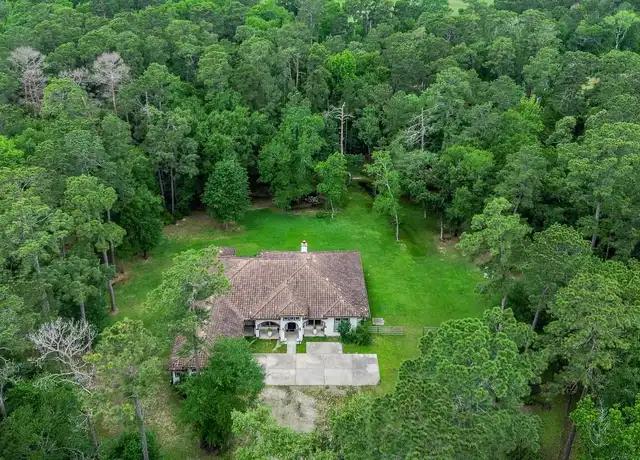
Your Woodlands Home Backs to Trees—But Can You Really Call It “Permanent Privacy”?
Your Woodlands Home Backs to Trees—But Does That Mean Nobody Can Ever Build Behind You?
The seller loves the backyard.
Instead of looking directly into another home:
Trees.
Green space.
Maybe a trail.
Maybe a drainage reserve.
Maybe protected open space.
Maybe community-owned land.
So the listing description says:
“Permanent privacy!”
That sounds great.
Until the buyer asks:
“How do you know it is permanent?”
Now things become complicated.
A home backing to green space can be a meaningful selling advantage in The Woodlands.
But sellers should understand exactly what is behind the property before marketing it.
Because:
Greenbelt.
Reserve.
Trail.
Drainage area.
Utility corridor.
Parkland.
Undeveloped parcel.
are not interchangeable terms.
Start With the Survey
Before writing the listing description:
Find the survey if available.
Understand:
Property boundaries.
Easements.
Adjacent areas.
Structures.
Fences.
Do not assume the property extends all the way to:
Trail.
Creek.
Tree line.
Your Fence May Not Be the Property Line
This matters.
A fence may sit:
Inside the boundary.
On the boundary.
In another permitted location.
Do not tell buyers:
“Everything behind the fence belongs to us.”
unless verified.
Identify What Is Actually Behind the Property
Is it:
Community open space?
Greenbelt?
Park?
Trail corridor?
Drainage reserve?
Utility easement?
Golf course?
Another privately owned parcel?
Know before marketing.
“Greenbelt” Can Mean Different Things
Sellers often use the word casually to describe:
Any wooded area behind the house.
But buyers may interpret it as:
Protected land that cannot be developed.
Those are not necessarily the same thing.
Avoid “Permanent Greenbelt” Without Support
If governing documents or ownership records clearly establish the status:
Use accurate terminology.
Otherwise:
Describe what exists today.
For example:
“Backyard overlooks a wooded community reserve.”
when verified.
That is stronger than making a future guarantee.
Undeveloped Land Is Not Automatically a Reserve
This is one of the biggest mistakes.
Seller sees:
Trees.
No houses.
Therefore:
“Greenbelt.”
But the land may simply be:
Undeveloped.
If you do not know:
Find out.
Do Not Promise Future Development Outcomes
Buyer:
“Can anything ever be built back there?”
Seller:
“Absolutely not.”
Unless there is reliable documentation supporting that conclusion:
Do not promise it.
Land use and future conditions can change.
Trail Access Needs Verification
A trail visible behind the property does not automatically mean:
Private backyard access is permitted.
If there is a gate in the fence:
Understand whether that access is allowed.
Do Not Create Unauthorized Trail Access for Showings
Cutting through:
Fence.
Vegetation.
Reserve area.
to create a convenient route is not appropriate without permission.
Use established access points.
Direct Trail Access Can Be a Strong Feature
If the property legitimately offers convenient access:
Show it.
Buyers may value being able to:
Walk.
Run.
Bike.
Reach parks.
Connect to other community areas.
But “Steps From the Trail” Should Be True
Do not use:
“Steps away.”
when the nearest official entrance requires:
Driving.
Long walk.
Crossing restricted land.
Use accurate proximity.
Privacy Is Often the Real Value
Many buyers are not purchasing the greenbelt itself.
They are purchasing:
Separation.
Trees.
Views.
Reduced rear-neighbor visibility.
A quieter visual setting.
That can be powerful.
Avoid “No Rear Neighbors” When It Is Misleading
If there is:
Busy trail.
Public facility.
Road.
Commercial property beyond the trees,
the buyer may feel the description was incomplete.
Describe the actual setting.
Trails Can Create Privacy Questions
Buyer may ask:
“Can people on the trail see into the backyard?”
Test it.
Walk the trail where legally accessible.
Look toward the property.
Landscaping Can Improve Screening
Strategic:
Shrubs.
Trees.
Fence landscaping.
may improve privacy without eliminating the wooded view.
Do Not Block the Greenbelt Completely
If the setting is a selling feature:
Buyers should be able to see it.
Balance:
Privacy.
View.
Seasonal Changes Matter
A backyard may feel completely private in summer.
Then winter arrives and leaves fall.
Sightlines change.
Avoid absolute privacy claims.
Trail Activity Can Change Throughout the Day
Morning:
Runners.
Afternoon:
Families.
Evening:
Cyclists.
If trail proximity is important:
Understand how the setting actually feels.
Do Not Promise Silence
A wooded backdrop may feel peaceful.
But trails and public areas can have activity.
Use:
“Wooded setting.”
rather than:
“Completely silent backyard.”
Drainage Reserves Need Different Marketing
A drainage reserve may still provide:
Open space.
Separation.
Trees.
But its primary purpose may not be recreational.
Do not market it as:
Parkland.
Buyers May Notice Drainage Infrastructure
They may see:
Swales.
Channels.
Culverts.
Stormwater structures.
Explain what you actually know.
Do not say:
“That means the property can never flood.”
Green Space Does Not Eliminate Flood Questions
A wooded reserve or drainage area behind the property does not automatically establish:
Flood safety.
Buyers should evaluate property-specific conditions separately.
Utility Corridors Can Look Like Open Space
A wide cleared area may provide separation from neighbors.
But it may contain:
Power infrastructure.
Pipelines.
Other utilities.
Do not call it a nature preserve.
Know Your Easements
A buyer considering:
Pool.
Outdoor kitchen.
Detached structure.
Fence change.
may care about easements.
The survey can help them begin understanding those limitations.
Do Not Promise Buildability
Buyer:
“There's plenty of room for a pool.”
Maybe physically.
But easements, approvals, setbacks, trees, utilities, and design may matter.
Better:
“The backyard offers substantial open space; buyer should verify plans for any future improvements.”
Existing Pools Can Benefit From Greenbelt Settings
A pool backing to trees can photograph beautifully.
Show:
Pool.
Patio.
Trees.
Together.
This communicates:
Privacy.
Outdoor living.
Setting.
Outdoor Kitchens Should Face the View
For photography and staging:
Arrange seating so buyers naturally look toward:
Trees.
Reserve.
Green space.
Do not position everything toward the house.
Clean the Rear Fence
The fence becomes part of the view.
Repair where appropriate:
Loose boards.
Leaning sections.
Broken gates.
Know Who Maintains the Fence
Do not automatically tell buyers:
“The HOA maintains it.”
Verify responsibility.
Tree Maintenance Can Become a Boundary Question
Buyer may ask:
“Who maintains those trees behind the fence?”
Trees on adjacent or community property may not be yours.
Do not promise:
You can remove them.
Association will remove them.
They will remain forever.
Do Not Trim Trees Outside Your Property Without Authorization
Preparing for listing does not change property boundaries.
Photography Should Establish the Relationship
Do not photograph only:
Trees.
The buyer needs to understand:
Home → patio → yard → green space.
Use wide, realistic perspectives.
Shoot From Inside Too
Strong images might include:
Living room looking toward trees.
Breakfast area looking toward reserve.
Primary bedroom overlooking green space.
This demonstrates how the lot affects daily life.
Twilight Can Work Extremely Well
A lit patio with a darker wooded backdrop can create a strong lifestyle image.
Especially with:
Pool lighting.
Landscape lighting.
Covered patio.
Fireplace.
Drone Photography Can Explain the Lot
Aerial photography may help show:
Home.
Property.
Tree corridor.
Trail.
Nearby park.
But avoid creating the impression that adjacent land belongs to the seller.
Property-Line Graphics Need Accuracy
If boundaries are shown on an aerial:
They should be based on reliable information.
Do not draw approximate lines because:
“That's about where it is.”
Maps Can Help Buyers Understand Trail Connectivity
A community map may show:
Nearby trails.
Parks.
Schools.
Village centers.
Use current authoritative information when making specific claims.
Greenbelt Lots May Compete Differently
Two otherwise similar homes:
One backs directly to another house.
One backs to wooded open space.
Some buyers may prefer the second.
But there is no universal premium.
Do Not Invent a Greenbelt Premium
Seller:
“Greenbelt lots are automatically worth $50,000 more.”
Not necessarily.
Value depends on:
Price range.
View.
Privacy.
Lot size.
Location.
Condition.
Buyer demand.
Comparable sales.
Same-Neighborhood Comparables Are Helpful
Look for sales with:
Similar lot orientation.
Similar backing condition.
Similar home size.
Similar updates.
This may help isolate how buyers responded to the setting.
A Trail Can Be Positive or Negative Depending on the Buyer
One buyer:
“We can walk right outside and exercise.”
Another:
“Will people be behind our house all day?”
Your job is not to decide for them.
Show the facts.
Marketing Should Sell the Experience
Instead of only:
“Greenbelt lot.”
describe what the buyer experiences:
Wooded views from the living area.
Mature tree backdrop.
Separation from rear homes.
Convenient trail access when accurate.
Outdoor living overlooking green space.
Do Not Stuff the Listing With Unverified Superlatives
Avoid:
Permanent.
Protected forever.
Completely private.
Never developed.
Untouchable.
Unless those claims are reliably supported.
Documentation Makes Strong Marketing Easier
When you know:
Land ownership.
Reserve status.
Trail location.
Easements.
Property boundary.
you can market confidently without exaggerating.
Use the “What Is Actually Back There?” Test
Know before listing.
Use the “Present Fact or Future Promise?” Test
Describe today.
Do not guarantee tomorrow.
Use the “Can Trail Users See the Yard?” Test
Check.
Use the “Does the Photography Explain the Lot?” Test
Home and green space should appear together.
The Woodlands Greenbelt Seller Scorecard
Before listing, evaluate:
Survey
Available?
Property Boundary
Understood?
Fence
Location understood?
Adjacent Land
Ownership/status researched?
Greenbelt
Term verified?
Reserve
Status verified?
Trail
Official access identified?
Backyard Gate
Permitted access?
Privacy
Accurately described?
Seasonal Screening
Considered?
Drainage
No unsupported claims?
Easements
Known?
Future Improvements
No promises?
Trees
Ownership understood?
Fence Condition
Good?
Pool
Setting showcased?
Patio
Staged toward view?
Interior Views
Photographed?
Drone
Useful?
Property Lines
No guessed graphics?
Pricing
Similar lot positions compared?
Final Thoughts
A home backing to wooded open space can immediately feel different.
Instead of looking through the kitchen window and seeing:
Another fence.
Another patio.
Another house.
the buyer sees:
Trees.
Depth.
Green.
Maybe a trail moving quietly through the community.
That feeling can be difficult to reproduce.
And in The Woodlands, it fits naturally with the lifestyle many buyers are seeking.
But sellers can weaken that advantage by making promises they cannot support.
Before listing:
Find the survey.
Understand the property boundary.
Identify what is actually behind the home.
Verify trail access.
Review easements.
Check privacy from both sides of the fence.
Clean and repair the backyard.
Stage outdoor living toward the view.
Photograph the green space from inside and outside.
Use aerial photography where it helps explain the setting.
Then describe what the buyer can actually experience.
Not:
“Nobody can ever build behind you.”
Not:
“Permanent privacy guaranteed.”
Not:
“Private trail access.”
unless those statements are truly supported.
Instead:
“Wooded reserve backdrop with additional separation from rear homes.”
or:
“Backyard setting overlooking community green space.”
when accurate.
The distinction matters.
Because you do not need to exaggerate a great lot.
When buyers step onto the patio, look beyond the backyard and see mature trees instead of another row of houses, the property can speak for itself.
Your job is to make sure the marketing explains why that setting is special without promising something the seller cannot control.
Frequently Asked Questions
Does backing to a greenbelt increase a Woodlands home's value?
It can improve buyer appeal and may contribute to value, particularly when it provides attractive views or additional separation from neighboring homes. The amount depends on comparable sales and the specific property.
Can I advertise “no rear neighbors”?
Use the phrase carefully. If a trail, public facility, road, or other use exists behind the home, more precise language may better describe the setting.
Can I say the greenbelt is permanent?
Only when reliable information supports that claim. Otherwise describe the current land use without guaranteeing future conditions.
Is undeveloped wooded land automatically a greenbelt?
No. Undeveloped property may still be privately owned or potentially subject to future changes. Verify the status before marketing it as a greenbelt or reserve.
Can I advertise direct trail access?
Only if the property's access is legitimate and permitted. A trail visible behind the fence does not automatically mean homeowners may create private access to it.
Should I photograph the trail?
Yes, when it is a verified nearby community amenity relevant to the property. The listing should still focus primarily on the home and its actual backyard relationship to the setting.
Should I use drone photography?
It can be particularly helpful for showing the home's relationship to wooded corridors, trails, parks, and surrounding development, provided the imagery does not imply ownership of adjacent land.
Can I tell buyers they can build a pool in the backyard?
Avoid guaranteeing future improvements. Buyers should verify easements, setbacks, approvals, utilities, tree restrictions, and other requirements for their specific plans.
Are homes backing to trails less private?
It depends on trail location, vegetation, elevation, fence design, and usage. Sellers should evaluate the actual sightlines rather than making broad assumptions.
What's the biggest takeaway?
When selling a Woodlands home that backs to a greenbelt, reserve, trail, or wooded open space, market the setting you can verify—not a future you cannot guarantee. Understand the boundary and adjacent land, showcase the privacy and views accurately, and let the lot's real advantages create the value.