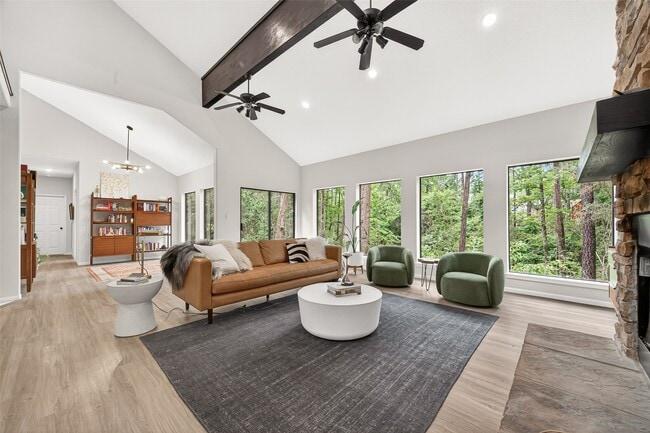
uyers Love the Trees—But They're Looking Through Fogged Windows
Your Woodlands Home Has a Beautiful View—So Why Are Buyers Staring at the Windows?
You open the blinds.
Outside:
Mature trees.
Beautiful backyard.
Maybe a pool.
The exact wooded setting that attracted you to The Woodlands in the first place.
But instead of looking at the view, the buyer walks toward the glass.
“Is that window fogged?”
Then they notice another one.
And another.
Now they are wondering:
Are the seals failing?
How old are the windows?
Does the entire house need new windows?
Are they leaking?
Will replacing them cost tens of thousands of dollars?
A few cloudy panes can suddenly make an otherwise well-maintained home feel much older.
That does not mean every seller should replace every window before listing.
It means you need to understand what buyers are seeing.
Start With a Window-by-Window Walkthrough
Before listing, walk through the house during daylight.
Open every blind and curtain.
Look for:
Fogging.
Condensation between panes.
Cracked glass.
Damaged screens.
Broken locks.
Windows that will not open.
Windows that will not stay open.
Damaged trim.
Visible water staining.
Make a list.
Fog Between the Panes Is Different From Dirty Glass
This distinction matters.
Sometimes the window simply needs cleaning.
Other times moisture appears to be trapped between panes of insulated glass.
Cleaning the inside and outside surfaces will not remove moisture trapped inside a sealed glass unit.
Clean Everything Before Deciding
Start with:
Interior glass.
Exterior glass where safely accessible.
Tracks.
Sills.
Screens.
You may discover that some of what looked like:
“Old windows”
was simply dirt.
Failed Seals Can Affect Buyer Perception
A fogged pane may not prevent someone from living in the house.
But visually it communicates:
Age.
Deferred maintenance.
Potential expense.
This is especially noticeable when several windows are affected.
Do Not Tell Buyers Fogging Is “Just Humidity”
If moisture is visibly trapped between panes:
Do not invent an explanation.
If you do not know the cause:
Say so.
Determine Whether the Entire Window Needs Replacement
This is where sellers sometimes spend unnecessarily.
Depending on the window and condition, a professional may determine that the appropriate solution involves:
Glass unit replacement.
Sash replacement.
Hardware repair.
Full window replacement.
Get property-specific information.
Do Not Automatically Order a Whole-House Window Package
One failed pane does not necessarily mean:
Replace 30 windows.
Understand the actual condition first.
But Multiple Failed Windows Can Change the Strategy
If buyers will immediately see:
Eight.
Ten.
Fifteen.
fogged windows,
the cumulative impression may be different.
At that point, consider:
Repair estimates.
Replacement options.
Pricing impact.
Buyer expectations.
Window Age Is Useful Information
If you know when windows were installed:
Document it.
Maybe:
Original windows remain in part of the house.
Some were replaced during remodeling.
Rear windows were replaced after a renovation.
Be specific.
Partial Replacement Is Common
Do not say:
“New windows throughout.”
because you replaced six.
Instead:
“Six rear-facing windows replaced in 2023.”
when accurate.
Find Warranty Information
Replacement windows may have:
Manufacturer warranty.
Glass warranty.
Installation warranty.
Transfer provisions.
Find the documentation.
Verify Whether the Warranty Transfers
Do not promise:
“Lifetime warranty for the buyer.”
unless the terms actually support that statement.
Windows That Will Not Open Deserve Attention
Buyers and inspectors may test windows.
A window may be:
Painted shut.
Stuck.
Mechanically damaged.
Locked incorrectly.
Do not assume:
“Nobody opens that one anyway.”
Windows That Slam Shut Can Be Concerning
If a window will not remain open:
Have the mechanism evaluated.
This is particularly important when buyers are physically testing it during a showing or inspection.
Broken Locks Are Small but Noticeable
Check every accessible window lock.
Security-related defects tend to get buyer attention.
Screens Affect Presentation
Torn.
Bent.
Missing.
Dirty.
screens can make good windows look poorly maintained.
Repairing or replacing inexpensive screens may improve presentation significantly.
Remove Screens Only With a Plan
Some photographers prefer removing screens temporarily for clearer views.
If you do:
Keep them labeled and stored safely.
Do not make the buyer wonder whether screens exist.
Window Tracks Should Be Clean
Dead insects.
Dirt.
Leaves.
Mildew.
A dirty track is a tiny detail that buyers notice when they walk close to the window.
Wood Trim Needs Inspection
Look around windows for:
Peeling paint.
Soft wood.
Cracks.
Staining.
Swelling.
These conditions may deserve further evaluation.
Water Stains Need an Explanation
A stain near a window may come from:
Previous leak.
Condensation.
Roof issue.
Exterior flashing.
Another source.
Do not automatically blame the window.
Determine the cause where possible.
Do Not Paint Over an Unknown Water Problem
Fresh paint is normal.
Covering a stain without understanding whether moisture is still present is not good preparation.
Caulking Should Not Look Like a Last-Minute Rescue
Excessive fresh caulk around every window can make buyers think:
“What were they trying to stop?”
Use appropriate repairs rather than cosmetic overcorrection.
The Woodlands Makes Windows Especially Important
One of the advantages of many established Woodlands homes is the connection to:
Trees.
Backyards.
Green space.
Outdoor living.
Natural light.
Windows frame that experience.
If the glass is cloudy:
The home's setting loses impact.
Clean Windows Can Transform Photography
Before professional photos:
Clean the glass.
Open blinds.
Remove unnecessary window clutter.
Trim landscaping blocking important views.
Let natural light work.
Do Not Remove All Privacy for Showings
Photography and daily showings are different.
If a window faces:
Neighbor.
Street.
Walkway.
use appropriate window treatments while still allowing the room to feel bright.
Heavy Drapes Can Make an Older Home Feel Darker
If curtains overwhelm the room:
Consider simplifying them for listing.
The goal is not:
Empty windows.
It is:
Light.
View.
Scale.
Plantation Shutters Can Be a Feature
If the home has quality shutters:
Clean them.
Repair broken louvers.
Make sure they operate.
If they convey:
Clarify appropriately.
Blinds Need to Work
A buyer notices immediately when:
One blind is crooked.
Slats are broken.
Cord is damaged.
Motorized shade does not move.
Small maintenance issues accumulate.
Motorized Window Treatments Need Testing
If advertised:
Test:
Remote.
Wall controls.
Smart-home integration where applicable.
Charging or battery systems.
Energy-Efficiency Claims Need Support
Avoid:
“These windows cut electric bills in half.”
unless you have reliable evidence specific to that claim.
Better:
Describe documented:
Window type.
Installation.
Manufacturer.
Features.
“Energy Efficient” Should Not Become a Guarantee
Buyer utility costs depend on:
HVAC.
Insulation.
Household usage.
Weather.
Pool.
Thermostat.
Many factors.
Tinting Should Be Disclosed Accurately
Some homes use:
Window film.
Tint.
Solar screens.
Do not confuse those with:
Factory glass coatings.
Different products serve different purposes.
Solar Screens Can Affect Interior Light
They may help with sun exposure but can also make rooms photograph darker.
Evaluate whether they should remain installed during photography while accurately representing what conveys with the home.
Window Orientation Matters
West-facing windows may receive different afternoon exposure from:
North-facing windows.
A buyer may ask.
You can explain the home's orientation without promising exact future temperatures or energy performance.
Large Two-Story Windows Need Special Attention
In homes with:
Two-story living rooms.
Large entry windows.
High glass,
professional cleaning may make a significant difference.
Do not risk unsafe DIY access simply for listing preparation.
Specialty Windows Can Cost More to Replace
Arched.
Oversized.
Custom-shaped.
Decorative.
Do not quote buyers replacement costs from memory.
If replacement is being considered:
Get an actual estimate.
Inspection Reports May Flag Window Issues
Common observations can involve:
Failed seals.
Operation.
Locks.
Screens.
Glass.
Trim.
Moisture.
Do not panic over the length of the list.
Separate:
Cosmetic.
Maintenance.
Functional.
Potential moisture-related concerns.
Buyer Repair Requests Are Negotiable
A buyer may ask:
Replace every fogged pane.
Repair specific windows.
Provide a credit.
Other negotiated solutions.
Your response depends on:
Contract.
Price.
Competition.
Repair cost.
Overall transaction.
Get Estimates Before Making a Decision
If several windows are affected:
Knowing the likely repair cost can improve negotiations.
Guessing:
“That's probably $30,000.”
helps nobody.
Pricing Should Reflect the Overall Home
Older windows are one factor among:
Roof.
HVAC.
Kitchen.
Bathrooms.
Pool.
Lot.
Location.
Landscaping.
Overall maintenance.
Do not price the entire home around one system unless the condition genuinely warrants it.
Replacement Windows May Not Return Dollar for Dollar
If you spend:
$25,000
you should not automatically assume:
Home value increases $25,000.
The benefit may instead be:
Better presentation.
Reduced buyer objection.
Improved marketability.
Sometimes Repair Is the Better Pre-Listing Choice
Especially when:
Only a few panes are affected.
The rest of the windows function well.
Repair is reasonably available.
Sometimes Pricing Around the Condition Makes More Sense
If replacement is:
Extensive.
Expensive.
Time-consuming.
you may choose to market and price accordingly.
There is no universal answer.
Use the “Dirty or Failed?” Test
Clean first.
Then evaluate.
Use the “One Window or Whole-House Problem?” Test
Scope matters.
Use the “Can It Be Repaired?” Test
Get professional information.
Use the “Will Buyers Notice Immediately?” Test
If yes:
Address your strategy before listing.
The Woodlands Window Seller Scorecard
Before listing, evaluate:
Glass
Clean?
Fogging
Affected panes identified?
Cracks
Any visible damage?
Operation
Windows open properly?
Locks
Working?
Screens
Clean and intact?
Tracks
Clean?
Sills
Condition reviewed?
Trim
Water damage or deterioration?
Previous Leaks
Documented?
Replacement History
Known?
Warranties
Available?
Warranty Transfer
Verified?
Blinds
Working?
Shutters
Working?
Motorized Shades
Tested?
Landscaping
Views unobstructed where appropriate?
Photography
Windows and views showcased?
Repair Estimates
Obtained if needed?
Pricing
Condition considered realistically?
Final Thoughts
Windows can be easy for sellers to overlook.
You have looked through them every day for years.
You may barely notice:
The cloudy pane.
The torn screen.
The blind that does not open correctly.
The window that sticks.
A buyer sees them for the first time.
And in The Woodlands, windows can matter even more because so much of the home's appeal may come from what is outside:
Mature trees.
Wooded lots.
Pools.
Landscaping.
Outdoor living.
Natural light.
Before listing:
Clean every important window.
Open and close them.
Check locks.
Repair screens.
Identify fogged panes.
Find replacement records.
Locate warranties.
Investigate water staining.
Get estimates where significant repairs may be needed.
Then decide strategically whether to:
Repair.
Replace.
Or price with the existing condition in mind.
Do not tell buyers:
“All older windows fog eventually.”
Do not say:
“It's only cosmetic.”
if you do not know that.
And do not spend tens of thousands of dollars replacing every window simply because one buyer might object.
Understand the condition first.
Because the goal is not to make an established Woodlands home look like it was built yesterday.
The goal is to make buyers look through those windows and think:
“That's exactly why I want to live here.”
Not:
“How much is it going to cost to replace all this glass?”
Frequently Asked Questions
Should I replace fogged windows before selling my Woodlands home?
Not automatically. Consider the number of affected windows, repair options, replacement cost, buyer expectations, comparable competition, and the home's overall condition.
Does fog between window panes mean the whole window must be replaced?
Not necessarily. Depending on the window system and condition, a professional may recommend replacing a glass unit, sash, component, or entire window.
Are fogged windows only a cosmetic issue?
Do not assume so. The cause and significance should be evaluated when necessary, particularly if moisture, damage, or other conditions are present.
Should I replace all the windows because some are original?
Age alone does not automatically require whole-house replacement. Condition, operation, efficiency goals, cost, and market strategy all matter.
Can I advertise replacement windows as energy efficient?
Describe documented product features accurately, but avoid guaranteeing specific utility savings or future energy costs.
Should I repair torn window screens?
Generally, yes. Damaged screens are relatively visible and can make otherwise good windows appear poorly maintained.
Should I provide window warranties to buyers?
Yes, when available. Verify whether warranties transfer and whether registration or other steps are required.
Will new windows increase my sale price by what I spend?
Not necessarily. Improvement cost and market value are different. New windows may improve presentation and reduce buyer objections without producing a dollar-for-dollar increase.
Should I clean windows professionally before listing?
For homes with large, numerous, or difficult-to-access windows, professional cleaning can substantially improve photography and presentation. Avoid unsafe DIY work.
What's the biggest takeaway?
When selling an established Woodlands home with older or fogged windows, do not automatically replace everything and do not ignore what buyers can clearly see. Clean first, identify actual defects, document previous replacements, obtain professional information when needed, and choose repairs based on the home's overall selling strategy.