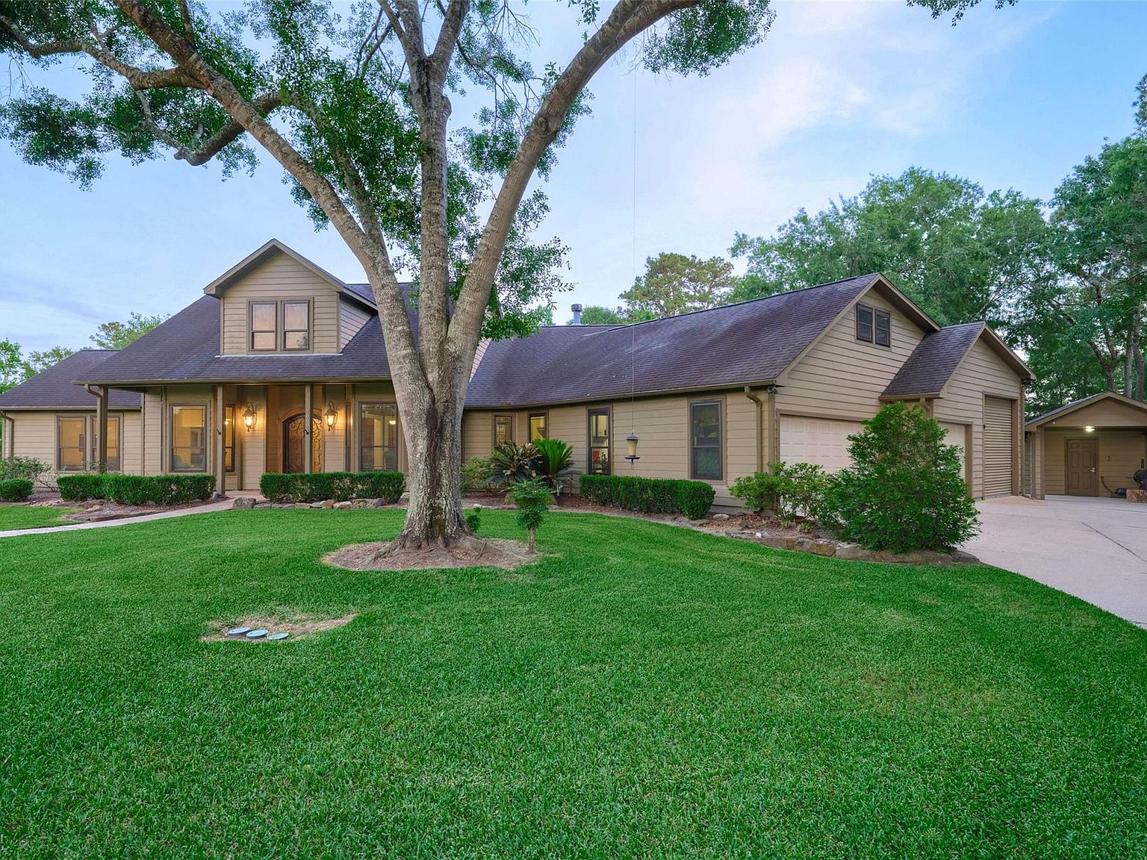
The House Isn't Updated. That Doesn't Mean You Should Walk Away.
You open the front door.
And there it is.
Brown cabinetry.
Older countertops.
A light fixture that immediately tells you which decade it came from.
You look at your spouse.
They look at you.
And before you've even reached the family room, you've decided:
“This house needs too much work.”
Maybe.
But maybe not.
Because one of the easiest mistakes buyers can make when shopping for an established home in Spring is confusing:
“I don't like how this looks.”
with:
“There's something wrong with this house.”
Those are very different problems.
And they can have very different price tags.
Start With One Simple Question
When something bothers you during a showing, ask:
Is this cosmetic or structural/function-related?
Cosmetic might include:
Paint.
Wallpaper.
Light fixtures.
Cabinet hardware.
Some flooring.
Decor.
Certain countertops.
Function-related or potentially more significant concerns may involve:
Roofing.
Foundation.
HVAC.
Plumbing.
Electrical systems.
Drainage.
Water intrusion.
Structural components.
Those categories shouldn't be treated the same.
Ugly Paint Is Actually Good News
You walk into a bedroom.
It's dark red.
You hate it.
Perfect.
Paint is one of the easiest things for buyers to mentally overvalue.
A color you dislike can make an entire room feel wrong.
Try mentally removing it.
Look instead at:
Room dimensions.
Windows.
Ceiling height.
Closet space.
Natural light.
Location within the floor plan.
Those are harder to change.
The Same Goes for Light Fixtures
A dated chandelier can dominate an entire dining room.
But the chandelier isn't the dining room.
Imagine it gone.
Now look again.
Is the room:
Large enough?
Well positioned?
Bright?
Connected to the kitchen?
Useful for your household?
Don't reject a good room because of one object attached to the ceiling.
Kitchens Are Where Buyers Struggle Most
This is understandable.
Kitchen renovations can become expensive.
But “older kitchen” covers a huge range.
One kitchen may simply need:
Hardware.
Lighting.
Paint.
Backsplash.
Another may need:
Cabinetry.
Countertops.
Appliances.
Flooring.
Layout changes.
Electrical work.
Plumbing modifications.
Those are very different projects.
Don't estimate renovation difficulty based on color alone.
Ask Whether the Layout Works
This is crucial.
Finishes can change.
Moving walls, plumbing, gas lines, electrical systems, windows, and doors can be considerably more complicated.
Before worrying about cabinet color, ask:
Is the kitchen large enough?
Does the island work?
Is there enough storage?
How does it connect to the family room?
Where is the pantry?
How does traffic move through the space?
If the bones work, you may have more options.
Quality Can Hide Behind an Older Style
Something being unfashionable doesn't automatically mean it's poor quality.
Older custom cabinetry may be extremely well constructed.
Traditional millwork may be expensive to reproduce.
Natural materials may have decades of useful life remaining.
Don't automatically assume:
Newer = better.
Evaluate condition and quality separately from style.
Now Look Outside
This is where the comparison gets interesting.
The dated home may have something the newly renovated one doesn't.
A fantastic lot.
Mature trees.
Privacy.
A larger yard.
An established street.
A pool.
Outdoor living.
Better positioning.
Those things can be much harder to create later.
You Can Change a Countertop. You Can't Grow a Mature Tree Overnight.
Established areas can offer something new construction simply needs time to develop:
Maturity.
Trees.
Landscaping.
Neighborhood character.
If those characteristics matter to you, don't let easily changed finishes distract you from them.
The question becomes:
What would be harder to recreate—the kitchen or the setting?
Sometimes the answer is obvious.
Don't Underestimate a Great Floor Plan
Imagine two homes.
Home A
Beautifully renovated.
But the primary bedroom is where you don't want it.
The kitchen feels tight.
There's no office.
Storage is limited.
Home B
Older finishes.
But the floor plan works perfectly.
Which one is really the better starting point?
That's a personal decision.
But remember:
A renovation can change finishes.
Changing fundamental architecture may be much more complicated.
Condition Matters More Than Instagram Appeal
A house can photograph beautifully and still have maintenance concerns.
Another can look dated while having:
Well-maintained systems.
Recent mechanical improvements.
A solid maintenance history.
A good roof.
Updated components you can't see in photographs.
Don't evaluate homes entirely by how “current” they look.
The expensive parts aren't always pretty.
Ask What Has Already Been Replaced
When seriously considering an established Spring home, find out what information is available about major systems and improvements.
Depending on the property, that may include:
Roof.
HVAC.
Water heaters.
Windows.
Plumbing work.
Electrical work.
Pool equipment.
Appliances.
Exterior improvements.
An older-looking home with significant recent system improvements may deserve a very different evaluation than appearances suggest.
Inspection Is Where Reality Replaces Guessing
A showing isn't an inspection.
Neither is a listing description.
If you move forward with a property, appropriate inspections and professional evaluations can help you better understand condition.
Don't try to diagnose major systems by standing in the kitchen for twenty minutes.
Use qualified professionals.
Build Two Renovation Lists
If you like the home but dislike the finishes, make two lists.
Must Change Immediately
Things you genuinely cannot comfortably live with.
Can Wait
Things you'd eventually like to change.
Buyers often mentally renovate the entire home before making an offer.
That's how a manageable project becomes an imaginary $250,000 renovation.
You may discover only a few things truly need immediate attention.
You Don't Have to Renovate Before Moving In
Social media has created an interesting expectation:
Buy house.
Immediately transform everything.
Reveal perfect finished home.
Real life doesn't need to work that way.
You can live in a house first.
Learn how you use it.
Notice where morning light falls.
Figure out which spaces actually bother you.
Then renovate intentionally.
Sometimes the project you thought was urgent becomes unnecessary after six months.
Living in the Home Can Save You From Bad Renovations
That wall you planned to remove?
After living there, you realize it provides useful separation.
The kitchen island you wanted larger?
You discover it would interfere with traffic.
The formal dining room you planned to convert?
You unexpectedly use it all the time.
Homes teach you things after you move in.
There's value in listening before demolishing.
But Don't Romanticize a True Fixer-Upper
There's an important distinction.
This article isn't saying:
“Ignore problems.”
A home requiring substantial repairs or renovations may not fit your:
Budget.
Timeline.
Skills.
Risk tolerance.
Financing.
Lifestyle.
That's okay.
Not everyone wants a project.
The point is to distinguish a true project from a perfectly functional home wearing yesterday's colors.
Price the Renovation Before Assuming the Deal Works
Suppose the outdated home is $75,000 less than the renovated alternative.
Great deal?
Maybe.
If the improvements you actually want cost $30,000, the comparison looks one way.
If they cost $150,000, it looks very different.
Get realistic information before assuming either:
“We'll renovate cheaply.”
or
“This will cost a fortune.”
Both can be wrong.
Don't Forget the Hassle Factor
Renovations don't cost only money.
They can cost:
Time.
Decisions.
Dust.
Contractor meetings.
Temporary inconvenience.
Delays.
For some buyers, that doesn't matter.
They enjoy the process.
For others, paying more for a finished home may be worth every dollar.
Know which type of buyer you are.
The Opportunity Is Often Where Other Buyers Stop Looking
Here's where an older home can become interesting.
Many buyers struggle to see past finishes.
They want move-in ready.
They scroll past brown cabinets.
They reject older bathrooms.
That can sometimes mean fewer people are emotionally competing for a home with excellent fundamentals but less fashionable presentation.
It doesn't automatically make the property a bargain.
But it can create an opportunity worth investigating.
Use the “Can't Change It” Test
Before rejecting an established home, divide what you dislike into two categories.
Things You Can Change
Paint.
Lighting.
Hardware.
Many finishes.
Appliances.
Décor.
Things That Are Harder to Change
Lot.
Street.
Overall location.
Surroundings.
Certain architectural characteristics.
Mature trees.
Fundamental floor-plan elements.
Then ask:
Which list contains the reasons I actually care about this house?
That's often clarifying.
Final Thoughts
The best Spring home for you may not be the one with the newest kitchen.
It may be the home with:
The right lot.
The right floor plan.
The right amount of space.
Beautiful mature trees.
A location that fits your life.
And a kitchen that happens to be fifteen years behind your Pinterest board.
That's okay.
You can replace countertops.
You can change paint.
You can update lighting.
What you can't easily do is manufacture a great property in a great setting after you've bought the wrong one.
So when you walk into an older home and your first reaction is:
“This is dated.”
Don't stop there.
Ask the more valuable question:
“What's actually wrong—and what's simply not my style yet?”
That distinction could completely change which Spring home you choose.
Frequently Asked Questions
Is buying an outdated home a good idea?
It can be, depending on the property's condition, price, location, layout, renovation needs, and your willingness to complete improvements.
What's the difference between outdated and poorly maintained?
Outdated usually describes style or finishes. Poor maintenance can involve condition and neglected repairs. A home can be stylistically older while still being well maintained.
Should I renovate immediately after buying?
Not necessarily. Unless something requires immediate attention, living in the home first may help you understand which changes will genuinely improve how you use it.
Are older homes always cheaper to buy?
No. Price depends on location, lot, size, condition, improvements, market conditions, and many other factors.
Should I get renovation estimates before buying?
If planned improvements are important to your purchase decision, obtaining realistic information about potential scope and cost can help you evaluate the property more accurately.
What's the biggest takeaway?
Don't reject a Spring home because its finishes aren't current. First determine whether you're looking at cosmetic inconvenience or a genuinely expensive problem. The difference can reveal opportunities other buyers overlook.